To clean up water damage, you’re racing a 48-hour clock. Wet framing, carpet and drywall that dry inside that window usually never grow mold, according to the EPA. Miss it, and the job stops being a fan-and-shop-vac afternoon.
Before you touch a towel, check three stop signs.
- Water near power. If it reached outlets, a plugged cord, a hard-wired appliance or the breaker box, cut the power first. If the panel itself is wet, don’t go near it. Phone the utility.
- Sewage or floodwater. A toilet overflow with waste, a sewage backup, or muddy outdoor water carries bacteria. The EPA sends contaminated water to a professional, not to a rented wet-dry vac.
- Past 48 hours. Wet material that sat longer than two days gives mold a head start. A musty smell means you’re already late.
Cut the Water and the Power, in That Order
Close the supply valve first, then switch off power to the wet zone at your breaker. Stand on dry floor and keep one hand free. If the breaker box is wet or buzzing, leave it and phone the utility.
Supply valves sit under the sink, behind the toilet, behind the washer, and at the water heater or the main.
Turn your valve clockwise until it stops. A frozen valve is common on older fixtures. Shut the main instead and open a low faucet to drain the line.
For the electrical side, you want dry hands, dry boots and a flashlight. You want a wet-dry vac rated for water, not a mop and a prayer. A household vacuum won’t survive the first gallon.
A tank that keeps weeping at the fittings is its own job. The order to check those connections is in our water heater leak repair guide.
On service calls, the puddle had usually started at a supply line someone had already tightened once.
Sort the Water by What Is In It
Clean water from a supply line is a drying job. Gray water from a washer, dishwasher or sink is a cleaning job. Black water from sewage or flooding isn’t a DIY job, and the EPA sends contaminated water to a professional.
| Where the water came from | What it carries | What you can do |
|---|---|---|
| Burst supply line, rain through a window, ice maker line | Little more than minerals | Extract, dry, wipe hard surfaces |
| Washer, dishwasher, sink overflow, AC condensate | Soap, food, dust | Gloves and disinfectant on hard surfaces; porous items that stayed wet go out |
| Toilet overflow with waste, sewage backup, outdoor flood | Bacteria and worse | Stop here and bring in a crew with containment |
The usual indoor sources are a dishwasher leaking from the bottom, a fridge leaking water from the bottom, or an AC leaking water indoors, and each one tells you something different about how far the water traveled.
Fix the source first. Otherwise you’re drying water that keeps arriving.
Extract the Water Before You Move Anything
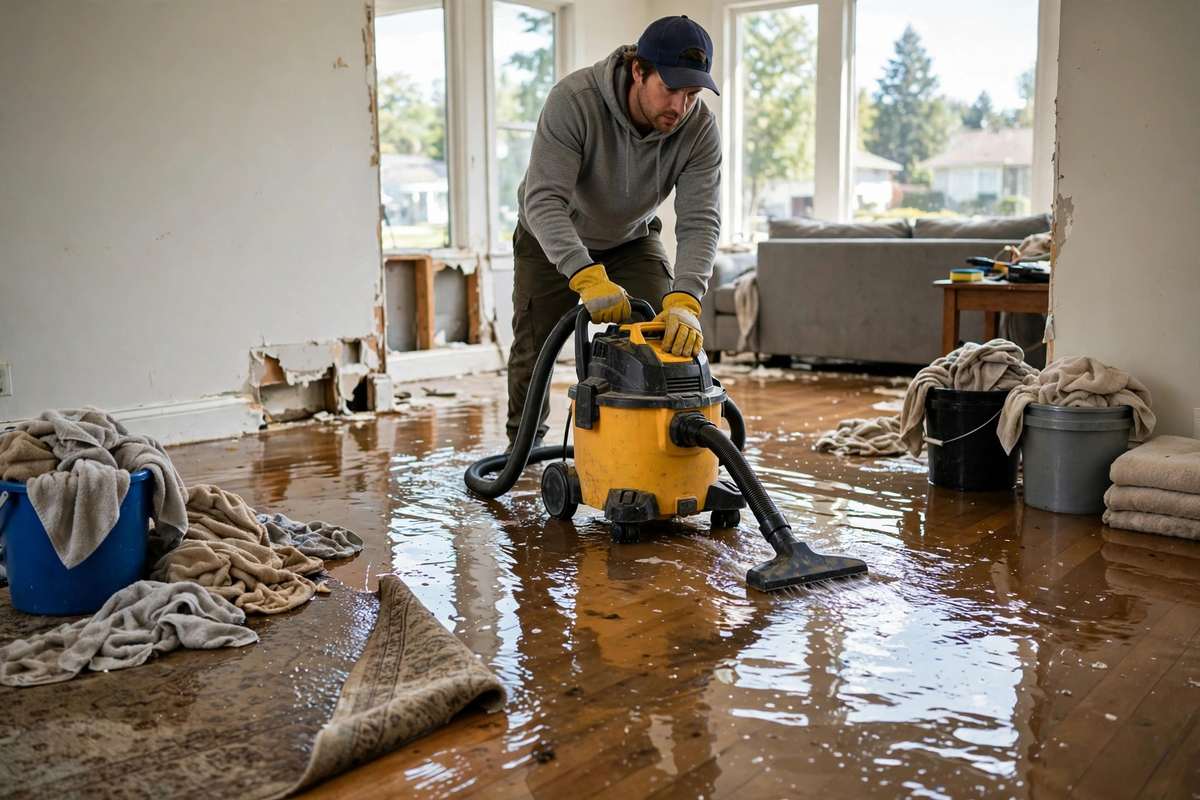
You can pull standing water with a wet-dry vac or a transfer pump. Work from the far corner toward the door. Empty the tank before it reaches the motor housing.
A squeegee and towels handle the film your vac leaves behind.
Lift your carpet at one corner and check the backing. If it’s soaked through, the pad underneath is finished and gets replaced.
Drywall wicks water upward, so press the wall a foot above the waterline. Soft, crumbly board gets cut back to solid material.
Photograph the waterline while it’s still visible.
An adjuster can’t price a wall they never saw wet. A trash bag on the curb ends the argument.
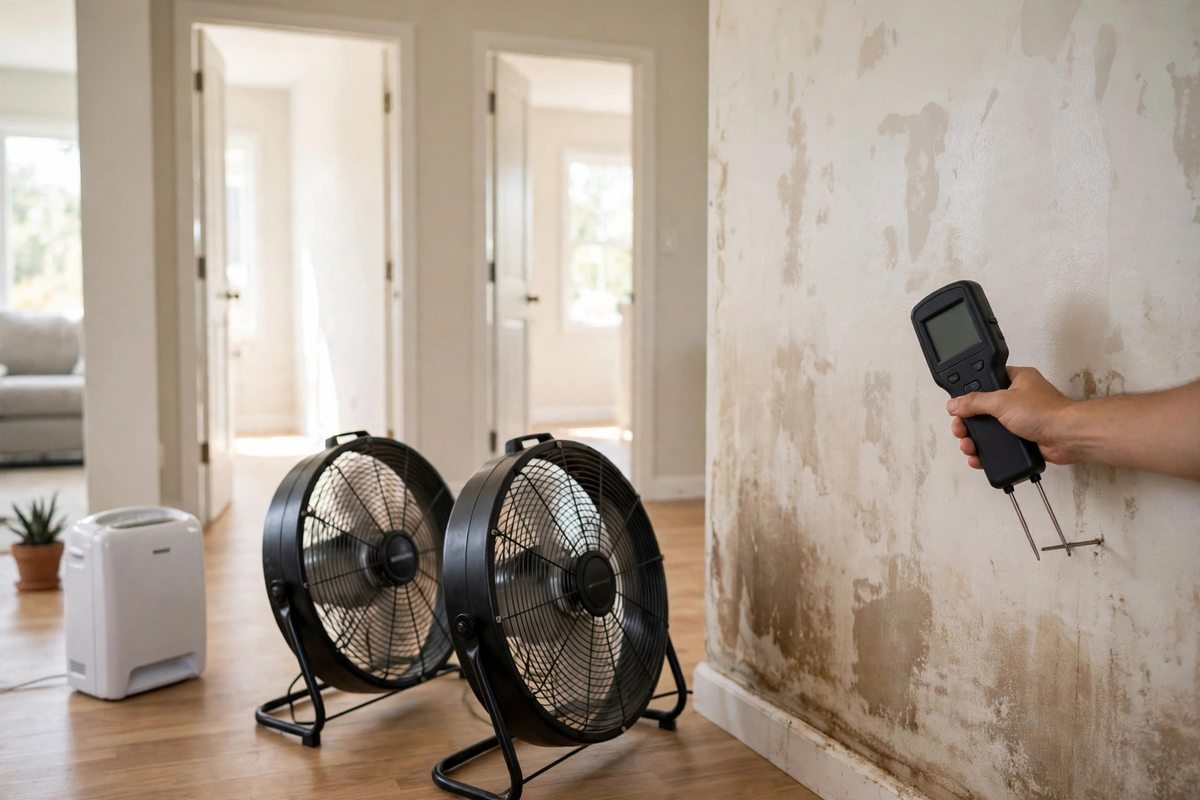
Dry the Structure Inside 48 Hours
Air movement plus dehumidification does the work. Aim fans at wet surfaces and hold indoor humidity between 30 and 50 percent, the range the EPA recommends for mold control.
Open interior doors, closet doors and cabinet doors, and you’ll feel the difference in an hour.
Run the dehumidifier constantly. Empty it or hose it to a drain. A unit that fills overnight and shuts off is doing half a job.
Keep windows closed while it runs, especially on a humid day. You’re drying the house, not the neighborhood.
A moisture meter turns guesswork into a number, and an inexpensive one is enough. Keep yours in the kit.
Press it into the baseboard, the subfloor and the drywall. A reading that hasn’t moved in a day means air is not reaching that spot, and your fans are aimed wrong.
Plan on several days of continuous drying, and check your meter each morning before you move anything back. Carpet and pad finish sooner than drywall, while a soaked subfloor can hold water for a week.
The 48-hour figure is when the material has to be dry. A dripping chest freezer leaves a slow puddle you find days later, which is why our freezer leak guide starts at the source.
Decide What Dries and What Goes Out
Hard, non-porous items get dried and cleaned. Porous items wet past the 48-hour window usually get thrown out, because mold grows inside material you can’t reach with a cloth.
Keep tile, metal, glass, plastic and solid wood furniture you can wipe and air out.
Toss the carpet pad, ceiling tiles, wet drywall, cardboard, paper, mattresses and foam cushions that took on water. If your item squishes, it goes.
Boxes are the quiet loss in most floods. Cardboard holds moisture against the floor and breeds mold under holiday storage.
I’ve seen pads that felt dry on top and dripped when lifted. Lift the corner before you decide.
A claim or a Saturday? That’s the question homeowners argue about most.
A burst supply line that soaked one room usually gets filed. A puddle under the fridge usually doesn’t.
One comment on a first-flood thread put the gap bluntly:
“Oh my sweet summer child. This is really minor and not at all insurance claim worthy.”
– r/FirstTimeHomeBuyer, October 2026 (76 upvotes)
Take photos and keep your wet-item list either way. Read the policy’s sudden-versus-seepage wording before you phone anyone.
FAQ: How to Clean Up Water Damage
How long does it take to dry a room after water damage?
Plan on several days of continuous drying, with fans and a dehumidifier running around the clock. Carpet and pad dry faster than drywall. A soaked subfloor is the slowest. Trust the meter rather than your hand.
Does homeowners insurance cover water damage cleanup?
Usually yes for a sudden burst pipe or appliance failure. Usually no for seepage that built up over months. Policies differ on mold limits, so read that section before you file, and photograph everything before disposal.
Can fans alone dry a wet room?
Only in dry weather with your windows open. Indoors, fans push moisture into the air and a dehumidifier takes it out. Fans alone in a humid house just redistribute the water.
When does water damage become an emergency?
When the water is contaminated, when it reached wiring, or when the material has been wet more than 48 hours. The EPA also sends homeowners to a professional once mold covers about 10 square feet, roughly a 3 by 3 foot patch. Those three conditions decide the job.
If the meter still reads wet on day three, stop drying and find the leak. Dry air over a live leak is a bill with no end.