Water heater leak repair depends on where the water comes from. A. O. Smith’s gas Use and Care Guide says almost all leaks occur at connections and are not a tank leak.
A fitting, a valve or a supply line can be fixed. Water coming through the tank’s own steel can’t. So don’t price a new heater yet. Shut it down, dry it off, and find the first wet spot you can see.
Water heater leak repair starts with shutting it down
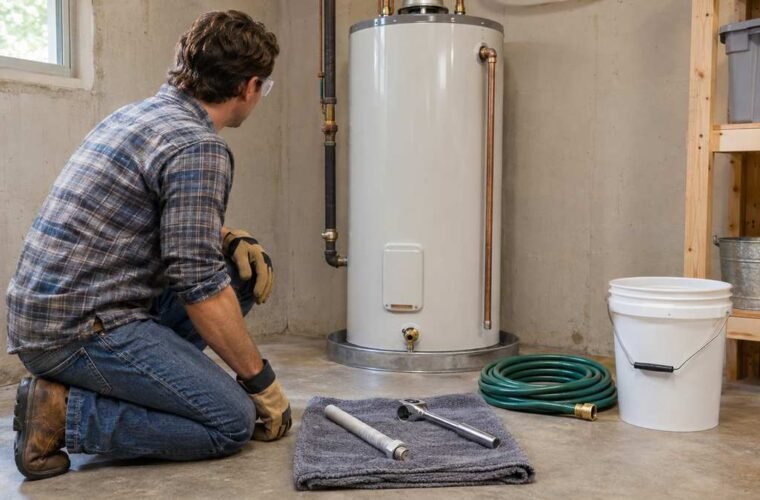
Before you touch anything, cut the heat and the water. A. O. Smith’s leak checklist puts it in this order:
- Turn off the energy. On an electric heater, switch off its breaker at the panel. On a gas heater, turn the gas shut-off valve near the heater to off, if you’re confident doing so.
- Close the cold water valve. It’s the dedicated shut-off on the cold line running into the heater. That stops more water from feeding the leak.
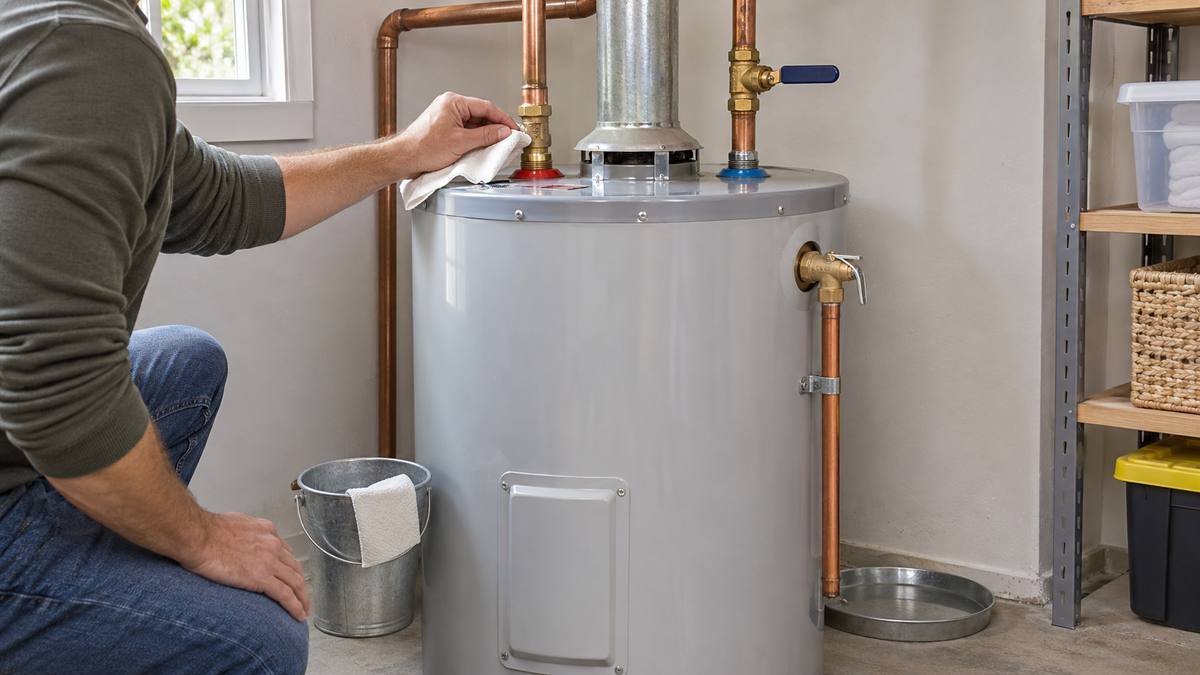
- Dry everything. Wipe the tank, the pipes and the floor with towels. You can’t see where fresh water appears until the surface is dry.
Put a bucket or a pan under any steady drip while you work.
If a lot of very hot water is pouring from the relief valve pipe, stop here. A. O. Smith says to turn the gas supply off and call a qualified person.
Leak or condensation?
Not every puddle is a leak. Rheem’s electric water heater manual says condensation can form on the tank when it’s first filled. It can also form during a heavy hot water draw with very cold incoming water.
Gas heaters do it too. A. O. Smith’s guide says a cold tank on a newly lit gas heater can make drips, a sizzling sound and a small puddle on the floor. Condensation isn’t a leak, and it stops once the tank reaches normal temperature.
So the test is time. If your heater is new, just refilled, or you’ve just run a lot of hot water, dry it and give it a few hours.
Still wet after the tank is hot? Rheem says to examine the piping and fittings for leaks.
Find where the water comes from
With the tank dry, watch for the first spot that gets wet again. Water runs down, so the highest wet point you can find is closest to the leak.
That’s why a puddle at the base can start at a fitting on top.
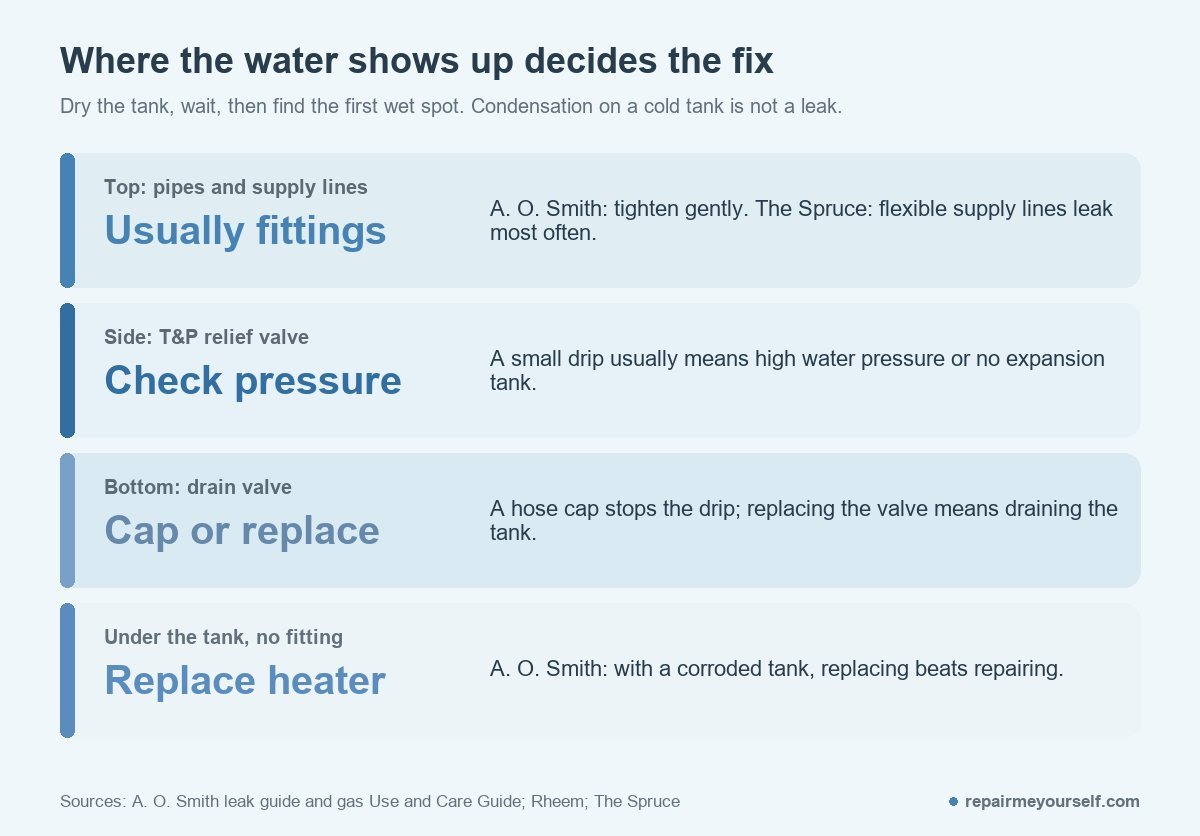
- Top of the heater. A. O. Smith says to inspect the pipe fittings and connections there. The Spruce adds the supply lines above the heater, and the short threaded pipes called nipples where those lines meet the tank.
- Side of the tank. This is almost always the temperature and pressure (T&P) relief valve, per The Spruce, or the pipe running down from it.
- Base, at the drain valve. The drain valve is the spigot near the floor you’d hook a hose to. Its leaks are fixable.
- Base, with no fitting nearby. If the valves and pipes are dry and water still collects under the tank, A. O. Smith calls it often the first sign of a serious problem, such as a corroded tank.
Leaks you can stop yourself
Three of those four spots are parts, not the tank. Here’s what you can do about each one.
Fittings and supply lines on top
If a pipe fitting is weeping, A. O. Smith’s advice is to try gently tightening it with a wrench. Don’t overdo it.
Too much force can damage the fitting and make the leak worse. The Spruce notes that the nipples on top can crack from overtightening.
The Spruce also says flexible supply tubes are the most common cause of leaks above the heater. If yours is leaking, you replace the line. You don’t keep tightening it.
Leaking nipples are a different job. Getting them out takes a pipe wrench and real force, and The Spruce calls that a job for a professional in most cases.
A dripping T&P relief valve
A drip from the T&P valve’s discharge pipe is often the valve doing its job. A. O. Smith’s manual says a small drip there usually means your home’s water pressure is too high, or you need a thermal expansion tank.
You can test that for the price of a gauge. A. O. Smith says to buy an inexpensive water pressure gauge and connect it to an outside faucet.
Then measure the highest pressure you see over 24 hours, since the highest pressures often occur at night. Most codes allow up to 80 psi. A. O. Smith recommends a working pressure no higher than 50-60 psi.
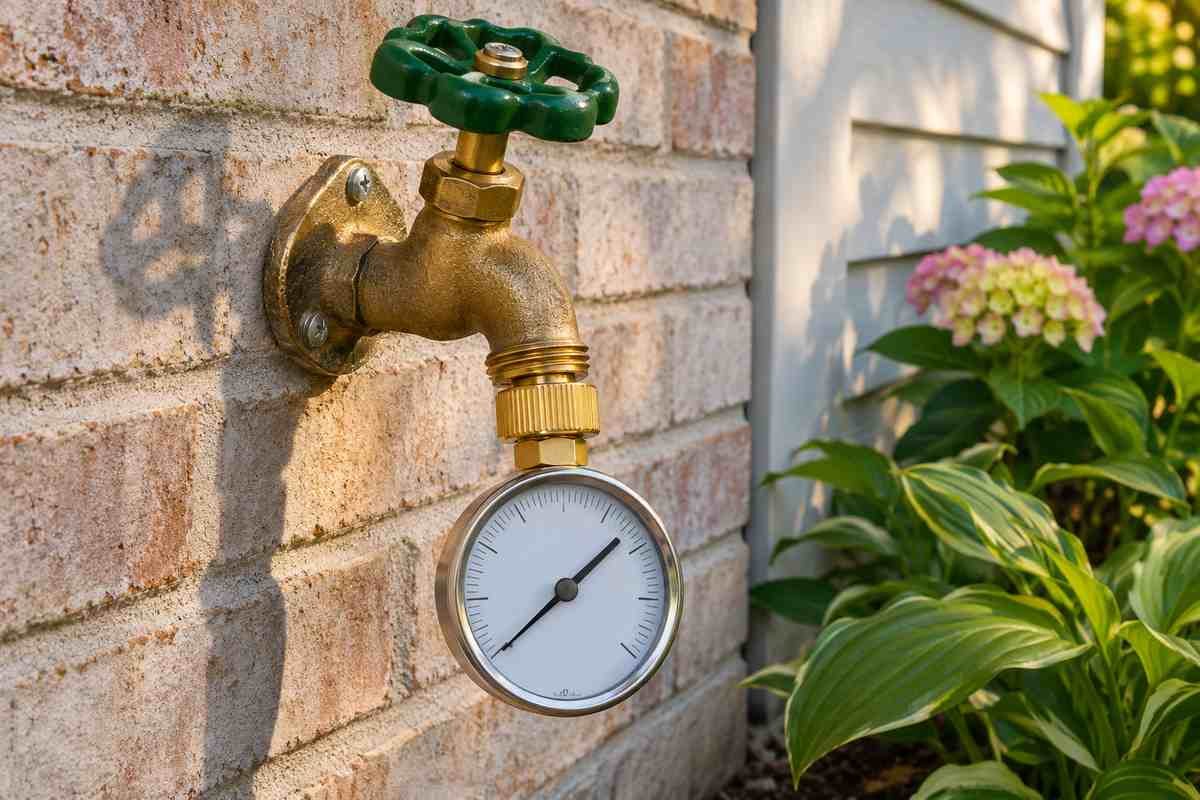
- Pressure too high: a pressure reducing valve on the main cold line, set between 50 and 60 psi, is the maker’s fix.
- No expansion tank: heated water expands, and A. O. Smith says almost all homes now need a thermal expansion tank sized to the heater and charged to the home’s pressure.
- Pressure fine, tank in place, still dripping: the valve may be broken. A. O. Smith says to have a qualified person replace it.
One rule has no exceptions. Never cap or plug the T&P valve or its discharge pipe. A. O. Smith warns that it could cause an explosion.
If you test the valve by lifting its lever, stand clear of the pipe outlet, since the water can be scalding. Rheem says that if the valve doesn’t release properly or keeps leaking afterward, you should replace it.
A leaking drain valve
Drain valves often leak after someone drains or flushes the tank, because the valve doesn’t close all the way.
The Spruce says you can cap a leaky drain valve with a hose cap. That stops the drip from the spout.
For a lasting fix, A. O. Smith says replacing the drain valve is usually the best solution. That means you drain the tank first.
Rheem’s flushing article lists a drain valve that won’t open or keeps leaking as a reason to call a professional. Weigh that before you start on an older heater. Our water heater maintenance steps cover draining and refilling the tank.
When the tank itself is leaking
This is the one leak you can’t fix. A. O. Smith says corrosion from hard water can’t be repaired and will eventually require tank replacement.
The maker also says a leak from the base of a corroded tank is usually better replaced than repaired.
“Unless you find a leak at the piping, tank leaks are death. Patching is too risky.”
– r/Plumbing, July 2026 (11 upvotes)
Note that reply’s first clause. On r/HomeMaintenance, another commenter put the same test plainly: if water is coming from the base “and not a fitting, tank’s probably done.”
Both agree with the maker. Rule out every fitting and valve before you accept a new heater.
Age matters too. A. O. Smith says water heaters typically last between 8 and 20 years, depending on the type.
Our water heater age calculator decodes Bradford White, A. O. Smith and Rheem serial numbers to tell you how old yours is. That helps when you’re deciding on a borderline repair.
Stop and call a plumber if:
- water comes from the tank body with every fitting dry;
- the T&P valve is pouring very hot water, or it still drips at 50-60 psi with an expansion tank;
- the nipples on top are leaking, or a fitting won’t seal without heavy force;
- the leak involves gas parts past the shut-off valve.
Until then, keep the cold valve closed and the energy off. A. O. Smith also suggests a metal drain pan piped to a drain under any heater where a leak would damage your floor.
Water heater leak questions
Can I still shower if my water heater is leaking?
A. O. Smith says no: you shouldn’t keep using a leaking heater. Turn off the energy and the cold water valve, find the source, and get it fixed. If the puddle was only condensation, your heater is fine once it’s up to temperature.
Is a leaking water heater an emergency?
Treat it as urgent. A. O. Smith says even small leaks cause water damage and mold over time.
If you see large amounts of hot water from the relief valve pipe, shut the gas supply off and call a qualified person right away.
How much does it cost to fix a water heater leak?
It depends on the part. A hose cap on a drain valve or a tightened fitting costs you little. A new T&P valve, drain valve or expansion tank is a parts-and-labor job. A leaking tank means a new heater, which is why you rule out every fitting first.