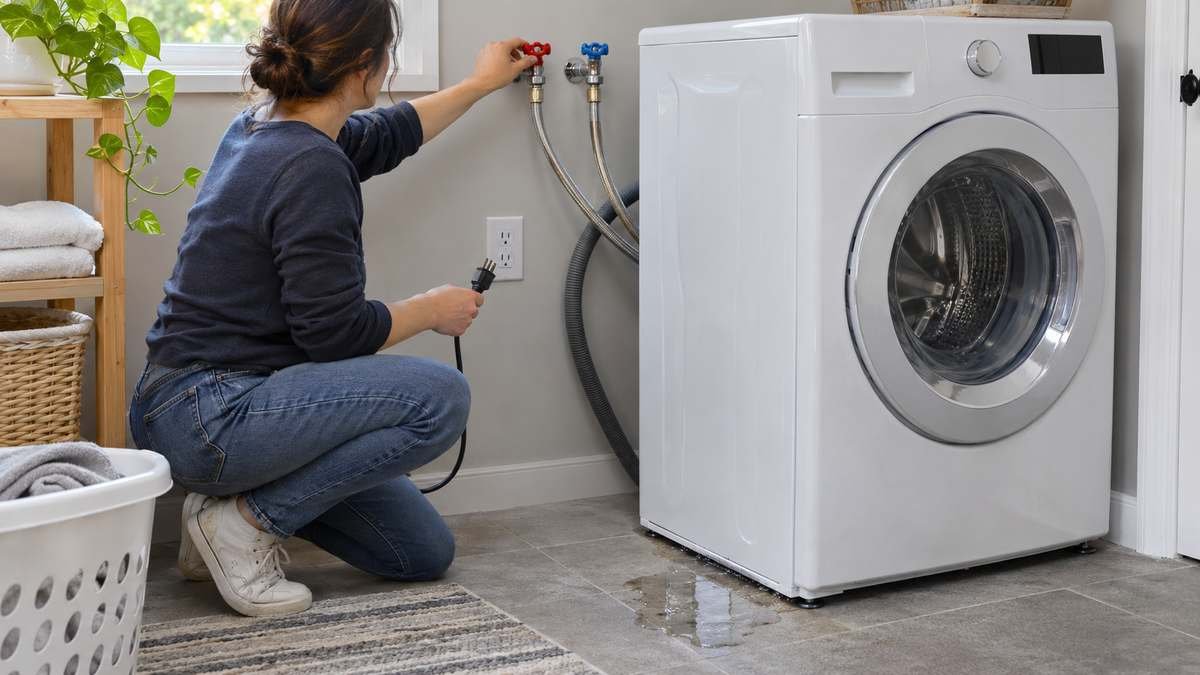
Washing machine leaking from bottom? Turn off both water faucets behind it and unplug it. Then find where the puddle starts. Water at the back points to a hose, a fitting or the house drain. Water at the front points to the door seal, the dispenser or a front-loader’s pump filter cap.
If it pools in the middle and every hose is dry, the leak is inside the cabinet. That’s where a part comes in. Everything before it you can check with the panels still on.
Stop the water, then find where the puddle starts
Shut off both faucets, unplug the washer and mop the floor completely dry. You can’t trace a leak on a wet floor.
I do the same on every washer I pull out from the wall: water off, plug out, then look.
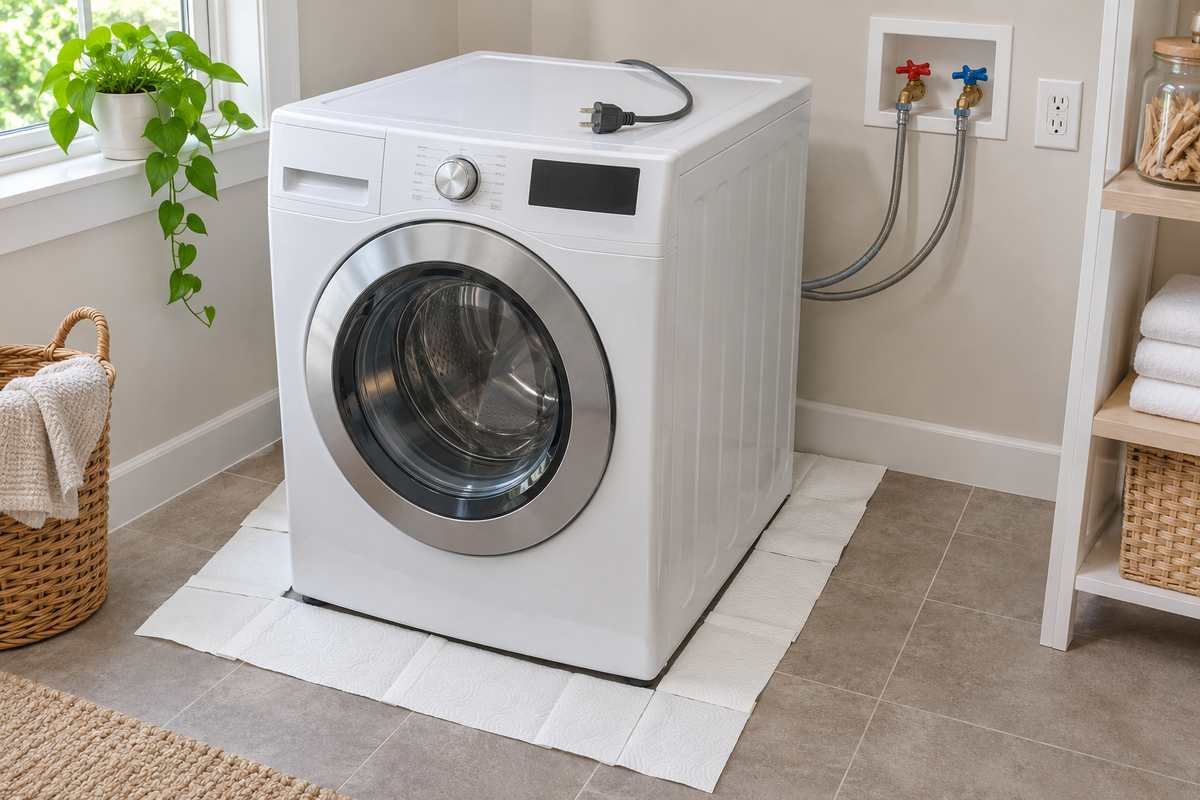
Now run the test LG gives for a front-loader: a Rinse & Spin cycle with nothing in the drum. Turn the water back on, start it, and stay with it while you watch all four sides of the floor.
No leak? LG says the problem likely isn’t the washer. You’ll use the same empty cycle again after each fix, as Samsung suggests.
Note when the water appears. The timing narrows it down before you’ve looked at a single part:
- While it fills. The fill hoses, the faucet connections or the dispenser drawer. Whirlpool says a clogged drawer blocks the water flowing through it and makes it leak.
- While it drains. The drain hose, a standpipe or sink that backs up, or a front-loader’s pump filter that wasn’t closed properly.
- While it spins. See washing machine leak only during the spin cycle.
No water during the test, but you still find a puddle later? Check the plumbing around the washer. Whirlpool’s list includes the laundry tub, faucets, drainpipe, water heater and water pipes. If the water shows up in a basement with the washer off, the page on a washer leaking into the basement walks through ruling out the house.
Washing machine leaking from bottom: match the spot to the cause
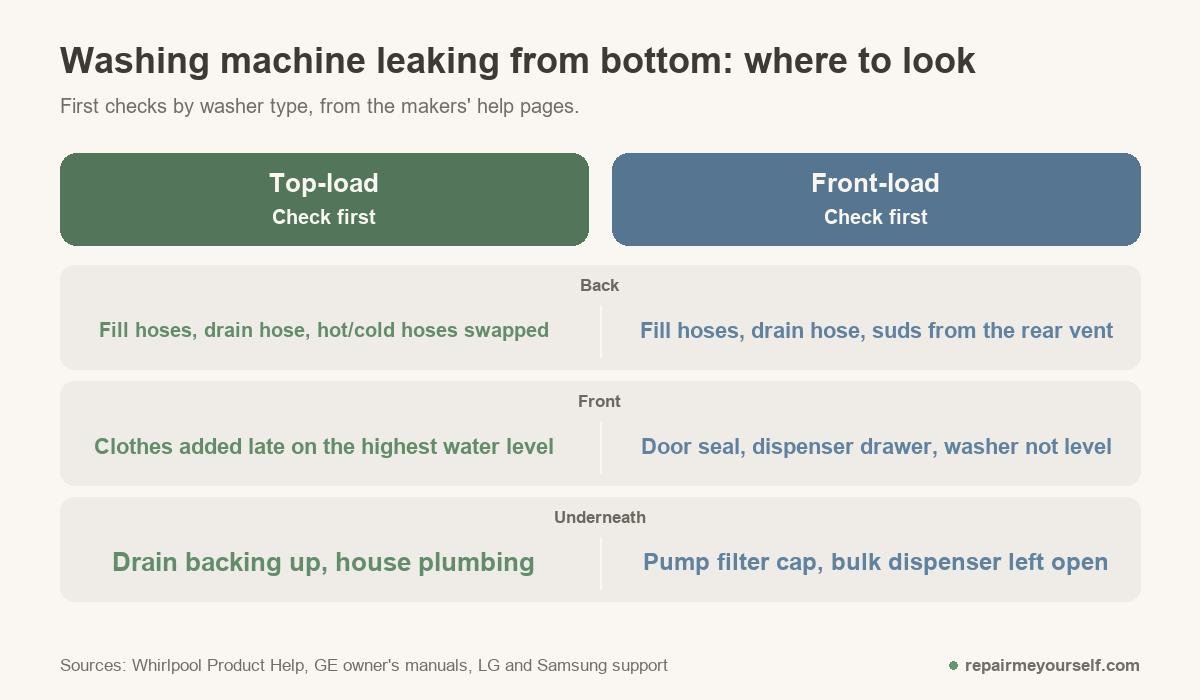
Where the water starts tells you which checks come first. Here’s how the makers’ own help pages split it:
- Back of the washer. Inlet hose fittings and their rubber washers, a cracked inlet valve, a loose drain hose, or a drain backing up. Whirlpool says too many suds can also leak out of a front-loader’s rear vent.
- Back left corner (front-load GE). GE’s troubleshooting chart says to check here: if this area is wet, the washer is oversudsing. Use less detergent.
- Front, near the door. A dirty or torn door seal, clothing caught in the seal, a clogged or open dispenser drawer, or an overloaded drum.
- Front lower corner (front-load). The pump filter access. LG says water can leak to the bottom if the drain pump filter and drain hose aren’t closed properly after cleaning.
- Underneath, with every hose dry. Something inside the cabinet: an internal hose, the pump or the tub seal.
Hoses and fittings at the back
Start at the fill hoses. Whirlpool says both ends of each inlet hose need a hose washer, the rubber ring inside the coupling.
Unscrew one and look if you’re not sure it’s there. Then check that each connection is tight and not cross-threaded, and that the inlet valve on the back of your washer isn’t cracked.
Tighten carefully. GE’s top-load instructions say hand-tight, then 1/4 to 1/2 turn more with pliers. Whirlpool says not to over-tighten.
Then look at the hoses themselves. GE says to check them for leaks, wear, cuts, corrosion and bulges, and to replace them right away if you see any.
Don’t wait for a burst, either. GE also says to replace all fill hoses every 5 years of use, even when they look fine.
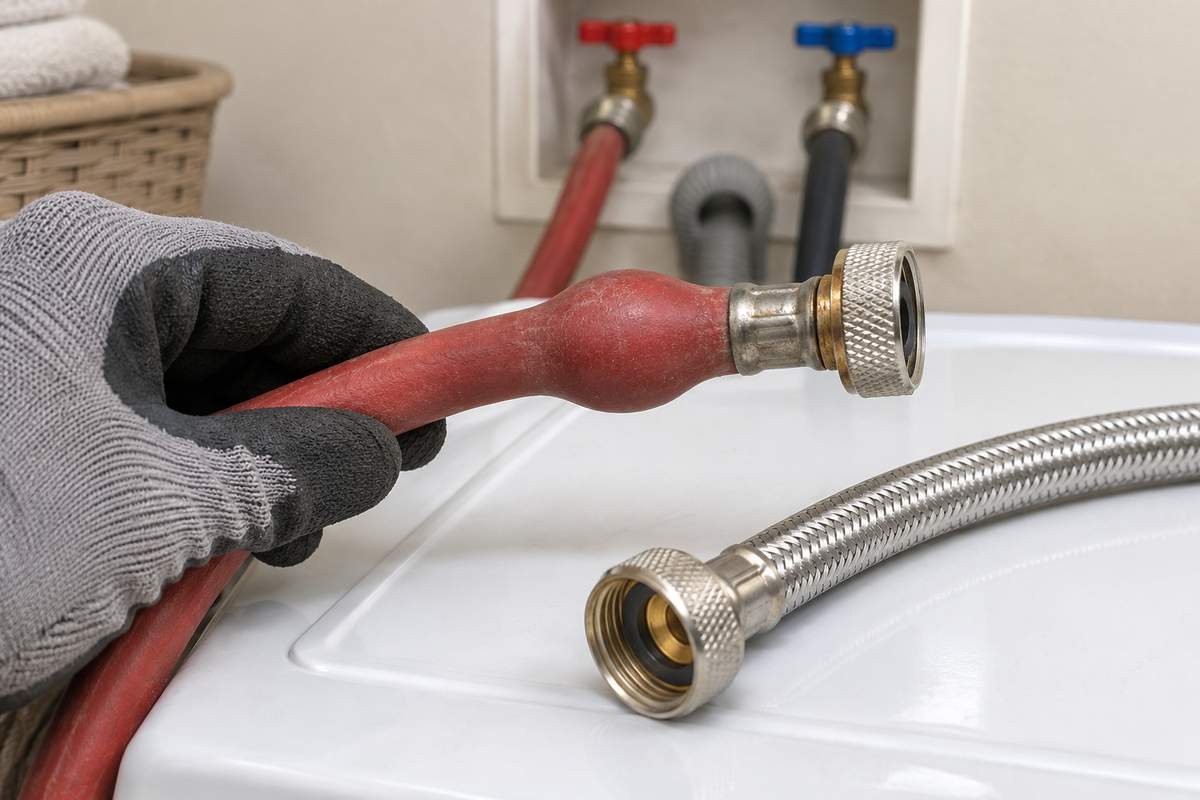
A bulge is the one to act on fast. On a Reddit thread about a Maytag top-loader whose red rubber hot hose bulged and leaked behind the unit, the top reply was blunt:
“They’re not immune to leaking/damage, but they are far safer than those rubber hoses–even new rubber hoses, let alone those old things.” u/JerseyWiseguy on Reddit, on braided stainless steel hoses
One more check on a top-loader. Whirlpool says hot and cold hoses on the wrong ports can cause leaking or condensation behind the washer. The ports are marked.
The drain hose and the house drain
A drain that can’t keep up looks exactly like a washer leak. Whirlpool’s leaking underneath page says your sink or drainpipe must carry away at least 17 gallons (64 L) of water per minute.
A clogged or slow one backs up onto the floor, and you’ll blame the washer for it.
Check the hose where it enters the standpipe:
- Depth. Samsung’s leak guide says the hose should go at least 6 inches and no more than 8 inches into the drainpipe, held with a zip tie. Other brands give their own number, so check your manual.
- Not sealed. Whirlpool says the hose should be secure but not sealed in the drainpipe. Samsung says not to make an airtight connection.
- Height. Samsung gives 18 to 96 inches for a standpipe.
- Wear. GE says a drain hose rubbing on the wall can wear through. Look for kinks, cracks and a loose clamp.
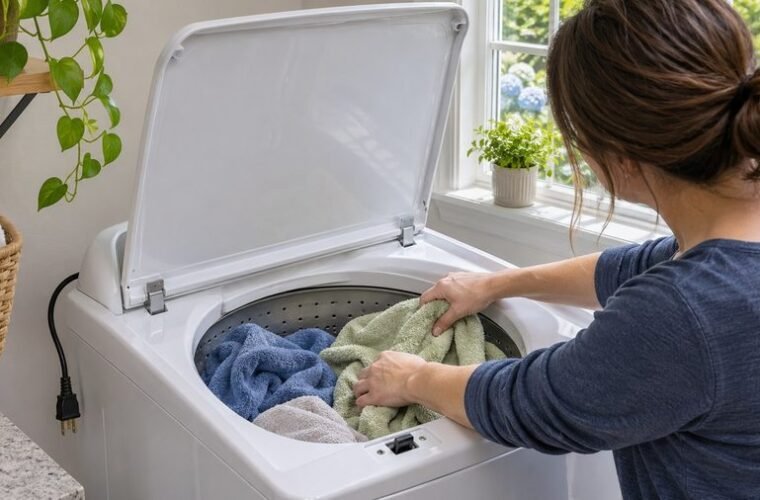
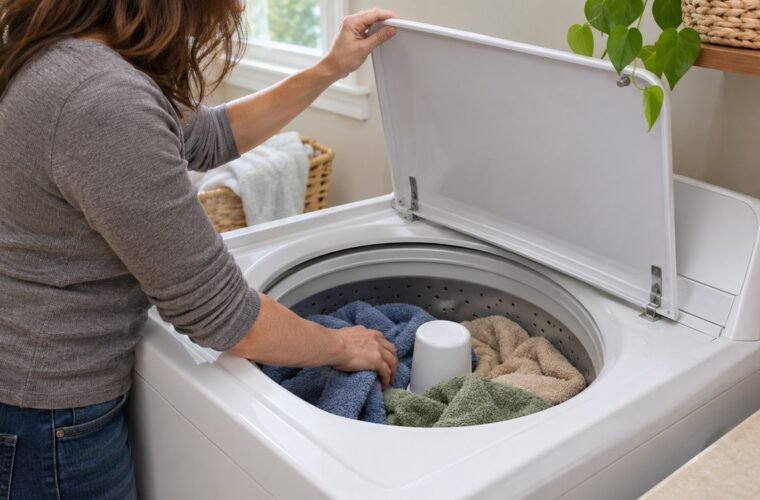
On a top-loader, check how you load it too. Whirlpool says adding clothes after the cycle starts on the highest water level can raise the water over the inner tub and onto the floor underneath.
So once it’s running, add no more than 1 or 2 small items. If you see water spilling over the top, see why is my washer overflowing.
Suds, detergent and the dispenser
Too many suds will find a way out. Whirlpool says non-HE detergent, or more than the recommended amount, makes excess suds that can leak from the washer.
Use HE detergent only. GE says you should use less of it with soft water or a small load.
Two less obvious causes come from Whirlpool’s front-load pages:
- “No splash” or “easy pour” bleach. It contains a thickener that can make extra suds. Switch to regular liquid bleach.
- Pods in the drawer. Put a laundry pod in the basket before the clothes, never in the dispenser drawer.
Then check the drawer itself. Whirlpool says it must be completely closed, because water flushes through it. A clogged drawer blocks that water and makes it leak, so pull it out and clean it.
GE’s chart names powder: it can clog the dispenser and push water out the front. If your washer is new, GE says to check the inside of the dispenser box for a crack.
Some Whirlpool front-loaders have a bulk dispenser at the base of the washer. Make sure it’s closed all the way.
Front-load washers: the door seal and the pump filter
First, a drip you can ignore. GE says water may drip from the door when you open it, and that’s normal. Samsung says it only counts as a leak if water drips while the door is closed.
For a real leak at the door, clean the seal. Whirlpool says dirt or deposits on the rubber seal or the door glass can stop it sealing.
Whirlpool says lint, dirt and even small items like coins can get trapped in the gasket. Pull the seal back, remove what you find and keep its drain holes clear. A seal with cracks or tears needs replacing.
Check whether your washer is level as well. Whirlpool lists an uneven washer as a cause of front leaks. The page on a washing machine shaking violently covers adjusting the feet.
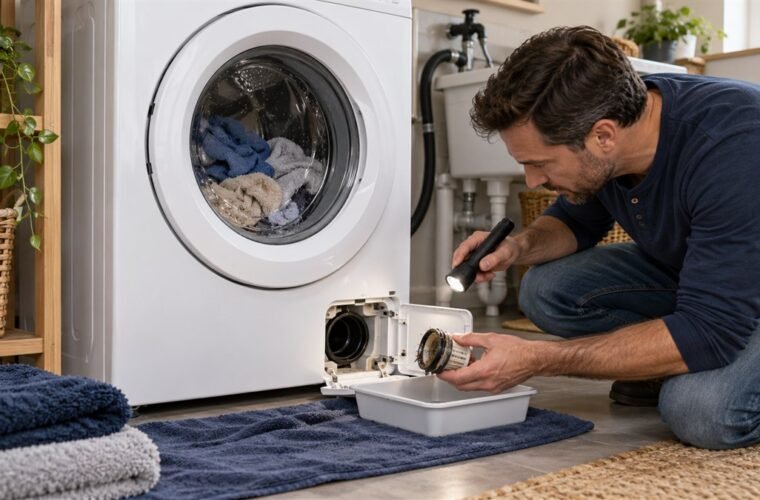
Then the pump filter, behind the small access panel at the bottom front. Samsung says to clean it at least once a month or every 40 washes, whichever comes first.
Drain the water into a pan before you twist the filter out, with a towel under it. When you’re done, seat the filter and the drain hose cap all the way, because LG says a filter that isn’t closed properly will leak to the bottom of the washer.
A clogged filter can cause a leak too. An owner of an 11-year-old LG front-loader posted on Reddit about water pooling at the front left corner, right where the filter sits. What came out of it: “A clothing tag was the main thing, and some hair.”
When the water comes from inside the cabinet
If the hoses, drain, suds, door and filter all check out, the water is coming from a part inside. On a Reddit thread about a Maytag top-loader dripping onto the floor, with black oily lint underneath, one reply narrowed it down:
“If you don’t see any drips from hoses or clamps then you have a tub or shaft seal leak” u/ResourceDiligent6566 on Reddit
Not every inside leak is that serious. Fred’s Appliance Academy, which trains appliance technicians, points first to the tub-to-pump hose, the internal drain hose and the drain pump. It says pins or paperclips that get past the filters can damage those hoses and the pump, and a pump can also crack or work a connection loose.
On a Frigidaire front-loader, an owner opened the bottom cover and photographed where the water came from. A reply identified the hose that runs from the tub to the pump, held with worm clamps, and called it an easy fix.
Before you open the cabinet, find the tech sheet. I always pull it first, before I touch a part.
It’s taped behind the kick plate, inside the console or on the back panel, and it shows how your model comes apart. Unplug the washer and shut off the water before you take a single screw out.
With the access panel off, look over the pump and its hoses for cracks and loose clamps. Then turn the pump impeller by hand. Fred’s says it should turn freely, and broken plastic in the pump housing means the pump needs replacing. A loose connection you can just tighten.
Waiting on a tech? Whirlpool says to keep the water valve turned off while the washer isn’t in use. GE gives the same advice for any washer when it’s not running, so a burst hose can’t flood the floor.
If you’re weighing a tub seal against a new machine, how long do washing machines last helps with that call.
Stop and call a pro if: the leak comes from the tub or the shaft seal. Fred’s says a tub seal repair often means taking most of the washer apart. LG also notes that a leak caused by your plumbing, not the washer, isn’t covered as warranty service.
Washer leaking from the bottom: questions
Why does my washer leak only when it drains?
Look at the drain path. A slow standpipe or sink backs up while the pump pushes water out, and Whirlpool says the drain has to carry at least 17 gallons a minute. On a front-loader, also check that the pump filter and its cap are seated.
Is water dripping from the door normal?
Yes, a little, when you open a front-loader’s door. GE calls that normal operation. Water dripping while the door is closed is a leak, and the seal is the first place to look.
Can I keep using a washer that leaks underneath?
Not until you know the source. Run the empty Rinse & Spin test and watch it. Between loads, keep the faucets off as Whirlpool and GE advise.
Dry floor, water on, empty cycle, eyes on the puddle. Work in that order and you won’t buy a part you didn’t need. For other washer faults, start at the washing machine troubleshooting guide.