A washing machine that shakes violently is hard to ignore. At its worst, it sounds like a freight train, walks across the floor, and rattles every item on the shelf above it. At its mildest, it is an annoying thud that gradually gets worse with each passing week.
Either way, violent shaking is never something to leave alone. Beyond the noise, it stresses the drum, suspension, bearings, hoses, and flooring beneath the machine. Catching the cause early saves you from a much bigger repair bill later.
The good news is that most causes are surprisingly simple to fix. Let’s go through each one.
Safety First
Before you troubleshoot anything, if your machine is shaking violently mid-cycle, stop the cycle and unplug the machine from the wall. Do not just press pause. A washer vibrating out of control can yank hoses loose, damage flooring, and stress the power cord enough to create an electrical hazard. Unplug first, then diagnose.
Washing Machine Violently Shaking Pattern Quick Reference
| When the Shaking Happens | Most Likely Cause |
|---|---|
| Only during spin cycle, not wash | Unbalanced load or worn shock absorbers |
| Every single cycle regardless of load | Machine not level or transport bolts still installed |
| Gets worse as spin speed increases | Worn drum bearings or suspension rods |
| Machine walks across the floor | Unlevel feet or missing anti-vibration pads |
| Shaking plus burning smell | Drive belt slipping or motor issue |
| New machine shaking from day one | Transport bolts not removed |
What Causes Violent Shaking in a Washing Machine?
More often than not, a washing machine shakes violently due to one of these 8 reasons:
1. The Load Is Unbalanced
This is the number one cause of violent shaking, and it costs nothing to fix.
When heavy items like comforters, jeans, or towels clump together on one side of the drum, the load becomes lopsided. As the drum accelerates toward full spin speed, that uneven weight swings harder and harder against the cabinet walls with every revolution. At 1000 RPM or more, even a small imbalance becomes a violent shake.
How to Fix an Unbalanced Load
Stop the cycle immediately and open the lid or door. Pull the clothes apart by hand and spread them evenly around the drum. Mix heavy items with lighter ones rather than washing them separately.
If you regularly wash a single large item like a duvet or a rug, always add two or three towels to balance the weight. That one habit eliminates the majority of violent shaking complaints entirely.
2. The Machine Is Not Level
An unlevel washer rocks during the spin cycle. As spin speed increases, that rocking amplifies rapidly into full violent shaking, and the machine may start walking across the floor.
Normal vibration gradually loosens the locking nuts on the leveling feet over time, which means a machine that was perfectly level at installation can drift out of level over months of use.
How to Level Your Washing Machine
Place a spirit level on top of the machine and check it side to side and front to back. Adjust the leveling feet by hand or with a wrench until the bubble sits dead center. Then tighten the locking nut above each foot firmly to hold the position against vibration.
Also, place Anti-Vibration Washing Machine Pads (View on Amazon) under all four feet after leveling. These thick rubber pads grip the floor and absorb vibration at the source, preventing the machine from walking and dramatically reducing noise transfer to the floor and walls. They are particularly effective on hardwood and tile floors where vibration travels easily.
3. The Transport Bolts Were Never Removed
This one catches many first-time washer owners completely off guard, and it causes some of the most extreme shaking you will ever see from a washing machine.
Transport bolts are thick metal bolts installed at the factory to lock the drum in place during shipping. They prevent the drum from moving while the machine is in transit. If they are not removed before the first use, the drum has no freedom of movement and fights violently against the bolts with every spin cycle. Left in long enough, they can crack the drum mounting and damage the concrete counterweight inside the machine.
How to Find and Remove Transport Bolts
Check the back of the machine for three to five large bolts, usually covered with plastic caps. Your user manual will show their exact location and the correct tool for removal, typically a wrench.
Remove every bolt and keep them in a labeled bag in case you ever need to move the machine again. If your machine has been shaking violently since day one of installation, this is almost certainly the cause.
4. The Shock Absorbers Have Weakened (Front-Loaders)
Shock absorbers on front-loading washers connect the outer tub to the base frame. Their job is to dampen drum movement during the spin cycle and prevent the tub from slamming into the cabinet.
When they weaken or fail, the drum loses its cushioning and crashes against the cabinet frame at high speed, producing intense shaking and loud banging that gets progressively worse.
How to Test and Replace Shock Absorbers
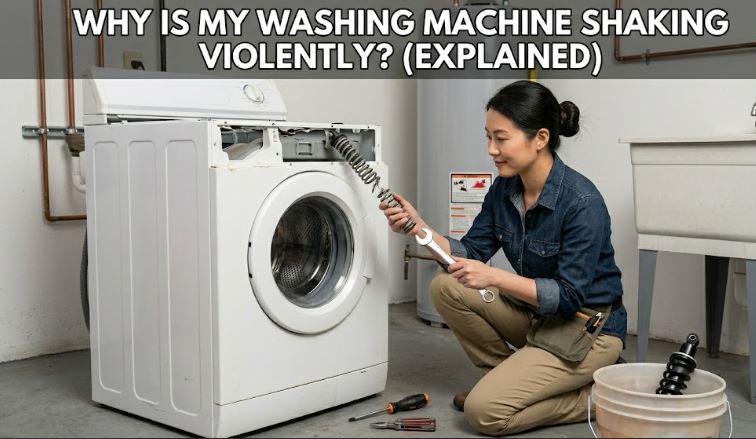
Unplug the machine and open the front or rear panel depending on your model. Locate the shock absorbers connecting the tub to the frame. Check for fluid leaks, broken attachment points, or visibly collapsed dampening rods.
Also push down on the drum and release it. A healthy shock absorber lets the drum push in and return slowly with firm resistance. If it springs back immediately or bounces multiple times, the absorbers are gone and needs a replacement (View on Amazon).
5. The Suspension Rods Are Worn (Top-Loaders)
Top-loading washers use suspension rods instead of shock absorbers. These rods hang the outer tub from the four corners of the machine frame and absorb movement during agitation and spin.
When a rod wears out, stretches, or loses its damping material, one corner of the tub drops lower than the others. The drum then spins at an angle, creating violent shaking that often gets dramatically worse at higher spin speeds.
How to Inspect and Replace Suspension Rods
Open the cabinet by removing the top panel or front panel depending on your model. Locate the four suspension rods at each corner of the outer tub. Check each one for visible wear, loose attachment points, or a rod that simply feels softer than the others when you push and release the tub.
Replace all four rods at the same time rather than just the damaged one, and you can check out replacement suspension rods on Amazon.
For more detail on suspension-related shaking, our post on washer making a loud banging noise during the spin cycle covers this alongside other mechanical causes.
6. The Drum Bearings Are Failing
Worn drum bearings cause a deep rumbling vibration that intensifies with spin speed. In severe cases, the whole machine shakes as the drum wobbles on a worn shaft rather than spinning cleanly on its axis.
This is one of the more serious causes of violent shaking because bearing failure, if ignored, eventually damages the drum shaft, the outer tub, and the seal around the bearing housing.
How to Diagnose Worn Bearings
Open the door and spin the drum slowly by hand. A grinding, gravelly sensation while hand-spinning confirms worn bearings even at low speed. Also look for rust-colored streaks on the back wall of the drum interior, which appear when a worn bearing seal allows water and bearing grease to mix and seep through.
Bearing replacement is a more involved repair and on machines over ten years old it is worth comparing the repair cost against the machine’s remaining lifespan.
7. The Floor Surface Is Uneven or Too Smooth
Sometimes the machine itself is perfectly fine. The problem is what it is sitting on.
An uneven floor creates the same rocking effect as unlevel feet, and a very smooth floor like polished tile or hardwood gives the machine nothing to grip, allowing it to slide and vibrate freely during the spin cycle.
How to Address a Flooring Issue
First, check whether the floor itself is level using a spirit level placed on the floor where the machine sits. If the floor is uneven, use adjustable furniture shims under the feet to compensate for the dip.
For smooth floors, the anti-vibration pads mentioned in the leveling section above are doubly effective here. They grip smooth surfaces far better than bare rubber machine feet and keep the machine anchored in place through even aggressive spin cycles.
8. The Machine Is Overloaded
Overloading is different from an unbalanced load, and it causes its own type of violent shaking.
When the drum is packed beyond its rated capacity, the entire load becomes one heavy mass that the drum cannot spin efficiently. The motor strains, the suspension system takes far more stress than it was designed for, and the whole machine shakes as a result. Over time, regular overloading wears out the bearings, shock absorbers, and suspension rods far faster than normal use.
How to Avoid Overloading
Fill the drum loosely to around 75 to 80 percent of its capacity. Clothes should be able to move freely inside the drum rather than being packed tightly. On top-loaders, you should be able to fit your hand flat against the top of the load and still feel space.
If you consistently have large loads, split them into two smaller cycles. It takes more time, but it extends the life of nearly every moving component in the machine significantly.
Shaking Fix Cost and Difficulty Overview
| Cause | DIY Difficulty | Part Cost | Pro Repair Cost |
|---|---|---|---|
| Unbalanced load | Very easy | Free | N/A |
| Unlevel machine | Easy | Free – $20 (pads) | N/A |
| Transport bolts | Easy | Free | N/A |
| Overloading | Easy | Free | N/A |
| Suspension rods | Moderate | $15 – $40 | $150 – $250 |
| Shock absorbers | Moderate | $20 – $50 | $150 – $300 |
| Drum bearings | Advanced | $30 – $80 | $200 – $500 |
Frequently Asked Questions
Is it dangerous to run a washing machine that shakes violently?
Yes, it can be. Violent shaking can yank water hoses loose and cause flooding, stress the power cord, scratch or crack flooring, and accelerate wear on internal components. Stop the cycle, unplug the machine, and diagnose the cause before running it again.
Why does my front-loader shake more than my old top-loader did?
Front-loaders spin at significantly higher RPM than traditional top-loaders, which means any imbalance gets amplified more intensely. They also rely heavily on shock absorbers that wear out over time. Proper leveling and anti-vibration pads are especially important for front-loaders.
Can violent shaking damage my floors permanently?
It can, particularly on hardwood and laminate floors. A heavy machine vibrating repeatedly in the same spot can cause dents, scratches, and loosened flooring panels over time. Anti-vibration pads prevent this by absorbing the energy before it transfers to the floor.
My machine started shaking after I moved it. What should I do?
Start by releveling it since moving almost always shifts the feet out of position. Also check the transport bolts were not accidentally reinstalled during the move. Then inspect the hose connections at the back to make sure nothing came loose in transit.
How do I know if it’s the suspension or the bearings causing the shaking?
Suspension issues tend to cause shaking that is worst at the start of the spin cycle and improves somewhat at full speed. Bearing problems cause shaking that gets progressively worse as spin speed increases and often comes with a grinding sound. Hand-spinning the drum by feel is the quickest way to confirm bearing wear.
Stop the Shake Before It Becomes a Bigger Problem
A washing machine shaking violently is the machine telling you something is wrong. Start with the free checks: balance the load, level the machine, and confirm the transport bolts are out. Those steps alone resolve the majority of violent shaking complaints without any tools or parts.
If the shaking continues after those checks, work through the suspension, shock absorber, and bearing diagnostics above. Our posts on washer making loud banging noise during spin cycle and washer stops mid-cycle cover related symptoms, and our full washing machine troubleshooting guide is your complete resource for diagnosing anything beyond what is covered here.

Hi, I’m Barlgan! I created Repair Me Yourself to empower homeowners to tackle appliance repairs with confidence. From decoding error codes to fixing cooling issues, I break down complex repairs into simple, actionable steps that save you time and money.