
Your washing machine is one of the hardest-working appliances in your home. So when it acts up, the frustration is real. Whether your washer suddenly stops mid-cycle or shakes like it is about to walk out the door, most problems have fixable causes you can handle yourself.
This washing machine troubleshooting guide covers the most common washer problems, what causes each one, and exactly how to fix them. I have diagnosed and repaired hundreds of washers over the years, and the issues below account for the vast majority of service calls.
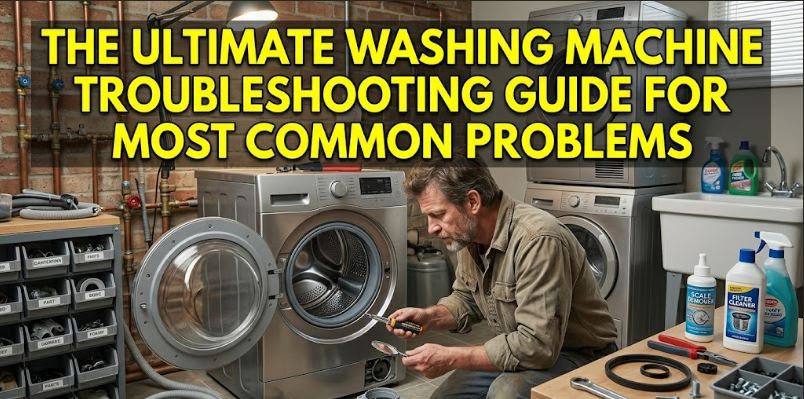
Quick Washing Machine Troubleshooting Guide
| Problem | Most Common Cause | Quick Fix |
|---|---|---|
| Washer won’t start | Door latch or control board | Check and replace door latch |
| Stops mid-cycle | Overheating or lid switch | Replace lid switch, reduce load |
| Stuck on sensing | Suspension rods or water inlet | Replace suspension rods |
| Not draining but spinning | Clogged pump filter | Clean the pump filter |
| Water left in drum | Drain hose height or pump | Adjust hose height |
| Draining slowly | Partial clog in drain hose | Clean filter, straighten hose |
| Shaking violently | Unbalanced load or worn shocks | Level machine, replace shocks |
| Squeaking when spinning | Worn drum bearing or belt | Replace drum bearing |
| Clothes not spun dry | Worn clutch or unbalanced load | Replace motor coupler |
| Door won’t unlock | Control board or door lock | Power cycle, replace door lock |
| Agitator not moving | Agitator dogs or drive belt | Replace agitator dogs |
11 Common Washing Machine Problems for Troubleshooting
Below are eleven of the most typical washing machine troubleshooting problems you are likely to face and fix as a homeowner:
1. Washer Won’t Start But Has Power
If your washer won’t start but has power, the good news is that the fix is usually simple. Power-related issues are almost never the machine dying completely. Most of the time, a single component is blocking the startup sequence.
| Cause | Sign | Fix |
|---|---|---|
| Door latch failure | Door feels loose or clicks oddly | Replace door latch |
| Blown thermal fuse | No response at all | Test and replace fuse |
| Faulty control board | Random button behavior | Replace control board |
| Child lock activated | Lock icon on display | Hold button combo to disable |
Faulty Door Latch or Lock Assembly
The washer will not start if it cannot confirm the door is securely closed. A worn latch is the number one reason for this symptom. You can usually hear the difference because a working latch clicks firmly, while a bad one feels soft or misses entirely.
Recommended Fix
Inspect the latch for cracks or a broken hook. Use a multimeter to test for continuity. Replace it if the reading is open.
Blown Thermal Fuse
When the motor overheats, the thermal fuse trips to protect the machine. Once blown, the washer gets zero power to start even though the outlet is live. This happens most often after a long heavy cycle or in a hot laundry room.
Recommended Fix
Locate the fuse near the exhaust duct or control panel. Test it with a multimeter. If there is no continuity, replace it. It is a cheap part and a quick swap.
Tripped Circuit Breaker
Sometimes the fix is embarrassingly simple. A tripped breaker or a half-pulled plug will leave the display lit but the motor dead. Always check the breaker box first before opening the machine.
Recommended Fix
Reset the breaker and ensure the outlet delivers full voltage with a voltage tester. If the breaker trips again immediately, call an electrician.
2. Washing Machine Stops Mid Cycle
Few things are as annoying as pulling out soaking wet clothes because your washing machine stops mid cycle. This problem often points to the machine protecting itself from a real issue rather than a random glitch.
| Cause | Sign | Fix |
|---|---|---|
| Lid switch failure | Stops when lid closes | Replace lid switch |
| Overloaded drum | Happens with heavy loads | Reduce load size |
| Motor overheating | Stops then restarts after rest | Check ventilation |
| Control board fault | Stops at random points | Reset or replace board |
Failed Lid Switch (Top Loaders)
On top-loading washers, the lid switch tells the machine it is safe to run. When the switch wears out, it sends an intermittent or absent signal, and the washer interprets that as the lid being open. The machine then shuts off as a safety measure.
Recommended Fix
Press the lid switch tab manually while the washer runs. If it stops without that pressure, the switch has failed. Replace it.
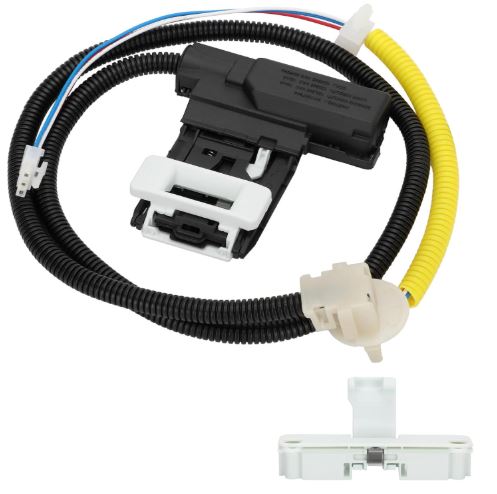
The W11307244 W10682535 Washer Lid Lock Switch (View on Amazon) is a reliable replacement for most Maytag, Whirlpool, Kenmore, and Amana washers.
Motor Overheating
The motor has a built-in thermal overload protector. If the machine runs too long, gets too hot, or works too hard, the protector shuts it down. It usually restarts after 30 minutes of rest.
Recommended Fix
Avoid back-to-back cycles with heavy loads. Ensure the machine has at least six inches of clearance on all sides for ventilation.
3. Washer Stuck on Sensing Mode
A washer stuck in sensing mode is one of the more confusing problems to diagnose because the machine appears to be working. The sensing phase is supposed to last under two minutes. If it drags on for ten minutes or more, something is blocking the machine from moving forward.
| Cause | Sign | Fix |
|---|---|---|
| Worn suspension rods | Drum wobbles during sensing | Replace suspension rods |
| Water inlet valve fault | No water enters drum | Test and replace valve |
| Control board glitch | Random sensing loops | Power cycle or replace board |
| Lid switch issue | Starts sensing then stops | Replace lid switch |
Worn Suspension Rods or Shock Absorbers
The washer uses its sensing phase to detect load size and balance. If the suspension rods are worn, the drum moves erratically, and the sensor never gets a stable reading. So the machine keeps sensing in a continuous loop.
Recommended Fix
Open the cabinet and grab each suspension rod. A healthy rod has firm resistance. A bad one feels loose or bouncy. Replace them in sets, not individually.
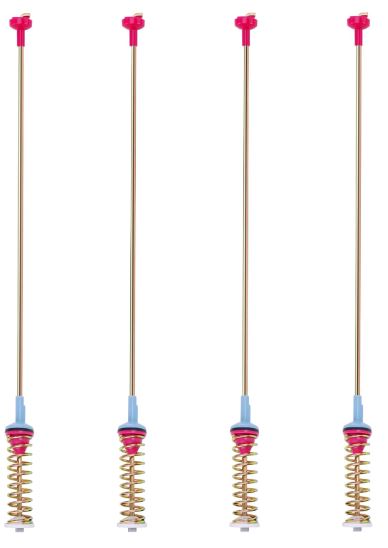
The Beaquicy Suspension Rod Kit (View on Amazon) comes in a four-pack and fits a wide range of Samsung washing machines, making it a cost-effective way to restore proper drum stability in one go.
Faulty Water Inlet Valve
If the washer senses a load but no water flows in, it loops back to sensing because it cannot proceed to fill. You will usually notice this when the drum sits dry well into what should be the fill phase.
Recommended Fix
Check water supply hoses for kinks first. Then test the inlet valve solenoids with a multimeter for continuity. Replace the valve if either solenoid reads open.
4. Washer Not Draining But Spinning
When your washer is not draining but still spinning, the two systems are more separate than you might think. The spin and drain functions share components on some machines but operate independently on others, which is why one can fail while the other keeps working fine.
| Cause | Sign | Fix |
|---|---|---|
| Clogged pump filter | Slow or no drainage | Clean the filter |
| Worn pump impeller | Humming during drain | Replace drain pump |
| Kinked drain hose | Water backs up | Straighten or replace hose |
| Foreign object in pump | Grinding sound | Remove object from pump |
Clogged Pump Filter
This is the most common cause by far. Lint, coins, hair ties, and small socks collect in the filter over time until water cannot pass through. Many people never clean this filter because they do not know it exists.
Recommended Fix
Locate the filter behind the front lower panel. Place a towel and a shallow pan underneath, then slowly unscrew the cap. Clear out all the debris and rinse the filter under warm water. Do this every three to six months going forward.
Faulty Drain Pump
If the filter is clean and water still will not drain, the pump itself may have a worn impeller or a seized motor. You will often hear a humming sound as the motor tries to run but cannot move water through.
Recommended Fix
Test the pump motor with a multimeter. Replace the pump assembly if it shows no continuity or makes a grinding sound during the drain cycle.
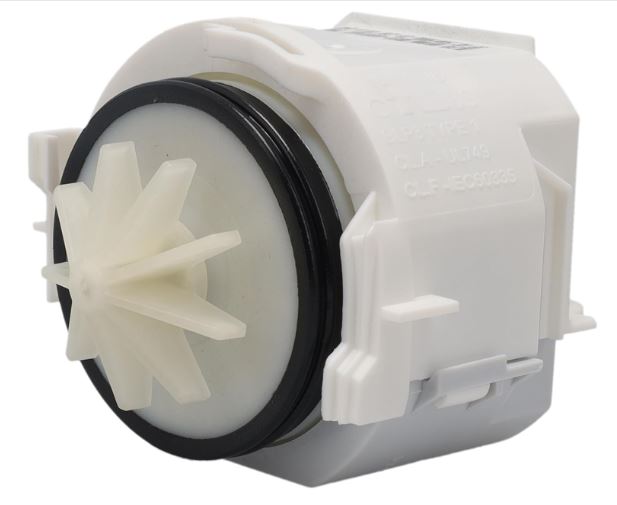
The Supplying Demand Drain Pump (View on Amazon) is a direct replacement for many models and comes with the mounting hardware needed for a clean installation.
5. Washer Leaves Water in Drum
If your washer leaves water in the drum after a full cycle, the drain system started but did not finish its job. Unlike a machine that will not drain at all, this problem often points to something interrupting the process partway through.
| Cause | Sign | Fix |
|---|---|---|
| Drain hose too high or low | Water siphons back in | Adjust hose to correct height |
| Partially clogged pump | Drain starts then stops | Clean pump and filter |
| Pressure switch fault | Machine thinks drum is empty | Test and replace switch |
Improper Drain Hose Installation
The drain hose must sit between 30 and 96 inches above the floor. If it sits too low, water siphons back into the drum after draining. If it sits too high, the pump cannot push water up and out against gravity.
Recommended Fix
Check your model’s manual for the correct hose height. Secure the hose at the correct position using a hose guide or a proper standpipe. This fix costs nothing if the hose itself is still in good shape.
Faulty Pressure Switch
The pressure switch monitors water level inside the drum. When it malfunctions, it can falsely signal that the drum is empty and end the drain cycle early, leaving several inches of water sitting in the tub.
Recommended Fix
Disconnect the small rubber tube running from the drum to the switch and blow through it gently. If it does not click, the switch is stuck. Replace it.
6. Washer Draining Slowly
Slow drainage often comes before complete drain failure, so catching this early saves you from a bigger repair down the road. Slow draining forces the machine to run longer cycles and leaves clothes far wetter than they should be at the end.
| Cause | Sign | Fix |
|---|---|---|
| Partially blocked filter | Gurgling sounds during drain | Clean filter |
| Kinked drain hose | Water drains in pulses | Straighten hose |
| Slow household drain | Backup into standpipe | Snake the household drain |
Partially Clogged Filter or Drain Hose
Even a partial clog slows water flow considerably. The machine may eventually drain, but it takes two to three times longer than normal. Over time, this extra strain accelerates wear on the pump motor.
Recommended Fix
Start with the filter. If that is clear, detach the drain hose and flush it with a garden hose at full pressure. Replace the hose if it collapses or kinks when bent at a normal angle.
Slow Household Drain
Sometimes the washer drains fine on its own but the standpipe or household drain cannot keep up with the flow. Water then backs up into the standpipe and slows the whole process down noticeably.
Recommended Fix
Pour a bucket of water directly into the standpipe and watch how fast it drains. If it is slow, snake the line or call a plumber. The problem is in your plumbing, not your washer.
7. Washing Machine Shaking Violently
A washing machine shaking violently during spin is hard to ignore. It sounds like the machine is about to launch itself across the laundry room floor. Fortunately, most cases come down to one of a handful of straightforward causes.
| Cause | Sign | Fix |
|---|---|---|
| Unbalanced load | Only happens with specific loads | Redistribute clothes evenly |
| Unlevel machine | Shakes in all cycles | Adjust leveling feet |
| Worn shock absorbers | Banging on cabinet sides | Replace shocks |
| Loose shipping bolt | Happened right after install | Remove shipping bolts |
Unlevel Machine or Worn Shock Absorbers
An unlevel washer rocks constantly during spin. Even a few millimeters of imbalance magnifies dramatically at high RPM. Worn shocks then allow the drum to swing too far and slam into the cabinet walls, which explains the banging you hear.
Recommended Fix
Place a bubble level on top of the machine. Adjust all four feet until the machine sits completely flat on the floor. Then test the shock absorbers by pushing down firmly on the drum. If it bounces more than once, replace them.
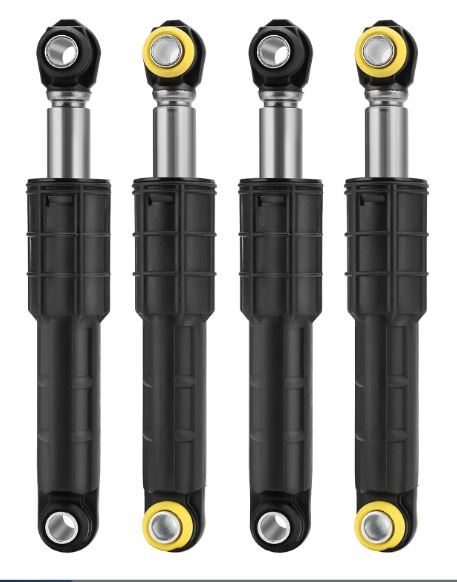
The DC66-00470A & DC66-00470B Washer Shock Absorber Set (View on Amazon) fits a wide range of Samsung front-load washers.
8. Washer Squeaking When Spinning
A washer that squeaks during spin is telling you something metal is making contact with something it should not be touching. The sound gets worse over time, and if you ignore it long enough, it usually leads to a more expensive repair.
| Cause | Sign | Fix |
|---|---|---|
| Worn drum bearing | Grinding squeal at high speed | Replace bearing |
| Worn drive belt | Squealing at start of spin | Replace belt |
| Drum spider failure | Rumbling with vibration | Replace spider assembly |
Worn Drum Bearing
The drum bearing supports the rear of the drum as it spins. Once the grease wears out or the bearing corrodes from water exposure, the metal surfaces grind against each other. You will hear it most clearly during the high-speed spin phase at the end of the cycle.
Recommended Fix
Grab the drum and try rocking it side to side. More than a few millimeters of play confirms a worn bearing. This is a moderate repair that requires disassembling the rear of the machine, but the part itself is inexpensive.
The Whole Parts Washer Bearing Kit (View on Amazon) works with most models and thus a fantastic choice for replacing worn drum bearings. .
Worn Drive Belt
On belt-driven machines, a stretched or cracked belt will squeal at the start of the spin cycle before the drum gets up to speed. The sound usually fades once the belt warms up, which makes this problem easy to miss at first.
Recommended Fix
Remove the back panel and inspect the belt visually. Look for glazing, cracks, or fraying along the edges. A belt that looks shiny instead of matte has worn smooth and needs replacing.
Also Read: Why Your Washing Machine Makes a Loud Banging Noise While Spinning & its Fixes
9. Washer Not Spinning Clothes Dry
When clothes come out dripping rather than just damp, the washer is not reaching full spin speed. This is different from no spin at all because the drum moves but never gets fast enough to extract water properly during the final spin.
A washer not spinning clothes dry could be a result of any of the issues shared below:
| Cause | Sign | Fix |
|---|---|---|
| Worn motor coupler | Spin starts slow and stops | Replace coupler |
| Worn clutch assembly | Slow spin on top loaders | Replace clutch |
| Unbalanced load | Only on heavy loads | Redistribute load |
| Control board error | Error code on display | Check code and reset |
Worn Motor Coupler or Clutch
On direct-drive top-loaders, the motor coupler connects the motor to the transmission. When it wears out, spin speed drops and clothes stay wet because the drum never reaches the RPM needed for effective water extraction. The clutch on older machines performs a similar function during the transition into full spin.
Recommended Fix
Remove the cabinet and inspect the coupler for cracks or rubber wear on the drive forks. Replace it if you see any damage at all. This is one of the cheapest repairs on a washer and takes about 30 minutes with basic tools.
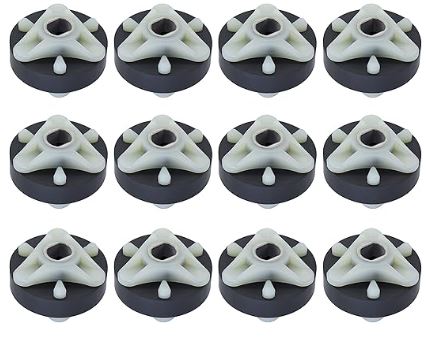
The BlueStars Heavy Duty Direct Drive Motor Coupling Kit (View on Amazon) is compatible with Whirlpool and Kenmore washers.
10. Washer Door Won’t Unlock After Cycle
A washer door that won’t unlock after a cycle is alarming, especially with your clothes trapped inside. Before you reach for a screwdriver, wait two to three full minutes after the cycle ends. Modern machines have a built-in unlock delay, and simply waiting resolves this more often than most people expect.
| Cause | Sign | Fix |
|---|---|---|
| Normal time delay | Unlocks after 2-3 minutes | Wait it out |
| Water remaining in drum | Sensor detects water | Run a drain-only cycle |
| Faulty door lock | Won’t unlock even when empty | Replace door lock |
| Control board glitch | Stuck after power outage | Power cycle the machine |
Residual Water or Faulty Door Lock Solenoid
The machine locks the door whenever its sensor detects water in the drum. If the water sensor misfires and reports water even when the drum is empty, the door stays locked indefinitely. A failing lock solenoid can also stick in the locked position after the cycle completes.
Recommended Fix
Run a drain-only cycle and listen for the pump engaging. If the door still will not open, cut power to the machine for ten minutes to force a control board reset. If it remains locked after that, replace the door lock assembly.
11. Washer Agitator Not Moving But Motor Runs
When the motor runs but the agitator sits perfectly still, the problem lies somewhere in the mechanical link between them. The motor is doing its job, but something in the power transfer chain has failed or worn through completely.
| Cause | Sign | Fix |
|---|---|---|
| Worn agitator dogs | Agitator slips in one direction | Replace agitator dogs |
| Broken drive belt | Motor hums, no movement | Replace belt |
| Stripped splines | Agitator spins freely | Replace agitator or shaft |
| Worn transmission | Clunking with no movement | Rebuild or replace transmission |
Worn Agitator Dogs (Directional Cogs)
Agitator dogs are the small plastic ratcheting pieces inside the upper agitator body. They allow the agitator to move in one direction and lock in the other, which creates the back-and-forth washing action. When they wear out, the agitator spins freely in both directions and provides zero washing action regardless of how loud the motor runs.
Recommended Fix
Remove the agitator cap by prying it up, then lift out the upper agitator body. You will find four to six small plastic dogs sitting in a cam housing. Replace the entire set at once. This is one of the simplest and most satisfying washer repairs you will ever do.
The Newlifeapp 285746 OR 285811 Agitator Repair Kit (View on Amazon) is ideal for Kenmore, Roper, and Whirlpool washing machines.
Frequently Asked Questions
How do I reset my washing machine when it is acting up?
Unplug the machine from the wall outlet and wait a full two minutes before plugging it back in. This type of washing machine reset clears the control board memory and resolves many error codes, sensing loops, and mid-cycle stop issues without replacing a single part. Always try this before ordering anything.
Why does my washer smell bad even after it drains fully?
Mold and mildew build up in the door gasket, detergent drawer, and drum interior when the machine stays damp between cycles. This could be why your washing machine smells bad after every wash. If so, run a hot maintenance wash with two cups of white vinegar monthly, leave the door open after every load, and wipe down the rubber gasket with a dry cloth to prevent the problem from returning.
Is it worth repairing an older washing machine or better to replace it?
Use the 50 percent rule as your guide. If the repair costs more than half the price of a comparable new machine, replacement usually makes better financial sense in 2026. Parts like agitator dogs, lid switches, and belts are absolutely worth fixing, but a failed transmission or cracked drum on a ten-year-old machine rarely is.
Why does my washer take much longer to complete a cycle than it used to?
Longer cycles almost always point to one of three things: partially clogged inlet screens slowing the fill, a dirty pump filter slowing the drain, or the machine repeatedly sensing and rebalancing an uneven load. Check all three areas systematically and your cycle times should return to normal quickly.
What does it mean when my washing machine displays an error code?
Error codes are the machine’s built-in diagnostic system pointing you directly to the problem area. Common codes like F21 for slow drain, F5E1 for door lock, and UL for unbalanced load tell you exactly where to look. Search the specific code along with your full model number for a precise diagnosis every time.
Can I keep using my washing machine if it has a small leak?
No, and it is not worth the risk. Even a minor leak puts water near electrical components, creates a slip hazard, and causes mold damage to your flooring and subfloor over time. A loose hose clamp or a worn door gasket costs almost nothing to fix, while water damage to a subfloor can run into serious money.
How often should I clean my washing machine to prevent problems?
Run a monthly maintenance cycle on the hottest setting with a washer cleaner tablet or white vinegar. Clean the pump filter every three to six months depending on how heavily you use the machine. These two habits alone prevent the majority of the problems covered in this guide before they ever start.
Your Washer Has More Life Left Than You Think: Here Is How to Get It
Washing machine problems rarely fix themselves, but they also rarely require a professional service call. The issues covered in this guide account for the vast majority of washer failures, and most of them have straightforward solutions you can complete in under an hour with tools you already own. The real key is identifying the correct cause before you spend a single cent on parts.
Start with the simplest checks first, work through the symptom table that matches your problem, and replace only what the diagnosis confirms is actually broken. If you run into a repair that is not covered here or need help identifying the right part for your specific model, visit repairmeyourself.com for model-specific guides and step-by-step repair tutorials. Your washer has years of reliable service left in it, and you now have everything you need to make sure it delivers.

Hi, I’m Barlgan! I created Repair Me Yourself to empower homeowners to tackle appliance repairs with confidence. From decoding error codes to fixing cooling issues, I break down complex repairs into simple, actionable steps that save you time and money.