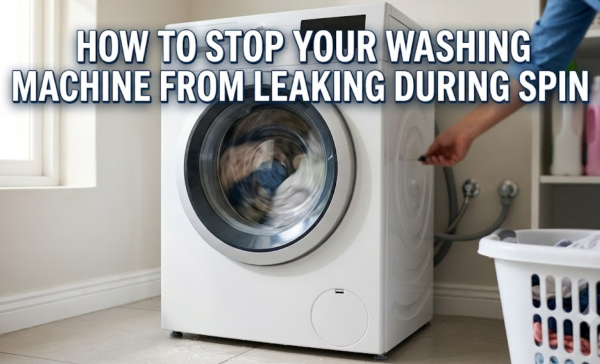
A leak that appears only during the spin cycle, and not during filling or washing, is one of the more puzzling appliance problems homeowners face. If the machine were leaking continuously, the source would be easier to pinpoint. Instead, this type of leak hides itself until the drum reaches high speed, which tells you something important: the fault only reveals itself under pressure.
The spin cycle generates intense centrifugal force as the drum rotates anywhere from 800 to 1,400 RPM. That force stresses hoses, seals, and connections that might hold perfectly fine under normal conditions. Understanding that dynamic is the first step toward finding and fixing the problem.
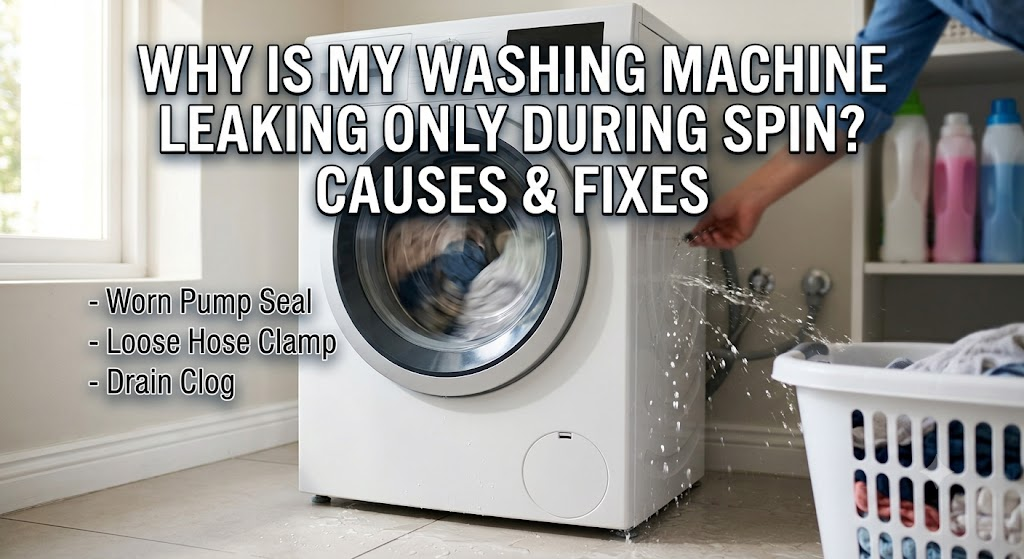
Why the Spin Cycle Triggers Leaks Other Cycles Do Not
The spin cycle is your washing machine’s most mechanically demanding phase. Water evacuation, high-speed drum rotation, and drain pump operation all happen simultaneously. Additionally, internal water pressure spikes as centrifugal force pushes residual water toward the outer walls of the drum and through the drain system.
Any weak point in a hose connection, gasket, or pump seal that holds up during the gentler wash and rinse phases will often give way under these conditions. Furthermore, the machine vibrates most intensely during spin, which can loosen clamps, shift hoses, and stress components that seemed secure at lower speeds. That combination of pressure and vibration makes the spin cycle the most revealing diagnostic moment your washing machine offers.
Common Causes by Washer Type
Not every leak source applies equally to both front-load and top-load washers. Understanding which type you own helps you start with the most likely cause rather than inspecting every component at once.
Front-Load Washers: Most Likely Causes
Front-load machines are the more common source of spin-cycle leaks, and the door boot gasket is almost always the first place to look.
Damaged or Worn Door Boot Gasket
The door boot gasket is the large bellows-shaped rubber seal that runs around the inside of the door opening, creating a watertight barrier between the drum and the door. Centrifugal force during spin pushes water outward and forward, directly toward this seal. Any split, tear, detachment from the frame, or heavy mold buildup on the gasket creates an escape route for that pressurized water.
Run your finger along the entire inner rim of the gasket, checking for tears, cracks, or sections that have pulled away from their mounting surface. Also check for accumulated debris or mold that creates gaps in the seal. If you find damage or separation, replacement is necessary. This is one of the most satisfying DIY repairs on a front-loader: unplug the machine, remove the spring clamp ring securing the gasket, peel the old gasket away, clean the mounting surfaces thoroughly, and install the replacement following the alignment marks.
Loose or Disconnected Drain Hose
The drain hose carries water from the pump to the standpipe or garbage disposal under pressure during the spin and drain phases. Vibration during spin frequently loosens the hose connection at either the pump end or the standpipe end. Pull the machine away from the wall and inspect the full length of the hose for kinks, cracks, or loose clamps. Tighten any loose clamp with a screwdriver and replace the hose if it feels brittle or shows visible cracks.
Blocked or Failing Drain Pump
A partially blocked drain pump struggles to move water fast enough during spin. As a result, water backs up inside the machine and finds the nearest weak point to escape. Remove the lower access panel and inspect the drain pump filter for debris. Clear any food particles, small objects, or lint buildup from the pump impeller. If the pump housing shows cracks or the pump motor hums but fails to drain efficiently, the pump itself has failed and needs replacement.
Top-Load Washers: Most Likely Causes
Top-load machines leak differently from front-loaders because their vertical drum orientation means escaped water tends to pool underneath the machine rather than appear at the door.
Worn Tub Seal or Center Post Gasket
The tub seal sits at the base of the inner drum, where the agitator shaft passes through the outer tub. Over time, this seal deteriorates and allows water to escape around the shaft during spin. A worn tub seal on a top-loader typically produces a leak from directly underneath the machine. Diagnosing this accurately requires removing the back panel and watching where water exits during a spin cycle. Tub seal replacement involves significant disassembly and often justifies a professional repair.
Loose Internal Hoses Between Tub and Pump
Inside a top-loader, two large hoses connect the tub to the pump. Their connection points are common leak sites as rubber loses elasticity and hose clamps loosen over years of vibration. Accessing these requires removing the washer’s back or front panel depending on the model. Once exposed, inspect both hose connections for dampness or visible dripping during a spin cycle and tighten or replace any loose or cracked connections.
Causes Common to Both Washer Types
Some causes apply regardless of whether you own a front-loader or top-loader. These are worth checking before moving on to model-specific diagnostics.
Overloading the Machine
An overloaded drum shifts weight unevenly during spin, causing the machine to wobble and potentially strike internal components. That movement loosens hose connections, stresses pump seals, and can cause water to slosh past the tub seal. Keep loads within the manufacturer’s recommended capacity, which is typically stated in your user manual in pounds or cubic feet.
Using Too Much Detergent
Excess detergent creates more suds than the machine can contain during spin. Those suds, combined with residual water, overflow and create puddles that look exactly like a mechanical leak. Consequently, many homeowners replace parts that are not actually faulty. If you use HE detergent in the correct quantity and still see overflow, a monthly cleaning cycle helps clear built-up residue inside the pump, hoses, and drum.
Unlevel Machine
A washing machine that is not level rocks and vibrates excessively during spin. That movement loosens connections over time and can push water past door gaskets or lid seals. Place a carpenter’s level on top of the machine, front-to-back and side-to-side, and adjust the leveling feet until the machine sits completely flat. Recheck the level periodically, since floors can shift over time.
Step-by-Step Diagnostic Approach
Follow this sequence to identify your leak source efficiently before spending money on parts.
| Step | Action | What You Are Looking For |
|---|---|---|
| 1 | Note where the puddle forms | Front = door seal or front hose; Back = drain hose; Underneath = pump or tub seal |
| 2 | Cut power and pull machine from wall | Safe access for inspection |
| 3 | Inspect drain hose connections | Kinks, cracks, loose clamps at both ends |
| 4 | Inspect door gasket (front-loader) | Tears, separation, mold gaps, debris |
| 5 | Check pump filter for blockages | Food debris, lint, foreign objects |
| 6 | Check machine is level | Use a carpenter’s level; adjust feet |
| 7 | Run a small test load and observe | Watch active leak source during spin |
| 8 | Remove access panel if leak is internal | Inspect tub-to-pump hoses and pump housing |
Leak Location and Most Likely Cause
| Where the Puddle Forms | Most Likely Cause | Front-Loader or Top-Loader? |
|---|---|---|
| Front of machine | Door boot gasket tear or separation | Front-loader |
| Back of machine | Loose or cracked drain hose | Both |
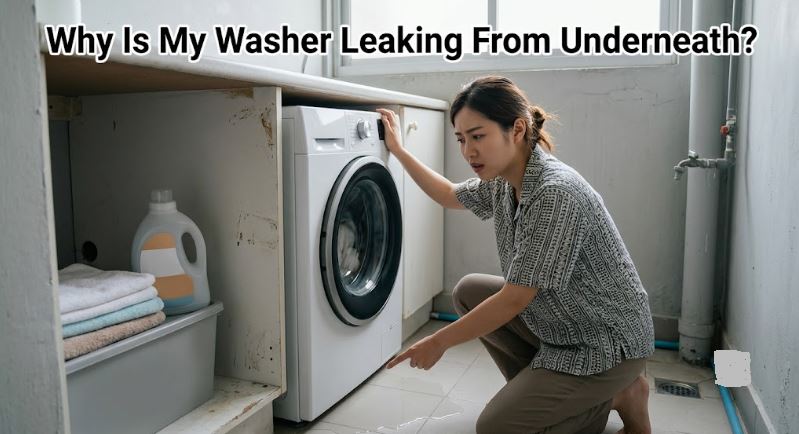
| Directly underneath | Drain pump, tub seal, or pump hose | Both |
| All around machine | Oversudsing or severely unlevel machine | Both |
| Inside drum area | Torn gasket or excess suds | Front-loader |
| Under agitator area | Center post gasket or tub seal | Top-loader |
When to Call a Technician
Several causes genuinely require professional hands. Tub seal replacement on both front-loaders and top-loaders involves significant disassembly and precise reassembly. A cracked outer tub is a major repair that often makes replacement the more practical financial choice. Furthermore, if the leak appears to originate from the back of the control panel area or from multiple points simultaneously, a professional diagnosis using the machine’s service mode is the right call. Attempting complex internal repairs without proper knowledge risks worsening the damage and potentially voiding your warranty.
Products That Help You Fix and Prevent Spin-Cycle Leaks
These three Amazon products address the most common spin-cycle leak causes directly.
Elyfree Universal Washing Machine Drain Hose, 10 Ft
A cracked, kinked, or brittle drain hose is one of the most common spin-cycle leak sources on both front-load and top-load washers. This universal 10-foot replacement hose fits most major washer brands including Whirlpool, GE, LG, Samsung, and Kenmore. Made from industrial-grade polypropylene with a corrugated design that resists kinking. Installation takes minutes: trim to length, attach to the washer outlet, tighten the clamp, and hook into the standpipe. Best for replacing any cracked, stiff, or poorly connected drain hose before it develops into a leak that damages your floor.
DC97-16140P Samsung Front Load Washer Door Boot Seal Gasket
For Samsung front-load washer owners dealing with spin-cycle leaks at the door, this replacement boot seal directly addresses the most common cause. Compatible with Samsung models including WF45K6200AW, WF45N5300AW, WF45M5500AP, and related series, it replaces part numbers DC97-19755A, 4546012, AP6002538, and PS11735181. The rubber construction provides a watertight seal that withstands both hot and cold wash temperatures, and the package includes gloves to protect your hands during installation. Buyers consistently report that this part resolved their spin-cycle leaks entirely and that installation takes under 30 minutes with a flathead screwdriver. Always confirm your specific model number matches the compatibility list before ordering.
Affresh Washing Machine Cleaner, 6 Tablets (6-Month Supply)
Oversudsing from detergent buildup inside the pump, hoses, and drum is a genuinely common cause of apparent spin-cycle leaks that is completely preventable. Affresh is the number one recommended washing machine cleaner by Whirlpool, Maytag, and Amana, earning over 225,000 five-star ratings on Amazon for its ability to power through residue hiding deep inside pump components, valves, drain hoses, and the tub. Each time-release tablet delivers extended cleaning action throughout an entire cycle, and one tablet per month prevents the accumulation that causes oversudsing, drainage slowdowns, and odor transfer to clean laundry. It is safe for all washer types including HE front-loaders and top-loaders, and carries EPA Safer Choice certification.
Maintenance Habits That Prevent Spin-Cycle Leaks
Consistent maintenance prevents the majority of spin-cycle leak causes before they develop.
| Habit | Frequency | Leak Type Prevented |
|---|---|---|
| Run Affresh washer cleaner tablet | Monthly | Oversudsing overflow, pump buildup |
| Inspect door gasket and wipe dry | Monthly | Door boot seal degradation |
| Check drain hose for kinks or cracks | Every 3 months | Drain hose leak |
| Clean pump filter | Every 3 months | Pump overflow from blockage |
| Verify machine is level | Every 6 months | Vibration-related loosening |
| Inspect hose connections | Annually | Internal hose connection leaks |
| Replace rubber supply hoses | Every 3 to 5 years | Supply hose failure |
| Avoid overloading | Every cycle | Tub seal and door seal stress |
Frequently Asked Questions
Why does my washing machine only leak during the spin cycle and not during washing?
The spin cycle generates centrifugal force and vibration that exposes weak points in hoses, seals, and gaskets that hold up fine at lower speeds. Water is also actively being pushed through the drain system under pressure during spin, which increases stress on every connection in the drainage path. A fault that is too minor to leak during a gentle wash cycle often reveals itself under spin cycle conditions.
How do I know if my front-load washer door gasket is causing the spin-cycle leak?
Check the location of your puddle. If water appears at the front of the machine during or after the spin cycle, the door boot gasket is the most likely culprit. Visually inspect the inner rim of the gasket for tears, cracks, or separation from the frame. Also check for heavy mold buildup creating gaps in the seal. Any of these conditions require gasket replacement.
Can too much detergent really cause a washing machine to appear to leak?
Yes, and this is more common than most homeowners realize. Excess suds build up during spin and overflow from the machine in a way that looks identical to a mechanical leak. If you recently switched detergent brands or increased the amount you use, try reverting to the correct HE detergent quantity and running a cleaning cycle before replacing any parts.
Is it safe to keep using my washing machine if it leaks only during the spin cycle?
No. Even a small spin-cycle leak allows water to reach electrical components under the machine, damage flooring, promote mold growth beneath the appliance, and worsen the underlying fault through continued use. Stop using the machine, identify the source, and repair it before running additional cycles.
How much does it typically cost to fix a washing machine spin-cycle leak professionally?
A drain hose replacement typically costs $75 to $150 in parts and labor. A door boot gasket replacement runs $100 to $200. A drain pump replacement costs $150 to $300. A tub seal replacement, which involves significant disassembly, can run $200 to $400 or more. If the repair cost exceeds half the price of a comparable new machine, replacement is often the better long-term financial decision.
How do I stop my top-load washer from leaking underneath during spin?
Start by checking the drain hose connection at the back of the machine and the internal hoses connecting the tub to the pump. Also confirm the machine sits level. If these checks do not reveal the source, the tub seal or center post gasket underneath the agitator is the next likely culprit. This repair requires panel removal and is best confirmed by watching where water exits during a live spin cycle with the access panel removed.
Also Read: Your Washing Machine Leaves Black Marks After Wash? (Fix It!)
Fix the Leak Before It Becomes a Bigger Problem
A spin-cycle leak rarely resolves itself. In fact, leaving it unaddressed typically worsens the underlying fault with every cycle and risks water damage to your floor, subfloor, and any cabinetry nearby. The good news is that most spin-cycle leaks trace back to one of a handful of straightforward causes, and many of them are genuinely fixable without a service call.
Start by noting where the puddle forms, then work through the diagnostic steps in this guide systematically. Replace any cracked hoses, clear any blocked pump filters, check your door gasket, and confirm the machine sits level. Add a monthly Affresh cleaning cycle to your routine and you will eliminate most future leak risks entirely before they have a chance to develop.