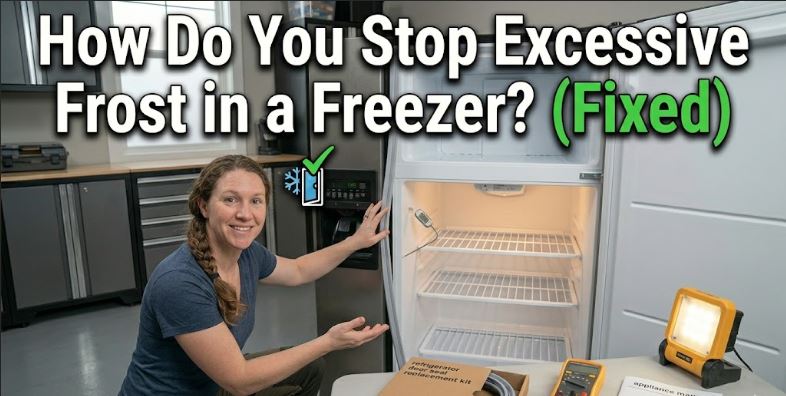
Opening the freezer to find thick ice coatings on the walls, frost caking the shelves, and items buried under a layer of crystals is more than just an inconvenience. That buildup is the freezer’s way of waving a red flag. It is telling you that warm, moist air is getting in where it should not be, or that the system designed to automatically remove frost has stopped doing its job.
A small amount of frost is completely normal, particularly in manual-defrost models. What is not normal is a layer thicker than a quarter inch forming rapidly after a manual defrost, frost creeping back within days, or ice packing so thickly that it reduces usable storage space and makes the door difficult to close fully. Beyond the inconvenience, excessive frost reduces the freezer’s efficiency, drives energy costs higher, and puts strain on the compressor over time.
The root cause of virtually every excessive frost complaint comes down to one of two things: warm air getting in, or the defrost system not doing its job. The causes below split cleanly between those two categories.
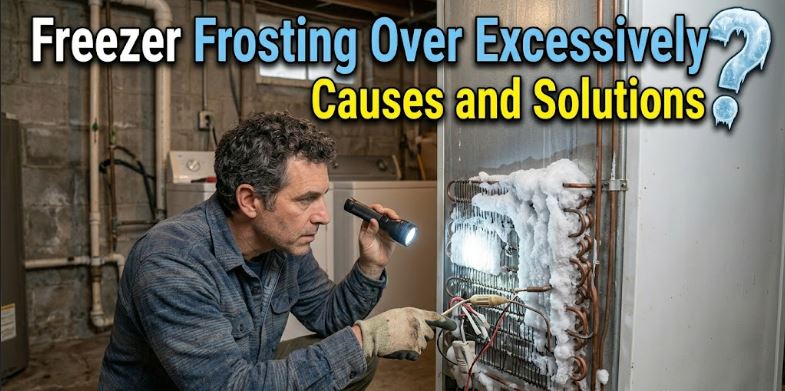
What Is Causing Your Freezer to Frost Over?
Here’s an overview of why your freezer continues frosting over excessively, and what you are likely to notice:
| What You Notice | Most Likely Cause |
|---|---|
| Heavy frost on walls and back panel | Defrost heater or thermostat failure |
| Frost returning within days of manual defrost | Door gasket leaking or defrost timer fault |
| Frost concentrated in one specific area | Gasket leak at that location or blocked vent |
| Ice buildup around the door edges | Worn or damaged door gasket |
| Frost getting worse over months | Progressive defrost system failure |
| Frost in frost-free model that never had it before | Defrost system component has failed |
| Frost after placing warm food inside | User habit issue, not a mechanical fault |
7 Reasons Your Freezer Is Frosting Over Excessively and How to Fix Each One
Here are the likely explanations for your freezer frosting over excessively:
1. The Door Gasket Is Worn, Dirty, or Damaged
The door gasket is the rubber seal running around the entire perimeter of the freezer door or lid. Its job is to create an airtight barrier between the frozen interior and the warm, humid kitchen air outside. When it seals correctly, frost formation is minimal. When it leaks, every minute the freezer door is closed, warm and moist air seeps in, immediately freezes on contact with the cold interior surfaces, and contributes to the progressive frost layer that builds up between defrost cycles.
A leaking gasket is the single most common cause of excessive frost in household freezers and the first component to inspect before anything else.
Here Is How to Inspect and Fix It
- Run your hand slowly around the entire perimeter of the closed door and feel for any cold air escaping. Any detectable draft pinpoints a leak at that location
- Perform the dollar bill test: close the freezer door on a dollar bill and try to pull it out. A healthy gasket grips the bill firmly with noticeable resistance. A gasket that lets the bill slide free easily has lost its sealing ability
- Open the door and inspect the gasket visually for cracks, tears, stiff or compressed sections, or areas that have separated from the door frame
- Clean the gasket first with warm water and mild dish soap since grease, pet hair, and dried food debris prevent even an undamaged gasket from sealing correctly. Dry thoroughly before testing again
- If cleaning does not restore the seal, replacement is the fix, and you can find compatible door gasket replacements on Amazon!
2. The Defrost Heater Has Failed
This is the most common mechanical cause of excessive frost in frost-free freezers and the one that typically develops gradually over weeks before becoming obvious.
Frost-free freezers run an automatic defrost cycle every eight to twelve hours. During this cycle, an electric defrost heater warms the evaporator coil just enough to melt any frost that has accumulated since the last cycle. When the heater fails, no melting occurs. Frost builds up on the evaporator coil with each cycle, eventually forming a thick ice block around the entire coil assembly. This progressive buildup then blocks airflow through the freezer, causes temperature fluctuations, and produces the wall frost that homeowners notice.
Here Is How to Diagnose and Fix It
- Unplug the freezer and remove the back panel inside the freezer compartment, usually held by two to four screws, to expose the evaporator coil
- Look for a thick ice block surrounding the coil rather than a thin frost layer. A solid ice block confirms the heater has not been running
- Use a multimeter set to continuity to test the defrost heater. No continuity confirms the heater element has burned out, and thus requires a replacement (View on Amazon).
- After replacing the heater, manually defrost the existing ice buildup before reinstalling the back panel and testing the new heater on its first automatic cycle
3. The Defrost Thermostat Has Failed
The defrost thermostat works alongside the defrost heater. While the heater provides the heat that melts frost from the evaporator coil, the defrost thermostat monitors coil temperature during the defrost cycle and cuts power to the heater once the coil reaches a safe temperature. This prevents the heater from running too hot.
When the defrost thermostat fails in the open position, it permanently cuts power to the heater circuit even when the defrost timer or control board calls for a cycle. The heater never runs, the coil never defrosts, and frost accumulates exactly as it does with a failed heater. Testing both components together is the most efficient diagnostic approach since they are accessed through the same disassembly.
Here Is How to Test and Fix It
- Access the evaporator coil by removing the back panel inside the freezer compartment as described in cause two above
- Locate the defrost thermostat, a small component clipped directly onto the evaporator coil with two wire leads
- Test it with a multimeter set to continuity while it is cold, which is its normal state when the freezer is running. A working defrost thermostat shows continuity when cold and breaks continuity when heated above its rated temperature
- No continuity at all when cold confirms the thermostat has failed open and is preventing the heater from receiving power
- Search your model number alongside “defrost thermostat” on Amazon for the correct replacement. Most defrost thermostats cost under $20 and clip directly onto the coil with no tools required
4. The Defrost Timer or Control Board Has a Fault
The defrost timer in older freezers and the control board in newer electronic models initiate the automatic defrost cycle at regular intervals. When either fails, the defrost cycle simply stops occurring, and frost accumulates unchecked between compressor cycles.
The defrost timer is a mechanical component in many older models that advances slowly and triggers the defrost heater at preset intervals. A timer that sticks or fails to advance never triggers a defrost cycle. Modern freezers use the main control board to manage defrost timing electronically, and a board fault can disable the defrost function while leaving all other freezer functions operating normally.
Here Is How to Diagnose and Address It
- Manually advance the defrost timer using a flat-head screwdriver inserted into the timer’s advancing slot, typically on the front face of the timer housing. Turn it slowly until you hear a click, which manually initiates a defrost cycle
- Listen and wait. The defrost heater should produce a faint sound of melting ice and water dripping into the drain pan beneath the coil within a few minutes. If this happens, the timer is not advancing automatically and needs replacement
- For electronic control boards, a board fault requires professional diagnosis with the manufacturer’s diagnostic mode or a service technician’s tools
5. The Door Is Being Opened Too Frequently or Left Open
This cause requires no parts, no tools, and no technician. It is purely a habit issue, and addressing it costs nothing.
Every time the freezer door opens, warm humid kitchen air rushes in to replace the cold air that escapes. That warm air immediately deposits moisture on the cold interior surfaces as frost. A freezer that is opened briefly three or four times per day accumulates a manageable amount of frost between defrost cycles.
A freezer opened frequently, left open while sorting through items, or accessed by children who stand in front of it for extended periods accumulates significantly more moisture than the defrost system was designed to handle.
Here Is How to Fix It
- Plan what you need before opening the freezer so each opening is brief and purposeful
- Avoid leaving the door open while transferring items to a counter, preparing meals, or sorting through contents for more than a few seconds
- Organize the freezer so frequently used items are at the front and accessible quickly without lengthy searching
- Never place a warm or uncovered container of hot food directly into the freezer since this releases a large amount of moisture simultaneously into the cold interior. Cool food in the refrigerator first before transferring it to the freezer
6. Hot or Uncovered Food Is Being Placed Directly in the Freezer
This cause is closely related to the previous one but deserves its own section because it produces noticeably more frost per incident than frequent door openings do.
When hot food is placed directly into the freezer, the temperature differential between the food and the freezer interior causes a significant release of steam and moisture into the compartment. That moisture immediately freezes on every cold surface it contacts.
A single container of hot soup placed uncovered in the freezer can produce more frost than a full day of normal door openings. Repeated over weeks and months, this habit creates the progressive frost buildup that surprises homeowners who otherwise maintain their appliances well.
Here Is How to Fix It
- Always allow cooked food to cool to room temperature before refrigerating, and to refrigerator temperature before moving to the freezer
- Store all food in airtight containers or properly sealed freezer bags before placing them in the freezer. The Rubbermaid Brilliance Freezer Containers (View on Amazon) seal completely airtight and prevent moisture from escaping into the freezer compartment during storage
- Never store food in uncovered pots, pans, or bowls inside the freezer regardless of whether the food has cooled, since these containers allow moisture to evaporate continuously throughout storage
7. The Temperature Is Set Too Low
A freezer running significantly below the correct temperature creates conditions where frost forms more rapidly and more densely than a correctly set unit would accumulate.
At extremely low temperatures, moisture from any source, including normal door openings and food storage, freezes almost instantly on contact with interior surfaces before it has a chance to reach the evaporator coil and enter the drainage system. The result is surface frost accumulation throughout the compartment rather than the localized evaporator coil frost that the defrost system is designed to manage.
Additionally, running too cold often indicates a thermostat or thermistor issue as covered in our post on freezer too cold, and both conditions contribute to accelerated frost formation simultaneously.
Here Is How to Check and Fix It
- Place a Precision Freezer Thermometer (View on Amazon) in the center of your freezer and leave it for four hours to check its temperature.
- The correct freezer temperature is 0°F (-18°C). Anything significantly below -5°F accelerates frost formation unnecessarily
- Adjust the temperature control one setting toward warmer and allow 24 hours before checking again since freezers take time to stabilize after adjustments
- If the temperature is already set correctly but the actual temperature reads significantly lower, a faulty thermostat or thermistor is sending incorrect readings to the compressor and needs professional assessment
Freezer Excessive Frost Fix Cost Overview
| Cause | DIY Safe | Fix Cost | Pro Service Cost |
|---|---|---|---|
| Clean or replace door gasket | Yes | Free – $30 | $100 – $200 |
| Cool food before freezing | Yes | Free | N/A |
| Reduce door openings | Yes | Free | N/A |
| Adjust temperature setting | Yes | Free | N/A |
| Manual advance defrost timer | Yes | Free | N/A |
| Replace defrost timer | Moderate DIY | $15 – $25 | $100 – $200 |
| Replace defrost thermostat | Moderate DIY | $10 – $20 | $100 – $180 |
| Replace defrost heater | Moderate DIY | $20 – $40 | $150 – $300 |
| Control board replacement | No | N/A | $200 – $400 |
Frequently Asked Questions
How much frost in a freezer is normal?
A thin layer of frost on the evaporator coil that is completely melted and cleared by each automatic defrost cycle is completely normal in frost-free models. In manual-defrost models, a buildup of up to a quarter inch across the interior walls between scheduled manual defrostings is acceptable. Frost thicker than a quarter inch forming rapidly after a recent defrost, or any frost that reduces usable storage space or makes the door difficult to close, is excessive and points to a cause that needs addressing.
How do I manually defrost a freezer that has frosted over?
Empty the freezer contents into a cooler packed with ice. Unplug the freezer and leave the door open with towels spread inside the compartment and on the floor below to catch melt water. Allow 24 to 48 hours for complete defrost. Never use a heat gun, hair dryer, or sharp implement to accelerate the process since these damage the evaporator coil and interior surfaces. Once fully defrosted and dried, plug the unit back in and monitor whether frost returns quickly, which confirms a gasket leak or defrost system fault.
Why does my frost-free freezer have excessive frost if it is supposed to prevent this?
Frost-free freezers run automatic defrost cycles every 8 to 12 hours to prevent frost accumulation. When excessive frost appears in a model that was previously frost-free, the automatic defrost system has developed a fault. The three components most commonly responsible are the defrost heater, the defrost thermostat, and the defrost timer, in that order of frequency. Testing each with a multimeter for continuity identifies the failed component quickly.
Can excessive frost damage my freezer permanently?
Yes, over time. A thick ice block around the evaporator coil eventually causes the evaporator fan motor to work against increased resistance, accelerating its wear. The compressor running more frequently to compensate for the reduced efficiency of an ice-covered coil ages faster than a properly maintained compressor. Additionally, ice buildup can eventually crack the interior liner panels if left unchecked for extended periods. Addressing frost accumulation promptly protects every component in the system.
My freezer just frosted over once after placing a lot of food inside. Is that a problem?
A single frost event after loading a large amount of food, particularly if any of it was warm or poorly sealed, is not necessarily a sign of a mechanical fault. Loading a large volume of food introduces significant moisture simultaneously, which can overwhelm the defrost cycle’s ability to keep up. Monitor the freezer over the following two weeks. If frost continues building rapidly between cycles rather than staying minimal, a door gasket or defrost system issue has likely developed and the causes above are worth working through systematically.
A Thorough Gasket Check Solves More Cases Than Anything Else
Excessive freezer frost almost always comes down to one of two root problems: warm air getting in through a failing gasket or frequent openings, or the defrost system failing to clear the frost that does accumulate. Starting with the gasket inspection costs nothing and resolves the majority of frost complaints before any internal component work is needed.
Work through the door seal, food placement habits, and temperature setting before removing any panels. If frost keeps returning quickly after those checks, the defrost heater, thermostat, and timer are the next logical diagnostic steps in that order. For related reading across the freezer category, our complete freezer troubleshooting guide covers every major freezer symptom and component failure across various leading brands.