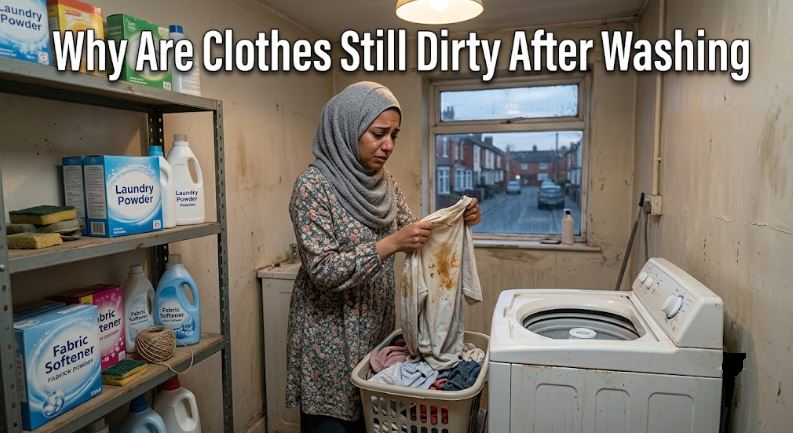
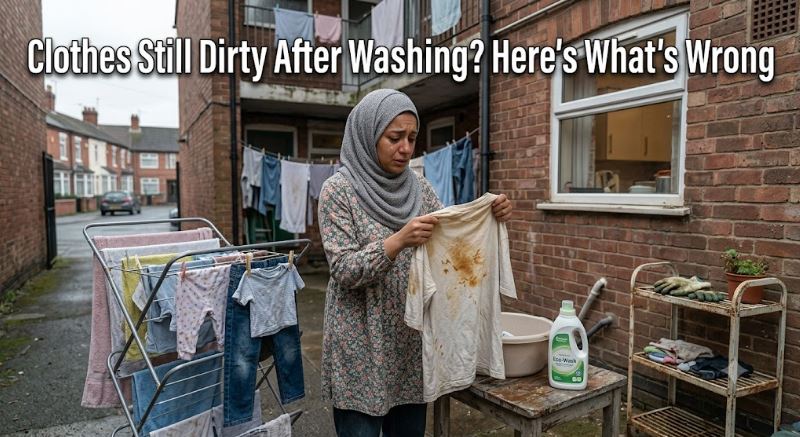
You pull a load out of the washer expecting clean laundry and instead find the same stains, dingy color, or faint smell you started with. The cycle ran, the machine sounded normal, but something clearly didn’t work.
You wonder, “why are clothes still dirty after washing?” Clothes usually stay dirty because of overloading, too little detergent for the load, water that’s too cold, or hard water reducing detergent’s cleaning power.
In most cases the washer itself isn’t broken. After years of troubleshooting washers, the real culprit is almost always one of a handful of habits or water conditions that quietly undercut how well any machine can clean. Here are the seven worth checking, in order.
Quick-Reference: Common Causes at a Glance
Most of these causes cost nothing to fix and come down to a habit rather than a broken part. Here’s how they compare:
| Cause | How Common | Fix Difficulty | Typical Fix Cost |
|---|---|---|---|
| Overloading the washer | Very common | Easy | $0 |
| Too little or diluted detergent | Very common | Easy | $0 |
| Water temperature too cold for the soil | Common | Easy | $0 |
| Hard water reducing detergent effectiveness | Common | Moderate | $0–$300 |
| Dirty drum or dispenser redepositing grime | Common | Easy (30 min) | $0–$15 |
| Skipping pretreatment on stains | Very common | Easy | $0–$10 |
| Worn agitator dogs (top-load agitator models) | Occasional | Moderate | $15–$30 |
7 Reasons Your Clothes Are Still Dirty After Washing
If your clothes are still dirty after using the washing machine, it is likely to be a result of one of these seven issues:
1. Overloading the Washer
Clothes need room to move freely against each other and the water to clean well. Pack the drum too full, and everything tumbles as one dense mass instead of separating, agitating, and rinsing individually.
This is the single most common cause we see, and it’s easy to miss, since an overloaded washer still runs a full cycle and sounds normal.
Fill the drum no more than three-quarters full, even when it looks like there’s room for more. Splitting an oversized load into two normal-sized ones almost always gets clothes cleaner with only a few extra minutes of total laundry time.
2. Too Little or Diluted Detergent
Most guidance online focuses on using too much detergent, but not having enough is just as common, especially with heavily soiled loads, hard water, or HE machines that already use less detergent than older top-loaders.
Detergent needs a certain concentration to break down oils and lift soil away from fabric. Below that threshold, it simply can’t do its job, no matter how long or hot the cycle runs.
Measure to the line for your load size and soil level rather than eyeballing it, and increase the amount for heavily soiled loads specifically.
A reliable HE detergent (View on Amazon) gives you a consistent baseline to dose correctly from.
3. Water Temperature Too Cold for the Soil Level
Cold water saves energy and works fine for lightly soiled, colorfast loads, but it struggles with oil-based stains, heavy grime, and anything that benefits from warmer temperatures to fully dissolve detergent.
Many people default to cold water for every load out of habit, without matching temperature to what’s actually in the load. Detergent doesn’t fully activate in water below about 60°F, which is common with cold tap water in winter.
Reserve warm or hot water for heavily soiled items, whites, and anything with body oil or grease, saving cold water for lightly worn or delicate items where it performs just as well.
4. Hard Water Reducing Detergent’s Cleaning Power
Hard water contains dissolved calcium and magnesium that react with detergent, using up some of its cleaning capacity before it reaches your clothes. The harder your water, the more detergent gets neutralized rather than doing actual cleaning work.
This shows up as dingy whites, stiff fabric, and soil that doesn’t fully rinse away, even with the correct detergent amount.
A home test kit or your water utility’s annual report confirms hard water. In hard water areas, increasing detergent slightly or adding a water softener addresses the root cause rather than compensating load after load.
5. A Dirty Washer Drum or Dispenser Is Redepositing Grime
It sounds counterintuitive, but a washer that isn’t cleaned periodically can make clothes dirtier. Detergent residue and biofilm inside the drum and dispenser can slough off during a cycle and redeposit onto otherwise clean clothes.
This is especially common in HE washers, where lower water volumes mean less rinsing to flush residue out between loads.
Run a monthly cleaning cycle with hot water and a dedicated washer cleaner (View on Amazon), and wipe the dispenser drawer and door seal by hand if you notice slimy or gritty residue.
6. Skipping Pretreatment on Heavily Soiled or Stained Items
A washing machine is built for general soil removal through agitation and detergent, not for lifting set-in stains like grease, blood, grass, or old food. Without pretreatment, those stains often survive a full cycle intact.
This isn’t a machine or detergent problem; it’s a matter of technique, and it’s one of the most overlooked reasons a specific stain keeps coming back load after load.
Treat visible stains with an effective stain remover (View on Amazon) and let it sit for several minutes before washing, rather than tossing a stained item straight in.
7. Worn Agitator Dogs Reducing Mechanical Action
On top-load washers with a center agitator, small plastic pieces called agitator dogs let the agitator grip and move the load back and forth. When they wear out, the agitator spins with much less resistance and barely moves the clothes.
This produces a washer that runs normally and completes full cycles, but delivers weaker cleaning because the mechanical agitation that’s supposed to work soil out of fabric isn’t happening anymore.
Remove the agitator cap and check the dogs inside the cam housing for wear or breakage. Replacing a full set is inexpensive and one of the more satisfying repairs a homeowner can do without help.
Water Temperature Guide by Soil Level
Matching water temperature to what you’re washing solves more cleaning problems than any product change. Here’s a general starting point:
| Load Type | Recommended Temperature |
|---|---|
| Lightly worn, colorfast items | Cold |
| Everyday mixed loads, moderate soil | Warm |
| Heavily soiled items, whites, towels | Hot |
| Oily or greasy stains | Hot (check fabric care label first) |
When to Call a Professional Instead
Most causes of poor cleaning are habit or maintenance issues, not mechanical failures, and cost nothing beyond a small adjustment. If you’ve addressed load size, detergent, temperature, and machine cleanliness and cleaning still hasn’t improved, a technician can test whether the water level sensor or dispenser is malfunctioning. For a broader look at washer issues, our washing machine troubleshooting guide covers mechanical failures beyond what’s discussed here.
FAQs
Why are my clothes still dirty even though I used plenty of detergent?
Excess detergent that doesn’t fully rinse out can leave clothes feeling dirty or stiff, which is different from insufficient cleaning. Check for suds remaining after the rinse cycle, since that points to too much detergent rather than too little.
Why do my white clothes look dull or gray after washing?
Graying whites usually point to hard water minerals or detergent residue building up in fabric over repeated washes. A monthly hot-water cleaning cycle and an occasional whitening booster can help reverse existing dinginess.
Can an old washing machine actually clean clothes worse than a new one?
Yes, in some cases. Worn agitator components, a degraded pump, or years of residue buildup can all reduce cleaning performance even when the washer runs a full cycle without any errors.
Should I stop washing in cold water if my clothes aren’t getting clean?
Not entirely, but reserve cold water for lightly soiled, colorfast loads and switch to warm or hot for anything heavily soiled. Cold water is excellent for energy savings and gentle fabrics, just not for cutting through real grime.
How much detergent should I actually be using?
Follow the dosing line for your load size and soil level rather than a fixed scoop every time, and increase it for heavily soiled loads or larger capacity washers. Our Whirlpool washer error codes guide explains how too much and too little detergent both trigger different washer symptoms.
Getting Truly Clean Clothes From Every Wash
Clothes coming out still dirty is almost always fixable without a repair bill, since the most common causes are overloading, detergent dosing, water temperature, and a washer that needs its own cleaning. Start with load size and detergent amount, since those two changes resolve most cases.
If cleaning performance still isn’t where it should be, work through hard water, machine cleanliness, and the agitator last. Together, these seven causes account for nearly every case of a washer that runs fine but doesn’t actually get clothes clean.