Your AC turns on, runs for two or three minutes, shuts off, then starts again five minutes later. The cycle repeats all day without the house ever reaching a comfortable temperature. That pattern has a name: short cycling, and it is one of the most damaging things that can happen to an air conditioning system.
Here is why it matters beyond the obvious discomfort. A normal AC cycle runs for 15 to 20 minutes, completes a full cooling process, and then rests before the next cycle. Each startup puts significant stress on the compressor through heat and electrical surge. A compressor designed to start two or three times per hour being forced to start ten or fifteen times instead wears out its components at a dramatically accelerated rate. Compressor replacement costs between $1,500 and $2,500. Addressing short cycling early costs a fraction of that.
The good news is that several causes are completely free to fix. Let’s work through them from the simplest to the most serious.
What Is Causing Your AC to Short Cycle?
Use this table to identify the most likely cause of your AC short cycling based on what you are observing before reading further.
| What You Notice | Most Likely Cause |
|---|---|
| AC runs 2 to 3 minutes then shuts off repeatedly | Clogged filter causing overheating or frozen coil |
| Shuts off quickly on hot days, runs longer at night | Oversized unit or refrigerant issue |
| Short cycles alongside warm air from vents | Low refrigerant or thermostat fault |
| Clicks on and off every few minutes all day | Thermostat location problem or electrical fault |
| Short cycles in mild weather only | Thermostat set too close to ambient temperature |
| System short cycles with error light on outdoor unit | High-pressure or low-pressure safety switch tripping |
7 Reasons Your AC Is Short Cycling and How to Fix Each One
These causes cover the vast majority of AC short cycling complaints, starting with the ones every homeowner can address immediately.
1. The Air Filter Is Clogged
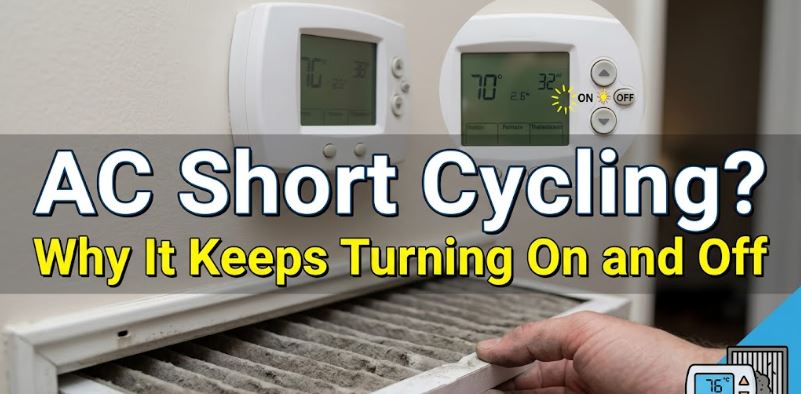
A dirty filter is the most common cause of AC short cycling and also the easiest to resolve. Think of it as the first stop on every short cycling diagnosis.
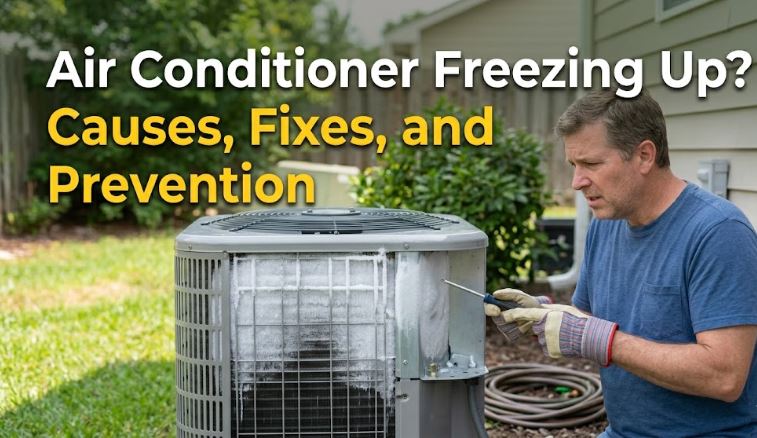
When the filter packs solid with dust and debris, airflow across the evaporator coil drops dramatically. The coil gets too cold, ice forms, and the system’s safety controls shut the compressor off to prevent damage. A few minutes later the ice melts slightly, the safety control resets, and the compressor starts again. The cycle then repeats every few minutes indefinitely, which is textbook short cycling.
Here Is How to Fix It
- Pull the filter from the return vent or air handler and hold it to a light source
- If you cannot see light through the filter material, replace it immediately
- The Filtrete 16x25x1 Air Filter MPR 1500 (View on Amazon) maintains strong airflow while capturing fine particles that restrict the evaporator coil
- After replacing, switch to Fan Only mode for 30 minutes to thaw any ice on the coil before switching back to Cool
- Set a monthly phone reminder to check the filter during the cooling season
2. The Thermostat Is Faulty or Poorly Positioned
The thermostat is the brain of the entire cooling system. When it reads the room temperature incorrectly, it sends inaccurate cycle commands that cause the system to start and stop far more frequently than it should.
A thermostat placed in direct sunlight reads a higher temperature than the rest of the room and keeps calling for cooling. One placed near a supply vent feels the cold air directly and thinks the room has reached the set temperature within minutes of the cycle starting, shutting the system off prematurely. Both scenarios create short cycling without any mechanical fault in the AC system itself.
Here Is How to Diagnose and Fix It
- Check whether the thermostat sits near a window, lamp, supply vent, or any heat-generating appliance
- Move the thermostat to an interior wall away from direct heat and cold sources if possible
- Replace batteries even if the display looks normal since low batteries cause erratic temperature sensing
- If repositioning is not possible, upgrading to a smart thermostat with remote sensors solves placement issues permanently. The Ecobee Smart Thermostat Premium with Smart Sensor and Air Quality Monitor (View on Amazon) averages temperature readings from multiple room sensors rather than relying on a single potentially mispositioned sensor, eliminating location-based short cycling entirely
3. The AC System Is Oversized for the Space
This is the short cycling cause that requires no repair because nothing is broken. The system is simply too large for the home it is cooling, and it short cycles by design.
An oversized AC cools the space so quickly that the thermostat reaches the set temperature within a few minutes of each cycle starting. The system shuts off satisfied, but the humidity in the room has not had time to be removed during such a short cycle. The space feels clammy rather than comfortable, temperatures rebound quickly, and the system starts again within minutes to repeat the process.
An oversized unit also means short cycles create excessive compressor wear since the compressor takes the most stress at startup, and the more frequently it starts the faster it wears.
Here Is How to Confirm and Address It
- Time a cooling cycle from startup to shutdown on a day where the outdoor temperature is above 85 degrees Fahrenheit
- A cycle consistently shorter than 10 minutes on a hot day with a clean filter and open vents strongly suggests an oversized unit
- Raise the thermostat set point by two to three degrees and use ceiling fans to compensate. Longer cycles at a higher set point cause less compressor wear than rapid cycling at a lower one
- Add thermal curtains and weatherstripping to increase the heat load and give the system more work to do per cycle. The Blackout Thermal Curtains (View on Amazon) reduce solar heat gain significantly and extend cycle duration naturally
- For a permanent solution, consult an HVAC professional about a variable-speed or two-stage compressor system that modulates output to match the actual load rather than running at full power on every cycle
4. Low Refrigerant From a System Leak
Safety level: Observation only. Refrigerant work requires EPA Section 608 certification.
Low refrigerant causes the evaporator coil to run far colder than its design temperature. The pressure inside the system drops below the threshold of the low-pressure safety switch, which immediately shuts the compressor off to prevent damage. As pressure equilibrates slightly with the compressor off, the switch resets and the compressor starts again, only to trigger the same shutdown within minutes.
This creates a very specific short cycling pattern. The system runs for two to four minutes, shuts off, and restarts within five to ten minutes in a consistent, repeating pattern regardless of the thermostat setting or outdoor temperature.
Here Is What to Observe and Do
- Check the refrigerant lines near the indoor air handler for frost or ice forming on a system with a clean filter
- Listen near both the indoor and outdoor units for hissing or bubbling, which indicates active refrigerant leakage
- Note whether the short cycling pattern is consistent and repeating rather than variable, which distinguishes refrigerant issues from thermostat problems
- Turn the system to Fan Only mode and contact a licensed HVAC technician. Refrigerant diagnosis requires a manifold gauge set and EPA certification to handle safely
- Do not add consumer refrigerant products since these cannot locate or repair the underlying leak
5. The Outdoor Condenser Unit Is Overheating
The outdoor condenser unit dumps the heat extracted from your home into the outside air. When the condenser coil is coated with dirt, grass clippings, or cottonwood seeds, or when airflow around the unit is blocked by vegetation or enclosures, heat cannot escape efficiently. Internal temperatures rise until the high-pressure safety switch trips and shuts the compressor off to prevent damage.
Once the unit cools down after a few minutes, the switch resets and the compressor starts again, only to overheat and shut down in the same pattern.
Here Is How to Fix It
- Turn the system off and clear all vegetation, debris, and clippings from within two feet of the unit on every side
- Rinse the condenser coil fins gently with a garden hose, spraying from the inside out rather than pushing debris deeper into the fins
- The Evap Pow’r C Coil Cleaner Kit (View on Amazon) comes in handy here, with the cleaner effective in dissolving stubborn dirt and debris from condenser fins without requiring a pressure washer
- Allow the unit to dry for 15 minutes before restarting
- Trim all surrounding shrubs and plants to maintain at least two feet of clear airflow space permanently
- Never enclose the outdoor unit in a decorative structure that restricts airflow, regardless of how it looks aesthetically
6. The Electrical Components or Capacitor Are Failing
Safety level: Observation only. Electrical diagnosis and repair requires a licensed HVAC technician.
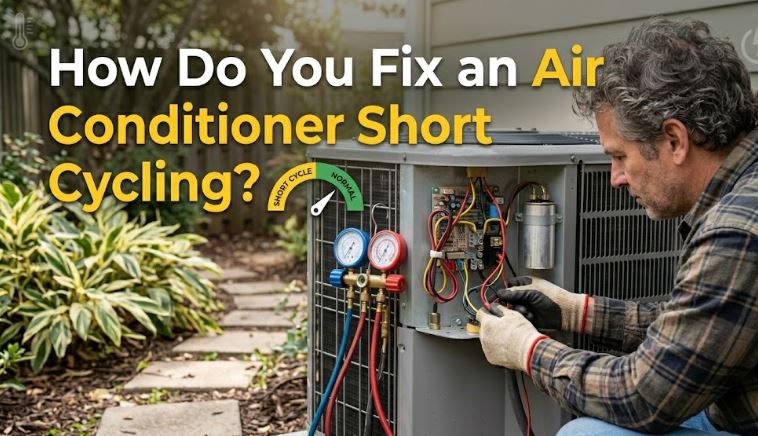
The capacitor is a cylindrical component inside the outdoor unit that provides the electrical surge needed to start the compressor and fan motor on each cycle. A capacitor in the early stages of failure can still start the compressor but cannot maintain the current needed to sustain operation. The compressor starts, runs for a short period, loses power support from the failing capacitor, and shuts down.
Faulty wiring connections or a failing contactor produce similar short cycling patterns by intermittently dropping the electrical supply to the compressor mid-cycle.
Here Is What to Observe
- Listen at the outdoor unit for a brief hum before the compressor shuts off, which distinguishes a capacitor issue from a pressure switch shutdown
- Note whether the outdoor fan runs normally while the compressor shuts off repeatedly, since fan-runs-compressor-stops is a classic capacitor pattern
- Check whether the system short cycles immediately from the first startup or only after running for a period, since immediate shutdown suggests pressure issues while delayed shutdown suggests electrical stress
- Contact a licensed HVAC technician for capacitor and electrical diagnosis. Capacitors store dangerous electrical charge even after power is disconnected and must be discharged safely before handling
7. The Condensate Drain Float Switch Is Repeatedly Tripping
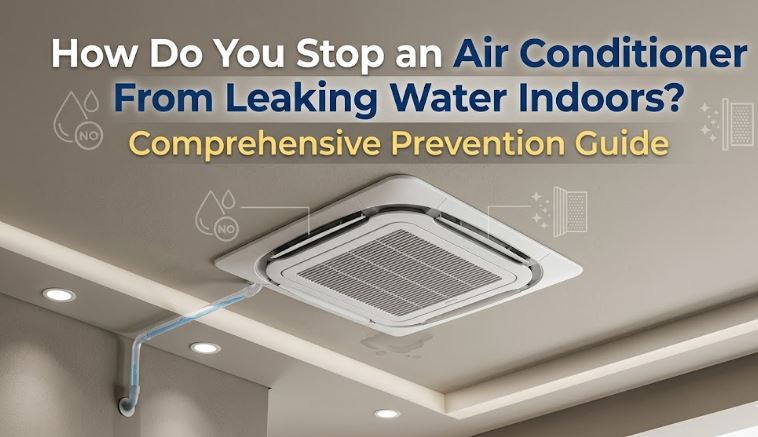
This is one of the more overlooked causes of AC short cycling and connects directly to the drainage problem covered in our post on AC leaking water indoors.
When the condensate drain line is partially clogged, water backs up in the drain pan until the float safety switch rises and trips. The switch shuts the system off to prevent overflow. The compressor stops, condensation production pauses, the water level drops slightly as the existing water slowly drains, the float drops, the switch resets, and the system starts again. Within minutes, the water backs up again and the cycle repeats.
Here Is How to Fix It
- Locate the drain pan beneath the indoor air handler and check for standing water
- Pour one cup of white vinegar into the condensate drain line access port to begin dissolving the clog
- Apply suction at the outdoor end of the drain line with a wet/dry vacuum for two to three minutes to pull the clog through
- The Deflecto Drain Cleaning Brush Kit (View on Amazon) reaches deep into the condensate line to dislodge debris packed beyond the reach of a vacuum
- Once the drain is clear and the pan empties, the float switch drops and the system resumes normal cycling immediately
- Pour a quarter cup of vinegar into the access port monthly during cooling season to prevent algae from rebuilding
AC Short Cycling Fix Cost Overview
| Cause | DIY Safe | Fix Cost | Pro Service Cost |
|---|---|---|---|
| Replace clogged air filter | Yes | $8 – $25 | N/A |
| Relocate or replace thermostat | Yes | Free – $150 | $80 – $200 |
| Clear condensate drain line | Yes | Free – $25 | $80 – $150 |
| Clean condenser coil and clear vegetation | Yes | Free – $15 | $80 – $150 |
| Add thermal curtains to reduce load | Yes | $20 – $60 | N/A |
| Capacitor replacement | No | N/A | $150 – $300 |
| Refrigerant leak repair and recharge | No | N/A | $250 – $600 |
| Oversized unit assessment | No | N/A | $150 – $300 |
Frequently Asked Questions
How do I know if my AC is short cycling or just cycling normally?
A normal AC cycle runs for 15 to 20 minutes and occurs two to three times per hour during moderate weather. Short cycling is when the compressor runs for two to five minutes, shuts off, and restarts within five to ten minutes repeatedly. If you can count more than three complete on-off cycles in a single hour, short cycling is confirmed and the cause needs investigating.
Can short cycling damage my AC permanently?
Yes, and the damage accumulates faster than most homeowners realize. Each compressor startup draws a significant electrical surge and generates heat from the mechanical engagement. A compressor designed to start a few times per hour subjected to ten or fifteen startups instead wears its electrical contacts, windings, and mechanical components at several times the normal rate. Extended short cycling is one of the leading causes of premature compressor failure, which is the most expensive single repair in residential HVAC.
My AC short cycles only on the hottest days of summer. What causes that?
Short cycling specific to the hottest days almost always points to the outdoor condenser overheating rather than a thermostat or refrigerant issue. On extreme heat days, a condenser already partially obstructed by dirty coil fins or blocked airflow reaches its thermal limit much faster than on moderate days. Cleaning the condenser coil and clearing two feet of space around the unit on all sides resolves this seasonal pattern in most cases.
Is short cycling making my energy bills higher?
Significantly so. Each compressor startup draws three to five times the electrical current of sustained operation. A system starting ten to fifteen times per hour instead of two to three times uses substantially more electricity for the same amount of actual cooling delivered. Homeowners with short cycling systems commonly report energy bills 20 to 40 percent higher than before the problem developed.
Should I turn my AC off if it is short cycling?
Yes, if the short cycling has been happening for more than an hour without resolution. Continued short cycling accelerates compressor wear and the underlying cause will not resolve on its own. Turn the system off, work through the free checks, and restart only after addressing the most likely cause. If short cycling resumes after the free fixes are complete, leave the system off and call a licensed HVAC technician.
You Can Stop Your Air Conditioner From Short Cycling!
AC short cycling sounds like a complex mechanical problem, but the majority of cases come back to one of three inexpensive causes: a dirty filter, a faulty thermostat, or a clogged condensate drain. Those three checks together cost nothing and resolve more than half of all short cycling complaints without any professional involvement.
Clean the filter, assess the thermostat position, clear the drain line, and clean the condenser before drawing any conclusions about refrigerant or electrical faults. And for more diagnosis on other AC-related issues, our complete air conditioner troubleshooting guide should help you fix day-to-day air conditioning problems without rushing to call an HVAC expert.