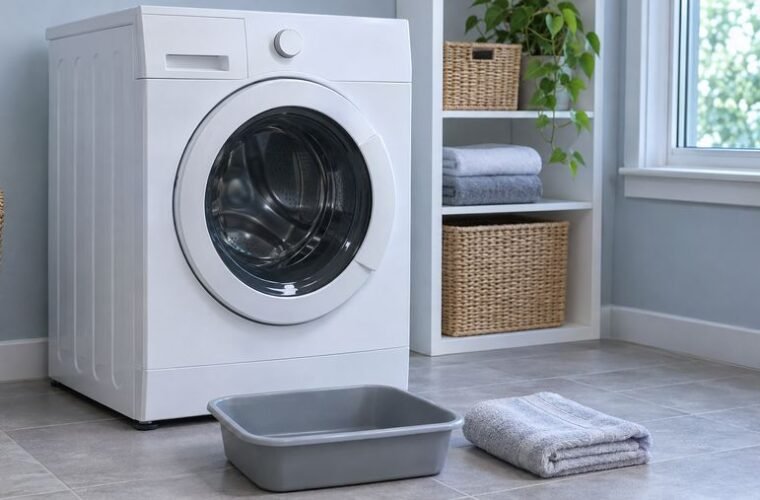
The Whirlpool Duet washer F20 code means the machine never got enough water. Whirlpool’s own checklist starts at the taps behind the unit, and the control logs the code when a fill runs about six minutes without reaching its level.
You can usually clear it without a single part.
On most of the Duet calls I run that end in F20, your washer isn’t filling for a dull reason: a hot valve left half shut after a plumbing repair, or a screen packed with grit. You can rule both out in ten minutes, before you spend anything. I’ve seen both on the same unit.
What the Whirlpool Duet Washer F20 Code Means
Whirlpool lists F20 as a water inlet problem: no water, or not enough of it. Displays with the newer control show the same fault as FH, so your washer may read FH and mean F20.
- Displayed as: F20, or FH on models with the newer control
- Logged when: a fill runs roughly six minutes without the level switch tripping
- Points at: the water supply, not the drain
- First move: press Pause/Cancel twice to clear the display
- Free checks: taps, hose kinks, inlet screens
- Not this code: a drain fault shows as F21
The official F20 error page puts it in one line: no water or insufficient water supply. That covers a shut valve, a pinched hose, a blocked screen and very low house pressure. If you want the neighbouring codes, the full Whirlpool washer code list and the control symbol guide both live on this site.
Both Taps, Both Hoses, One Full Turn
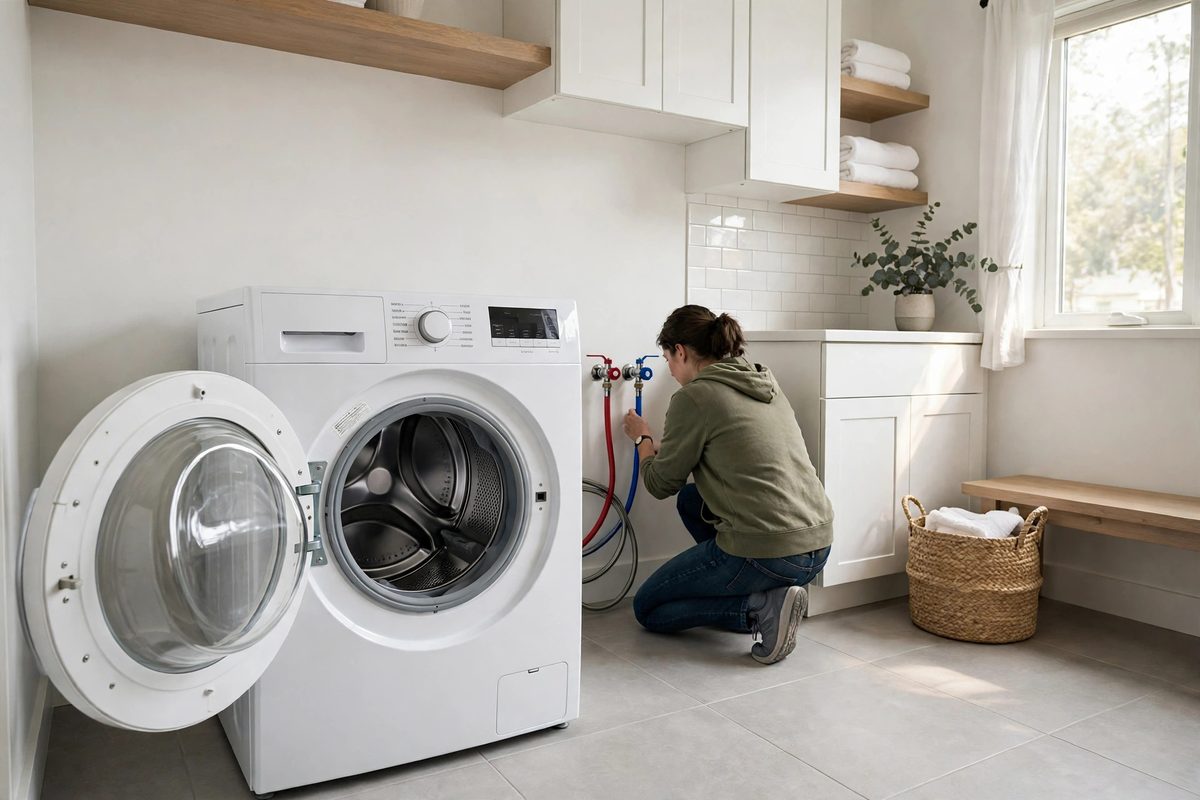
A Duet fills from hot and cold lines, and Whirlpool wants both connected and open even when you’re washing in cold. A hot valve closed for a plumbing job is the first thing I check.
Open each handle until it stops. If you only turned a gate valve a quarter turn, you haven’t opened it, and a quarter-turn ball valve needs your lever at the end of its travel.
Then look behind the machine. A hose pinched against the wall cuts flow enough to time out your fill. Slide the washer out, straighten both hoses, and check your rubber washers for cracks or grit.
Low pressure throws the same code. Whirlpool names less than 10 psi, which shows up on well systems, at the end of old pipe, or when another tap is wide open while your washer fills.
Clean the Inlet Screens Without Losing the Washers
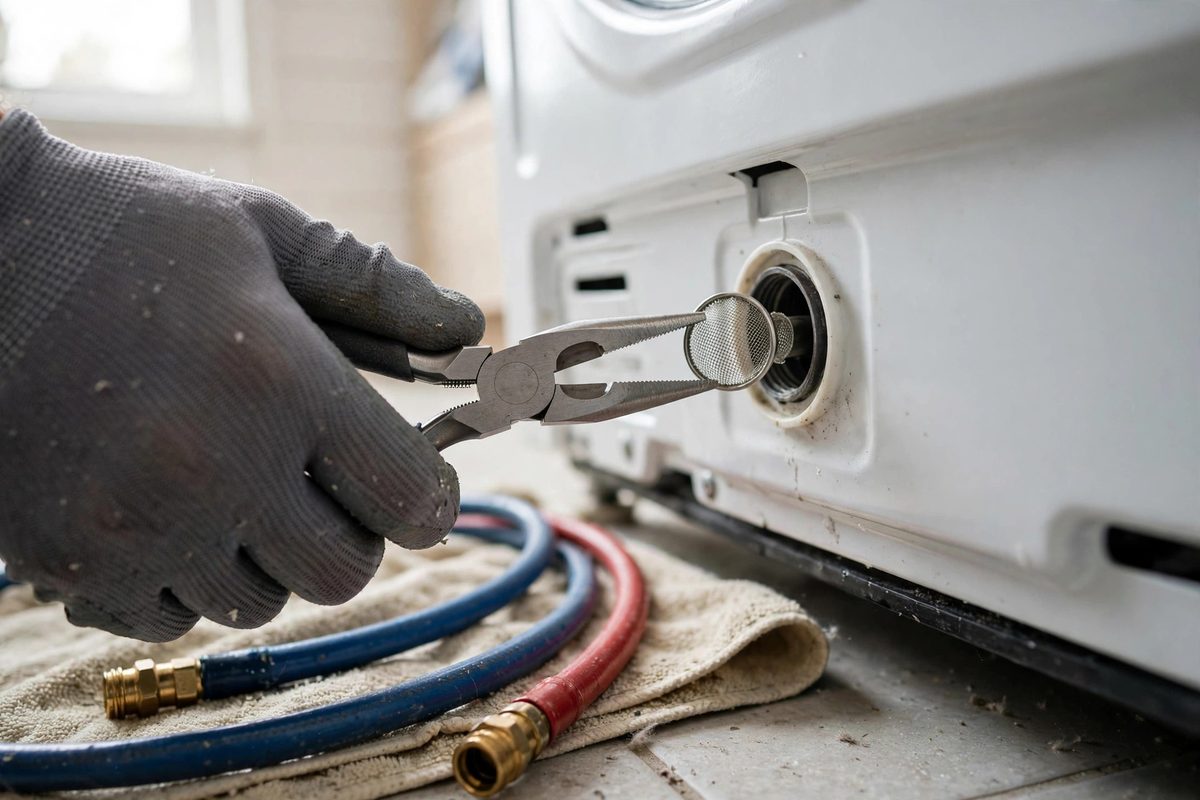
Your screens sit inside the inlet valves at the back of the washer. A screen half blind with sediment passes water slowly, and the fill times out before the level switch trips. What I find most often is a screen packed so hard it looks like cement.
You’ll need pliers, a towel and ten minutes.
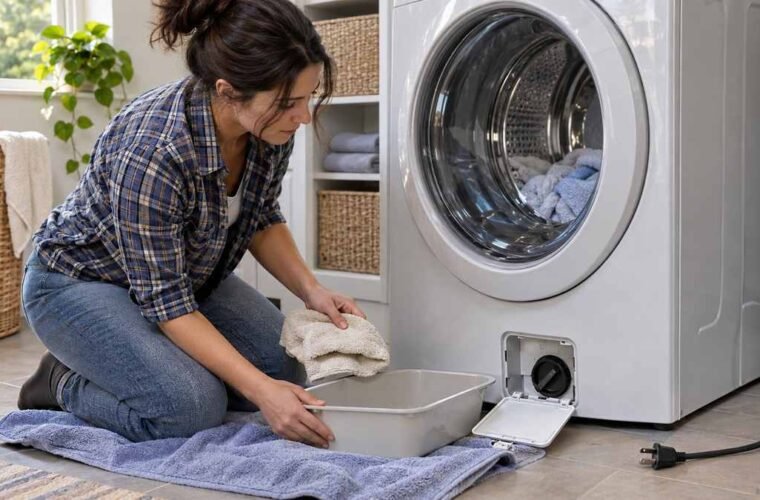
- Unplug the washer and shut both taps.
- Lay a towel under the hoses, then unscrew them from the back.
- Pull each screen straight out with needle-nose pliers. They’re a press fit, so you don’t twist them.
- Rinse the screen under a tap and lift the film off with an old toothbrush. Replace it if the mesh is torn.
- Check your hose washers while the hoses are off, then screw them back on by hand and give each a quarter turn with pliers.
- Open the taps slowly and watch both couplings for drips before you push the washer back.
A screen that crumbles as you touch it has sat in hard water for years. Whirlpool’s F20 and FH guide treats a clogged screen as a clean-and-recheck item, and it also flags non-HE detergent, because extra suds can set off the same fault.
When the Drain Hose Siphons the Fill Away
A drain hose pushed too far into the standpipe can seal the pipe and start a siphon. Water leaves as fast as it enters, your drum never holds a level, and the control sees a fill that won’t finish.
Whirlpool’s install instructions keep your hose about six inches inside the standpipe. Ease it back so the end sits just inside, and check that it still has the high loop the manual calls for.
If your hose empties into a laundry tub, keep the end above the water line. My rule is to check the siphon before I touch the pump. A hose lying in standing water siphons the same way.
The test takes two minutes. Start a cycle with the door closed and watch your drum. Water that rises and then drops while the washer is still filling points at the drain path, not the supply.
Reset Before You Open Anything
Whirlpool’s first step is clearing the display and cycling power to the control. Press Pause/Cancel twice. If the code holds, unplug your washer or switch the breaker off for five minutes, then run Rinse & Spin.
Watch that cycle. A fill that runs normally and finishes points at an intermittent valve or a screen you’ve already cleared. A fill that stops early with your drum barely wet sends you back to the supply checks.
This is where parts get swapped early. One owner on an appliance repair thread about this fault wrote:
“I changed the pressure switch and still get the F20 – any ideas on replacing control cards?”
Appliance Repair Forum, February 2014
A level switch can fail, but it sits at the end of the list, behind your taps, hoses, screens and siphon.
F20 or F21? Fill Problem or Drain Problem
The two codes sit on opposite halves of the cycle, and mixing them up sends you to the wrong end of your machine.
| Code on the display | What the washer was doing | Check first |
|---|---|---|
| F20 or FH | Filling; about six minutes without reaching the level | Taps, hoses, inlet screens, drain-hose siphon |
| F21 or F02 | Draining; about eight minutes without emptying | Drain pump filter, drain hose kinks |
Whirlpool’s timing makes the split easy. A washer that fills fine and then won’t empty is an F21, even when your drum looks half full after the cycle stops. The drain side is covered in the Duet F21 guide.
Whirlpool Duet Washer F20 Code: FAQ
Why does my Duet show F20 when there’s water in the drum?
Water in your drum doesn’t prove the fill finished. A partly filled drum, a siphon pulling water out or a level switch that never trips all leave the control short of its target.
Can a blocked drain filter cause F20?
Not directly. A blocked filter stalls the drain and shows F21. The drain-side cause of F20 is a siphon pulling water out while you’re filling.
How long should a fill take on a Duet?
A normal fill takes a few minutes. Your control allows roughly six before it logs F20, so a fill that drags past that has a restriction somewhere in the supply.
Do I need a new water inlet valve?
Only after your taps are open, your hoses straight, your screens clean and your drain hose not siphoning. If it still times out, the valve or the level switch is next, and both need a meter and the back off the washer.
Will F20 clear on its own?
Sometimes after a power cycle. Press Pause/Cancel twice, then unplug for five minutes if the code holds. If it comes back on your next fill, the restriction is still there.
Stop and call a pro if both taps are fully open, your screens are clean, and the drum still won’t hold water past the six-minute mark. The next parts in line are the inlet valve and the level switch, and neither is a job to guess at with the cover off.