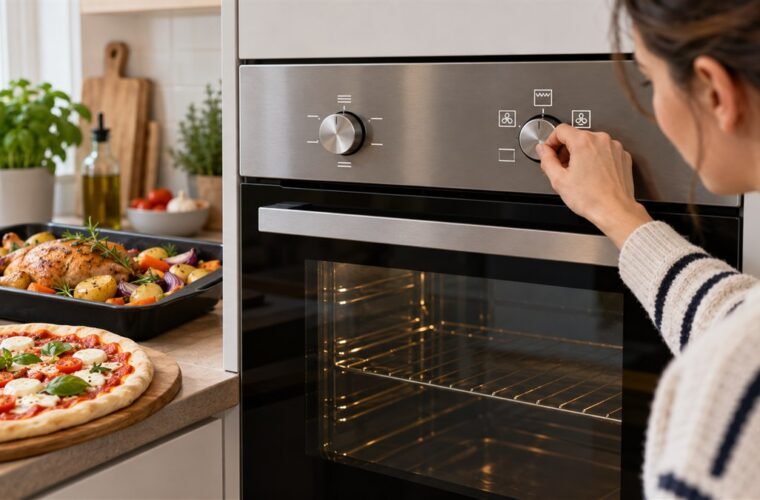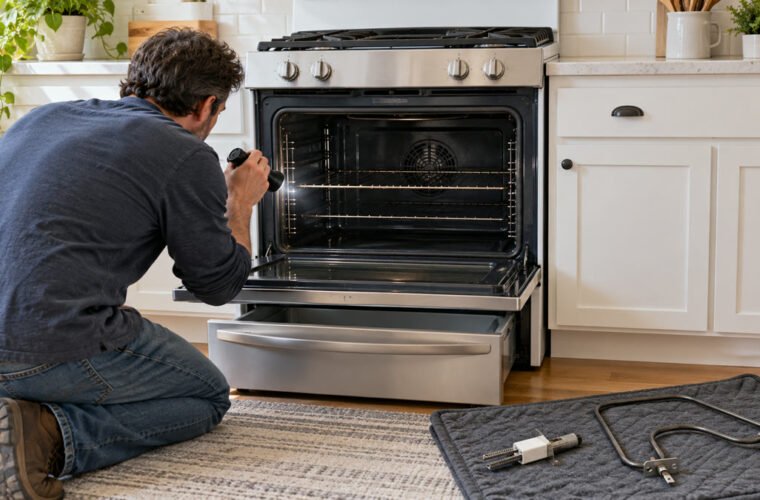
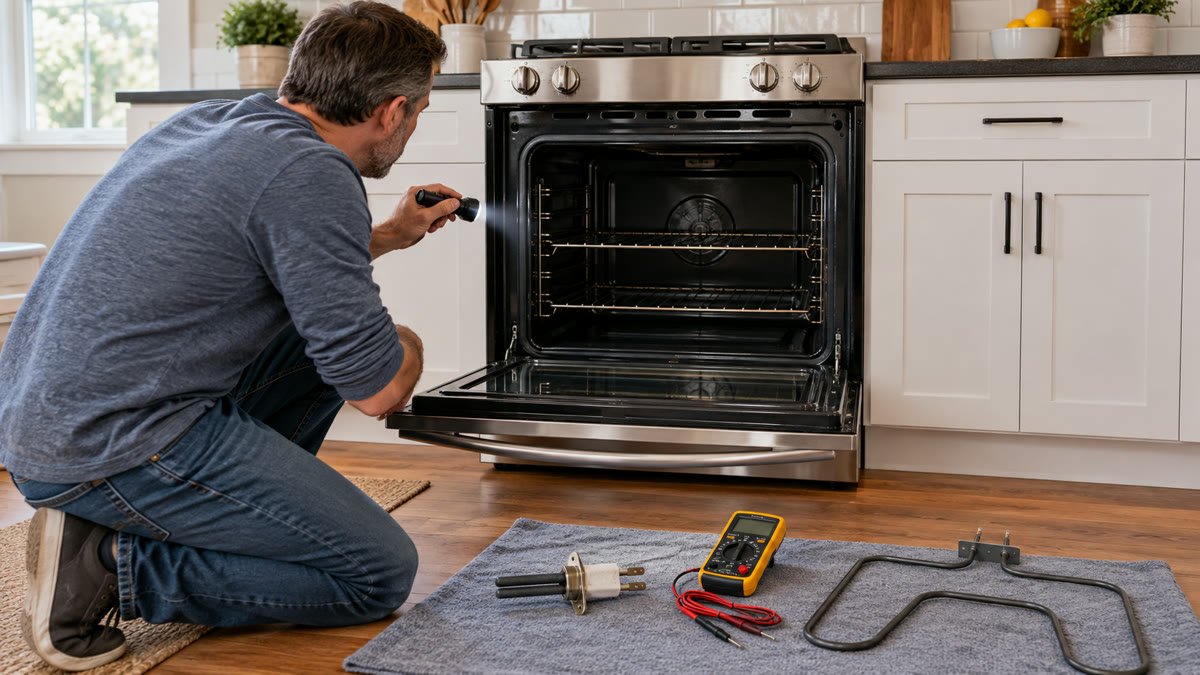
A Whirlpool oven not heating is usually a failed igniter on a gas model or a burned-out bake element on an electric one. Before you buy either, rule out the free causes: a door left open, Control Lock, demo mode, a Delayed Start, or a tripped breaker.
The control board comes last.
What you can see decides where you start. If your gas oven glows without lighting, look at the igniter. If your electric oven’s lower element never turns red, look at the element.
A blank or frozen panel points at settings and power.
Most of my service calls were Whirlpool, Maytag and KitchenAid machines, and I pull the tech sheet before I touch a part. On a range it’s usually taped behind the kick plate or on the back panel.
Keep your model number handy too, because button names vary between panels. On a Frigidaire the order changes, starting with the clock and a gas range recall, so see Frigidaire oven not heating for that brand.
Why is my Whirlpool oven not heating?
Your Whirlpool oven isn’t heating because one link in the heat chain has stopped: the igniter on gas models, the bake element on electric ones, or the control board that switches either. Sears Home Services puts its split for Whirlpool ovens stuck below 100°F at 29% igniter, 23% bake element and 18% control board.
The last 30% is everything else, from wiring to a sensor or a valve.
Those numbers describe one service company’s repair mix, so they tell you what’s likely, not what’s in your oven.
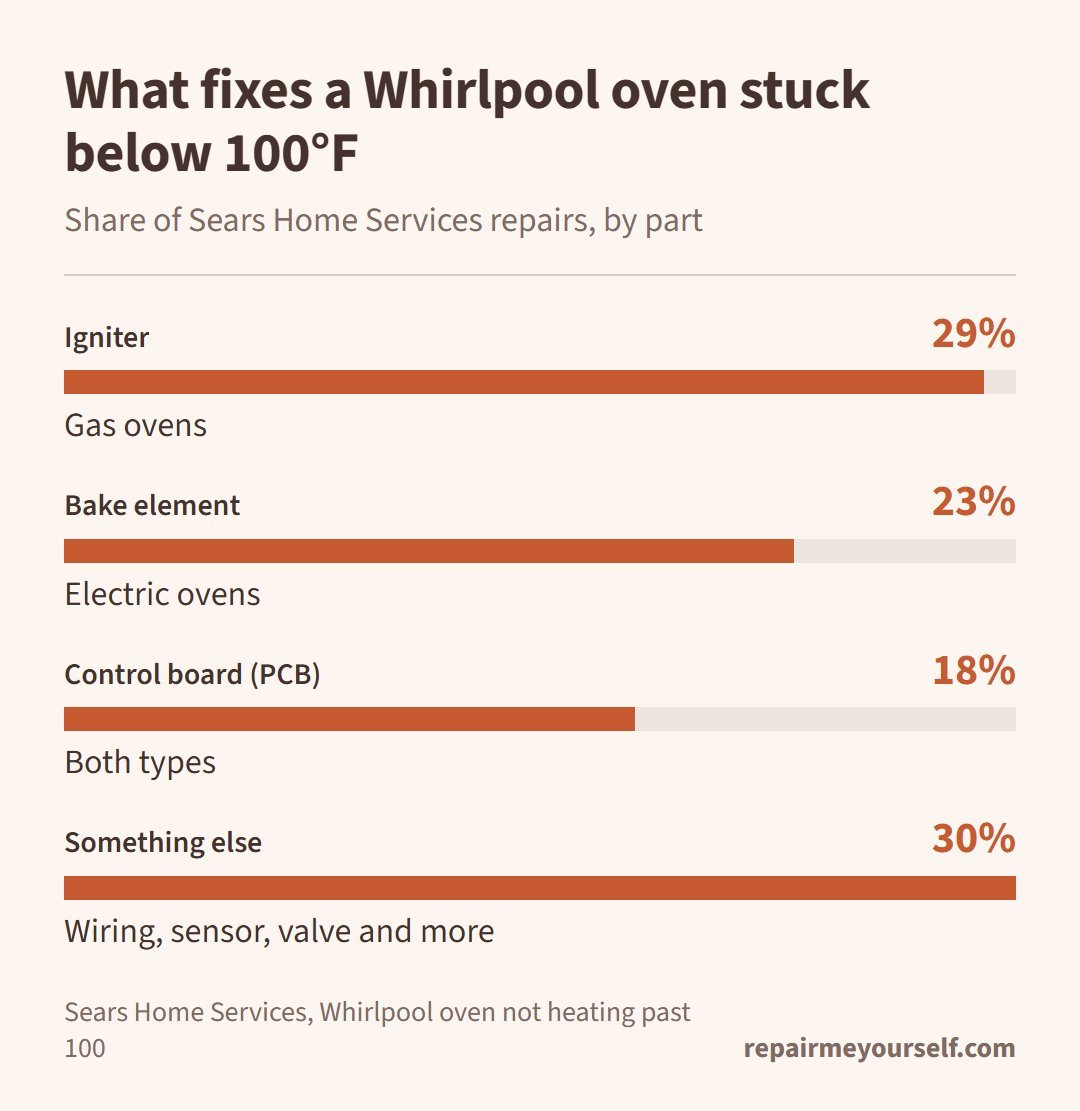
Match what you see to a starting point:
- Blank display, or buttons do nothing: power, Control Lock or demo mode.
- Gas cooktop lights, oven stays cold: the regulator shut-off valve, then the igniter.
- Igniter glows orange but the burner never lights: a weak igniter.
- Electric oven, lower element never turns red: the bake element or the power feeding it.
- Heats, just slowly, or bakes cold: preheat conditions, the sensor or calibration.
- F9 or F9 E0 after an outage: a breaker reset.
Free checks before you touch a part
Six settings can stop a Whirlpool oven from heating while every part is fine. Go through them in this order. None of them needs a tool.
- Door fully shut. Whirlpool says the elements won’t come on with the door open, and the broil element cuts out the moment you open it mid-broil. Make sure a rack or a pan handle isn’t holding it ajar.
- Control Lock off. A locked panel ignores Bake. Whirlpool’s fix is to hold the Control Lock button, or the pair of buttons your panel uses, for 3 seconds. My page on a locked Whirlpool oven sorts out the panel lock from a stuck door latch.
- Demo mode off. Whirlpool says the oven will not operate in demo mode, even though the display lights up. The exit steps vary by model, so find them in your owner’s manual.
- No Delayed Start. With a delay set, Bake won’t begin until the programmed start time. Cancel it and set Bake again.
- Fahrenheit, not Celsius. If the display shows C instead of F, you’re in Celsius mode, where Whirlpool says the control won’t go past 260°. That’s normal, and switching back to Fahrenheit in the settings clears it.
- F9 after a power outage. Turn the range’s breaker off for one minute, switch it back on and watch the display for another minute. If F9 or F9 E0 returns, Whirlpool says the outlet may be miswired, and that’s an electrician’s job.
Still cold? Note whether your oven burns gas or runs on electricity. They fail in different places.
Whirlpool gas oven not heating but the stovetop works
A working cooktop proves gas reaches the range, so the fault sits in the oven’s own gas path or its ignition. Whirlpool’s help page for this exact symptom puts a small lever first.
The regulator valve and three free fixes
Your gas range has a shut-off valve on the pressure regulator. Whirlpool says that when it’s OFF, gas flows to the cooktop burners but doesn’t supply the oven.
The lever can get flipped during delivery, or pushed by a utensil or cooking sheet you slide into the storage drawer.
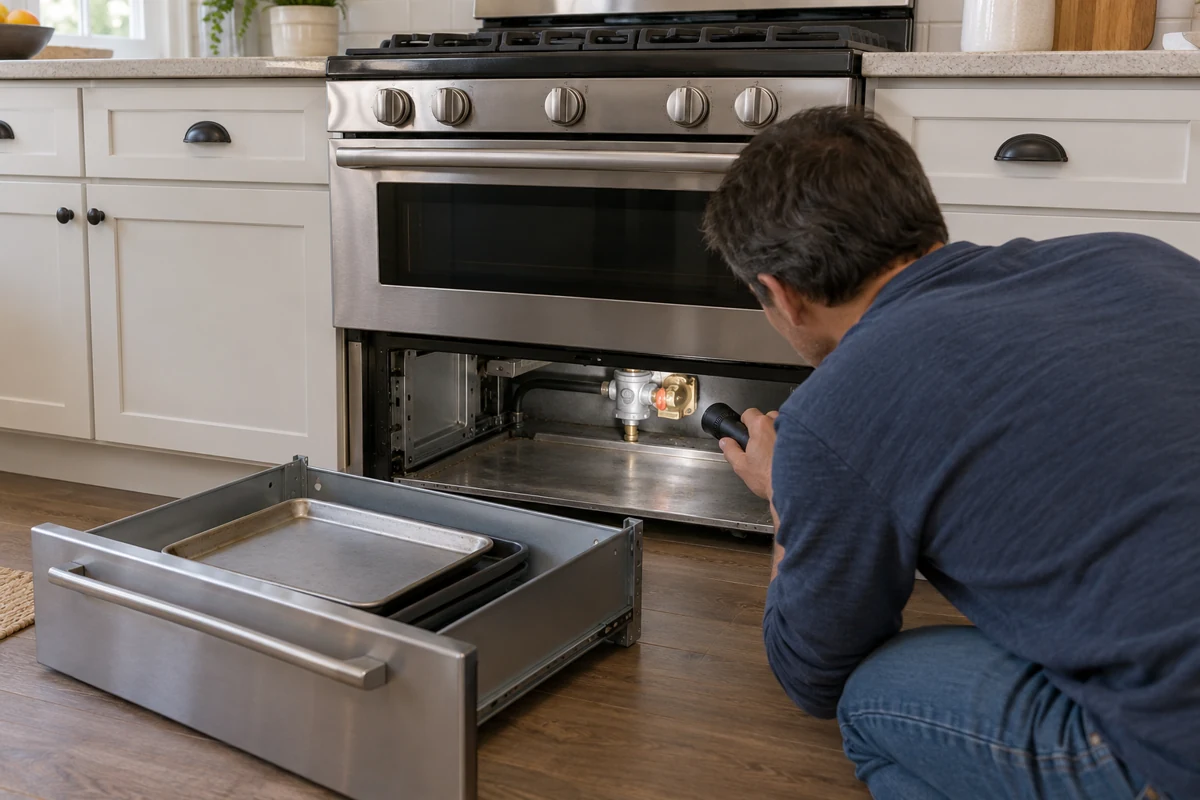
That valve is separate from the main gas supply to your home. Pull the drawer, find the lever and make sure it’s ON.
Then clear three more things from Whirlpool’s list:
- Foil or a liner on the oven bottom. Whirlpool says it can block air or gas flow to the burner, so take it out.
- An overloaded storage drawer. Pots, pans or spare racks can interfere with the igniter.
- The plug. The igniters need a 120-volt grounded outlet. Whirlpool says not to use a two-prong adapter or an extension cord, because ignition depends on a good ground path.
Just installed or reconnected? Turn on any surface burner first to bleed air out of the gas line.
Igniter glows but the oven won’t light
An igniter that glows and still won’t light the burner is the classic Whirlpool gas fault. Whirlpool’s own blog calls an orange glow with no ignition a clear sign the igniter is broken.
Why would a glowing part be bad? The glow bar has to pull enough current to open the oven’s gas valve, and a technician on r/appliancerepair explains that a worn one can glow without ever getting there.
When I ran calls, a cold gas Whirlpool oven with a working cooktop usually ended with a new igniter.
You confirm it with an amp draw. Clamp a meter around one igniter wire while the oven calls for heat, and keep your hands clear of the burner.
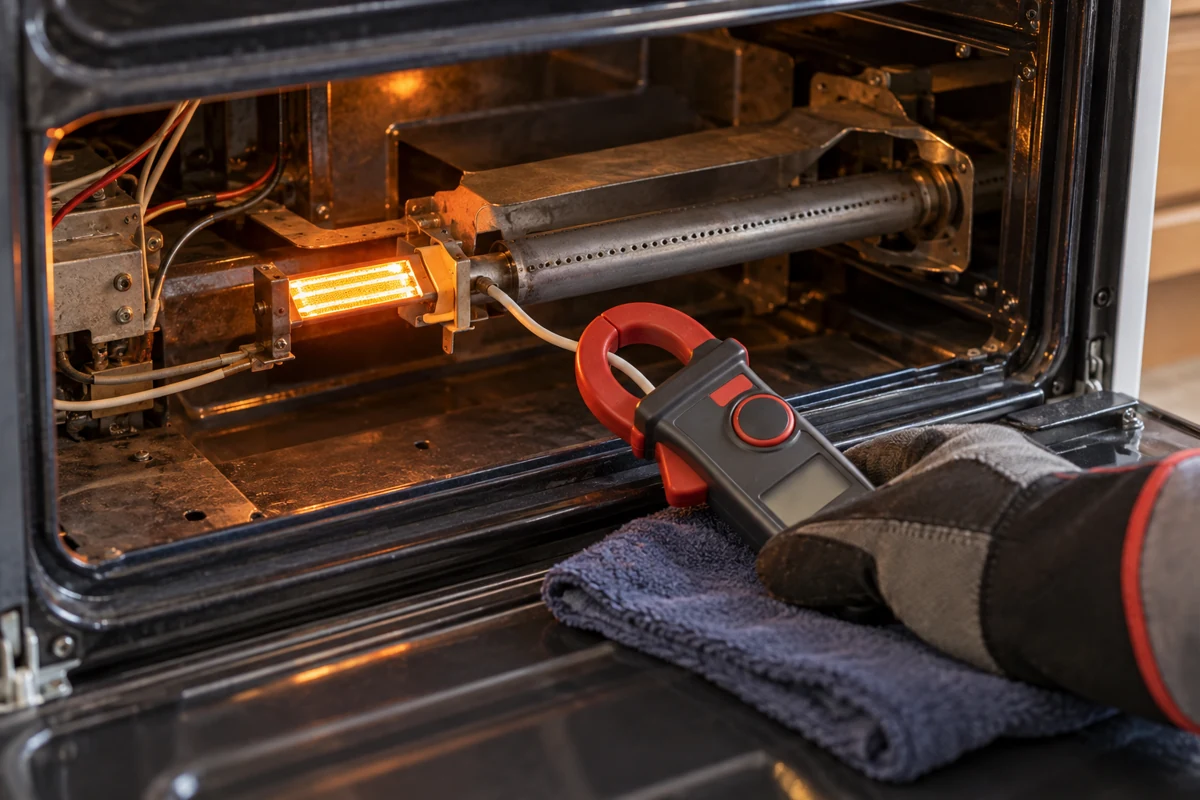
Surface Igniter lists its DS025KX, sold as a replacement for Whirlpool part 12400035, at 3.2 to 3.6 amps steady state at 115 volts.
The same maker sells a lower-rated 2.5 to 3.0 amp family, so match your reading to your igniter’s own part number. One technician on r/appliancerepair put the cutoff bluntly:
“Gonna save everyone reading this AI slop wall of text. It’s the igniter 95 percent of the time. Do an amp draw while trying to ignite. Less than 3.1, replace igniter. They’re all the same. Forget the connection. Cut and use ceramic wire nuts. Get back to cooking.”
– r/appliancerepair, August 2026 (10 upvotes)
That comment came on a Whirlpool WFG505M0MS0 whose igniter glowed but whose burner wouldn’t catch. The 95 percent is one tech’s estimate, not a count.
Stop and call a pro if you smell gas, the igniter draws normal current and the burner still won’t light, or the fix means opening the gas valve.
I’m not licensed for gas-line work, and I don’t do it for readers either.
Whirlpool electric oven not heating
Start with your eyes. Set Bake to 350°F and watch the lower element.
Whirlpool says an element that doesn’t glow red is a sign it needs replacing. If you spot blisters or holes in the coil, that points the same way.
Don’t mistake cycling for failure. Whirlpool says it’s normal for the bake and broil elements to switch off and on during a cycle to hold the set temperature. An electric range also needs 240 volts. If the display is dead too, go back to the breaker before you suspect the oven.
Broiler works but bake doesn’t
A broiler that heats while Bake stays cold means power is reaching your oven, so the bake element is the first suspect.
Turn the breaker off, pull the wires off the element terminals and test across them with a multimeter. If you get no reading, the coil is open.
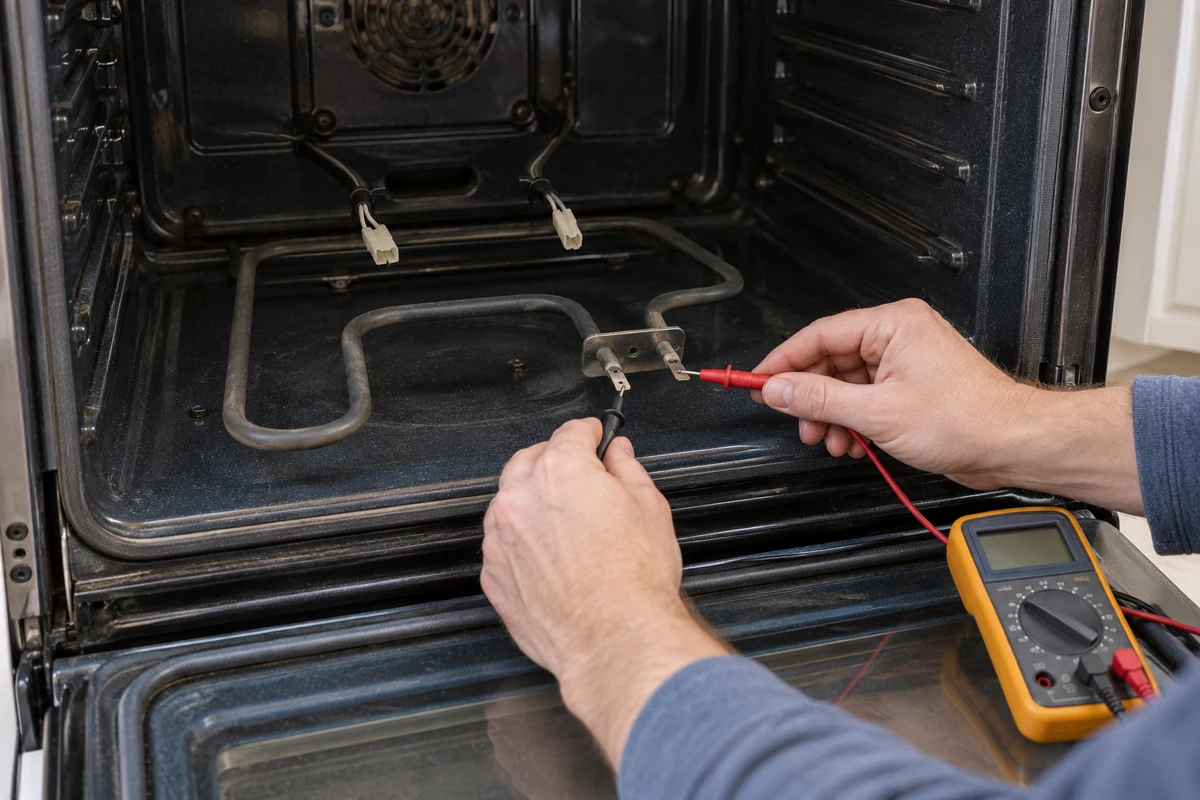
If it’s burned out, my steps to replace an oven heating element walk you through the swap.
If the element tests fine, the relay on the control board that switches it is next, and that’s usually a technician visit.
Smooth oven floor? The element is hidden
Some Whirlpool-family ovens, KitchenAid among them, hide the bake element under a flat floor panel. You can’t watch it glow.
Reaching it is a bigger job than swapping an exposed coil, so test before you take anything apart. When an owner posted about a KitchenAid KEBK101SSS04 wall oven that baked cold, a tech answered this way:
“This unit has a hidden bake element I’d guess your bake element is bad start by checking the bake element ohm it out and confirm it’s getting proper voltage.”
– r/appliancerepair, October 2026
Both halves of that matter. If your element tests good but has no voltage at its terminals, you’re looking at wiring, a thermal fuse or the control.
Whirlpool notes a thermal fuse can cut power to the oven, and it recommends a technician for that repair.
Heats, but slowly or never reaches temperature
Give your oven a fair test before you blame a part. Whirlpool says a normal preheat to 350°F takes 12 to 15 minutes with all the racks in.
Unused racks left inside, a hidden bake element, a 208-volt supply and a cold kitchen all add time.
If it does reach temperature but your food comes out underdone, look at the temperature sensor. It’s the thin rod usually mounted on the back wall of the cavity.
Whirlpool’s blog says it should sit at a 90° angle, and an element bent too close to it throws off the reading.
Then test the oven, not your thermometer. Whirlpool’s biscuit bake test uses 8 refrigerated biscuits on a shiny cookie sheet, on the middle rack.
Biscuits that stay pale at the package bake time suggest your oven runs cool, which is what calibration corrects.
Calibration lives in the controls. Depending on your panel, you’ll find it in the settings menu, by holding the Temp down arrow for 5 seconds until “0°F CAL” shows, or by holding BAKE for 5 seconds.
The range is 30°F either way. Whirlpool advises never moving it more than 10 degrees at a time.
That 30°F ceiling is also the limit of what calibration can do. An oven that won’t climb past 100°F or 250°F has a failed part, and no offset will fix it.
Other questions about a Whirlpool oven not heating
How do I reset a Whirlpool gas range oven?
To reset a Whirlpool oven, cut its power for one minute, then restore it. Whirlpool gives that one-minute breaker reset for F9 codes on its electric ranges. On a gas range, which runs on a 120-volt plug, I just unplug the cord for a minute. A reset fixes a Whirlpool oven not heating only when the control board is confused. It won’t revive a dead igniter.
Why does my oven get warm but not hot?
A Whirlpool oven that gets warm but never hot usually has a weak igniter on gas or a failing bake element on electric. On gas models the glow bar can warm the cavity a little without ever opening the valve. On electric models, test the bake element for an open coil.
When should I call a technician?
Call a Whirlpool technician when your free checks pass and the tests point past the igniter or element: the gas valve, the regulator, a thermal fuse or the control board. Have the model and serial number from the rating label ready when you book.