
That loud banging noise coming from your laundry room is hard to ignore. Sometimes it sounds like the machine is about to walk right across the floor. Other times it is more of a rhythmic thudding that gets louder as the spin speed increases.
A washer making a loud banging noise during the spin cycle is one of the most common calls appliance technicians get. More importantly, it is one of the most fixable. Let’s go through each cause from the simplest to the most serious so you can pinpoint exactly what is going on with your machine.
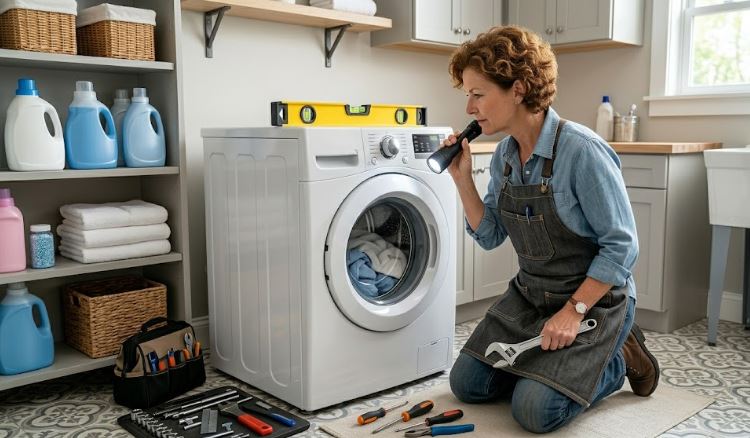
Quick Reference for Loud Noise Types By a Washer During Spin Cycle
| Type of Noise | Most Likely Cause |
|---|---|
| Loud rhythmic thumping | Unbalanced load |
| Banging plus machine moving | Unlevel machine or worn shock absorbers |
| Metallic clanking inside drum | Foreign object in drum or pump |
| Loud grinding during high-speed spin | Worn drum bearings |
| Banging that starts then fades | Suspension rods or springs failing |
| Loud clunking when spin starts | Worn clutch assembly (top-loaders) |
What Causes Loud Banging Noise in a Washing Machine’s Spin Cycle?
A washing machine may produce a loud slam while spinning due to one of these eight reasons:
1. The Load Is Unbalanced
This is the first thing to check, and it resolves the majority of banging and violent shaking complaints without spending a single dollar.
When heavy items like jeans, towels, or bedding bunch together on one side of the drum, the load becomes lopsided. As the drum accelerates into the spin cycle, that uneven weight swings hard against the cabinet walls with every rotation, creating that signature loud banging.
How to Fix an Unbalanced Load
Pause the cycle and open the lid or door. Physically pull the clothes apart and redistribute them evenly around the drum. Pay special attention to heavy single items, since one waterlogged duvet spinning alone will bang every time.
Going forward, mix heavy and light items together in the same load and avoid washing a single large item on its own. Adding a couple of towels alongside a bulky item helps balance the weight distribution significantly.
2. The Machine Is Not Level
An unlevel washer rocks and shakes during the spin cycle, and that rocking amplifies into a loud banging as spin speed increases. You might also notice the machine creeping across the floor during a heavy spin.
Even a small tilt is enough to cause significant noise because the drum spins at high speed and any imbalance gets magnified quickly.
How to Level Your Washing Machine
Place a spirit level on top of the machine and check it from side to side and front to back. Most washers have four adjustable feet that screw in or out by hand or with a wrench.
Adjust the feet until the bubble sits perfectly centered in the level. Then lock each foot in place using the locking nut above it, because vibration will gradually shift unlocked feet over time.
To prevent the machine from creeping during heavy spins, place Anti-Vibration Washing Machine Pads (View on Amazon) under all four feet. These thick rubber pads absorb vibration at the source and grip the floor firmly, keeping the machine exactly where it belongs through even the fastest spin cycles.
3. A Foreign Object Is Trapped in the Drum or Pump
Coins, buttons, bra underwires, and small plastic clips are notorious for slipping past pockets and into the drum. During the spin cycle, these items rattle and clank loudly against the drum walls or get sucked toward the pump and create a grinding, metallic banging sound.
This type of noise tends to be more irregular than the rhythmic thumping of an unbalanced load, and it often changes pitch as the drum speed changes.
How to Find and Remove Foreign Objects
Before running a cycle, shine a flashlight into the drum and check the drum holes and rubber door seal for trapped objects. Check the gap between the drum and the door gasket on front-loaders since small items love to hide there.
Also clean the pump filter at the front base of the machine. Coins and clips frequently make it through to the filter housing and rattle against the pump impeller during the drain and spin phases. Checking pockets before every load is the most effective prevention strategy here.
4. The Shock Absorbers or Suspension Rods Are Worn
Shock absorbers on front-loaders and suspension rods on top-loaders both serve the same purpose: they cushion the drum during the spin cycle and prevent it from slamming into the cabinet.
When these components wear out, the drum loses its cushioning and bangs hard against the machine’s frame, particularly at higher spin speeds. The noise usually starts gradually and gets worse over several months.
How to Test and Replace Shock Absorbers or Suspension Rods
Unplug the machine and manually push down on the drum. On a front-loader, it should push in and return slowly with resistance. If it springs back immediately or rattles loosely, the shock absorbers are gone.
On a top-loader, grab the drum and try to move it side to side. Excessive movement with a clunking sensation points to worn suspension rods. Search your model number alongside “suspension rod kit” or “shock absorber kit” on Amazon to find the correct replacement set.
Check out the most compatible washing machine suspension rods on Amazon.
5. The Drum Bearings Are Failing
Worn drum bearings produce one of the louder and more alarming noises a washer can make: a deep, rumbling grind that intensifies as spin speed increases. Sometimes it sounds almost like a jet engine at full spin.
Bearings allow the drum to rotate smoothly on its shaft. When they wear out, metal grinds against metal with every revolution, and that friction creates serious noise and heat.
How to Diagnose Worn Bearings
Open the door and spin the drum by hand. A healthy drum spins quietly and freely. A grinding or rumbling sensation while hand-spinning the drum, even at slow speed, confirms the bearings are worn.
Also look for rust-colored streaks on the back wall of the drum interior. These appear when a worn bearing seal allows water to reach the bearing housing and cause corrosion. Bearing replacement is one of the more involved washer repairs, and on older machines it is worth comparing the repair cost against the machine’s age before proceeding.
6. The Suspension Springs Are Stretched or Disconnected
Suspension springs work alongside shock absorbers to keep the drum centered inside the cabinet. On top-loaders especially, these springs connect the outer tub to the machine frame and absorb movement during agitation and spin.
When a spring stretches out or snaps loose, the drum swings freely and bangs against the sides of the cabinet with each rotation.
How to Inspect and Replace Suspension Springs
Unplug the machine and open the cabinet by removing the top or back panel depending on your model. Locate the springs connecting the outer tub to the frame and check each one for stretching, disconnection, or breakage.
A disconnected spring is sometimes easy to reattach by hand. A stretched or broken spring needs replacement (View on Amazon).
7. The Clutch Assembly Is Worn (Top-Loaders)
This one is specific to top-loading washers, and it tends to surprise people because it sounds serious but is actually a known wear item.
The clutch assembly connects the transmission to the inner tub and allows the drum to gradually ramp up to full spin speed rather than jolting immediately. When the clutch wears out, that gradual ramp disappears and the drum engages with a loud clunking or banging sound at the start of each spin cycle.
How to Address a Worn Clutch
Listen specifically for when the banging occurs. If it is loudest in the first 10 to 15 seconds of the spin cycle and then quiets somewhat as the drum reaches full speed, the clutch is the likely culprit.
The clutch is not repairable and needs full replacement when it fails. Search your model number alongside “clutch assembly” on Amazon for the correct part. For Whirlpool and Kenmore direct-drive top-loaders, this is a well-documented repair with plenty of video guides available to walk you through the process step by step.
8. The Drive Belt Is Slipping or Damaged
A worn or damaged drive belt can create a sharp slapping or banging noise during the spin cycle as it skips across the motor pulley. This is more common on older top-loaders and some front-loader models that use a belt-driven system.
The noise often comes with a burning rubber smell if the belt has started to glaze from slipping.
How to Check and Replace the Drive Belt
Unplug the machine and access the rear panel. Locate the belt running between the motor and drum pulleys. Look for cracking, fraying, glazing, or visible looseness. A belt that slides off the pulley easily by hand without resistance has already stretched past its working tension.
Search your model number alongside “washer drive belt” on Amazon.
Banging Noise Fix Difficulty and Cost
| Cause | DIY Difficulty | Part Cost | Professional Cost |
|---|---|---|---|
| Unbalanced load | Very easy | Free | N/A |
| Unlevel machine | Easy | Free – $20 (pads) | N/A |
| Foreign object | Easy | Free | $80 – $130 |
| Suspension rods/springs | Moderate | $15 – $40 | $150 – $250 |
| Shock absorbers | Moderate | $20 – $50 | $150 – $250 |
| Drive belt | Moderate | $10 – $25 | $100 – $200 |
| Clutch assembly | Moderate | $20 – $50 | $150 – $300 |
| Drum bearings | Advanced | $30 – $80 | $200 – $500 |
Frequently Asked Questions
Is it safe to keep running a washer that is banging loudly?
It depends on the cause. An unbalanced load or unlevel machine is safe to correct and restart. However, banging caused by worn bearings, a failing clutch, or broken suspension components should be fixed promptly since continued use accelerates damage to surrounding parts.
Why does my washer only bang at the start of the spin cycle?
Banging specifically at spin startup almost always points to the clutch assembly on top-loaders, or to shock absorbers that have lost their dampening ability. Both allow the drum to engage with a jolt rather than ramping up smoothly to speed.
Can a banging washer damage my floor?
Yes, it can. A machine that vibrates severely enough to walk across the floor can scratch hardwood, crack tiles, and even stress the subfloor over time. Anti-vibration pads and proper leveling address this before floor damage occurs.
Why does the banging get louder as the spin speeds up?
Louder noise at higher spin speeds points to a mechanical imbalance rather than a load issue. Worn bearings, damaged suspension, or a failing shock absorber all become more noticeable as centrifugal force increases with spin speed.
How long do washing machine drum bearings typically last?
Drum bearings generally last 10 to 15 years under normal use. Overloading the machine regularly, washing very heavy items frequently, and using too much detergent all accelerate bearing wear by putting extra stress on the drum shaft.
Loud Does Not Always Mean Expensive
A washer making a loud banging noise during the spin cycle sounds alarming, but the cause is almost always one of the eight issues above, and most of them are straightforward fixes. Start with the free checks first: redistribute the load, level the machine, and look for foreign objects. Those three steps alone resolve most banging complaints before any tools even come out.
For more issues to fix DIY, our complete washing machine troubleshooting guide is your go-to resource for deeper mechanical diagnostics across all major brands.

Hi, I’m Barlgan! I created Repair Me Yourself to empower homeowners to tackle appliance repairs with confidence. From decoding error codes to fixing cooling issues, I break down complex repairs into simple, actionable steps that save you time and money.