
The refrigerator used to be the most boring appliance in the kitchen — it kept food cold, it hummed quietly, and you never thought about it. That changed. Today’s smart refrigerators come with touchscreens, internal cameras, grocery tracking apps, voice control, and enough connectivity to function as a kitchen command centre.
But alongside all that innovation is a price tag that can exceed $3,000 — and a genuine question that more buyers are asking: is a smart fridge actually worth it, or are you paying a premium for features you will use once and forget?
This guide answers that question directly. It compares smart and traditional refrigerators across the factors that matter most — features, reliability, cost, and long-term value — and then covers three top picks of each type currently available on Amazon.

Smart Fridge vs Traditional Refrigerator: The Honest Comparison
Understanding what you are actually getting — and giving up — with each category is the most important step before spending over a thousand dollars.
What Makes a Refrigerator “Smart”?
A smart refrigerator connects to your home Wi-Fi network and pairs with a manufacturer app on your smartphone. At the basic level, this means remote temperature monitoring, door-open alerts, and diagnostic notifications.
At the premium level — Samsung’s Family Hub being the most prominent example — it means a full-sized touchscreen display on the door, internal cameras that show you what is inside the fridge from the grocery store, calendar and note-sharing for the household, voice assistant integration, and AI-powered features that are still maturing. Smart fridges span a wide price range depending on how deep the tech goes.
Features: Smart Fridge Wins for Tech Households, Traditional Wins on Simplicity
The features gap between smart and traditional refrigerators is real, but the practical value of those features is more nuanced. Internal cameras are genuinely useful for checking inventory while shopping without relying on memory. Remote temperature monitoring and door-open alerts are practical for peace of mind. App-based temperature scheduling works as advertised.
The features that get marketed heavily but deliver less in daily use include AI inventory tracking — which independent reviewers consistently describe as unreliable in 2026, often misidentifying items and requiring far more manual input than advertised — and large touchscreens, which are impressive at first but quickly become redundant when your phone already does everything they offer, with better software support and a longer update lifecycle.
Traditional refrigerators, by contrast, do one thing with total reliability: they keep food cold. Fewer components, simpler mechanical systems, and no software dependencies mean they have significantly fewer failure points and are easier and cheaper to repair when something does go wrong.
Reliability: Traditional Refrigerators Have a Clear Edge
Smart refrigerators have more components that can fail: touchscreens, Wi-Fi modules, internal cameras, and sensor boards are all additional failure points on top of the standard compressor, seals, and thermostat of any refrigerator. When the non-refrigeration components fail — and they do — the repair cost is higher, parts can be harder to source, and not every technician is equipped to handle software-related issues.
There is also a longevity concern unique to smart appliances. A traditional refrigerator bought today will still do its job perfectly in 15 years. A smart refrigerator bought today may have its app and software support discontinued in 5 to 7 years, leaving you with a very expensive traditional refrigerator with a touchscreen that no longer connects to anything. This is not hypothetical: it has happened with early smart appliance adopters already.
Cost: Traditional Refrigerators Are Significantly Cheaper to Buy and Repair
The price premium for smart refrigerators is typically $500 to $1,500 above a comparable traditional model. A solid traditional 25 cu. ft. side-by-side refrigerator costs roughly $900 to $1,200. A comparable smart French door model with Wi-Fi and internal cameras starts around $1,500 and can reach $2,500 or more.
Top-end smart models with large touchscreens and full Family Hub functionality exceed $3,000. Annual electricity costs for both types are broadly similar when ENERGY STAR certified, though traditional models with simpler compressor designs often run slightly more efficiently in real-world use.
Understanding the true operating cost of your refrigerator — including electricity — is worth doing before buying. Our guide on how many watts a fridge uses breaks this down model by model, which is especially useful when comparing smart models with their additional electronic components running continuously.
Energy Efficiency: Broadly Similar, With Caveats
Both smart and traditional refrigerators offer ENERGY STAR certified options, and certification requirements are the same across both categories. The smart features themselves — touchscreens, cameras, Wi-Fi modules — do consume a small but continuous amount of electricity on top of the refrigeration system. For most households this is negligible, but it is worth noting that the additional electronics never fully power down.
Who Should Buy Each?
Buy a smart refrigerator if you are fully invested in a smart home ecosystem, genuinely value remote monitoring and app-based control, use your kitchen as a family hub and will use features like shared calendars and grocery lists, and are comfortable that some software features may become outdated before the appliance does.
Buy a traditional refrigerator if reliability, repairability, and value over a 15-year lifespan are your priorities, you do not have a strong need for connectivity features, or your budget is better allocated to the core refrigeration quality — capacity, insulation, and compressor — rather than technology add-ons.
Smart Fridge vs Traditional Refrigerator Quick Summary
| Feature | Smart Refrigerator | Traditional Refrigerator |
|---|---|---|
| Wi-Fi and app control | Yes | No |
| Internal cameras | Some models | No |
| Touchscreen display | Some models | No |
| Starting price | $1,499+ | $600+ |
| Repair complexity | Higher | Lower |
| Software longevity risk | Yes (5–7 years) | None |
| Energy consumption | Similar + small tech draw | Similar |
| Reliability over 15 years | Moderate (more failure points) | High |
| Best for | Tech-forward households | Most households |
The 3 Best Smart Refrigerators on Amazon
Smart refrigerators range from Wi-Fi-only models with basic app connectivity to full-featured kitchen hubs with touchscreens and cameras. The three models below cover that spectrum — all verified available on Amazon, all from established brands with genuine smart home integration.
1. Midea MRF29D9BST French Door Refrigerator
The Midea MRF29D9BST is designed for households that need serious refrigerator space without paying luxury-brand prices. With nearly 29 cubic feet of storage, this fridge easily handles large grocery runs, meal prep containers, oversized drink pitchers, and bulk freezer items without feeling cramped. The layout is flexible too, thanks to adjustable shelves and movable door bins that make it easier to fit tall bottles or awkwardly shaped items. One of the most interesting features is the hands-free AutoFill dispenser, which automatically fills cups and bottles without needing to hold them in place.
In everyday use, the refrigerator feels modern, spacious, and surprisingly feature-packed for the price. The dual icemakers are especially useful for larger families or anyone who goes through a lot of ice, and the tall dispenser fits large tumblers much better than many standard refrigerators. Most feedback around the fridge focuses on the amount of storage and convenience features you get for the money. That said, Midea is still building its reputation in the full-size refrigerator market, and some owners online have reported concerns about noise, reliability, or customer support experiences. Others, however, say the refrigerator offers excellent value compared to more expensive brands.
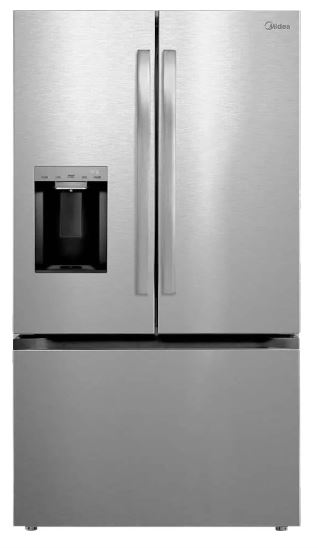
Key Features
- 28.9 cu. ft. capacity
- French-door refrigerator design
- Hands-free OneTouch AutoFill dispenser
- Dual icemakers
- Adjustable sliding shelves
- Adjustable door bins
- External ice and water dispenser
- Wi-Fi connectivity
- ENERGY STAR certified
- Tall dispenser for large tumblers and bottles
2. LG LRFLC2706S — Best Smart Refrigerator for a Built-In Look
The LG LRFLC2706S solves one of the most common smart refrigerator frustrations: getting a full-size capacity in a counter-depth footprint that actually looks integrated with your kitchen. LG’s Counter-Depth MAX technology delivers a genuine 27 cubic feet of storage — the capacity of a standard-depth fridge — in a 28.5-inch-deep format that sits flush with standard cabinetry. That distinction matters if your kitchen is designed for a built-in look.
The smart features are handled through LG’s ThinQ platform, which is one of the more mature and reliable smart appliance ecosystems available in 2026. The ThinQ app allows remote temperature adjustment, energy monitoring, diagnostic alerts through Smart Diagnosis, and integration with Alexa and Google Assistant voice control. ThinQ Care proactively sends maintenance and usage alerts before issues develop — a feature that has meaningful practical value for an appliance you depend on every day.
LG’s Smart Inverter Compressor adjusts its speed continuously based on actual cooling demand rather than cycling on and off at full power. This results in less mechanical wear over time, more consistent internal temperatures, and quieter operation than single-speed alternatives. LG backs the linear compressor with an industry-leading 10-year parts warranty — one of the strongest compressor coverage commitments available on any refrigerator at this price point.
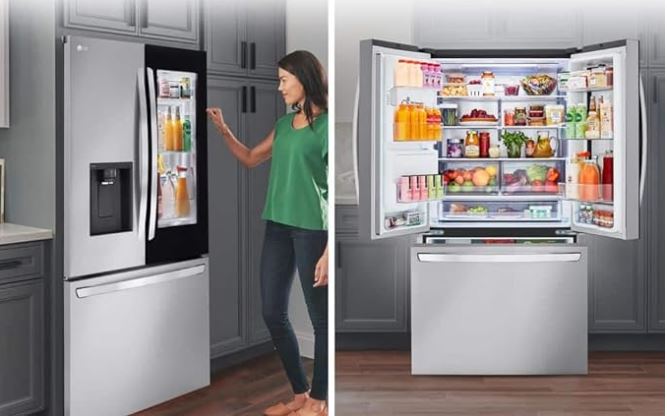
Key Features
- 27 cu. ft. Counter-Depth MAX capacity — full-size storage, built-in aesthetic
- LG ThinQ Wi-Fi app: remote temperature control, energy monitoring, Smart Diagnosis
- ThinQ Care: proactive maintenance alerts and usage tracking
- Compatible with Alexa and Google Assistant
- Smart Inverter Compressor with 10-year parts warranty
- Door Cooling+ system for consistent temperature throughout the interior
- PrintProof fingerprint-resistant stainless steel exterior
- Internal water dispenser
- ENERGY STAR certified
- Smart Diagnosis for early issue identification
Best for: Households who want smart connectivity without a large touchscreen, a counter-depth design that integrates cleanly with kitchen cabinetry, and the reassurance of LG’s 10-year compressor warranty.
3. GE GNE27JYMFS — Best Entry-Level Smart Refrigerator
Not every household needs a full-featured smart fridge with a touchscreen and cameras. For those who want Wi-Fi connectivity, remote monitoring, and app-based control without the premium price or the complexity of a full smart platform, the GE GNE27JYMFS offers a sensible middle ground — genuine smart capability at the most accessible price on this list.
The GNE27JYMFS connects to GE’s SmartHQ app via Wi-Fi, enabling remote temperature adjustment, Turbo Cool and Turbo Freeze activation from your phone, energy tracking, and alert notifications if the door is left open or the temperature fluctuates outside a safe range. It also works with Alexa and Google Assistant for basic voice commands. This is not Samsung Family Hub — there is no touchscreen or camera — but it is the kind of connected functionality that most households will actually use day to day rather than abandon after the novelty wears off.
The underlying refrigeration quality is strong. At 27 cubic feet across a standard 36-inch-wide footprint, this is a spacious French door model with GE’s Quick Space retractable shelf (which folds down to accommodate tall items), full-width humidity-controlled crispers, a deli drawer, and two-level freezer baskets. The advanced water filtration system removes 99 percent of lead and chlorine from water and ice — better filtration than many refrigerators at twice the price.
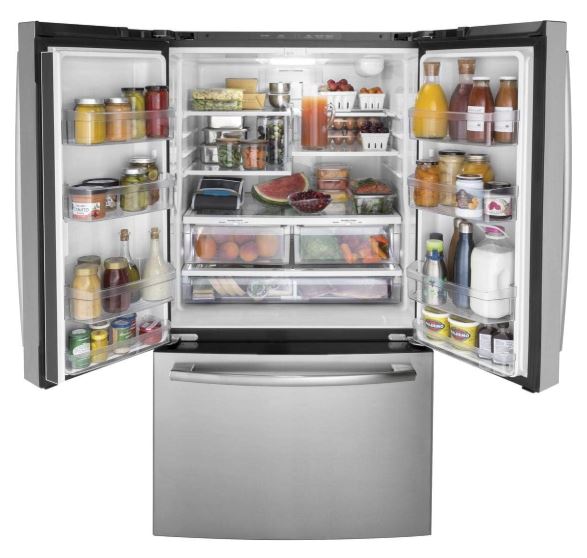
Key Features
- 27 cu. ft. French door capacity in a 36-inch-wide footprint
- SmartHQ Wi-Fi app: remote temperature control, Turbo Cool/Freeze, energy tracking
- Door-open and temperature alert notifications
- Compatible with Alexa and Google Assistant
- Quick Space retractable shelf for tall items
- Advanced water filtration: removes 99% of lead and chlorine
- Humidity-controlled crisper drawers
- Full-width deli drawer
- Two-level freezer storage baskets
- Fingerprint-resistant stainless steel exterior
- ENERGY STAR certified
Best for: Buyers who want the core benefits of smart refrigerator connectivity — remote monitoring, app control, and alerts — without the complexity or price premium of a full Family Hub or InstaView model.
The 3 Best Traditional Refrigerators on Amazon
Traditional refrigerators prioritize what a refrigerator fundamentally needs to do: keep food cold reliably, over a long time, with low maintenance and repair costs. These three picks represent the best of the category across different sizes and configurations.
1. GE GTS22KGNRBB — Best Traditional Top-Freezer Refrigerator
Top-freezer refrigerators are the most reliable configuration in the residential refrigerator market — simpler mechanics, fewer moving parts, and decades of proven performance data back that claim consistently. The GE GTS22KGNRBB is one of the most consistently well-rated models in this category, with a 4.5-star average across thousands of reviews and GE’s ranking as the number-one brand in quality and dependability among 16 to 22 cu. ft. refrigerators based on independent property maintenance surveys.
At 21.9 cubic feet, this is a generously sized top-freezer that suits families of two to four comfortably. Edge-to-edge glass shelves that run wall to wall maximize usable shelf space at every level. Upfront temperature controls — separate dials for the fridge and freezer, positioned at the front of the interior — let you make adjustments without bending or reaching deep inside. LED lighting throughout the interior illuminates every corner without generating heat or the light quality degradation of older bulb types.
The garage-ready rating means this model operates reliably in ambient temperatures from 38°F to 110°F, making it a strong choice as either a primary kitchen refrigerator or a secondary unit in a garage or basement. With no smart components to worry about and a straightforward mechanical design, this is the refrigerator that will still be working perfectly in 2038 with only routine maintenance.
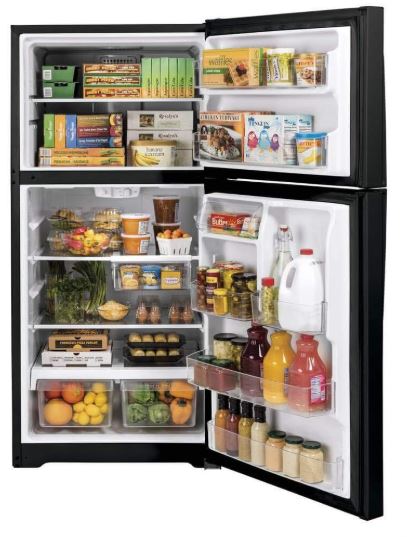
Key Features
- 21.9 cu. ft. total capacity in a 33-inch-wide top-freezer format
- Edge-to-edge full-width glass shelves for maximum usable depth
- Upfront separate temperature controls for fridge and freezer
- LED interior lighting throughout
- Garage-ready: operates in 38°F to 110°F ambient temperatures
- Modular door bins with dairy compartment
- Adjustable glass freezer shelf
- Deli drawer and produce crisper drawers
- High-gloss finish, easy-clean interior
- GE’s #1 quality and dependability rating in its size class
Best for: Households who want a proven, no-fuss top-freezer refrigerator from a trusted brand at the lowest price point on this list, with garage-ready capability and long-term reliability as the primary priorities.
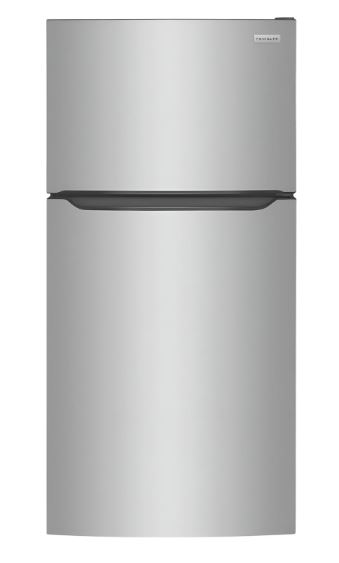
2. Frigidaire FFTR1835VS — Best Compact Traditional Refrigerator
The Frigidaire FFTR1835VS makes a strong case for the 30-inch-wide top-freezer format — a configuration that fits in spaces too narrow for a standard 33-inch refrigerator while still delivering nearly 18.4 cubic feet of storage. For apartments, smaller homes, secondary installations, or any kitchen where a full-width refrigerator simply will not fit, this is one of the most capable options available at its price.
Frigidaire’s EvenTemp cooling system distinguishes this model from basic budget alternatives. Rather than relying on a single vent to distribute cold air, EvenTemp uses a fan-assisted airflow design to circulate consistently throughout the refrigerator compartment, minimizing warm spots near the door and temperature gradients between shelves. The practical result is food that stays fresher longer and less frost accumulation in areas where air circulation is otherwise weak.
The interior organization is practical and well-thought-out for the size: adjustable glass shelves accommodate different container heights, humidity-controlled crisper drawers independently manage produce freshness, and a sliding deli drawer shifts from one side to the other to free up door bin space as needed. Gallon-sized door bins handle the largest containers you regularly need to store. The garage-ready design means this unit handles temperature extremes from 45°F to 110°F without issue.
This model’s EvenTemp system and overall reliability track record were specifically highlighted in our best refrigerator under $1,000 guide, which covers this category in more detail if you want a deeper comparison within the traditional refrigerator space.
Key Features
- 18.3 cu. ft. total capacity in a 30-inch-wide footprint
- EvenTemp fan-assisted cooling for consistent temperature throughout
- Humidity-controlled crisper drawers for produce freshness
- Sliding half-width deli drawer — moves side to side for flexible organization
- Adjustable glass shelves for varying container heights
- Gallon-sized door bins
- Garage-ready: operates in 45°F to 110°F ambient temperatures
- ADA compliant controls and dimensions
- Optional slim ice maker compatible (sold separately)
- ENERGY STAR certified
Best for: Apartments, smaller homes, secondary installations, or any kitchen that needs a 30-inch-wide footprint without sacrificing quality refrigeration performance or organization features.
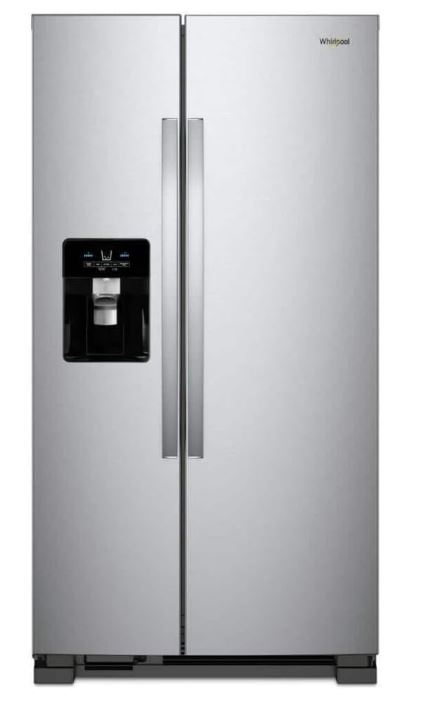
3. Whirlpool WRS325SDHZ — Best Traditional Side-by-Side Refrigerator
For households that use the freezer heavily, prefer eye-level access to both fresh and frozen sections without bending, or have a narrower kitchen where a half-width door swing is easier to manage, the side-by-side configuration remains the most practical layout — and the Whirlpool WRS325SDHZ is the most reliably-backed model in this category.
Whirlpool specifically claims the lowest repair rate among side-by-side refrigerator brands compared to GE, Frigidaire, Samsung, and LG, a claim supported by independent service data rather than marketing alone. For a refrigerator you expect to own for 12 to 15 years, that reliability track record carries more weight than any smart feature at a comparable price. There are no software dependencies to worry about, no app requiring updates, and no touchscreen that might need replacement — just a well-engineered mechanical refrigerator doing its job.
At 25 cubic feet, it is spacious enough for families of four to five. The in-door can caddy specifically holds cans and bottles vertically within the door, freeing up valuable shelf space for larger items. Wall-to-wall frameless glass shelves maximize usable surface at every level. EveryDrop water filtration at the external dual-pad dispenser removes over 70 contaminants from water and ice — one of the most thorough filtration systems in a traditional refrigerator at this price.
Key Features
- 25 cu. ft. total capacity in a 36-inch-wide side-by-side configuration
- Whirlpool’s lowest claimed repair rate among side-by-side brands
- In-door can caddy for bottles and cans — frees up shelf space
- Wall-to-wall frameless glass shelves for maximum usable depth
- Deli drawer for meats and cheeses at optimal temperature
- External dual-pad ice and water dispenser with EveryDrop filtration (70+ contaminants removed)
- Fingerprint-resistant stainless steel finish
- Adaptive defrost for energy-efficient temperature maintenance
- ADA compliant
- No smart components — nothing to update, fail, or become obsolete
Best for: Households prioritizing proven reliability and lowest repair likelihood over technology features, who use the freezer frequently and want eye-level access to both sections, at the strongest long-term value on this list.
Frequently Asked Questions
Is a smart fridge really worth the extra cost?
For most households, the honest answer is no — the practical daily value of smart features does not justify a $500 to $1,500 premium over a comparable traditional model. The exception is households genuinely embedded in a smart home ecosystem, those who specifically value the internal camera for grocery shopping, or buyers who will use shared scheduling features actively. If those use cases describe you, a smart fridge earns its cost. If not, that premium is better spent on a high-quality traditional refrigerator with a better compressor and stronger insulation.
How long do smart refrigerators last compared to traditional ones?
The refrigeration components of a smart fridge last as long as a traditional model — typically 10 to 15 years with proper maintenance. The smart features, however, carry a software longevity risk: manufacturers may discontinue app support within 5 to 7 years, leaving the touchscreen and connected features non-functional. Traditional refrigerators carry no equivalent risk — a well-maintained traditional fridge from today will still operate identically in 2040.
Are smart refrigerators harder to repair?
Yes, generally. Smart refrigerators add touchscreens, Wi-Fi modules, cameras, and sensor boards to the standard compressor, thermostat, and seals of any refrigerator. More components means more failure points. When the smart components fail, repair costs are higher, parts can be harder to source, and some technicians are not equipped to handle software-related issues. Traditional refrigerators, with fewer components, are easier and less expensive to repair throughout their lifespan.
Can I add smart features to a traditional refrigerator?
Not to the same degree as a built-in smart model, but you can add external smart monitoring. Wi-Fi temperature sensors placed inside a traditional fridge can send alerts if temperature rises unexpectedly. Smart plugs can monitor electricity consumption. These options cost $20 to $50 total and cover the practical monitoring needs that most households actually use from a smart refrigerator, without the cost or software risk of a built-in system.
Do smart refrigerators use more electricity?
Smart refrigerators consume slightly more electricity than comparable traditional models due to the continuous power draw of touchscreens, cameras, and Wi-Fi modules. Both types offer ENERGY STAR certified options with similar core refrigeration efficiency, but the electronics add a small ongoing draw. The difference is typically modest — often less than $10 per year at average electricity rates — and unlikely to be a deciding factor in the purchase decision.
Make the Right Choice Before You Spend $2,000 on the Wrong Fridge
The smart fridge vs. traditional refrigerator debate does not have a single correct answer — it has the right answer for how your household actually lives. If connectivity, family hub features, and smart home integration genuinely fit your lifestyle, any of the three smart models above deliver that well, with the Midea MRF29D9BST leading on full platform features, the LG LRFLC2706S on build quality and compressor warranty, and the GE GNE27JYMFS as the most accessible entry point.
If long-term reliability, lower repair costs, and straightforward performance are your priorities, the traditional models stand on solid ground: the GE GTS22KGNRBB for top-freezer value, the Frigidaire FFTR1835VS for compact spaces with quality cooling, and the Whirlpool WRS325SDHZ for side-by-side reliability that Whirlpool backs with the lowest repair rate claim in its category.

Hi, I’m Barlgan! I created Repair Me Yourself to empower homeowners to tackle appliance repairs with confidence. From decoding error codes to fixing cooling issues, I break down complex repairs into simple, actionable steps that save you time and money.