If you have ever shopped for a top-load washing machine in the last few years, you have probably noticed that some models have a tall post in the middle of the drum and others have nothing but a low disc sitting at the bottom. That difference — agitator vs impeller — is one of the most consequential choices you can make when buying a washer, and the appliance industry does not always explain it clearly.
This guide breaks down exactly how each design works, what the real trade-offs are for different laundry types, and which models available on Amazon.com right now make the strongest case for each approach.
How an Agitator Washer Works
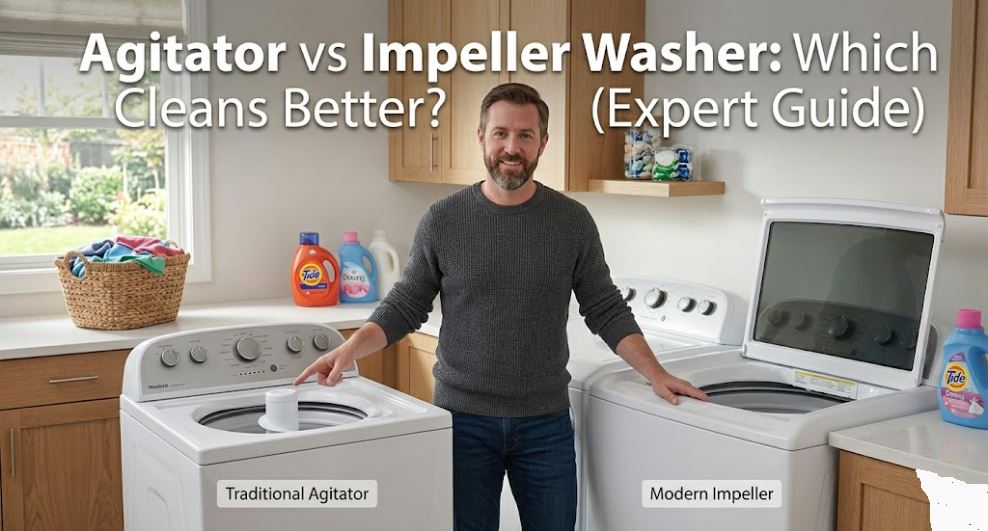
An agitator washer has a tall, finned post mounted in the center of the drum. During the wash cycle, that post twists back and forth, rubbing clothes directly against its fins and against each other as they move through the water.
The mechanical action is intentionally aggressive. That is both the appeal and the trade-off.
The case for agitator washers
For heavily soiled laundry — work uniforms caked in grease, kids’ sports gear with ground-in mud, towels used at the gym — an agitator’s direct friction approach gets results faster than any other top-load design. The central post physically breaks apart stains rather than relying on soak time and water movement alone.
Cycle times are typically shorter. A normal agitator wash cycle runs 35 to 50 minutes, while an impeller cycle on the same load can run 50 to 70 minutes or longer to achieve comparable results. For households running multiple loads per week, that time difference adds up.
Agitator washers are also more forgiving if you do not sort loads carefully or occasionally overload slightly. The mechanical action compensates where user error would hurt an impeller machine more.
The case against agitator washers
The same friction that removes tough stains can wear fabric over time. Delicate items — lightweight knits, linen, athletic wear with stretch — take more abuse in an agitator machine than they should. Items with embellishments, drawstrings, or loose weaves can snag on the agitator post.
Standard agitator models also use more water per load than HE impeller designs. Water usage has become a meaningful cost factor in areas with high utility rates or during drought conditions.
How an Impeller Washer Works
An impeller washer replaces the central post with a low-profile disc or cone at the base of the drum. Rather than rubbing clothes directly, the disc spins to create powerful water currents that tumble clothes against each other throughout the entire drum.
Because there is no post taking up central space, the drum volume is fully usable. A 4.5 cu. ft. impeller washer delivers noticeably more practical loading room than the same stated capacity in an agitator model.
The case for impeller washers
Impeller washers use significantly less water. High-efficiency models can use up to 60 percent less water per cycle than traditional agitator machines, which translates directly into lower utility bills over a year of use. The energy required to heat water is also reduced, adding to long-term savings.
Consumer Reports testing has found that modern HE impeller top-loaders clean as well as or better than agitator models for everyday laundry — shirts, underwear, sheets, moderately soiled items. The gentler action preserves fabric integrity over years of washing, meaning clothing holds its shape, color, and texture longer.
High-spin extractions on impeller machines also pull more water out of clothes before the cycle ends, reducing time in the dryer. That is another efficiency gain that extends across every load.
The case against impeller washers
For very heavily soiled loads, an impeller machine may need a pre-soak, an extended cycle, or a stain pre-treatment to match what an agitator would achieve in a standard cycle. If your household regularly deals with workwear, sports gear, or children’s clothing that arrives truly dirty, this limitation is worth factoring in.
Impeller machines can also cause tangling in certain load types, particularly large items like sheets or jeans that wrap around each other as they tumble. Some owners add a laundry net bag or reduce load size to manage this.
Agitator vs Impeller Washer: Key Differences at a Glance
| Feature | Agitator | Impeller |
|---|---|---|
| Cleaning method | Direct mechanical friction | Water currents and tumbling |
| Best load type | Heavily soiled, sturdy fabrics | Everyday laundry, delicates, bulky items |
| Water usage | Higher | 40 to 60% lower |
| Drum capacity (usable) | Reduced by central post | Full drum available |
| Cycle time | Shorter (35 to 50 min typical) | Longer (50 to 70 min typical) |
| Fabric wear | More over time | Gentler on fabric |
| Best for bulk items | Limited by post | More room for comforters |
| Typical price range | Slightly lower | Slightly higher |
Five Amazon Picks: Agitator vs Impeller Washer
Below are five top-load washers available on Amazon.com right now, selected across both design types to suit different household needs.
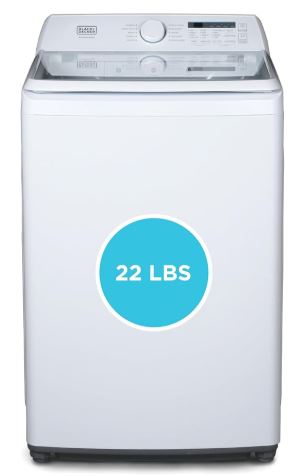
Agitator Pick 1: BLACK+DECKER BTLW41MW – 4.1 Cu. Ft. Top Load Washer with Agitator
The BLACK+DECKER BTLW41MW is the most accessible agitator washer on this list and one of the few full-size machines at this price point sold directly on Amazon with genuine buyer reviews. At 4.1 cubic feet it handles standard household loads comfortably.
The agitator delivers fast, direct cleaning action — well suited to households dealing with regular heavily soiled laundry from outdoor work, sports, or children. Ten wash cycles cover everything from heavy duty to delicates, and the 24-hour delay start lets you schedule loads around your schedule rather than hovering by the machine.
The stainless steel wash tub resists rust and prevents the musty odor problems that plague some plastic tub budget washers over time. The LED display is straightforward and legible, and the glass lid lets you check cycle progress without opening the machine.
If your washer develops lid, spin, or cycle issues over time, our Kenmore Series 600 washer troubleshooting guide covers diagnostics that apply broadly across top-load agitator machines, including checking the lid lock assembly and motor coupling.
Best for: Budget-conscious buyers, heavy-duty laundry needs, straightforward operation.
Agitator Pick 2: Kenmore 4.4 Cu. Ft. Triple Action Agitator Top Load Washer
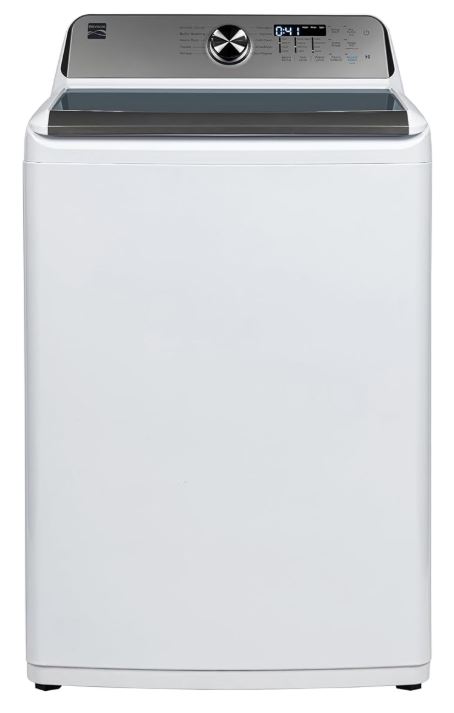
Kenmore’s Triple Action Agitator approach goes beyond a standard single-motion post. The system combines spray jets that attack dirt from multiple angles with a wash basket that moves back and forth, and the agitator itself moves clothes in a circular pattern. Three independent cleaning actions working simultaneously mean this machine handles tough stains more efficiently than a traditional single-motion agitator design.
The Accela Wash cycle reduces full-load wash time noticeably compared to standard settings. The Express Wash cycle cleans small loads in around 28 minutes — useful for last-minute needs. At 4.4 cubic feet the capacity handles large family loads, and the stainless steel tub is built for long-term use without odor buildup.
For households that do multiple loads daily and need the washing machine to keep up without babysitting it, the Kenmore’s combination of speed and cleaning power makes it a practical workhorse.
Best for: Active families with frequent heavy laundry, buyers wanting more aggressive cleaning action.
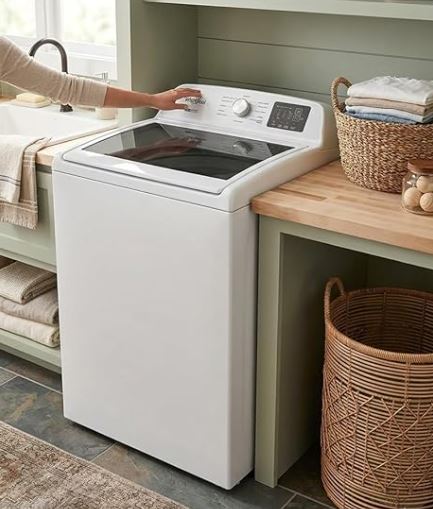
Agitator Pick 3: Whirlpool 4.2-4.3 Cu. Ft. Top Load Washer with Removable Agitator
This Whirlpool model is one of the most versatile top-load washers currently available because it bridges both sides of the agitator vs impeller debate. The 2-in-1 removable agitator lets you keep the post installed for tough stains and everyday loads, then pull it out in seconds when you need to wash a king-size comforter, sleeping bag, or bulky jacket without the restriction of a central post.
Whirlpool is the only brand currently offering this removable design, and it solves the single biggest frustration with dedicated agitator machines — that drum restriction when washing oversized items.
Automatic load-sensing adjusts the water level to match each load size, keeping water consumption in check without requiring manual selection. The presoak option adds a 30-minute soak before the cycle begins, which is effective for set-in stains without needing a separate bucket treatment. The soft-close glass lid is a practical detail — it will not slam shut mid-load.
Best for: Households wanting agitator performance for everyday loads and impeller-style space for bulky items in one machine.
Impeller Pick 1: Kenmore 4.5 Cu. Ft. Triple Action Impeller Top Load Washer
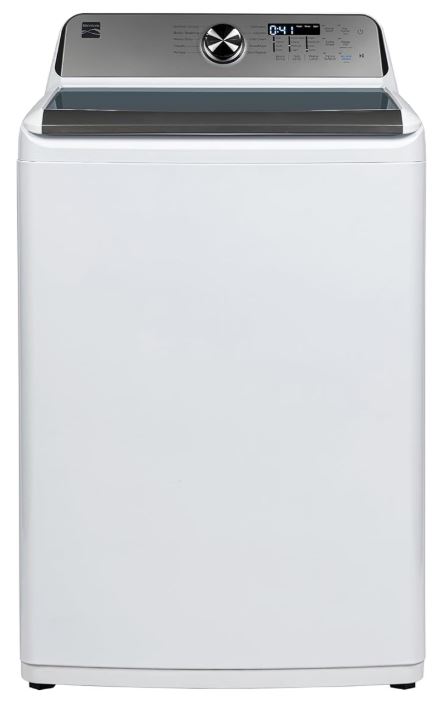
The Kenmore Triple Action Impeller applies the same multi-motion approach as its agitator sibling, but through a gentler system. Nine spray jets push concentrated detergent into the load from multiple directions, the wash basket moves back and forth, and the impeller circulates clothes in a continuous circular pattern. The combination delivers cleaning performance that competes with agitator machines on everyday loads while being noticeably easier on fabric.
Accela Wash reduces full-size load time by up to 51 percent compared to a standard normal cycle. At 4.5 cubic feet — a half cubic foot more than the agitator version — the drum accommodates larger comforters and bulky loads without restriction. The dispenser drawer releases detergent and fabric softener at the right time in the cycle automatically, which is a convenience most buyers underestimate until they have used it.
If you encounter error codes or cycle issues with any Kenmore top-load washer, our Kenmore Series 500 washer troubleshooting guide walks through the most common lid lock, drain, and motor issues step by step.
Best for: Households wanting efficient everyday cleaning with large drum capacity and gentle fabric care.
Impeller Pick 2: LG WT6105CW 4.1 Cu. Ft. TurboDrum Top Load Washer
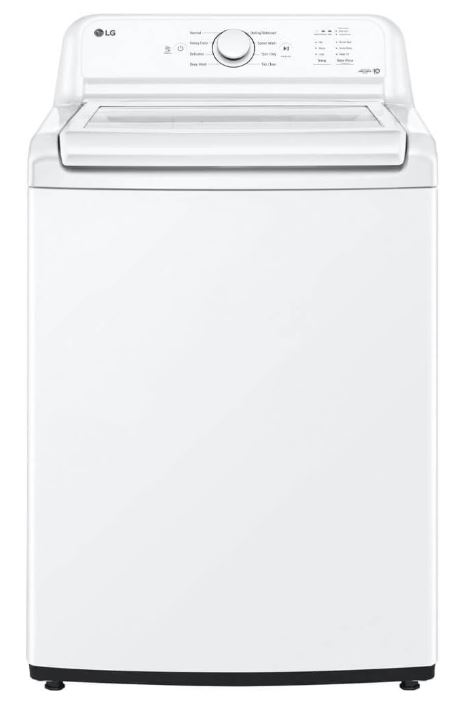
LG’s TurboDrum technology adds a layer of active impeller engineering not found in most budget-tier alternatives. The drum and the impeller rotate in opposite directions simultaneously, creating stronger water currents throughout the entire tub volume. That counter-rotation improves how thoroughly clothes are separated and saturated in every cycle.
The SmartDiagnosis feature connects to the LG ThinQ app and transmits error code information directly to LG customer support or to your phone, simplifying troubleshooting significantly. If something goes wrong, you get a precise diagnosis rather than guesswork. For users who want smart-appliance functionality without paying smart-appliance prices, this feature alone differentiates the WT6105CW from most alternatives at this price.
The direct drive motor — LG’s proprietary design — connects the drum directly to the motor without belts or pulleys, reducing mechanical failure points. LG backs it with a 10-year warranty on that motor. TrueBalance anti-vibration handles uneven loads without the shaking that plagues budget top-loaders.
For GE washer users who want a similar smart-diagnosis approach, our GE washer error codes guide walks through how to interpret and act on the most common fault codes.
Best for: Tech-forward buyers wanting smart diagnostics, quiet operation, and long-term motor reliability.
Agitator vs Impeller Washer: Which Is More Effective?
The honest answer is that effectiveness depends on what you are washing.
For workwear, heavily soiled kids’ clothing, gym gear, and towels that come in truly dirty, an agitator washer is more effective. The direct mechanical friction loosens ground-in soil faster than water currents alone, and shorter cycle times mean you can run more loads in a day.
For everyday laundry — shirts, underwear, bed sheets, mixed loads of lightly to moderately soiled items — a modern HE impeller machine cleans just as effectively according to Consumer Reports testing, uses significantly less water and energy, and is gentler on fabric over years of use.
The Whirlpool removable agitator (Pick 3) is worth serious consideration if you want to stop choosing between the two approaches altogether.
Frequently Asked Questions
Does an agitator washer clean better than an impeller?
For heavily soiled laundry and tough stains, yes — the direct mechanical action of an agitator has an edge. For everyday moderately soiled loads, Consumer Reports testing shows modern impeller machines clean just as well, often better, because they use water and detergent more efficiently.
Do impeller washers tangle clothes?
More than agitator machines, yes. Large single items like bedsheets or jeans can wrap around each other during the tumbling motion. Reducing load size slightly or using mesh laundry bags for sheets helps prevent this.
Is an impeller washer the same as a front-load washer?
No. Both agitator and impeller washers are top-load designs. A front-load washer tumbles clothes on a horizontal axis and works differently from either. Impeller and agitator both sit inside a vertical drum accessed from the top.
Which uses less water — agitator or impeller?
Impeller washers use significantly less water. HE impeller machines can use up to 60 percent less water per load than traditional agitator designs, which contributes meaningfully to lower utility costs over a full year of use.
Can I put a comforter in an agitator washer?
It depends on drum size. Standard agitator machines have the central post restricting usable drum space, which makes fitting a king-size comforter difficult. The Whirlpool removable agitator (Pick 3) solves this by letting you remove the post for bulky loads.

Hi, I’m Barlgan! I created Repair Me Yourself to empower homeowners to tackle appliance repairs with confidence. From decoding error codes to fixing cooling issues, I break down complex repairs into simple, actionable steps that save you time and money.