A burning plastic smell from a microwave is one of those kitchen moments that demands immediate action. Unlike a food-related burnt smell that fades after cleaning, a burning plastic odor points to something inside the machine itself generating heat it should not be generating.
The key distinction to make right away is this: a food-based burnt smell is unpleasant but not dangerous. A burning plastic or electrical smell is a safety concern and the microwave should stop running immediately.
Before going through the causes, here is a quick smell test. Food that has overcooked smells like burnt food. A failing component smells sharper, more chemical, closer to a melting electrical cord or a hot plastic container. That chemical quality is the signal to act immediately.
Critical Safety Rule
If the burning plastic smell is strong, sharp, or accompanied by smoke or sparking, stop the microwave, unplug it from the wall, and do not use it again until the cause is identified. Never open the microwave cabinet. The capacitor stores a lethal charge even after unplugging. All internal work requires a professional with proper discharge equipment.
Quick Reference for a Microwave Smelling Like Plastic
| Smell Description | Most Likely Cause |
|---|---|
| Sharp plastic smell, brand new machine | Normal first-use burn-off of manufacturing coatings |
| Burning plastic smell during cooking | Plastic container or wrap melting inside cavity |
| Sweet plastic smell with reduced heating | Failing magnetron or arcing waveguide cover |
| Sharp electrical smell, no food inside | Internal component overheating or failing |
| Plastic smell after cleaning | Cleaning product residue burning off on cavity walls |
| Intermittent plastic smell, no consistent trigger | Failing capacitor or control board |
What Causes a Burning Plastic Smell in a Microwave?
It’s generally hard to ignore a plastic smell coming from a microwave as it often indicates one of these issues:
1. It Is a Brand New Microwave
This is the most common and least alarming cause on the list, and it applies specifically to machines being used for the first time or the first few times.
New microwaves have manufacturing oils, protective coatings, and adhesives on internal components that produce a mild burning plastic or chemical smell during the first one to three cycles. This is normal across all major brands and is not a sign of a fault.
Here Is How to Confirm and Clear It
- Run the microwave empty on high power for one to two minutes with the kitchen window open
- Repeat once more if the smell persists after the first run
- The smell should disappear completely by the third use
- If it persists beyond five uses or becomes stronger rather than milder, it has moved past normal burn-off and needs investigation
If the smell is still present and strong after several uses, move through the remaining causes below.
2. Plastic Packaging or Container Is Melting Inside
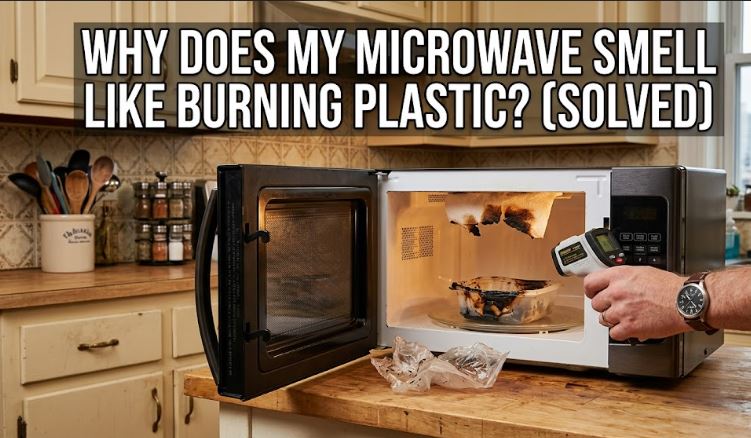
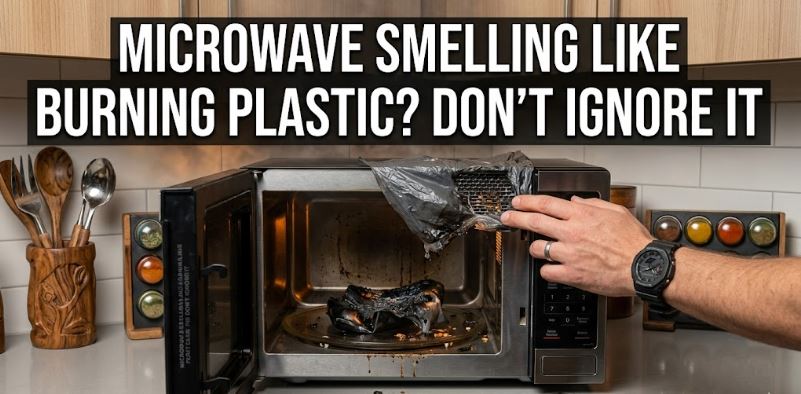
This is the second most common cause and also the easiest to confirm. Not all plastic containers, films, and packaging are microwave-safe. Regular plastic bags, some takeaway containers, cling wraps not rated for microwave use, and any packaging with metallic lining can all melt and release the classic burning plastic smell within seconds of microwaving.
Even a small amount of plastic film left accidentally on a container is enough to produce a sharp, chemical plastic smell that lingers in the cavity for hours afterward.
Here Is How to Fix and Prevent It
- Stop the microwave immediately and remove the container
- Check the bottom of every container for the microwave-safe symbol before placing it inside
- Remove all plastic wrapping and films from food before heating
- Use microwave-safe covers (View on Amazon) instead of plastic wrap.
- Once plastic has melted inside, clean the cavity thoroughly before the next use
3. Food Residue or Grease Is Burning on the Cavity Walls
Accumulated food splatter and grease on the cavity walls, ceiling, and around the door frame does not just cause hygiene problems. Over repeated heating cycles, that residue carbonizes and eventually burns, producing a smell that ranges from food-like at first to increasingly plastic and chemical as the carbonized layer thickens.
This is an extremely common cause in microwaves that are not cleaned regularly, and the smell intensifies gradually over weeks rather than appearing suddenly.
Here Is How to Clean and Eliminate the Smell
- Unplug the microwave before cleaning
- Place a microwave-safe bowl with two cups of water and two tablespoons of white vinegar or lemon juice inside
- Run on high for five minutes until steam fills the cavity, then leave the door closed for three more minutes
- Wipe every interior surface with a soft cloth, paying special attention to the ceiling and corners where grease concentrates
- Clean the waveguide cover separately with a damp cloth and mild dish soap
- For persistent odor after cleaning, place an open box of Arm & Hammer Baking Soda (View on Amazon) inside the cavity overnight with the door closed. Baking soda absorbs residual odors effectively without leaving any chemical residue
4. The Waveguide Cover Is Burned or Damaged
The waveguide cover protects the magnetron opening from food splatter while allowing microwave energy to pass through the cavity. When grease and carbonized debris build up on this cover, or when the cover develops cracks from age or previous arcing, it absorbs microwave energy and burns rather than transmitting it cleanly.
A burning waveguide cover produces a sweet, plastic burning smell that is different from a food smell and distinctly chemical in character. Continued use with a burned cover causes it to degrade further and eventually leads to arcing inside the cavity.
Here Is How to Inspect and Replace It
- Open the door and locate the flat rectangular panel on the interior side wall
- Look for brown or black burn marks, visible holes, warping, or a rough burned texture
- Clean light grease buildup with a soft damp cloth and mild dish soap before concluding it needs replacement
- If burn marks or holes are visible, replace the cover before using the microwave again
- Never run the microwave without a waveguide cover installed (View on Amazon).
5. The Cooling Fan Bearing Is Worn
Safety level: External ventilation checks only. Internal fan access requires a professional.
The cooling fan keeps the magnetron from overheating during operation. When the fan bearing wears out, the shaft creates friction against the housing as it rotates. That friction generates heat, and the hot bearing material produces a burning plastic or rubber smell that is most noticeable from the rear or top of the machine during and immediately after a cooking cycle.
This cause is often accompanied by a buzzing or grinding sound from the fan area, which our post on microwave making buzzing noise covers in full detail.
Here Is What to Check Safely
- Listen for whether the burning smell coincides with a grinding or buzzing sound from the rear
- Check the exterior vent grille for visible dust or grease buildup restricting airflow
- Vacuum the exterior vents gently with a soft brush attachment to reduce fan strain
- For over-the-range models, clean or replace the grease filters on the underside.
- If cleaning does not reduce the smell and a grinding sound persists, the fan bearing needs professional replacement
6. A Component Is Overheating or Failing
Safety level: Symptom observation only. Stop using the machine and call a professional.
Several internal components can produce a burning plastic smell when they overheat or fail. The most common are the magnetron, the control board, and the high-voltage capacitor. Each produces a slightly different smell, but all share the same sharp, chemical, electrical quality that distinguishes them from food-related odors.
A magnetron overheating from age or from being run empty produces a hot plastic and metallic smell. A failing control board produces a sharper, more distinctly electronic smell similar to a burning circuit board. A failing capacitor produces a strong chemical burning smell and is one of the most hazardous internal failures since the capacitor stores extreme voltage.
Here Is What to Observe and Do
- Note whether the smell is accompanied by reduced heating, sparking, or unusual sounds
- Check whether the machine has ever been run empty, even briefly, since this damages the magnetron immediately
- Run the cup of water test: place a cup of cold water inside and run on high for one minute. Water that barely warms alongside a burning smell confirms internal component stress
- Stop using the machine immediately if any of these signs are present
- Unplug it from the wall and contact a qualified technician for assessment
- On microwaves over eight years old, getting a replacement microwave (View on Amazon) appears to be more economical than repairing a major internal component.
7. The Cavity Paint Is Chipped and Burning
Chipped or damaged interior paint exposes the bare metal beneath the cavity coating. During operation, microwave energy concentrates at the exposed metal edges and generates localized heat that burns the surrounding paint layer and produces a sharp plastic or chemical smell.
This cause often accompanies occasional sparking from the same damaged area, which our post on microwave sparks when running addresses in detail.
Here Is How to Assess and Repair It
- Open the door and inspect every interior surface under good lighting for chips, scratches, or areas where the paint has worn away to reveal a different-colored surface beneath
- Do not use the microwave until any exposed metal area is addressed
- For small chips, clean the area thoroughly, let it dry completely, and apply Rust-Oleum Appliance Enamel Touch-Up Paint (View on Amazon) in thin coats. Allow 24 hours to cure before using the microwave
- Never use regular paint inside the cavity since it cannot withstand microwave conditions and releases harmful fumes
- For large areas of damaged paint, professional assessment or machine replacement is the safer choice
Microwave Burning Plastic Smell Fix & Cost Overview
| Cause | Safe DIY Fix | Part or Product Cost | Pro Repair Needed |
|---|---|---|---|
| Brand new machine burn-off | Yes | Free | No |
| Remove melting plastic container | Yes | Free | No |
| Clean carbonized food residue | Yes | Free – $5 | No |
| Replace waveguide cover | Yes | $5 – $10 | No |
| Touch up chipped cavity paint | Yes | $8 – $15 | No for small chips |
| Clean exterior vents and grease filters | Yes | Free – $15 | No |
| Cooling fan bearing | External cleaning only | Free | Yes for replacement |
| Internal component failure | Stop and unplug | N/A | Yes, immediately |
Frequently Asked Questions
Is a burning plastic smell from a microwave dangerous?
It depends entirely on the source. A new machine burning off manufacturing coatings or a melted plastic container inside the cavity is unpleasant but not immediately dangerous once the source is removed and the cavity is cleaned. A burning smell coming from inside the machine itself, especially with no food present, is a safety concern that requires unplugging the machine and professional assessment before further use.
How do I get the burning plastic smell out of my microwave after an incident?
Start with the steam cleaning method. Place a bowl of water with lemon juice or white vinegar inside and run on high for five minutes, then wipe all surfaces thoroughly. For persistent smells, place an open box of baking soda inside overnight. If the smell lingers after two or three cleaning cycles, the source may be carbonized residue that needs more targeted scrubbing or a waveguide cover that has absorbed the odor and needs replacement.
Can running a microwave empty cause a burning smell?
Yes, and it causes more than just a smell. Running a microwave empty means there is no food or liquid to absorb the microwave energy. That energy reflects back into the magnetron tube and generates extreme heat in components not designed to handle it. Even a single empty run can cause immediate magnetron damage that produces a burning smell and reduces the machine’s remaining lifespan significantly.
Why does my microwave smell like burning plastic after cleaning?
Cleaning product residue left on the cavity walls burns off during the next cooking cycle and produces a temporary chemical smell. Always rinse the interior thoroughly with a damp cloth after using any cleaning product. Also avoid bleach-based cleaners inside the cavity since they leave residue that burns at microwave temperatures and releases harmful fumes.
Stop the Machine First, Then Find the Source
A microwave smelling like burning plastic almost always has a visible, identifiable source that a careful inspection reveals within minutes. Start by checking for melting containers and a dirty cavity before drawing any conclusions about internal components.
Clean the cavity thoroughly, replace the waveguide cover if it shows damage, and repair any chipped paint before the next use. For anything that smells sharply electrical with no identifiable external cause, stop using the machine and call a technician. For related reading, our posts on microwave sparks when running and microwave making buzzing noise cover overlapping causes, and our complete microwave troubleshooting guide is your go-to resource across all leading brands.