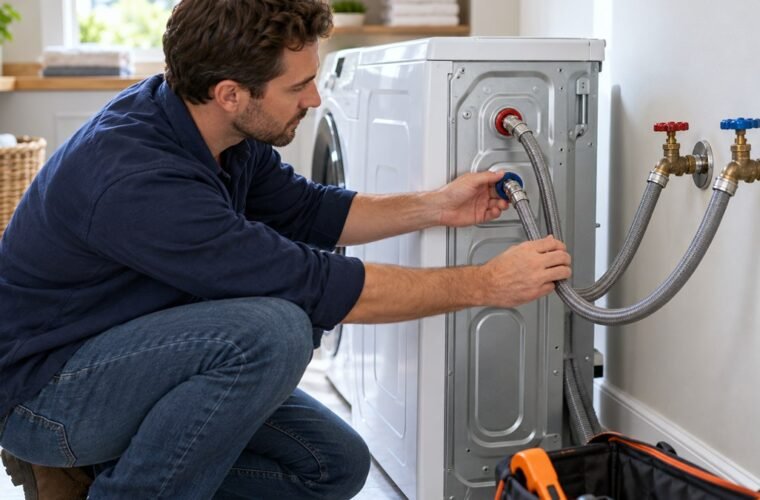
The LG washer LE code means the tub failed to spin. LG names two causes: an overloaded drum that strains the motor, or a coin or other object jamming the tub.
Unplug the washer for 5 minutes, lighten the load and check for anything caught in the drum.
If that doesn’t clear it, empty the drum and turn it by hand. A drum that catches points to a jam. One that turns freely rules out both of LG’s causes, and your LE is electrical.
What the LG washer LE code means
On a front loader, LG’s help page says LE appears when the motor can’t run properly, so the tub stops.
Your washer isn’t telling you the motor is dead. It’s telling you the motor couldn’t turn the drum the way it expected.
Top loaders get a blunter name. LG’s top-load LE page calls it a Motor Locker Error, and the only cause it gives is a coin or foreign object caught in the mechanism.
I always pulled the tech sheet before I unplugged anything at the back of a washer. You’ll find it behind the kick plate, in the console or on the back panel, and it shows the motor and sensor wiring for your exact model, which matters later if the simple checks don’t clear the code and you end up with the rear panel off, looking at a cluster of connectors that all look the same.
Reset it the way LG says
LG’s front-load LE page treats a one-off LE as a temporary error. Unplug the power cord, wait 5 minutes, plug it back in and run the cycle again.
You’ll see other waits quoted online. Mr. Appliance’s LE article gives 5 minutes in one place, 10 in another and 30 in its summary. LG’s own number is 5, and a longer wait won’t fix a jam.
Lighten the load, then look for the coin
Was the drum packed? LG says overloading strains the motor and can stop the tub from spinning. Pull some of the heavy items out and restart.
For a heavy load or a large blanket, LG’s advice is to use the Bedding cycle instead of a regular wash. A heavy, wet comforter on a regular cycle is exactly the kind of load LG has in mind.
If the load wasn’t the problem, look for something caught in the drum:
- Turn the power off and unplug the washer.
- Take all the laundry out.
- Check the drum for a coin or other object, including the gaps around the edges.
- On a top loader, check the washboard at the bottom of the tub as well.
- Pull out anything you find with pliers or tweezers, not your fingers.
Then plug it back in and run a short cycle. If the drum spins, you’re done.
Turn the drum by hand
This is the check I’d do before anyone orders a part. With your washer unplugged and empty, reach in and turn the drum slowly through a few full turns.
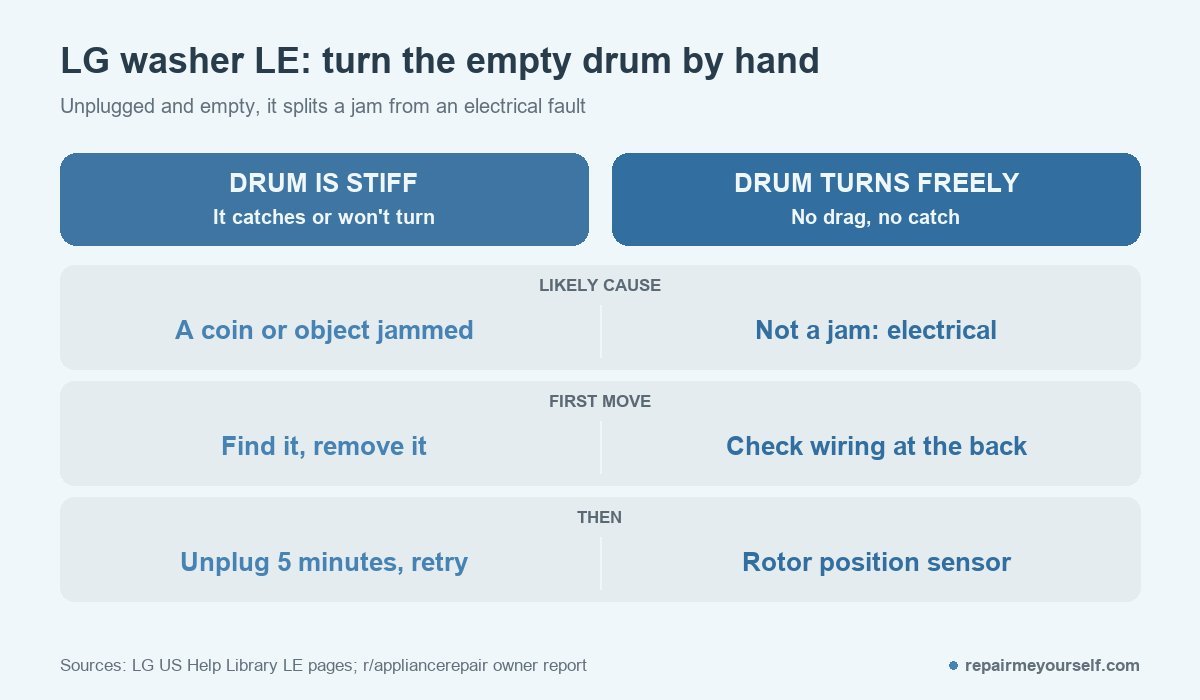
If it’s stiff, scrapes or catches at the same spot every turn, something is still jammed. Go back over the drum gaps and, on a top loader, the washboard.
A grinding drag is worth a technician’s look before you run it again.
If it turns freely, you’ve ruled out both causes LG gives. The motor had nothing physical stopping it, so the control lost track of the drum for another reason, and that’s an electrical question.
A free drum and LE again: wiring and the rotor position sensor
One owner of an LG WM3170CW posted on r/appliancerepair in September 2026 with LE after the washer sat for a few days.
The drum turned freely by hand. When they opened the back, they found the hot water inlet had leaked and soaked the wires.
Drying it out wasn’t enough. A commenter told them to disconnect the wires, check the connections for corrosion and, if that failed, replace the rotor position sensor behind the rotor. The owner came back with the result:
“Rps sensor (hall sensor) did it ! Back in action”
– r/appliancerepair, September 2026
It’s one washer, not a rule. Still, it fits the free-drum pattern, and Mr. Appliance lists the same suspects for an LE that keeps coming back: a worn rotor position sensor, loose or damaged wiring between the motor and the control board, the motor itself and the board.
Start with the cheapest look. Unplug the washer, take off the rear panel and check the connectors at the motor for water, corrosion or a plug that’s backed out.
Your tech sheet tells you which connector feeds the sensor, and a multimeter helps if you go further.
Getting to the sensor means taking the rotor off. If you’re not comfortable with that, it’s the stage where I’d book a technician, and LG’s own advice for a persistent LE is service.
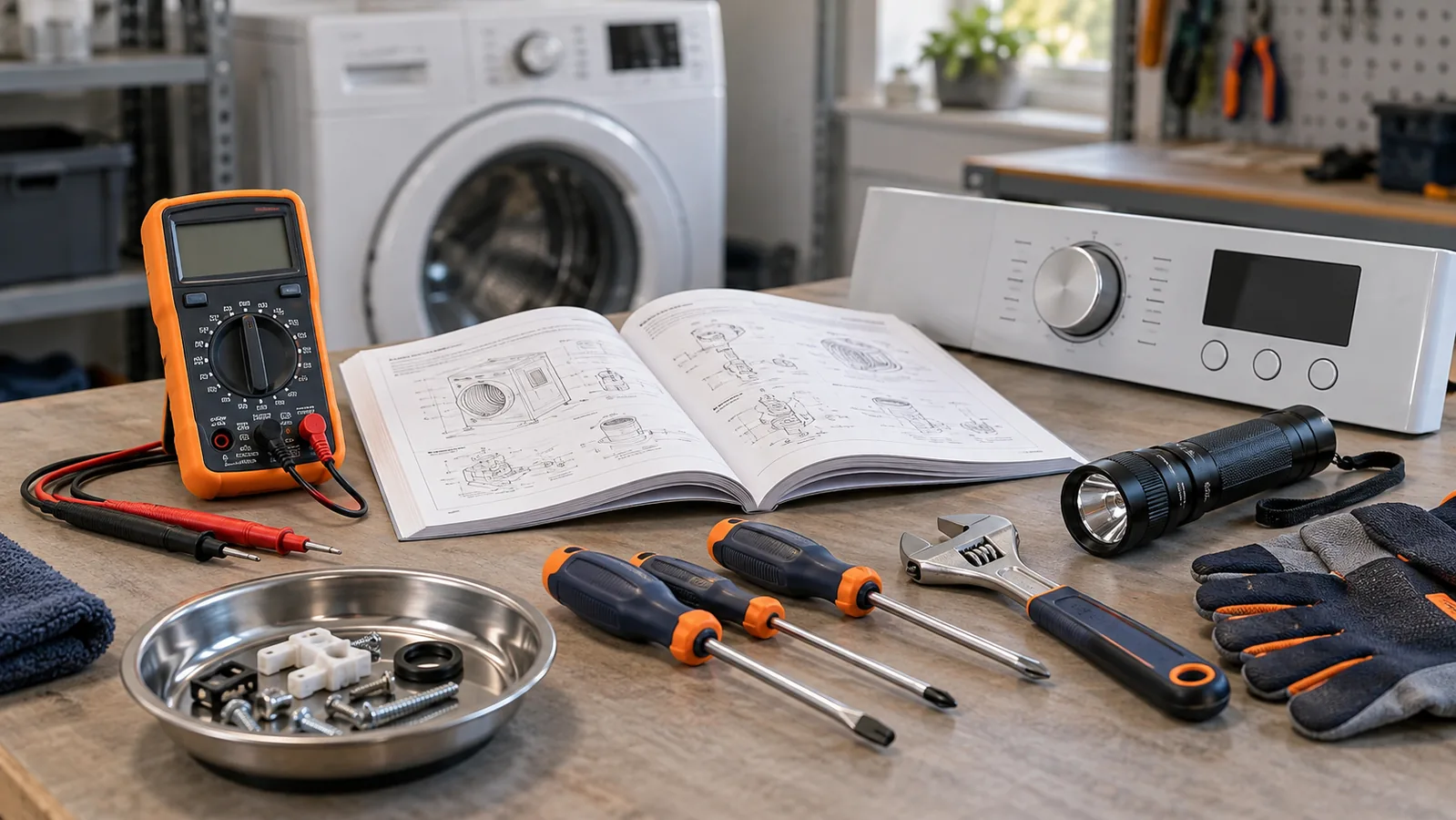
Before you open the back at all, here are the safety tools I keep around.
For LG’s other codes, see the full LG washer error codes list. If your washer quit draining instead of spinning, the LG washer OE code page has LG’s 15-second hum test.
A stiff drum means find the object. A free drum with LE coming back means the wiring and the rotor position sensor come before any motor or board. Don’t buy either until you’ve turned that drum by hand.