
You press start, the dishwasher hums to life, and a few minutes later it just stops. Sometimes it gets halfway through a cycle. Other times it barely makes it through the fill stage. Either way, you end up with dirty dishes, standing water in the tub, and no clear explanation.
A dishwasher that starts then stops is one of the trickier appliance problems to pin down because so many different components can trigger a mid-cycle shutdown. The good news is that when does it stop matters enormously.
A machine that stops within the first two minutes points to different causes than one that stops 20 minutes into the wash phase. Use that timing as your first clue before diving into the causes below.
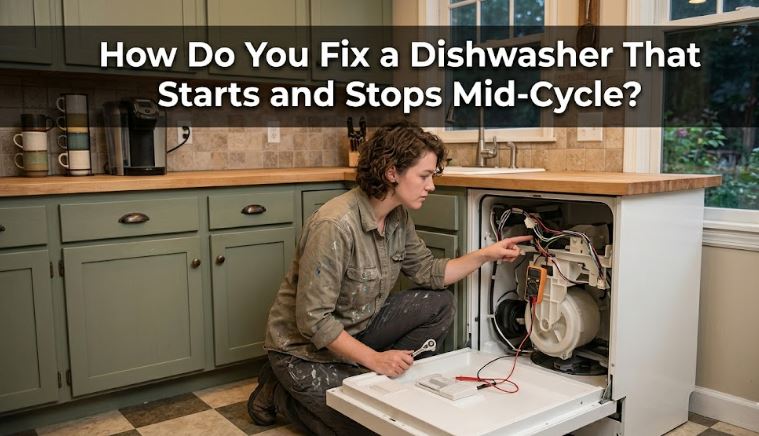
Quick Diagnosis for a Dishwasher That Starts Then Stops
| When It Stops | Most Likely Cause |
|---|---|
| Within first 30 seconds of starting | Door latch losing signal or water supply not detected |
| After 1 to 2 minutes during fill | Water inlet valve fault or low water pressure |
| Mid-wash phase, water still in tub | Float switch triggered or motor overheating |
| During drain phase, water remains | Clogged filter or drain pump fault |
| Randomly at different points each time | Intermittent door latch, loose wiring, or control board |
| After completing wash but before rinse | Heating element fault or thermostat issue |
What Causes a Dishwasher to Shut Off Unexpectedly?
Your dishwasher mat start running then stop unexpectedly in the middle of the cycle due to any of these eight reasons:
1. The Door Latch Is Losing Contact Mid-Cycle
The door latch is not only checked at the start of the cycle. The control board monitors the latch switch signal continuously throughout every cycle. When a latch that is partially worn makes solid contact at first but loses it from vibration as the machine runs, the board interprets this as the door opening mid-cycle and shuts the machine off immediately as a safety response.
This cause produces one of the most frustrating patterns because the dishwasher appears to start normally each time, then stops at a slightly different point depending on when vibration causes the latch to lose contact.
How to Test and Fix the Door Latch
Open and close the door and listen for a firm, consistent click. Then run a cycle and watch whether the door feels even slightly loose as the machine vibrates during filling and washing. A door that develops any give during operation points directly to the latch.
Test the latch switch with a multimeter for continuity while applying slight pressure to simulate operational movement. An intermittent reading confirms the switch is failing, nd thus requires a compatible replacement (View on Amazon).
2. The Filter or Drain System Is Blocked
A clogged filter or blocked drain hose is one of the top reasons a dishwasher stops mid-cycle, and it catches most people off guard because they associate drainage problems with standing water rather than mid-cycle stops.
Here is what actually happens. When the dishwasher cannot drain properly during a drain phase, water stays in the tub at a level that triggers the flood protection sensor. The machine interprets this as an overfill condition and shuts down rather than continuing the cycle with standing water present.
Food particles, grease, and soap scum build up inside the filter with every load. Even a partial blockage can create enough drainage resistance to confuse the water level sensors and cause a mid-cycle stop.
How to Clean the Filter and Drain System
Turn off and unplug the dishwasher. Locate the cylindrical filter assembly at the bottom of the tub, typically beneath the lower spray arm. Twist and lift it out, then rinse it thoroughly under warm running water and scrub it with a soft brush to remove grease and food debris.
While the filter is out, reach into the filter housing and check for debris in the sump area below. Also check the drain hose at the back of the machine for kinks or blockages. For ongoing filter maintenance, the OXO Good Grips Bottle Brush (View on Amazon) works extremely well for scrubbing cylindrical dishwasher filters clean without damaging the mesh. Clean the filter every two to four weeks for consistent cycle performance.
3. The Water Inlet Valve Is Faulty or the Supply Is Restricted
If your dishwasher stops within the first one to two minutes of a cycle, it almost always means the machine failed to fill with water properly. The control board monitors fill progress and shuts the cycle down if adequate water does not enter the tub within a set timeframe.
A closed or partially closed supply valve, a kinked supply hose, a clogged inlet screen, or a failing water inlet valve solenoid can all prevent the tub from filling fast enough, triggering a very early cycle stop.
How to Check and Restore Water Flow
First confirm the hot water supply valve under the sink is fully open. This takes 30 seconds and costs nothing. Next, check the water supply hose running to the dishwasher for kinks or compression.
Then disconnect the supply hose from the inlet valve and inspect the small mesh screen inside the connection for mineral deposit buildup. Clean it with a soft brush under running water. If the screen is clear and the supply valve is open but the machine still stops early, test the inlet valve solenoid with a multimeter.
If it won’t show continuity, it’s likely faulty and thus needs to be replaced with a new valve (View on Amazon).
4. The Float Switch Is Stuck in the Raised Position
The float switch monitors water level inside the dishwasher tub. When the water reaches the correct level, the float rises and signals the inlet valve to stop filling. When the float gets stuck in the raised position from food debris or calcium deposits, it permanently signals the board that the tub is full, which stops filling immediately and often triggers a cycle shutdown before any meaningful washing can occur.
This cause is particularly confusing because the tub is visually empty yet the machine behaves as if it is overfull.
How to Inspect and Fix the Float Switch
Open the dishwasher and locate the float, the small plastic dome or cylinder on the tub floor near the front corner. Press it down gently and confirm it springs back up freely. A float that sticks down or barely moves is jammed by debris or mineral buildup.
Clean around the float base thoroughly with a damp cloth. Remove any calcium deposits with a small amount of white vinegar on a cloth. If the float moves freely but the machine still stops early, the float switch itself has failed electrically and needs replacement (View on Amazon).
5. The Heating Element or Thermostat Has a Fault
Many dishwashers include a heated wash phase where the water temperature must reach a specific level before the cycle advances. When the heating element fails or a thermostat reads temperature incorrectly, the machine waits for a temperature it can never reach, eventually timing out and shutting down mid-cycle.
This cause produces a very specific stopping pattern. The machine runs through the fill phase and early wash phase normally, then stops partway through the wash when it cannot confirm that the water reached the target temperature.
How to Diagnose a Heating Element Issue
Run a cycle and listen carefully. A normally functioning dishwasher produces a quiet hum during the heated wash phase. If the machine stops during what should be the heating portion of the cycle and the water feels cold when you open the door, the heating element is the likely suspect.
Unplug the machine and test the heating element with a multimeter for continuity. No continuity confirms the element has failed, and consequently requires a replacement (View on Amazon)
6. The Wash Motor Is Overheating
The wash pump motor circulates water through the spray arms during the wash cycle. When the motor overheats from a blocked spray arm, a seized impeller, or simply aging bearings, the motor’s built-in thermal overload protector trips and cuts power to the motor to prevent permanent damage.
The machine stops mid-cycle, typically during the wash phase rather than during filling or draining. After the motor cools down, restarting sometimes produces another brief cycle before the same stop occurs again.
How to Address an Overheating Wash Motor
First check the spray arms for blockages. Remove both the lower and upper spray arms and rinse them under running water. Hold each arm up to a light and confirm all spray holes are clear. Use a toothpick to clear any blocked holes. Blocked spray arms force the motor to work significantly harder than normal and are a common contributor to motor overheating.
If the spray arms are clear and the stop-then-restart pattern continues, inspect the motor impeller for debris or hard water scale buildup. If the motor continues overheating with clear spray arms and a clean impeller, the motor bearings are wearing out and motor replacement is the correct long-term fix.
7. There Is a Power Supply Interruption
A loose plug connection, a partially tripped circuit breaker, or an intermittent fault at the outlet can all cause the dishwasher to stop mid-cycle in a way that looks exactly like a component failure but is actually an electrical supply issue.
This cause is particularly deceptive because the machine starts normally and runs well until the vibration or thermal expansion from the cycle causes a loose connection to lose contact momentarily, shutting the machine off.
How to Check and Secure the Power Supply
Confirm the dishwasher plug is firmly seated in the outlet without any looseness. Then go to the electrical panel and flip the dishwasher’s breaker fully off and back on, even if it does not appear tripped.
Also check whether your dishwasher is wired through a wall switch near the sink, which is common in many homes. Make sure that switch is in the fully on position and cannot be accidentally bumped to off. If the outlet has a GFCI reset button, press it firmly to confirm it has not tripped. Consistent mid-cycle stops that clear with a power reset point to an intermittent electrical supply issue rather than a component fault.
8. The Control Board Has a Developing Fault
When all the mechanical causes above check out and the dishwasher still stops mid-cycle at random or unpredictable points, the control board becomes the primary suspect.
A control board that is failing does not always die completely at once. Corroded relay contacts, damaged capacitors, or corrupted program memory can cause the board to lose track of where it is in the cycle or send incorrect signals to components mid-wash. The machine stops because the board has essentially lost the plot mid-cycle rather than because any individual component has failed.
Random stops at different cycle phases, stops that clear with a hard reset but return within a few cycles, and stops accompanied by unusual display behavior or error codes all point toward the control board.
How to Diagnose and Address a Control Board Fault
Start with a hard reset. Turn off the circuit breaker for a full two minutes, restore power, and run a complete cycle while paying attention to exactly where and when it stops. A consistent stop at the same point in every cycle points to a component fault at that phase. A stop at a different point each time points to the control board.
Check your display for error codes before and after the stop. Error codes are the most direct route to identifying which system the board detected as faulty.
If diagnostics confirm a board fault, search your model number on Amazon alongside “control board” to find the correct replacement. Control boards are model-specific and must match exactly.
Mid-Cycle Stop Fix Cost and Difficulty Overview
| Cause | DIY Difficulty | Part Cost | Pro Repair Cost |
|---|---|---|---|
| Clean filter and drain system | Very easy | Free | $80 – $130 |
| Clear float switch | Easy | Free | $80 – $130 |
| Check power supply and breaker | Easy | Free | N/A |
| Clear blocked spray arms | Easy | Free | $80 – $130 |
| Door latch assembly | Moderate | $15 – $40 | $100 – $200 |
| Float switch replacement | Moderate | $10 – $25 | $100 – $180 |
| Water inlet valve | Moderate | $20 – $50 | $100 – $200 |
| Heating element | Moderate | $20 – $60 | $120 – $250 |
| Wash motor replacement | Advanced | $60 – $150 | $200 – $350 |
| Control board replacement | Advanced | $80 – $200 | $200 – $400 |
Frequently Asked Questions
Why does my dishwasher stop mid-cycle with water still in the tub?
Standing water at the point of stopping almost always points to a drainage fault. The dishwasher tried to drain during a drain phase, could not clear the water fast enough, and the flood protection sensor triggered a shutdown. Start by cleaning the filter since partial blockages cause exactly this symptom and the fix takes under five minutes.
My dishwasher stops then restarts on its own after a few minutes. What causes that?
A dishwasher that stops then self-restarts after a rest period almost always points to motor overheating. The motor’s thermal overload protector trips from excess heat, the machine waits for the motor to cool, and the cycle partially resumes when the protector resets. Check the spray arms for blockages first since restricted spray arm flow is the most common reason motors overheat.
Can overloading dishes cause the dishwasher to stop mid-cycle?
Yes, in two ways. Overpacked dishes block the spray arms from rotating freely, which forces the wash motor to work harder and overheat. Dishes that block the door from closing fully also cause mid-cycle stops since the door latch signal can drop out when the tub is too full to allow the door to seal properly.
How do I know if it is the door latch or the control board causing random mid-cycle stops?
A door latch issue tends to produce stops that are associated with vibration, meaning the machine stops during the active wash phase rather than during quieter phases like fill or drain. A control board issue produces stops at inconsistent points across different cycles with no pattern linking the stops to any particular phase or movement. A hard reset often temporarily clears board faults but does not fix latch issues.
Fix Your Dishwasher That Starts Then Stops Today!
A dishwasher that starts then stops is giving you a clue every time it shuts down. The timing of that stop is the most useful diagnostic information you have. Use it to work through the causes above in the right order rather than guessing at parts.
Start with the free checks every time: clean the filter, check the float, confirm the door click, and verify the power supply. Together those four checks take under fifteen minutes and resolve the majority of mid-cycle stop complaints.
For other diagnostics, you should check out our latest dishwasher troubleshooting guide, where we explore everyday dishwasher problems that you can try troubleshooting yourself before calling a pro.

Hi, I’m Barlgan! I created Repair Me Yourself to empower homeowners to tackle appliance repairs with confidence. From decoding error codes to fixing cooling issues, I break down complex repairs into simple, actionable steps that save you time and money.