
Walk into any appliance store or scroll Amazon’s laundry section and you’ll quickly face a choice that wasn’t common a decade ago: a single washer-dryer combo that handles everything in one drum, or the traditional setup of separate washer and dryer units.
This isn’t just a question of space or budget. It’s about how your household actually does laundry, how often, how much, and whether speed or convenience matters more to you.

What Is a Washer-Dryer Combo?
A washer-dryer combo is a single front-load appliance that washes and dries your clothes in the same drum without any transfer between machines. You load once, select a combined cycle, and return to laundry that is both clean and dry.
Most modern units are ventless, meaning they use condensation or heat pump drying instead of pushing humid air through a duct. That design gives you enormous flexibility in placement. You can install a combo along any wall with a water hookup, even in a kitchen or bathroom. Most also run on a standard 110-volt outlet, eliminating the need for a 220-volt connection that conventional electric dryers require.
What Are Separate Units?
Separate washer and dryer units are the two-machine setup most households grew up with. The washer cleans the load, you transfer the wet clothes to the dryer, and the dryer finishes the job, typically in 45 to 60 minutes.
Separate units come in front-load and top-load configurations and can be stacked to save floor space. They’re available across nearly every price point and offer one capability that a combo never can: running two loads at the same time.
Washer-Dryer Combo vs Separate Units Core Trade-offs
Space
This is where the washer-dryer combo wins clearly. A typical all-in-one unit measures around 24 inches wide, the footprint of a single front-load washer, making it viable for apartments, condos, laundry closets, and anywhere that couldn’t fit two machines. Separate units can be stacked to reduce floor space, but they still require ventilation planning, adequate ceiling height, and a 220-volt outlet for the dryer in most cases.
Drying Performance and Cycle Time
This is where separate units take a decisive lead, and where many combo buyers find themselves frustrated after purchase.
Combo units use condensation or heat pump technology that operates at lower temperatures and recycles air within a sealed system. It is gentler on fabrics and more energy-efficient per cycle, but it is measurably slower. Many models take two to four hours to complete a full wash-and-dry cycle, compared to the 45 to 60 minutes a conventional vented dryer needs. Consumer Reports testing found one popular heat pump combo took 3.5 hours to dry a 12-pound load.
With separate machines, you can wash one load while another is in the dryer, cutting your total laundry time significantly. For families running multiple loads per day, this matters a great deal.
Load Capacity
Combo units can typically wash a full drum, but the drying portion works best at half the wash capacity or less. Bulkier items like towels, king-size bedding, and heavy workwear often come out partially damp.
Full-size separate dryers with 7-plus cubic foot drums handle large loads, comforters, and heavy fabrics without compromise.
Cost
Washer-dryer combos typically run from $900 to $2,500. A mid-range separate washer and dryer each cost around $500 to $1,000, putting the combined total in a similar range. Where the ongoing cost differs is in energy efficiency. Standalone washers generally earn higher efficiency ratings than combo units, though modern heat pump combos close that gap on the drying side by recycling air rather than venting it out.
Relevant: What are the Best Dryers Under $600? (Reviewed!)
Reliability
Combo units carry a higher service rate than standalone machines. When a combo breaks down, both washing and drying go offline simultaneously. With separate units, a dryer failure doesn’t stop you from washing, and a washer problem doesn’t affect your dryer.
Heat pump combo dryers also require a refrigeration-trained technician for repairs rather than a standard appliance repair professional, which can mean longer wait times and higher service bills.
Washer-Dryer Combo vs Separate Units Head-to-Head Comparison
Here is how the two setups compare across the factors that matter most for most households.
| Feature | Washer-Dryer Combo | Separate Units |
|---|---|---|
| Footprint | Single machine (~24″ wide) | Two machines side-by-side or stacked |
| Space required | Minimal | Dedicated laundry area |
| Drying speed | 2 to 4 hours per load | 45 to 60 minutes per load |
| Simultaneous loads | No | Yes |
| Wash capacity | 2.3 to 5.0 cu. ft. | 4.5 to 6.0+ cu. ft. |
| Venting required | No | Usually yes |
| Electrical | Standard 110V | 220V for most dryers |
| Reliability | Higher service rate | Lower service rate |
| If one function fails | Both out of service | Other machine still works |
| Best for | Singles, couples, small spaces | Families, high-volume laundry |
Who Should Choose a Washer-Dryer Combo?
A combo makes genuine sense for a specific type of household. You are likely in that group if the following apply:
- You live alone or with a partner and run one or two loads per week
- Your apartment, condo, or home simply does not have room for two machines
- Your space lacks a dryer vent or a 220-volt outlet
- You value the convenience of loading once and walking away
- You are in an RV, tiny home, or similar space where footprint is the defining constraint
For these households, slower drying and smaller capacity are entirely livable trade-offs when you are not competing for the machine with multiple family members.
Who Should Choose Separate Units?
Separate units are the better fit for the majority of households. You should go this route if the following describe your situation:
- You have a family of three or more generating significant laundry volume
- You need to process multiple loads per day or on weekends
- Fast turnaround matters for sports kits, work uniforms, or school clothes
- You wash bulky items like king-size bedding or heavy towels regularly
- Reliability and repairability are priorities
The performance gap between a dedicated dryer and a combo’s drying function is substantial. If you have ever stood waiting for laundry on a Sunday night and needed it done in under an hour, separate units are your answer.
Our Top Amazon Picks
Best Washer-Dryer Combo: LG WM3555HWA 2.4 Cu. Ft. Smart All-In-One Washer/Dryer
The LG WM3555HWA is one of the most widely praised washer-dryer combos available. At 24 inches wide, it fits in a closet, hallway nook, kitchen, or bathroom with no dryer vent and no 220-volt outlet required.
Key features include:
- Ventless condensing drying with Sensor Dry technology that automatically adjusts cycle time based on moisture levels
- Built-in AI that detects fabric type and load size, then selects optimal wash settings across 14 available cycles
- Allergiene steam cycle that eliminates over 95% of pet dander, dust mites, and pollen
- LG ThinQ app connectivity for remote monitoring and SmartDiagnosis troubleshooting
- Quiet operation and a NeveRust stainless steel drum
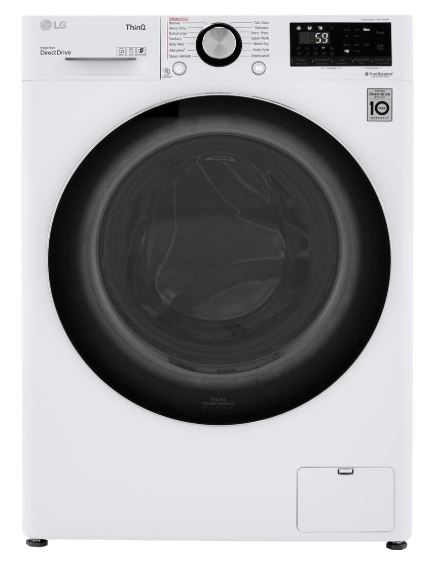
Reviewers consistently praise it for washing quality, quiet performance, and its ability to fit where no other laundry solution would. It is the most sensible combo choice for space-constrained households who want genuine smart features.
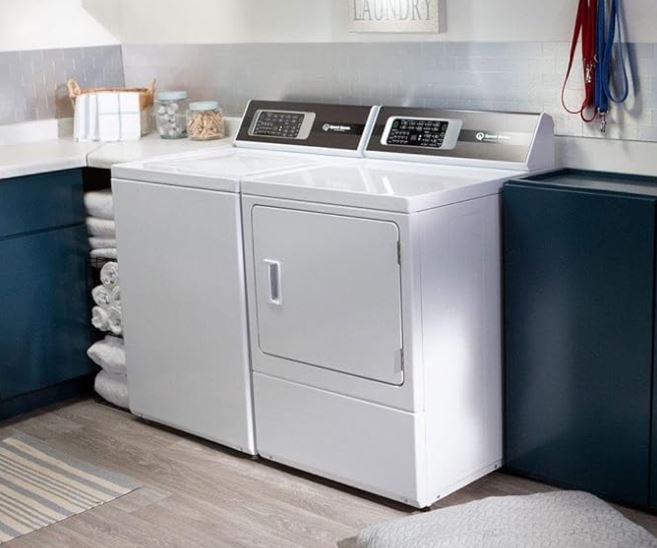
Best Separate Washer: Speed Queen TR7003WN Top-Load Washer
The Speed Queen TR7003WN is the kind of washer people buy when they want something dependable that can handle years of heavy laundry use. It’s built with a more old-school mindset, focusing on durability, strong cleaning performance, and simple operation instead of packing in unnecessary smart features. The washer feels solid from the moment you use it, and many homeowners like that it washes clothes with more water and stronger agitation than many newer high-efficiency machines.
One of the best things about this washer is how stable and well-built it feels during everyday use. It handles towels, bedding, work clothes, and larger loads without struggling, and the controls are easy to understand. The wash action is also gentler on fabrics than some older agitator models while still delivering a deep clean. The main drawback is the price, since it costs more than most standard top-load washers, but many buyers see it as a long-term investment because of its reputation for reliability and its strong warranty coverage.
Key Features
- 3.2 cu. ft. capacity
- Commercial-grade construction
- Stainless steel wash tub
- Perfect Wash™ system
- Full tub wash and rinse
- Ultra-quiet operation
- Delay start option
- Extra rinse setting
- 16 wash cycles
- 7-year parts and labor warranty
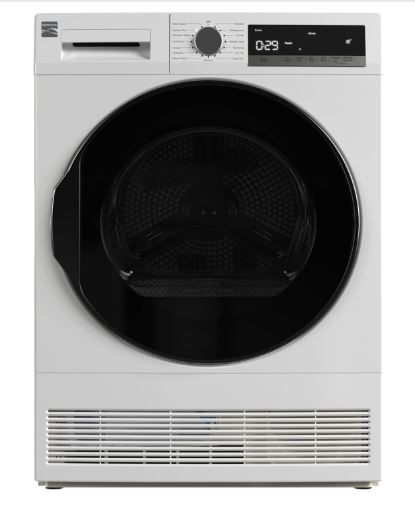
Best Separate Dryer: Kenmore 4.0 cu. ft. Ventless Compact Front Load Electric Dryer
The Kenmore 4.0 cu. ft. Ventless Compact Dryer is a practical option for anyone dealing with limited laundry space or a home where adding a traditional dryer vent is not possible. Because it uses a ventless drying system, you can install it in apartments, condos, or smaller laundry areas without worrying about external ductwork. Even though it is compact, it still feels roomy enough for everyday laundry and offers enough cycle options for most households.
What many people will appreciate most is how easy this dryer is to live with. The sensor drying feature helps prevent clothes from coming out overheated or overdried, while the Wrinkle Guard setting is helpful if you cannot remove laundry immediately after a cycle finishes. Like most ventless dryers, it takes a little longer to dry heavier loads compared to standard vented models, but the convenience and flexibility make it a solid choice for smaller homes and modern living spaces.
Key Features
- 4.0 cu. ft. compact capacity
- Ventless drying system
- ENERGY STAR certified
- Smart sensor drying
- Wrinkle Guard feature
- LED display controls
- Multiple drying cycles
- Stackable front-load design
- Sanitize drying option
- Compact space-saving footprint
4 Things to Check Before You Buy
Check your electrical and venting situation first. If you do not have a dryer vent or a 220-volt outlet, a combo running on 110 volts with no vent may be your most practical solution, or you can budget for the electrical work before buying separate units.
Measure carefully before ordering. A 24-inch combo sounds manageable, but account for door clearance, water hookup access, and standing room in front of the machine. Side-by-side separate units need roughly 54 to 56 inches of width minimum.
Match washer and dryer brands when buying separate. Smart features like automatic cycle syncing, app integration, and certain steam functions only work when the washer and dryer are from the same manufacturer’s compatible lineup. Mixing brands works fine mechanically but you lose some of the connected functionality.
Factor in long-term repairability. A combo unit that breaks down takes both functions offline and may need a specialist technician. Separate units fail independently and are generally easier and less expensive to repair.
Frequently Asked Questions
How long does a washer-dryer combo take to complete a full cycle?
Most combos take two to four hours to complete a combined wash-and-dry cycle depending on load size and the drying technology used. Separate dryers typically finish a drying cycle in 45 to 60 minutes.
Can a washer-dryer combo handle the same load size as separate machines?
Generally no. Most combos can wash a full drum but recommend filling to about half capacity for the drying portion to achieve proper results. Bulky items like comforters are particularly difficult for combo dryers.
Do washer-dryer combos need a dryer vent?
Most modern combos are ventless and do not require a dryer exhaust duct. They manage moisture internally using condensation or heat pump technology, which is one of their key advantages for apartments and condos where installing ductwork is difficult or impossible.
Are separate washers and dryers more reliable than combo units?
Yes, based on available service data. Standalone front-load washers carry a significantly lower service rate than combo units. Separate units also have the practical advantage that a breakdown in one machine does not affect the other.
What maintenance do washer-dryer combos require?
Combo units require regular cleaning of the drum, door gasket, and in heat pump models, the lint filter and condenser. This maintenance is more involved than on a standard vented dryer. Neglecting it reduces drying efficiency and shortens the appliance’s lifespan.
What should I do if my washer-dryer combo breaks down?
If the unit fails, both functions are unavailable until it is repaired. Heat pump combos in particular require a technician with refrigeration experience, and not all appliance repair services have that capability. Our appliance troubleshooting guides can help you diagnose the problem before calling a professional.

Hi, I’m Barlgan! I created Repair Me Yourself to empower homeowners to tackle appliance repairs with confidence. From decoding error codes to fixing cooling issues, I break down complex repairs into simple, actionable steps that save you time and money.