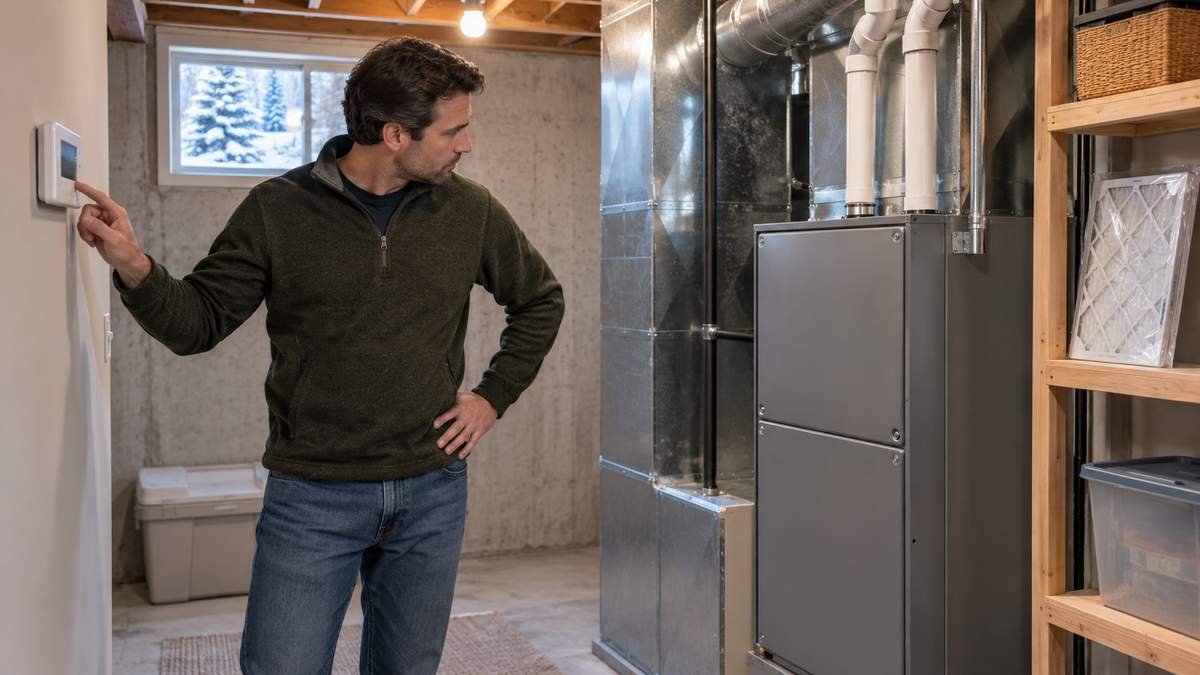
Furnace troubleshooting starts with checks you can do without tools. Make sure the thermostat is on HEAT and set above room temperature. Check the furnace power switch and the breaker, then the filter. See that the gas valve handle runs the same way as the pipe and the vent outside isn’t blocked.
Do one thing before any of that. If your furnace has a blinking status light, write the code down first. Carrier’s owner’s manual says that switching off the power or pulling the blower door erases it.
A quick word on where I’m coming from. My service calls were refrigerators, washers, dryers, dishwashers, ovens and cooktops, not furnaces. And I’m not licensed for gas work. So everything below comes from what Carrier and its Payne brand tell homeowners to check in their owner’s manuals. Where those manuals say to call a technician, I stop too, and so should you.
Read the furnace status light before you turn anything off
If your furnace has a status light on its control board, write down the code it’s flashing before you touch the power or the blower door. Both clear it, and the code is the best clue you’ll get.
Carrier’s condensing furnace owner’s manual is blunt about this. It says to record the LED status code before removing the blower access door or turning off the 115-volt power. Do either one and the display ends, and the code is erased from the control’s memory.
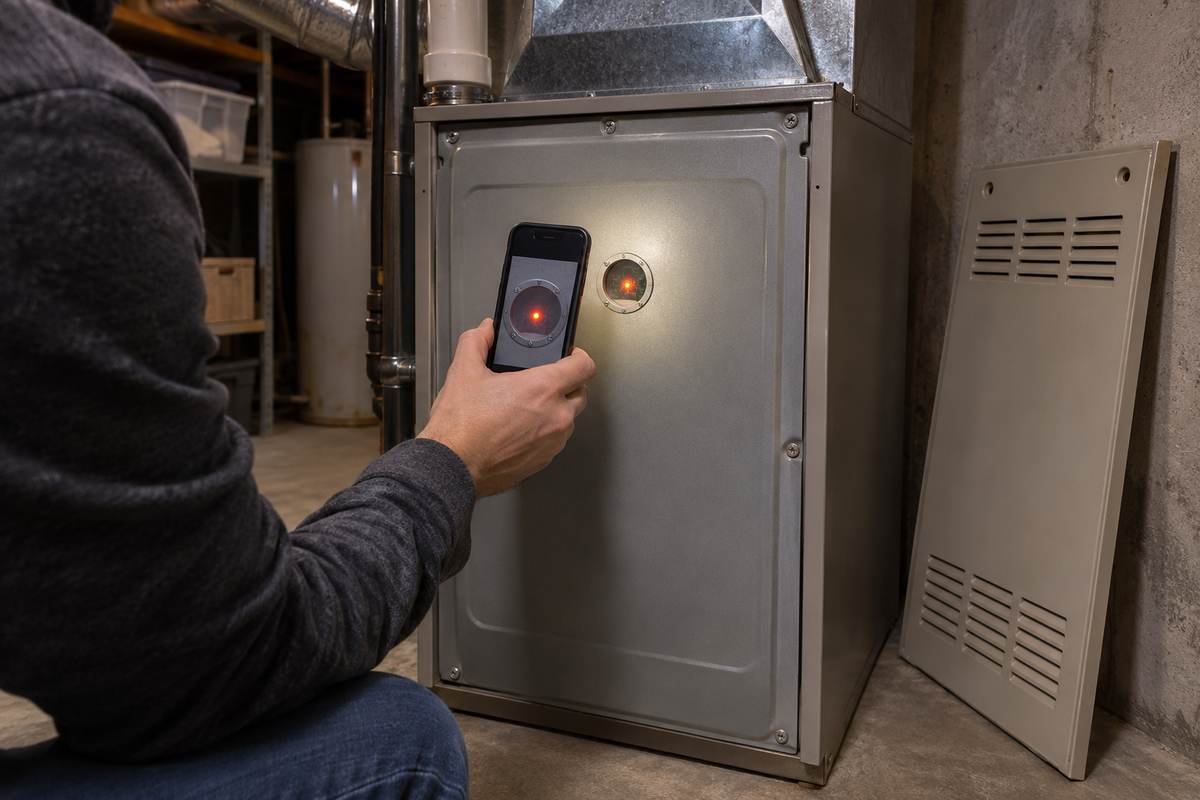
Here’s how you see it on that Carrier model:
- Take off the main furnace door. That’s the outer panel.
- Look through the small view port in the blower access panel behind it. Don’t remove that panel yet.
- Count the flashes, or film them on your phone and count them later.
- Match the count to the code chart in your furnace’s manual.
Use your own furnace’s chart, not one you found online for a different model.
Furnace not turning on: the checklist, in order
When the furnace does nothing at all, the owner’s manuals list a short set of checks to do before you call. Carrier says to go through them step by step and move on only if the furnace still won’t start.
- Thermostat. Is it set to HEAT, and set above the room temperature? Carrier’s troubleshooting guide adds that a battery thermostat may just need new batteries. If the screen is blank, start there. Our thermostat troubleshooting guide covers the wiring side.
- Power. Check the furnace’s power switch, then the breaker. The Payne manual also points to a fuse on the furnace control board.
- The blower door. Payne asks whether the blower access door is firmly in place. The furnace has a blower door safety switch, and the door has to be seated for it to run.
- The gas shut-off valve. Find the manual valve on the gas pipe leading to the furnace. If the lever points the same way the pipe runs, it’s open. At a right angle to the pipe, it’s closed.
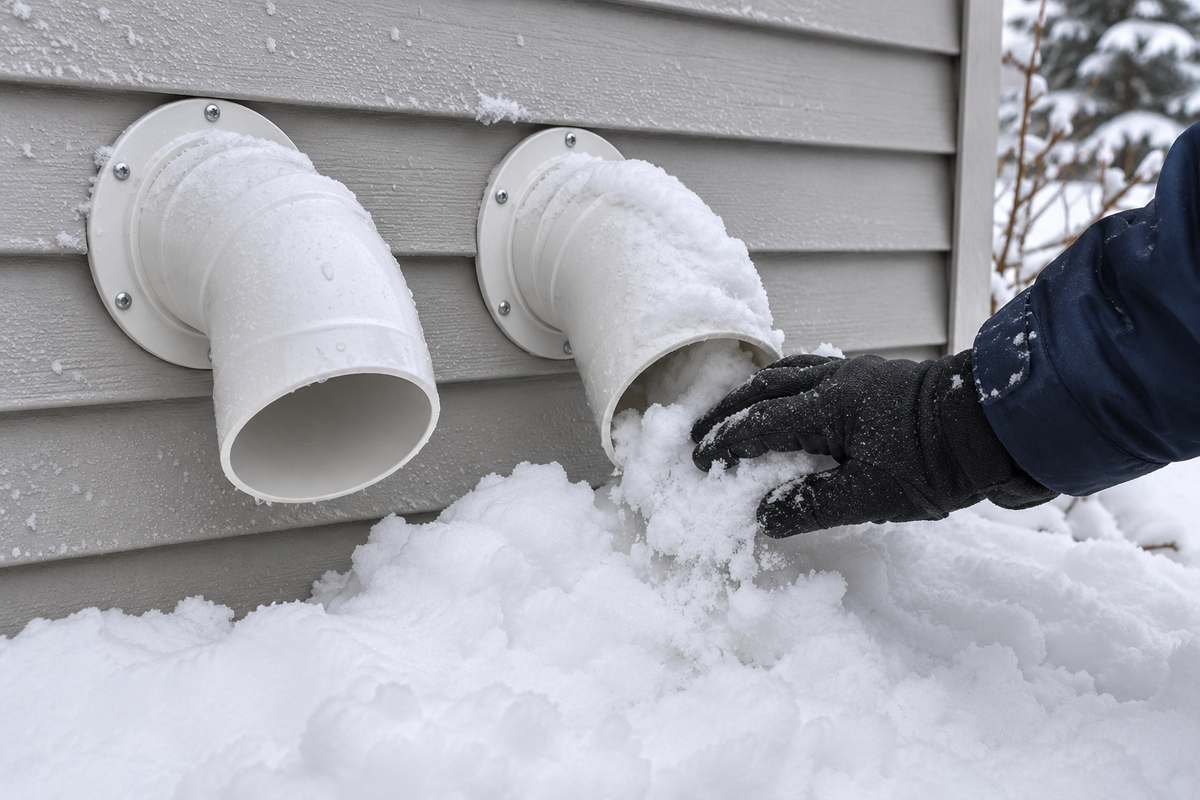
- The vent outside. Carrier lists obstructions around the vent termination. On a high-efficiency furnace, that’s the plastic pipe or pipes on the outside wall or roof.
Don’t skip the outside pipes after a snowfall. When a parent posted that their daughter in the upper Midwest woke to a 48°F house, one reply asked exactly this:
“did she check the intake and vent outside to see if there is any blockage by snow?” u/run_detoured on Reddit
The next two checks are inside the furnace, so turn the power off first. That’s the manual’s own instruction, and it’s also why you wrote the code down.
- The gas valve switch. Is the control switch on the gas valve in the ON position? If it isn’t, Carrier says to follow the start-up procedure printed in the manual rather than just flipping it.
- The flame rollout switch. It’s a manual-reset switch on the burner box. If it has tripped, Carrier says you can push its button once. If it trips again, shut the furnace down and call for service.
That second trip matters. The manual’s reset is a one-time check, not a fix. The switch is there to shut the furnace off after high temperatures, so a second trip means the cause is still there. That’s a job for a licensed tech.
Watch the start-up to see where it stops
A gas furnace starts in a fixed order, and watching it tells you where it fails. Raise the thermostat and listen and look in this order: inducer fan, igniter glow, burners, then the blower.
Here’s the sequence you’re watching for, as Carrier’s condensing furnace manual describes it:
- The thermostat calls for heat, and the inducer motor starts. You’ll hear it as a small fan.
- A pressure switch checks that there’s enough combustion air. Only then is the hot surface igniter powered.
- The igniter heats for 17 seconds. Payne’s manual says it glows orange when it’s hot.
- The gas valve opens, and the burners light. You’ll see flame through the burner window if your furnace has one.
- After about 60 seconds, the blower comes on and you feel warm air at the vents.
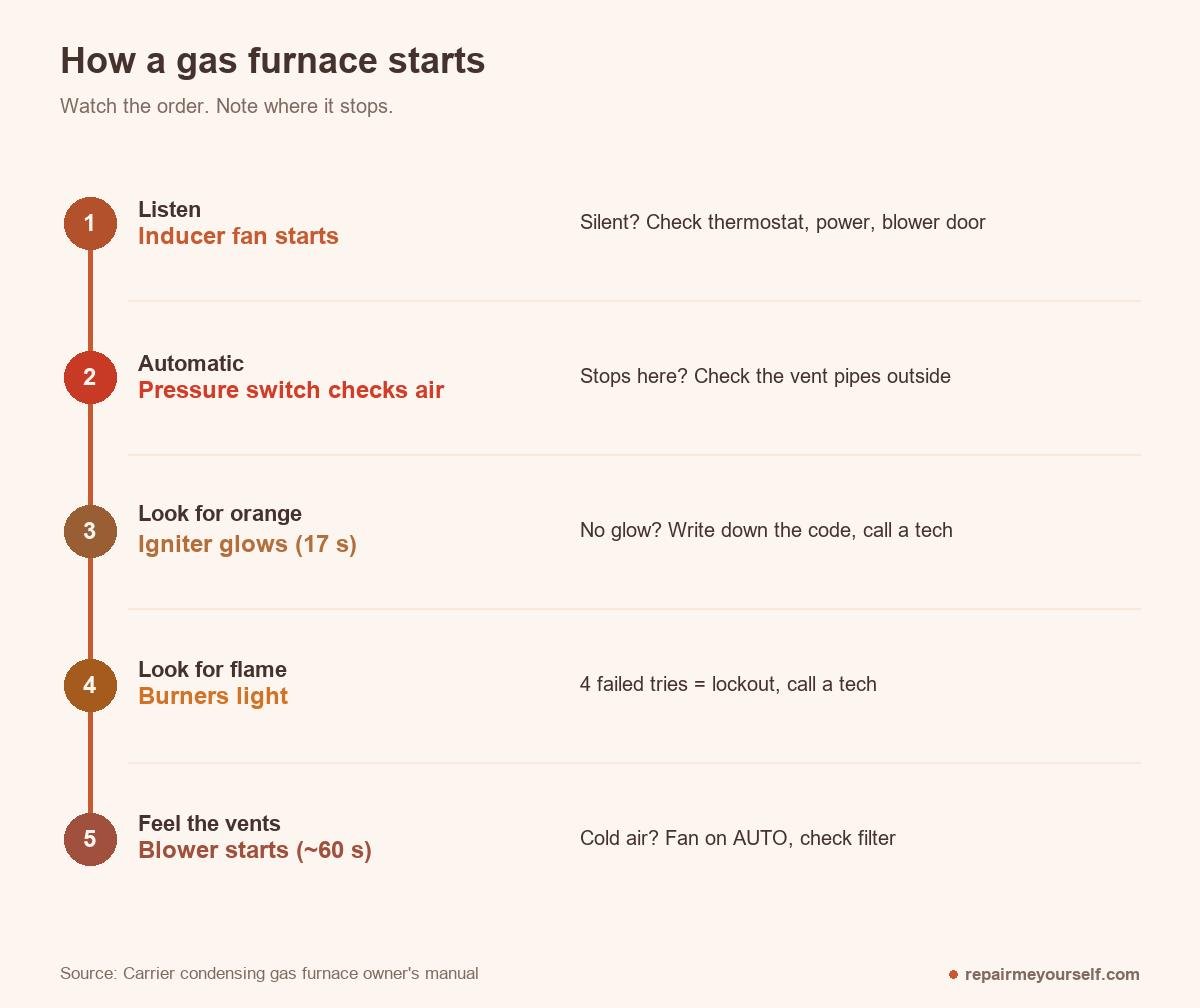
The timing varies. Payne’s PG8M manual says it waits about 32 seconds before the gas flows, and its blower starts 25 to 45 seconds after that. Your own manual has the numbers for the furnace you’ve got.
If the burners don’t light, the control tries again. Carrier’s manual says it locks out after four failed attempts. At that point both manuals say the same thing: shut the furnace down and call for service.
Don’t keep cycling the power to force more tries. Instead, note the step where it stopped and the status code. A tech can use both.
Furnace blowing cold air
If your furnace is blowing cold air, check the thermostat’s fan setting first. On ON, the blower runs all the time, so between heating cycles you feel unheated air. Switch it to AUTO and see whether the cold air stops.
Both owner’s manuals describe ON as continuous fan. On Payne’s furnace the blower runs constantly, apart from a 42 to 62 second pause when the thermostat calls for heat. That’s useful for filtering air. It also means the vents never go quiet.
There’s also a wait at every start. The blower comes on only after the burners have been warming the heat exchanger for a while. So if the burners are lit and the blower hasn’t started, give it a minute.
Cold air that never warms up is different, and the filter is the first suspect. Payne’s condensing furnace manual says a dirty filter cuts airflow until the furnace cycles on its safety controls, and left alone, it eventually locks out. In an r/HVAC thread where a tech asked others to guess why a furnace was blowing only cold air, one guess named the same thing:
“Plugged filter trips high limit” u/LightFusion on Reddit
If the filter’s clean, the fan’s on AUTO and the burners still don’t light, you’re past the homeowner checks. That’s ignition or gas supply, and it’s the tech’s job.
Furnace keeps shutting off
A furnace that keeps turning on and off is short cycling. Carrier’s furnace troubleshooting guide says to check three things you can reach: where the thermostat sits, the filter, and whether the vents are open.
- The thermostat. If it’s near a heat source, it can read the room wrong and shut the furnace off early.
- The filter. A dirty one restricts airflow. Carrier says that can overheat the heat exchanger and trip a safety shutoff.
- The vents. If you’ve closed or blocked supply and return vents, they do the same thing.
On some furnaces, a blocked vent causes it. Payne’s manual says a blocked vent safeguard switch shuts the furnace off and resets itself once the furnace cools. If you clear the vent and it keeps happening, Carrier says the cause could be airflow, sizing or the controls, and that needs a professional.
Check and change the furnace filter
The filter is the one repair the manuals hand to you. Payne’s says untrained people can clean or replace air filters, and that everything else should be left to trained service people.
Here’s what the manuals say:
- How often to check it. Every 4 weeks or so, and clean or replace it if it’s dirty. Carrier’s online guide gives typical replacement times: 30 to 90 days for many 1-inch filters, and 6 to 12 months for 4-inch media filters.
- Power first. Turn off the electrical supply to the furnace before you open the filter door.
- Which way it goes. Payne says to install a replacement with the airflow arrow pointing toward the blower.
- Same size and type. Use the filter your furnace was originally specified with.
- Never run it without one. Payne warns that it can damage the blower motor.
Can’t find the filter? Carrier’s manual says it may be in the blower compartment or in a filter cabinet on the side or bottom of the furnace. If it’s somewhere else, ask your dealer.
Where DIY furnace repair stops
DIY furnace repair stops at the filter, the settings and the switches the owner’s manual tells you to check. Anything involving gas, flames, the vent pipe or a switch that trips twice goes to a licensed technician.
The Payne and Carrier manuals name these as stop signs for you:
- You smell gas. Don’t light anything or touch electrical switches, and don’t use a phone in the building. Leave, then call your gas supplier from a neighbor’s phone. If you can’t reach them, call the fire department.
- A loud bang when the burners light. Payne calls it delayed ignition, caused by buildup on the burners. Shut the furnace down and call your dealer.
- Flames that aren’t bright blue. Payne says to call your servicing dealer.
- Holes, rust or a loose vent pipe. Payne says not to run the furnace, because toxic fumes can escape into the house.
- Any part has been under water. Don’t use the furnace until a qualified technician inspects it and replaces any control or gas control parts that were under water.
Payne also recommends a carbon monoxide alarm in the living area, away from gas appliances and the door to an attached garage. For the gas side, our guide to gas leak detectors covers the tools.
When you call, give the tech the model and serial number from the furnace’s rating plate. Add the status code and the start-up step where it stopped. Payne’s manual says the model and serial number alone can let a dealer suggest things you can try over the phone.
Furnace troubleshooting: questions
Where is the reset button on a furnace?
The owner’s manuals I read don’t show one main reset button. Their manual-reset switches are the flame rollout switch on the burner box and, on Payne’s 80% model, limit switches at the end of the burners. Push one once. If it trips again, call for service.
Turning the power off and back on is the other thing people call a reset. Write down the status code first, because cutting the power clears it.
How long do furnaces last?
Carrier says its furnaces typically last 15 to 20 years, depending on maintenance and use. It suggests weighing replacement when breakdowns get frequent, or when a repair approaches the cost of a new furnace.
What is the most common furnace problem?
Carrier names a dirty or clogged air filter as the most common one. It restricts airflow, so the furnace can overheat, heat unevenly or shut down. It’s also the one furnace repair Payne’s manual leaves to you, so start there.
If you also have central air, the same thermostat and filter checks apply in summer. Our guide to an AC unit not turning on picks up from there.