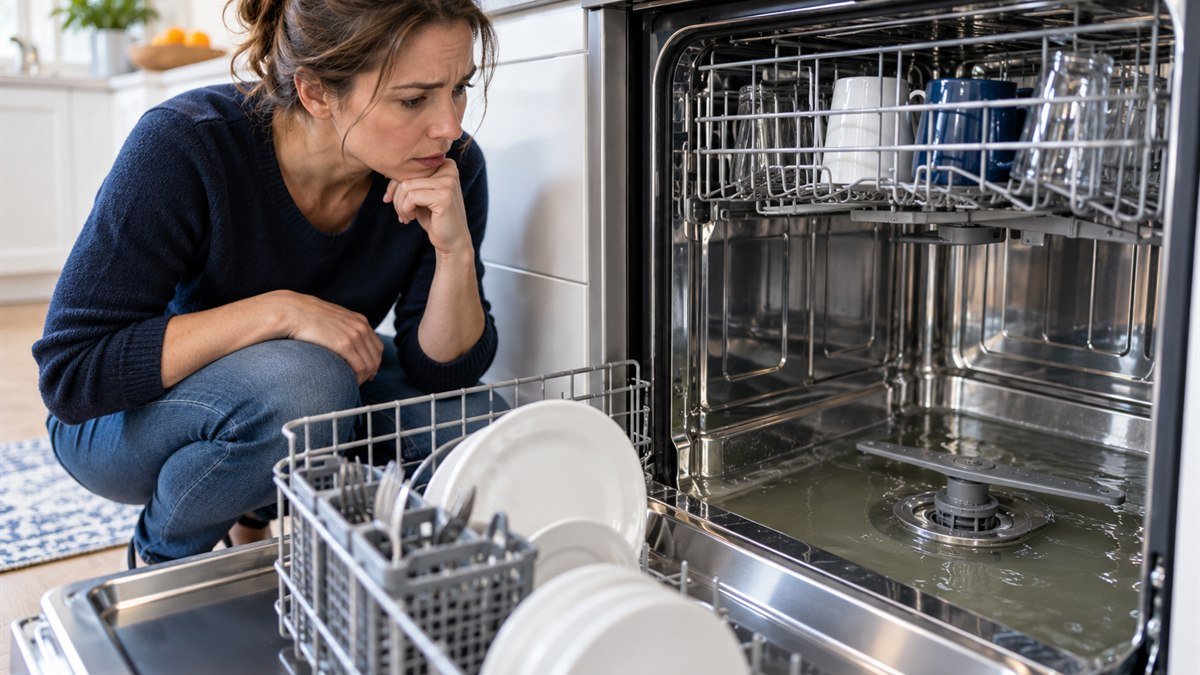
A Frigidaire dishwasher not draining usually has a clogged glass trap or filter, a disposal knockout plug that was never removed, or a pinched drain hose. Frigidaire says some water in the bottom after a cycle is normal. Water covering the filter screen is the sign of a real drain problem.
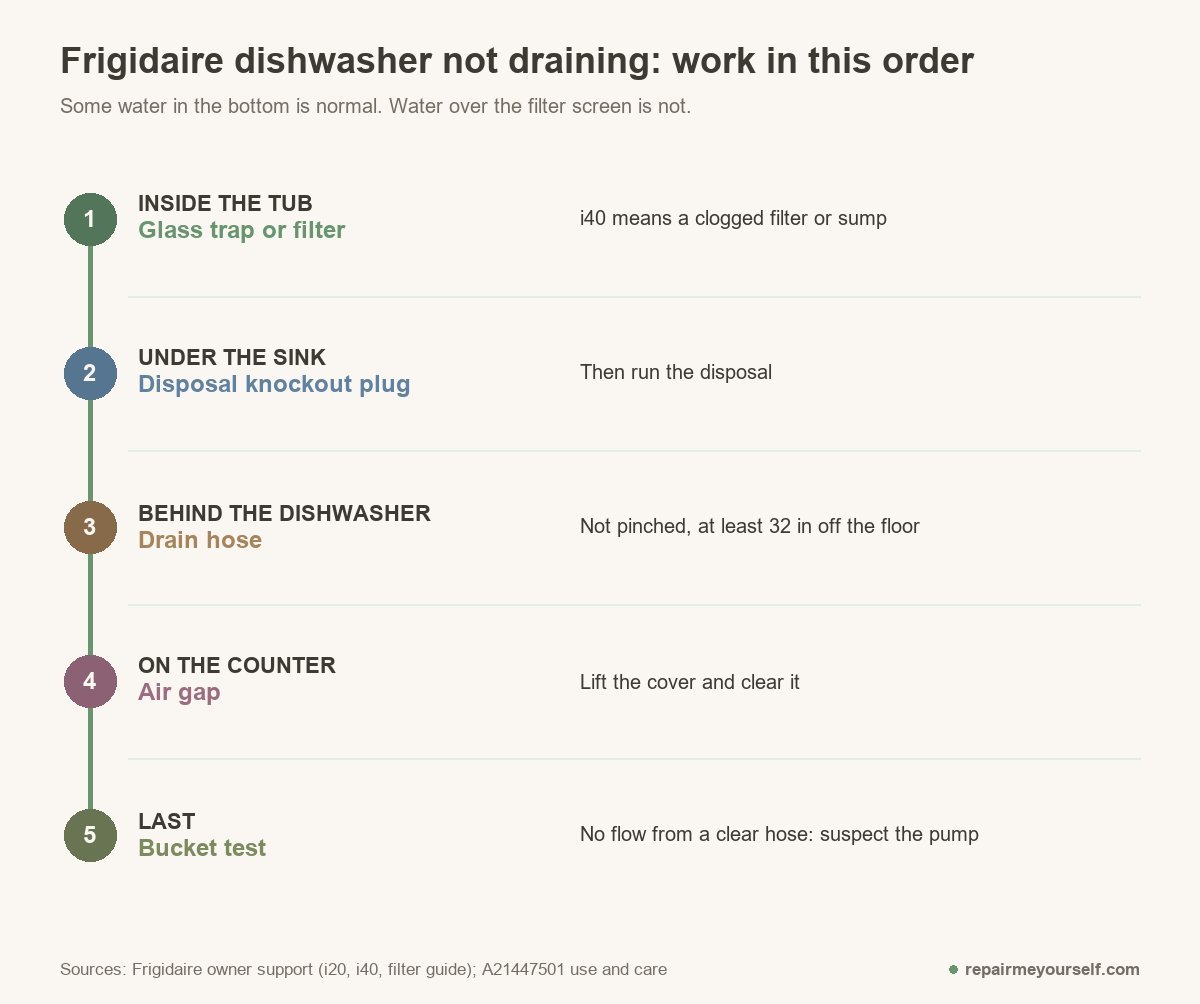
So look before you take anything apart. If the water sits below the filter screen, run your next load and watch it. If it’s covering the screen, work through the steps below in order. Don’t skip ahead.
How much water is too much in a Frigidaire dishwasher?
Frigidaire’s support article on water left after a cycle sets the line: a little water in the bottom is expected, and water over the filter screen means something in the drain path is blocked.
Your dishwasher may also tell you with a code. Frigidaire lists i20 as “unit did not drain properly” and i40 as a clogged filter or sump, where food soils have built up. Both send you to the same first stop.
Clean the glass trap or the filter
There are two Frigidaire filter designs, and the one you’ve got changes the steps. Pull the bottom rack and look at the floor of the tub. If you see a handle in the middle of the lower spray arm, you have a glass trap. If you see a round filter you can twist, you have the cylinder filter.
I always looked at the model tag first on a Frigidaire call, because the two come apart differently.
Glass trap models
On models like the one in Frigidaire’s December 2021 use and care manual, the filter cleans itself. The glass trap in its center catches broken glass, straws, bones and pits, and that’s what you empty.
- Grasp the glass trap’s handle. Rotate it 90 degrees clockwise while you press down on the center of the wash arm.
- Lift the spray arm and glass trap assembly up and out.
- Tip it over a trash can and tap it empty, or slide the trap off the assembly and empty it.
- Set it back, press down on the center of the arm and turn the handle 90 degrees counterclockwise until it snaps in.
Cylinder filter models
Frigidaire’s glass trap and filter guide covers the other design, which has a cylinder fine filter and a coarse filter under it.
- Rotate the cylinder fine filter counterclockwise and lift it out.
- Empty it and rinse it under running water. A sponge or bottle brush clears stuck food.
- Lift the coarse filter out of the tub bottom and flush it under running water.
- Put the coarse filter back, then the cylinder filter, turning it the opposite way until it locks.
Then run a short cycle. If water still covers the screen at the end, the blockage is past the tub.
Work outward from the dishwasher
Frigidaire’s i20 article gives the rest of the list. Go through it in the order the water travels.
The disposal knockout plug
Is your drain hose connected to a garbage disposal that’s new? Frigidaire says the knockout plug in its dishwasher inlet can be overlooked during installation. With it in place, the water’s got nowhere to go.
If the disposal isn’t new, run it. Frigidaire’s own tip is that running a connected disposal clears the drain system, and it costs you nothing to try.
The drain hose and its height
Pull the dishwasher forward a little and follow the hose from the back of the tub to the sink, because Frigidaire wants it free of blockages and not pinched or restricted anywhere along the way.
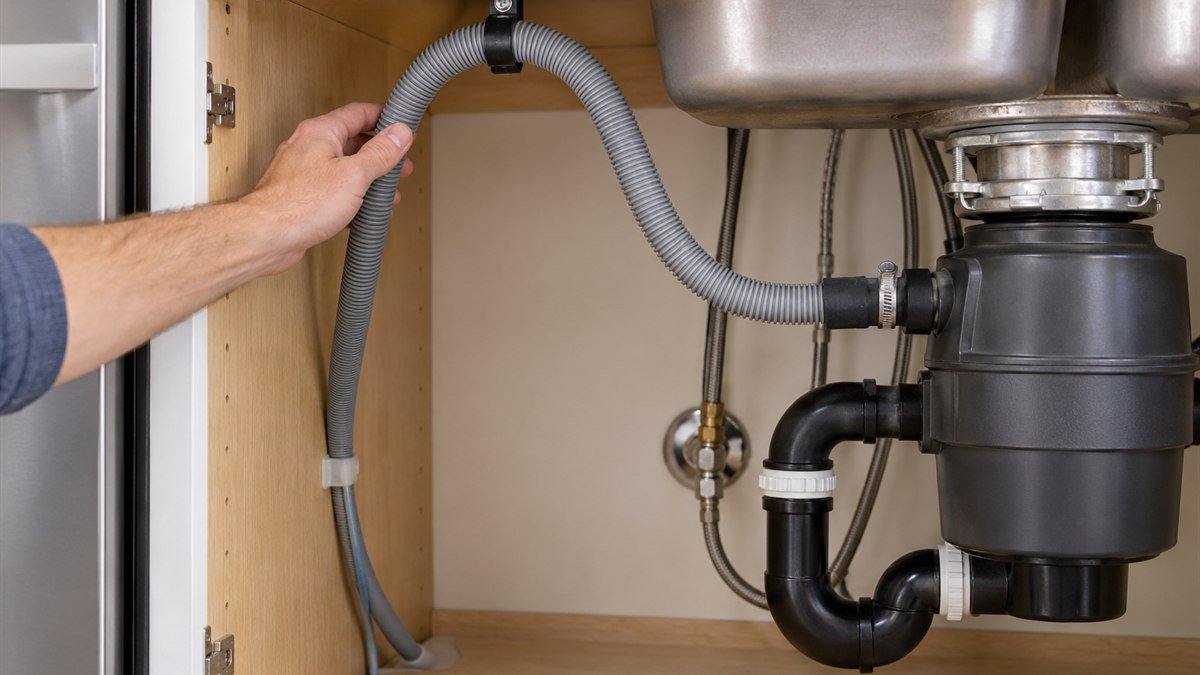
Then measure it. Frigidaire’s i20 article says the drain hose has to sit at least 32 inches above the floor. Measure from the floor to the highest point of the hose run, and raise it if it sits lower.
The air gap
If you have a small cap on the counter beside your faucet, that’s a drain air gap. Frigidaire says to keep it clean so the dishwasher can drain, and the way in is simple: lift the cover off and clear out whatever has collected inside.
Frigidaire also notes the air gap isn’t part of the dishwasher and isn’t covered by its warranty.
Force a drain and clear the code
On the model in Frigidaire’s 2021 manual, pressing START/Cancel and closing the door right away starts a 90-second drain. That’s the quickest way to empty the tub after each fix.
Frigidaire’s i20 article gives three ways to reset the code: press and hold the cancel button, switch the power off at the breaker, or unplug the dishwasher for 3 minutes. Make sure the cycle actually finished, too, because Frigidaire’s manual lists a paused cycle as one of the reasons you’ll find water left in the tub after the dishwasher goes quiet.
Frigidaire dishwasher not draining but no blockage?
If the filter, plug, hose and air gap are all clear, find out whether the pump is moving water. A technician on the AppliancePartsPros forum gave one owner a simple way to do it. I like it because it settles the pump question without a meter.
- Take the drain hose off the disposal or sink connection.
- Put the end in a bucket.
- Run a drain, using cancel as above.
Strong flow into the bucket means the dishwasher’s fine and the clog is in your sink plumbing. A trickle or nothing means it’s at or before the pump.
That same thread turned up one more cause. A later poster found the flapper valve at the pump outlet sucked inward, blocking the drain, and the dishwasher worked once it was cleared.
Stop and call a pro if the bucket gets no water and everything before the pump is clear. The next check on that forum was for 120 volts at the drain pump while it should be running. That’s a live-voltage test, and I’d leave it to a technician.
If your Frigidaire is flashing lights instead of draining, see Frigidaire dishwasher lights blinking. For drain trouble on any brand, there’s dishwasher not draining completely.
Until the bucket test fails, though, treat a Frigidaire that won’t drain as a path problem. Clear the trap, the plug, the hose height and the air gap before you spend money on a pump.