
Buying a new dryer should be straightforward. Then you realize you have to choose between gas and electric, and suddenly there are utility costs, installation fees, upfront prices, and long-term savings all pulling you in different directions.
The honest answer to which is more cost effective depends on your specific situation. But the numbers behind that answer are clear, consistent, and worth understanding before you spend a dollar. This guide lays out everything you need to make the right call for your home.
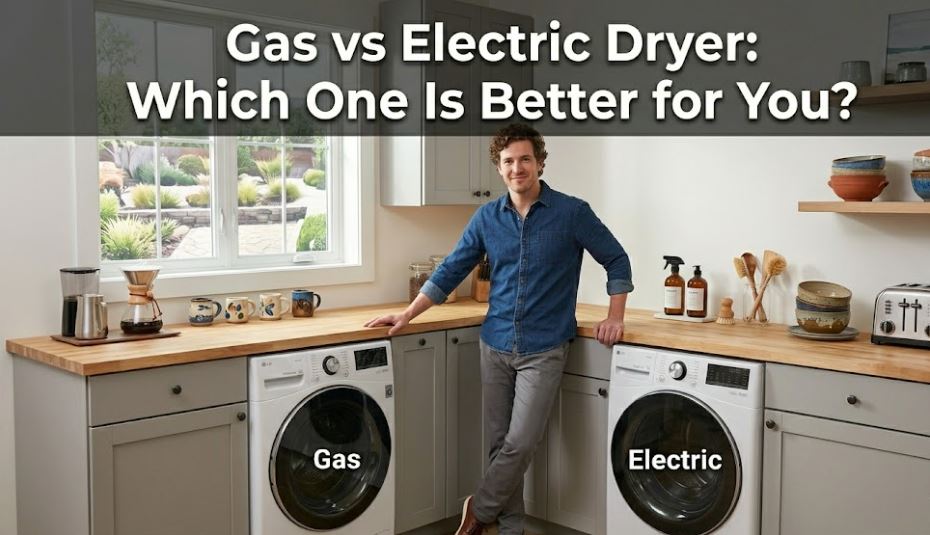
How Each Dryer Type Works
Understanding the basic mechanics helps explain why the costs differ.
Gas dryers burn natural gas or propane to generate heat, using only a small amount of electricity to power the drum motor, controls, and fan. Because of this, they plug into a standard 120-volt outlet rather than the high-voltage connection electric dryers require. The combustion-based heat is produced quickly and at high intensity, which is why gas dryers tend to dry clothes faster.
Electric dryers rely entirely on electricity, using a heating element to warm the air that circulates through the drum. They require a dedicated 240-volt outlet, which most homes built after 1996 already have installed. They heat up more slowly than gas models and typically take longer to complete a cycle, which directly affects energy consumption and operating cost.
Gas Vs Electric Dryer Cost Breakdown
Purchase Price
Gas dryers typically cost $50 to $150 more than comparable electric models. A mid-range electric dryer runs roughly $400 to $750, while a comparable gas model lands between $500 and $900. At the premium end, both types reach $1,200 and above.
Installation Cost
This is where the gap widens significantly, and it often changes the cost-effectiveness calculation entirely.
Electric dryers are simple to install. If your laundry area already has a 240-volt outlet, installation is essentially plugging it in. Even if an electrician needs to install the outlet, the cost typically runs $50 to $150.
Gas dryers require both a 120-volt electrical outlet and an active gas line within reach. If you already have a gas hookup in the laundry room, installation is straightforward. If you do not, running a new gas line costs between $400 and $1,000, plus an additional $125 to $250 to connect the appliance. That can add over $1,000 in installation costs before you dry a single load.
Both types also require exterior venting in most configurations, which adds cost if ductwork does not already exist.
Operating Cost Per Load
This is where gas dryers recoup their higher upfront cost over time.
A typical electric dryer uses 4 to 6 kilowatt-hours (kWh) per load. At the US national average electricity rate of roughly $0.16 per kWh, that works out to approximately $0.54 per load. An efficient electric dryer running 300 loads per year costs around $105 annually to operate.
A gas dryer uses far less electricity per cycle (around 0.1 to 0.2 kWh for the motor and controls) and approximately 0.2 to 0.25 therms of natural gas. At average US natural gas rates, the total cost per load comes to roughly $0.32 to $0.35. Running the same 300 loads per year on gas costs approximately $50 to $96 annually.
The operating cost advantage for gas is substantial and consistent: gas dryers cost roughly 40 to 60% less per load to run than comparable electric models under average US utility rates.
The Long-Term Cost Picture
Here is how the numbers play out over time for a household doing approximately 300 loads of laundry per year.
| Cost Factor | Electric Dryer | Gas Dryer |
|---|---|---|
| Average purchase price | $400 to $750 | $500 to $900 |
| Installation (existing hookup) | $50 to $150 | $125 to $250 |
| Installation (new line needed) | $50 to $150 | $525 to $1,250 |
| Approx. cost per load | $0.54 | $0.32 to $0.35 |
| Annual operating cost (300 loads) | $100 to $130 | $50 to $96 |
| Annual savings with gas | — | $35 to $80 per year |
| Break-even period (existing hookup) | — | 1 to 3 years |
| Break-even period (new gas line) | — | 7 to 15+ years |
| 10-year total operating cost | $1,000 to $1,300 | $500 to $960 |
The conclusion is clear for most households with an existing gas hookup: gas dryers are more cost effective over the long run, typically recovering the higher purchase price within one to three years. For households without a gas line, the math flips. The cost of running a new gas line often makes electric the more financially sensible choice unless you plan to stay in the home long-term.
What Else Affects the Calculation
Your Local Utility Rates
National averages are a starting point, but energy prices vary significantly by region. In states like Hawaii, California, and parts of the Northeast, electricity rates run 30 to 45 cents per kWh, making gas dryers even more financially attractive. In regions where natural gas is expensive or electricity is subsidized, the gap narrows.
Before deciding, check your actual electricity rate on your utility bill and compare it to your local natural gas rate. This single step gives you the most accurate cost comparison for your specific situation.
How Often You Do Laundry
The cost advantage of gas scales with usage. A household doing one or two loads per week saves relatively little per year compared to the higher upfront and installation cost. A family doing five to seven loads per week may break even on gas within the first year, even accounting for a modest installation cost.
Heat Pump Electric Dryers
There is a newer option worth knowing about: heat pump electric dryers. These use a refrigeration-based system to recycle warm air within the drum rather than venting it outside, using roughly 1.0 to 1.5 kWh per load rather than the 4 to 6 kWh of a conventional electric model. At that consumption level, heat pump dryers can match or beat gas dryers on operating cost, even at higher electricity rates. The trade-off is a higher purchase price (typically $1,000 to $2,000) and slower drying cycles. For households committed to electrification or those without a gas line, a heat pump dryer is worth serious consideration.
Safety Considerations
Gas appliances carry inherent risks that electric dryers do not. A poorly installed or maintained gas dryer can produce carbon monoxide, a colorless, odorless gas that is dangerous in enclosed spaces. If you have or are installing a gas dryer, a carbon monoxide detector nearby is strongly recommended. Both types carry fire risk from lint buildup in the exhaust duct, which is why regular vent cleaning is essential regardless of fuel type.
Who Should Choose a Gas Dryer?
A gas dryer is the more cost-effective choice if the following apply to your situation:
- Your laundry room already has an active gas line and a 120-volt outlet
- You live in a region where electricity rates are high relative to gas prices
- Your household does four or more loads of laundry per week
- You plan to stay in your home long enough to benefit from lower operating costs (generally 3 to 5 years minimum)
- Faster drying times matter to you, as gas dryers heat up more quickly and complete cycles in less time
Who Should Choose an Electric Dryer?
An electric dryer is the more practical and cost-effective choice if the following apply:
- Your home does not have a gas line in the laundry area and the cost of installation is prohibitive
- You live in an apartment, condo, or rental property where gas appliances may not be permitted
- Your household does one to three loads per week, making the operating cost savings from gas minimal
- You want the lowest possible installation cost and quickest setup
- You are interested in a heat pump model that uses very little electricity per load
Our Amazon Product Recommendations
Best Gas Dryer: LG DLGX4001W 7.4 Cu. Ft. Smart Gas Dryer
LG dominates both Consumer Reports’ gas dryer ratings and independent reliability data, and the LG DLGX4001W is the model that earns those rankings. It is available at a competitive price point for a feature-rich gas dryer, and it carries consistently strong reviews across major retailers, often scoring 4.6 out of 5 stars or higher.
Key features include:
- 7.4 cubic foot ultra-large capacity handles full family loads, blankets, and towels in a single cycle
- TurboSteam technology refreshes garments in as little as 10 minutes, reducing wrinkles and odors without a full wash
- Built-in AI fabric sensing that pairs with a compatible LG washer to automatically select the correct drying cycle for your load
- Sensor Dry that monitors moisture levels and stops the cycle automatically when clothes are done, preventing overdrying and saving energy
- FlowSense indicators that alert you when the duct or lint filter needs cleaning, a practical safety and efficiency feature
- LG ThinQ app connectivity for remote start, cycle monitoring, and voice control via Alexa and Google Assistant
- Reversible door and closet-depth design for flexible installation
- ENERGY STAR certified
- Requires a gas hookup and 120-volt outlet
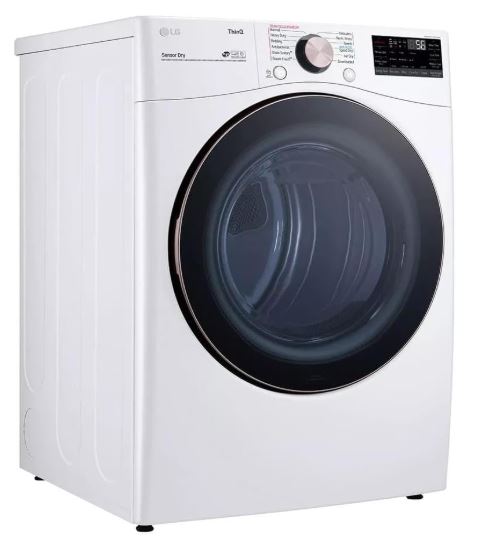
This dryer pairs directly with the LG WM4000HWA front-load washer featured in our high-efficiency washer guide, creating a matched smart laundry setup with shared app integration and automatic cycle pairing. For households with an existing gas hookup, this is one of the most reliable and cost-effective gas dryers available at a mid-range price.
Best Electric Dryer: LG DLEX4000W 7.4 Cu. Ft. Smart Electric Dryer
The electric counterpart to the DLGX4001W, the DLEX4000W delivers virtually the same feature set and performance in a 240-volt electric configuration. It is the right choice for households without a gas line or those who prefer electric appliances. It earns top marks from Consumer Reports and thousands of verified buyers, and is one of the highest-rated electric dryers available at this price point.
Key features include:
- 7.4 cubic foot capacity for large loads, bedding, and bulky items
- TurboSteam technology for quick fabric refreshing between washes
- Sensor Dry that monitors moisture and stops the cycle automatically, protecting clothes and saving electricity
- Built-in AI that pairs with a compatible LG washer to auto-select the optimal drying cycle
- LoDecibel quiet operation, well suited to laundry rooms near living areas or bedrooms
- FlowSense indicators for duct and lint filter maintenance alerts
- LG ThinQ app with remote start, SmartDiagnosis, and Alexa and Google Assistant compatibility
- Stackable with the LG WM4000HWA washer
- ENERGY STAR certified
- Requires a 240-volt outlet
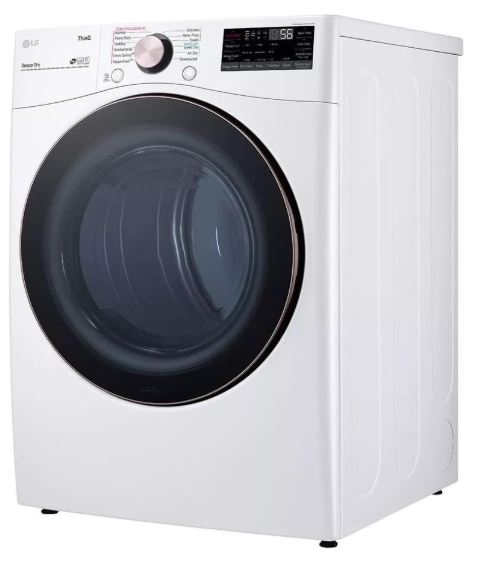
The primary difference between this and the gas model is the heat source and the installation requirements. Performance, features, and build quality are essentially identical. If you are comparing the two purely on operating cost, the gas model wins over time. But if your home is already wired with a 240-volt outlet and lacks a gas line, the DLEX4000W is one of the best electric dryers you can buy at a realistic price.
4 Things to Check Before You Buy
Confirm what hookups you already have. Walk to your laundry area and identify whether you have a 240-volt outlet, a gas line, or both. This single step will determine which type is viable without additional installation cost.
Check your actual utility rates before relying on national averages. Your electricity and gas rates are on your utility bills. Plug your own numbers into the cost-per-load calculation to get an accurate comparison for your region.
Consider how long you plan to stay in your home. If you are planning to move within two to three years, the operating savings from a gas dryer may not cover the higher upfront and installation cost. Electric may be the smarter short-term choice.
Factor in venting requirements for both types. Most gas and electric dryers require exterior venting. If your laundry area does not have a duct already, factor in the cost of ductwork installation when comparing total setup costs for each option.
Also Read:
Frequently Asked Questions
Is a gas dryer really cheaper to run than an electric dryer?
Yes, in most parts of the US. A typical electric dryer costs around $100 to $130 per year to operate. A comparable gas dryer costs around $50 to $96 per year. The exact savings depend on your local utility rates. In high-electricity-cost regions, the gap is even larger. In areas with expensive natural gas, it narrows.
How long does it take a gas dryer to pay for itself compared to electric?
For households with an existing gas hookup, the break-even point is typically one to three years, after which the lower operating costs represent pure savings. For households that need to install a new gas line (adding $400 to $1,000 or more), the break-even period extends to seven to fifteen years or more, often making electric the smarter financial choice.
Do gas dryers dry clothes faster than electric dryers?
Generally yes. Gas dryers heat up more quickly and generate higher heat output than standard electric resistance dryers. Most users find gas dryers complete cycles 10 to 20% faster than comparable electric models, which also contributes to their lower energy cost per load.
What voltage does a gas dryer require?
Gas dryers plug into a standard 120-volt household outlet, the same type used for most small appliances. They use electricity only to power the drum motor, fan, and controls. Electric dryers require a dedicated 240-volt outlet, which must be professionally installed if not already present in your laundry room.
Can I convert my existing electric dryer hookup to gas?
Yes, but it requires having a licensed plumber or gas technician run a gas line to the laundry area. You will also need to ensure a 120-volt outlet is available alongside the gas connection. The cost of conversion runs $500 to $1,250 on average. Whether it is worth doing depends on your local gas rates, how frequently you do laundry, and how long you plan to stay in your home.
Are gas dryers safe to use indoors?
Yes, when properly installed and maintained. Gas dryers must be vented to the exterior of the home to expel combustion gases safely. A carbon monoxide detector is strongly recommended in any home with gas appliances. The most common safety risks come from improper installation or neglected vent maintenance, not from the appliance itself when used correctly.
What is a heat pump dryer and how does it compare to both gas and electric?
A heat pump dryer is a type of electric dryer that uses a refrigeration system to recycle warm air within the drum rather than exhausting it outside. It uses approximately 1.0 to 1.5 kWh per load compared to 4 to 6 kWh for a conventional electric model, making it the most energy-efficient drying option available. Operating costs can match or beat gas dryers in many regions. The trade-offs are a higher purchase price, slower cycle times, and no exterior venting requirement. For households without a gas line, or those prioritizing long-term energy efficiency, heat pump dryers are a compelling option worth considering.
What maintenance does a dryer need regardless of type?
Both gas and electric dryers require regular cleaning of the lint filter after every cycle and annual cleaning of the exhaust duct to maintain airflow and prevent fire risk. Gas dryers additionally benefit from periodic inspection of the gas connection and burner assembly.

Hi, I’m Barlgan! I created Repair Me Yourself to empower homeowners to tackle appliance repairs with confidence. From decoding error codes to fixing cooling issues, I break down complex repairs into simple, actionable steps that save you time and money.