
If you have ever tried to hold a conversation while running the dishwasher, or had to pause a movie every time the drain pump kicked in, you already understand the appeal of a quieter machine. But quiet dishwashers typically cost more than standard models, and the marketing around noise levels is not always honest about what that difference actually feels like in a real kitchen.
This guide explains how dishwasher noise is measured, what the numbers really mean in practice, what engineering actually makes a machine quiet, and whether paying for a lower dBA rating is worth it for your specific home. Five Amazon-confirmed models — three quiet and two standard — illustrate both sides of the comparison.
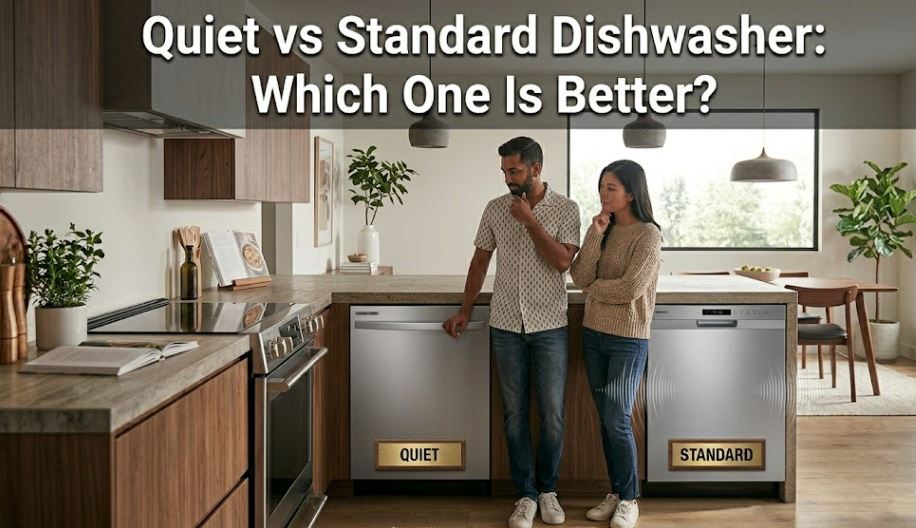
How Dishwasher Noise Is Measured — and What the Numbers Actually Mean
Dishwasher noise is measured in dBA, or A-weighted decibels. The A-weighting system adjusts the measurement to reflect how the human ear actually perceives sound, rather than a flat reading of raw sound pressure. That distinction matters because it means the dBA figure on a dishwasher spec sheet correlates reasonably well with how the machine will actually sound in your kitchen.
The logarithmic nature of the decibel scale is where most buyers get caught off guard. A 3 dBA reduction represents a noticeable — not marginal — decrease in perceived loudness. A 10 dBA reduction represents roughly half the perceived volume. That means a 40 dBA dishwasher does not sound slightly quieter than a 50 dBA dishwasher. It sounds dramatically quieter — about half as loud to your ear.
Here is how the industry segments dishwasher noise:
- 38 to 44 dBA: Genuinely quiet. At this level, most people cannot hear the machine running from an adjacent room. Suitable for open-concept kitchens, night cycles, and homes where babies are sleeping or someone is working from home near the kitchen.
- 45 to 49 dBA: Mid-range. Audible but unobtrusive. You can hold a conversation at normal volume near the kitchen without difficulty.
- 50 to 54 dBA: Standard. The machine is clearly audible. In open-plan spaces, it competes with background noise at low television volumes.
- 55 dBA and above: Older or budget designs. Noticeably loud in most settings — comparable to a normal conversation at three feet.
One important caveat from Consumer Reports: manufacturers report an average dBA level across a full wash cycle, but the loudest moments — the drain pump, the water spray intensifying — occur in brief peaks. Two dishwashers with identical average dBA ratings can feel quite different if one has loud peak moments during draining and the other maintains a consistent hum throughout.
What Makes a Quiet Dishwasher Actually Quiet
The difference in noise between a 40 dBA and a 52 dBA machine is not accidental. Several specific engineering decisions determine where a dishwasher falls on the noise spectrum.
Motor design
Quieter dishwashers use variable-speed inverter motors that modulate speed based on the current demand in the wash cycle. Rather than running at full power throughout and switching off abruptly, the motor adjusts continuously — producing less vibration and mechanical noise across the entire cycle. Standard dishwashers use fixed-speed motors that cycle on and off more aggressively, creating audible spikes in noise at each transition.
Insulation layers
Premium quiet dishwashers wrap the exterior cabinet in multiple layers of sound-dampening insulation — typically a combination of bitumen, foam, and fiberglass batting. The amount and quality of that insulation is the single biggest determinant of noise containment at comparable motor speeds. Standard models use thinner or single-layer insulation that allows more sound to escape into the room.
Tub material
Stainless steel tubs are often cited as quieter than plastic, but Consumer Reports testing does not fully confirm this as a consistent advantage. What stainless does offer is better heat retention for drying performance. The insulation surrounding the tub matters more than the tub material itself for noise suppression.
Wash arm design
Premium wash systems use optimized spray arm geometry that reduces the turbulence and cavitation noise that standard spray arms generate. Bosch’s PrecisionWash, for instance, uses sensors to adjust spray pressure in real time rather than running at constant pressure throughout the cycle.
Is a Quiet Dishwasher Worth the Extra Cost?
The honest answer depends entirely on your kitchen layout and daily habits.
For households with an open-concept kitchen that flows into a living area, a bedroom wall adjacent to the dishwasher installation, a baby sleeping nearby, or a work-from-home setup near the kitchen, the extra cost of a quieter model pays back in quality of life with every cycle. Running the dishwasher at night without disrupting sleep or running it during dinner without competing with the table conversation are genuine practical advantages.
For a household with a separate, enclosed kitchen, a high tolerance for background noise, or a tight appliance budget, a standard 51 to 52 dBA machine is perfectly workable. The dishes come out just as clean. The cycle times are comparable. What you give up is auditory comfort, not performance.
One nuance worth noting: a poorly installed dishwasher — not level, with a drain hose vibrating against the cabinet — will sound louder than its spec sheet rating regardless of how much insulation the manufacturer applied. Proper installation matters as much as the dBA number.
If your current dishwasher leaves residue, our guide on dishwasher not cleaning dishes walks through the most common causes before you decide whether a replacement is warranted.
Quick Comparison: Quiet vs Standard Dishwasher
| Factor | Quiet Dishwasher | Standard Dishwasher |
|---|---|---|
| Typical dBA range | 38 to 47 dBA | 50 to 58 dBA |
| Perceived loudness | Barely audible to unobtrusive | Clearly audible — competes with TV or conversation |
| Best suited for | Open-concept homes, night cycles, sleeping households | Enclosed kitchens, noise-tolerant households |
| Motor type | Variable-speed inverter | Fixed-speed, on/off cycling |
| Insulation layers | Multiple — bitumen, foam, fiberglass | Single layer or minimal |
| Cleaning performance | Equal — noise does not affect wash quality | Equal |
| Drying performance | Often better — inverter motor aids heat retention | Varies by model |
| Upfront cost | Higher | Lower |
| ENERGY STAR availability | Common | Common |
Three Quiet Dishwashers on Amazon Worth Buying
Here are three of the best quiet dishwashers today:
1. Bosch SHPM88Z75N 24″ 800 Series Bulit-In Dishwasher – 40 dBA
The Bosch SHPM88Z75N is the standard against which most quiet dishwashers are measured. At 40 dBA it sits well into the genuinely quiet category — barely perceptible from across the room during normal operation — and it backs that up with performance that consistently earns top marks in independent lab testing.
The PrecisionWash system uses sensors to continuously monitor and adjust spray pressure throughout the cycle, which contributes both to quieter operation and to cleaning consistency. CrystalDry technology uses volcanic zeolite mineral to absorb moisture and release heat during the dry cycle — a passive drying method that outperforms conventional heated dry for plastics and hard-to-dry items, without the noise of a drying fan running at the end of the cycle.
The MyWay 3rd rack provides an additional full-width loading tier that accommodates large bowls, platters, and irregular items that do not fit well on the two main racks. The RackMatic system on the upper rack adjusts to nine different height positions, which gives meaningful flexibility when loading mismatched items. The InfoLight projects a red beam onto the floor to signal the machine is running — a thoughtful feature for a cycle so quiet you genuinely might not know it is on.
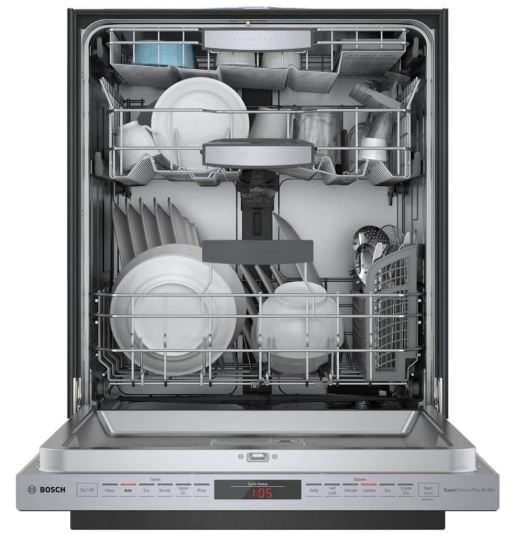
Best for: Open-concept kitchens, households where the dishwasher runs during evenings or overnight, buyers who want best-in-class quiet alongside premium drying.
2. GE GDP665SYNFS 24″ Energy Star Fully Integrated Dishwasher – 46 dBA
The GE GDP665SYNFS Dishwasher (View on Amazon) brings a well-specified quiet dishwasher to a more accessible price point. At 45 to 46 dBA it sits in the mid-range of the quiet category — audible but genuinely unobtrusive in most kitchen settings — and compensates with a feature set that competes with models significantly above its price.
Dry Boost with Fan Assist is GE’s most effective drying technology, using a fan to circulate air throughout the tub after the final rinse. Independent testing finds it produces dishes up to three times drier than a standard heated dry cycle, particularly for plastic containers that normally emerge still damp. The four bottle jets built into the upper rack direct water deep inside tall, narrow items — water bottles, travel mugs, vases — that conventional spray arms cannot reach effectively.
The Piranha Hard Food Disposer uses stainless steel impellers rotating at 3,600 RPM to pulverize food particles before they can recirculate or clog wash arms, which means you do not need to pre-rinse dishes before loading. Steam plus Sani loosens tough soils before the main wash cycle and provides a high-temperature rinse that eliminates 99.999 percent of bacteria on dishes. The AutoSense cycle detects soil level and adjusts temperature and cycle duration accordingly, reducing energy use on lighter loads.
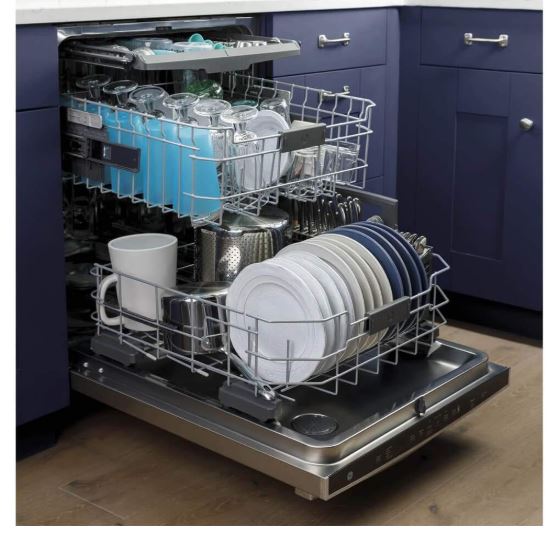
Best for: Households wanting quiet operation and strong drying performance at a more accessible price, buyers who frequently wash bottles and tall items.
3. Sharp SDW6726MS Stainless Steel Dishwasher – 47 dBA
Sharp’s Library Quiet designation accurately describes the SDW6726MS’s operating character. At 47 dBA, the Sharp SDW6726MS (View on Amazon) sits at the accessible end of the quiet category — comparable in perceived volume to light rain outside or a quiet office environment — and it represents the most straightforward entry point into genuine quiet-dishwasher performance on Amazon.
The three-sprayer system includes a dedicated Power Wash zone that delivers enhanced water pressure specifically to the lower rack position, which is useful for pots, pans, and casserole dishes that need more scrubbing than a standard spray arm provides. Soil sensors automatically detect the load’s cleaning demands and adjust cycle intensity without manual intervention, which saves water and energy on lighter loads while ensuring heavily soiled items get the wash time they need.
The Wash Zone option lets you run either the upper or lower rack independently when you have a partial load that does not warrant a full cycle — a water and energy saving feature that also shortens cycle time for small post-meal cleanups. ENERGY STAR certification confirms efficient water and energy use that meets EPA standards. At 14 place settings the capacity handles family-sized loads comfortably.

Best for: Buyers stepping up from a standard machine for the first time, households wanting quiet operation and a Power Wash zone at a mid-range price.
Two Standard Dishwashers on Amazon Worth Buying
Standard noise-level dishwashers deliver equal cleaning performance at lower upfront cost. For the right kitchen setup, they are a perfectly sound investment.
1. Kenmore 22-14592 24″ Built-In Dishwasher – 51 dBA
The Kenmore 22-14592 (View on Amazon) operates at 51 dBA — clearly audible but well below the 57 to 60 dBA of older or very basic machines — and packs in a feature set that justifies its position well above the bare-minimum tier of standard dishwashers.
The SmartWash cycle is the headline feature: built-in soil sensors detect how dirty the wash water is and automatically adjust temperature, water pressure, and cycle duration to match the actual load. A lightly soiled load finishes faster and uses less water; a heavily soiled load gets the extra time it needs. That adaptive behavior is usually found on quieter, more expensive models. The UltraWash system uses dual spray arms to clean from multiple angles simultaneously while continuously filtering the wash water throughout the cycle to prevent redepositing soil.
Automatic Leak Detection is an unusually practical safety feature at this price. The dishwasher monitors water flow throughout the cycle, and if a leak is detected at the base, it automatically drains the tub and shuts down before water reaches the floor. Sanitize Rinse heats the final rinse to a temperature that eliminates 99.9 percent of bacteria. SmartDry uses heat retention within the stainless steel tub to improve drying without a separate fan cycle.
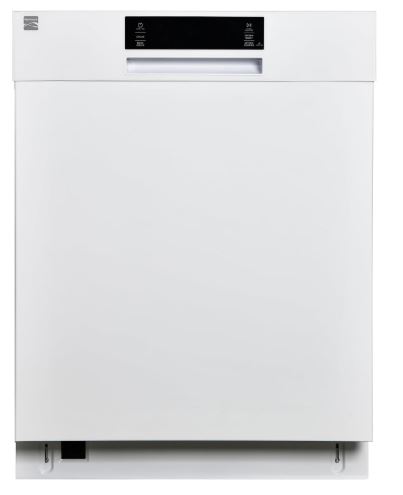
Best for: Enclosed kitchens where noise is not a primary concern, buyers who want smart wash sensing and leak detection at a standard-tier price.
2. BLACK+DECKER BDW100MW 24″ Built-In Dishwasher – 52 dBA
The BLACK+DECKER BDW100MW (View on Amazon) is the most budget-accessible dishwasher on this list and a straightforward choice for households replacing an old machine without wanting to spend significantly on either quiet operation or premium features. At approximately 52 dBA it is audible but not disruptive in a typical enclosed kitchen setting.
The Smart Wash cycle uses a soil sensor to automatically choose the most efficient wash settings for the current load — a feature that is increasingly common across dishwasher tiers and that saves both water and energy compared to running a fixed cycle regardless of load size. ENERGY STAR certification means the machine meets EPA water and energy efficiency standards. The stainless steel tub is a meaningful inclusion at this price point, contributing to heat retention during drying and resistance to food staining.
Five wash programs cover the full range of everyday dishwashing needs: Normal, Heavy, Quick, Rinse, and Smart Wash. The adjustable upper rack accommodates taller items without requiring dishes to be rearranged from load to load. For a household transitioning away from hand-washing or replacing a very old machine for the first time, the BDW100MW covers every essential function at the lowest accessible price on this list.
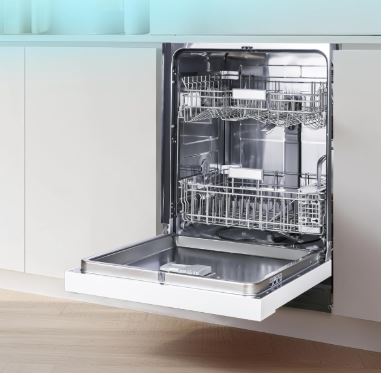
Best for: Budget-conscious buyers, enclosed kitchens, first-time dishwasher owners, households where noise level is a secondary consideration.
Read Also:
- Which are the Best Affordable Dishwashers on the Market? (Top Brands Revealed!)
- What is the Best Countertop Dishwasher Under $400?
Conclusion: Is Low Noise Worth It?
For most homes with an open kitchen layout, the answer is yes — and the threshold is lower than many buyers expect. You do not need to spend on a 40 dBA Bosch to make a meaningful improvement. Moving from a 55 dBA machine to a 47 or 48 dBA model produces a noticeable reduction in everyday kitchen noise, and models in that range are available at prices that do not require a significant premium over standard alternatives.
The Bosch SHPM88Z75N is the right pick if quiet operation is the primary concern and budget allows. The GE GDP665SYNFS is the best combination of quiet performance, strong drying, and accessible pricing. The Sharp SDW6726MS is the most direct entry point into genuine quiet operation for buyers who want a meaningful step up from a standard machine without the full Bosch price.
If i is an enclosed kitchen, noise sensitivity is low, and budget is the priority, the Kenmore 22-14592 and BLACK+DECKER BDW100MW both deliver clean dishes reliably and efficiently. Cleaning performance is equivalent across all five models — what changes is how aware you are that the machine is running.

Hi, I’m Barlgan! I created Repair Me Yourself to empower homeowners to tackle appliance repairs with confidence. From decoding error codes to fixing cooling issues, I break down complex repairs into simple, actionable steps that save you time and money.