Household appliances are essential to modern living. From preserving food to cleaning clothes and cooking meals, they save time and effort every day. However, when one of these appliances stops working properly, it can disrupt your routine and lead to costly repairs if not handled correctly.
The good news is that many common appliance problems are not as serious as they seem. With a basic understanding of how appliances work and a careful approach, you can diagnose and fix a wide range of issues without needing professional assistance. This not only saves money but also helps you become more confident in handling everyday technical problems at home.
In this guide, we will explore some of the most common appliance problems homeowners face, explain what causes them, and walk you through practical steps you can take to fix them safely and effectively.
Understanding the Basics of Appliance Troubleshooting
Before diving into specific issues, it is important to understand a few general principles of appliance troubleshooting. Most appliances follow a simple process: they receive power, perform a function, and complete a cycle. When something goes wrong, the issue usually falls into one of three categories: power problems, mechanical failures, or blockages.
Power-related issues can include faulty outlets, tripped circuit breakers, or damaged power cords. Mechanical failures involve worn-out parts such as motors, belts, or switches. Blockages are often caused by dirt, debris, or buildup that prevents the appliance from functioning properly.
Whenever you are troubleshooting an appliance, always start with the simplest possible explanation. Check that the appliance is plugged in, ensure the outlet is working, and inspect for visible signs of damage. Many problems can be resolved at this basic level without any tools.
Safety should always come first. Unplug the appliance before inspecting internal components, avoid working with wet hands, and never attempt repairs that involve gas lines or high-voltage components unless you are trained to do so.
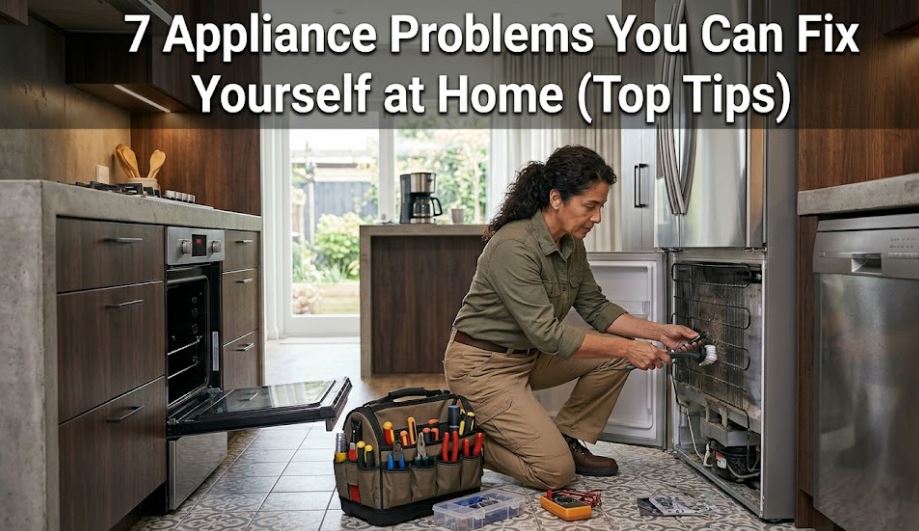
Refrigerator Not Cooling Properly
A refrigerator that is not cooling properly is one of the most common and urgent appliance issues. Food can spoil quickly, leading to waste and inconvenience.
Several factors can cause poor cooling performance. Dirty condenser coils are one of the most frequent culprits. These coils release heat from the refrigerator, and when they are covered in dust, the system cannot operate efficiently. Another common issue is blocked air vents inside the fridge, which disrupt airflow and create uneven temperatures.
To fix this problem, start by unplugging the refrigerator. Locate the condenser coils, which are usually found at the back or underneath the unit. Use a vacuum or a soft brush to remove dust and debris. Next, check the inside of the fridge and freezer compartments. Make sure that food items are not blocking the vents that allow cold air to circulate.
You should also verify the thermostat settings. For most refrigerators, a temperature between 3 and 5 degrees Celsius is ideal, while the freezer should be set around minus 18 degrees Celsius. If the problem persists after these steps, the issue could be related to the compressor or refrigerant, which typically requires professional repair.
Washing Machine Not Draining
A washing machine that fails to drain can leave your clothes soaking wet and unusable. This problem is often caused by a blockage somewhere in the drainage system.
The drain hose is the first place to check. Over time, lint, small clothing items, or debris can clog the hose and prevent water from flowing out. Another common cause is a blocked pump filter, which is designed to catch debris before it enters the pump.
To resolve this issue, unplug the washing machine and locate the drain hose. Disconnect it carefully and inspect it for any obstructions. You can run water through the hose to ensure it is clear. Next, find the pump filter, which is usually located behind a small access panel at the front of the machine. Remove the filter and clean out any debris.
It is also important to ensure that the hose is not kinked or bent, as this can restrict water flow. Once everything is clean and properly positioned, reconnect the components and test the machine with a short cycle.
Microwave Not Heating
Microwaves are convenient appliances, but when they stop heating, they quickly lose their usefulness. This issue can be caused by both simple and complex factors.
One of the simplest causes is a faulty door switch. Microwaves are designed not to operate unless the door is securely closed, and a malfunctioning switch can prevent the appliance from heating even if it appears to be running. Another possibility is a problem with internal components such as the diode, capacitor, or magnetron.
Start by checking that the door closes properly and that there is no damage to the latch. You can also try plugging the microwave into a different outlet to rule out power issues. If these steps do not resolve the problem, it is best to avoid further DIY repairs. Microwaves contain high-voltage components that can be dangerous even when unplugged, so professional servicing is recommended.
Dishwasher Not Cleaning Dishes Properly
A dishwasher that leaves dishes dirty can be frustrating and defeat its purpose. This problem is often caused by poor water distribution or buildup inside the machine.
Clogged spray arms are a common issue. These arms spin and spray water onto the dishes, but if their holes are blocked, water cannot reach all surfaces. A dirty filter can also reduce cleaning efficiency by allowing debris to circulate during the wash cycle.
To fix this, remove the spray arms and rinse them under running water. Use a small brush or toothpick to clear any blocked holes. Next, locate the filter at the bottom of the dishwasher and clean it thoroughly.
Running an empty cycle with a cup of vinegar placed on the top rack can help remove grease and mineral buildup. This simple maintenance step can significantly improve performance and keep your dishwasher running efficiently.
Oven Not Heating Evenly
An oven that does not heat evenly can ruin meals and make cooking unpredictable. This issue is often related to the heating element or temperature calibration.
Electric ovens rely on heating elements that glow red when functioning correctly. If one of these elements is damaged, the oven may produce uneven heat. Incorrect rack placement can also affect how heat is distributed.
To troubleshoot, turn on the oven and observe whether the heating elements are glowing evenly. If one section remains dark, it may need replacement. You can also use an oven thermometer to compare the actual temperature with the set temperature. If there is a discrepancy, the thermostat may need calibration.
Rotating your food halfway through cooking can help compensate for minor temperature differences and ensure more even results.
Dryer Not Drying Clothes
A dryer that fails to dry clothes properly can waste time and energy. The most common cause of this problem is restricted airflow.
Lint buildup in the filter or vent hose can block the flow of hot air, reducing the dryer’s efficiency. Overloading the dryer can also prevent clothes from tumbling properly, which limits drying performance.
Start by cleaning the lint filter, which should be done after every load. Then inspect the vent hose at the back of the dryer. Disconnect it and remove any lint or debris that may have accumulated inside. Make sure the hose is not crushed or bent.
Keeping the vent system clean not only improves drying performance but also reduces the risk of fire, making it an essential maintenance task.
Strange Noises from Appliances
Unusual noises are often an early warning sign that something is wrong with an appliance. Ignoring these sounds can lead to more serious damage over time.
Loose components are a common cause of rattling or vibrating noises. Worn bearings or belts can produce grinding or squealing sounds, especially in appliances with moving parts such as washing machines and dryers. Foreign objects can also become trapped inside appliances, causing irregular noises.
If you hear a strange sound, turn off the appliance immediately and inspect it carefully. Look for loose screws, panels, or visible debris. Tighten any loose parts and remove any objects that should not be there. If the noise continues, it may indicate internal wear that requires professional attention.
Preventive Maintenance Tips to Avoid Future Problems
Regular maintenance is the best way to keep your appliances in good working condition and avoid unexpected breakdowns. Simple habits can make a significant difference in performance and lifespan.
Clean your appliances regularly, including filters, coils, and vents. Avoid overloading machines, as this puts unnecessary strain on components. Use appliances according to the manufacturer’s instructions and avoid shortcuts that could cause damage.
It is also helpful to perform periodic inspections. Check hoses for leaks, listen for unusual sounds, and monitor performance. Addressing small issues early can prevent them from becoming major problems.
When to Call a Professional
While many appliance problems can be fixed at home, some situations require professional expertise. Electrical faults, gas-related issues, and internal component failures can be dangerous to handle without proper training.
If an appliance continues to malfunction after basic troubleshooting, or if you are unsure about the cause of the problem, it is best to seek professional help. Attempting complex repairs without the necessary knowledge can lead to further damage or safety risks.
Final Thoughts
Understanding how to troubleshoot common appliance problems is a valuable skill for any homeowner. It allows you to save money, reduce downtime, and maintain your appliances more effectively.
By starting with simple checks and following safe practices, you can resolve many issues on your own. Over time, this knowledge builds confidence and helps you take control of your home maintenance needs.
Appliances are an investment, and taking care of them ensures they continue to serve you well for years to come.

Hi, I’m Barlgan! I created Repair Me Yourself to empower homeowners to tackle appliance repairs with confidence. From decoding error codes to fixing cooling issues, I break down complex repairs into simple, actionable steps that save you time and money.