If you’ve spent any time comparing washers online, you’ve almost certainly landed in LG vs Samsung territory. Both are South Korean tech giants that have become serious contenders in the appliance space — not just for their flashy designs and smart features, but for delivering genuinely strong cleaning performance. The LG vs Samsung washer debate is one of the most contested in the appliance world, and the answer isn’t as simple as picking a winner.
This guide covers everything that actually matters: cleaning performance, technology, reliability data from real service records, and exactly which type of buyer each brand suits best.
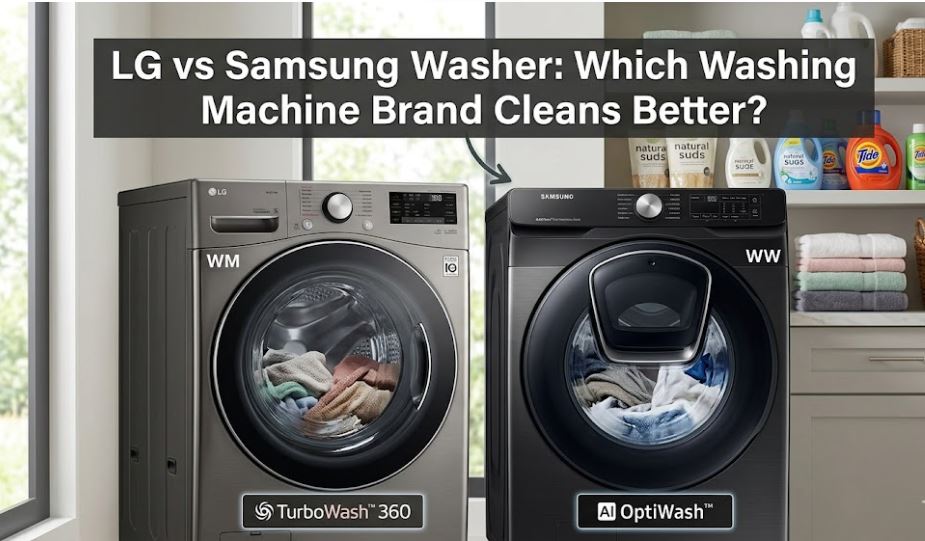
LG Vs Samsung Washer: How Each Brand Approaches Cleaning
LG and Samsung both make excellent front-load and top-load washers. Their cleaning philosophies, however, are meaningfully different.
LG’s Approach
LG builds its washers around the Direct Drive Motor — a design that connects the motor directly to the drum without belts or pulleys. Fewer moving parts means less mechanical stress and less vibration.
Their flagship cleaning technology is TurboWash 360°, which uses five high-pressure spray jets to saturate clothes from multiple angles. It cleans a full 10 lb load in under 30 minutes without sacrificing performance.
LG’s 6Motion Technology combines up to six different drum motions — including tumbling, stepping, and rolling — to match the wash motion to the fabric type. The AI DD (Direct Drive) feature takes this further, using sensors to detect fabric texture and load size, then automatically selecting the optimal combination of motions.
Samsung’s Approach
Samsung’s primary cleaning innovation is EcoBubble, which mixes air, water, and detergent to create a foamy solution that penetrates fabrics faster than standard liquid — even in cold water. This reduces the need for hot water and cuts energy consumption while improving stain removal.
Their Super Speed 2.0 cycle washes a full load in just 28 minutes — competitive with LG’s TurboWash — and lab testing by Reviewed.com found that stain removal results were outstanding without sacrificing cleaning quality. Samsung’s AI OptiWash technology scans the load and adjusts cycle settings automatically, similar to LG’s AI DD.
In direct stain removal tests, Reviewed.com found Samsung’s WF53BB8700AT scrubbed out stains better and faster than many competitors. It’s a genuinely capable cleaning machine.
LG vs Samsung Washer Cleaning Performance: Where Each Brand Wins
Both brands clean clothes effectively at comparable price points. The differences show up at the edges — speed, fabric care, and specialized load handling.
| Feature | LG | Samsung |
|---|---|---|
| Core cleaning tech | TurboWash 360° / 6Motion | EcoBubble / Super Speed 2.0 |
| Full load cycle time | ~30 min (TurboWash) | ~28 min (Super Speed) |
| Stain removal | Excellent | Excellent — lab-rated slightly higher |
| Fabric gentleness | Excellent — multiple drum motions | Very good — diamond drum interior |
| Steam cleaning | Yes — Allergiene cycle | Yes — 6 steam settings (Bespoke) |
| AI load sensing | Yes — AI DD | Yes — AI OptiWash / Smart Dial |
| Allergen removal | Yes — AAFA certified | Yes — steam-based |
| Max spin speed | Up to 1,400 RPM | Up to 1,300–1,400 RPM |
| Cold water performance | ColdWash Technology | EcoBubble (cold water optimized) |
| Mold/odor resistance | Good — leave door open | Varies — anti-microbial drum finish |
On everyday loads — mixed fabrics, moderate soiling, normal cycles — neither brand has a decisive advantage. Both produce clean, fresh-smelling laundry consistently. Where LG has a functional edge is in fabric care: the multi-motion drum approach is genuinely gentler on delicates and mixed loads over time. Where Samsung has an edge is in its EcoBubble cold-water performance and, in some lab tests, slightly superior stain removal at speed.
LG vs Samsung Washer Reliability: The Most Important Difference
This is where the comparison becomes most consequential — and where LG has a clear, data-backed advantage.
LG Reliability
Yale Appliance tracks first-year service rates across tens of thousands of units sold. Based on their 2025–2026 data across 33,190 service calls, LG front-load washers achieved a first-year service rate of 2.7% — the lowest of any washing machine brand they tracked. LG is ranked among the most reliable appliance brands overall, along with Speed Queen and Miele.
LG’s Direct Drive Motor comes with a 10-year limited warranty — a statement of confidence in the most critical component of the machine.
Samsung Reliability
Samsung’s picture is more complicated. Yale Appliance, which tracked Samsung’s service rate at 3.4% for front-load washers — still acceptable — made the decision to stop selling Samsung appliances entirely in 2025. The reason wasn’t failure rate alone. It was service infrastructure: when Samsung washers break, finding qualified technicians and sourcing replacement parts is considerably harder than with LG or GE.
One appliance engineer interviewed by multiple publications put it plainly: LG’s direct-drive design eliminates belts and pulleys, which are among the most common failure points in traditional washers. Samsung’s belt-driven models in some lines have more mechanical complexity, and the brand’s service network has not kept pace with its sales growth.
Real-world data backs this up. Technicians consistently report more Samsung service calls than LG. One construction professional quoted by Family Handyman said he’s called to fix far more Samsung washers than LGs, and would choose LG for that reason alone.
What This Means for You
If you buy an LG and it breaks, you’ll generally get same-week factory service. If you buy a Samsung and it breaks, repair access may be slower and harder to find. That’s not a small consideration for an appliance that runs multiple times a week.
Features and Technology
Both brands invest heavily in smart features. The differences are in the details.
LG’s Key Technologies
- TurboWash 360° — five jets, full load in 30 minutes
- AI DD — detects fabric type and adjusts drum motion automatically
- Allergiene Cycle — steam removes up to 95% of common allergens; AAFA certified
- ThinQ App — remote start, cycle monitoring, Proactive Customer Care alerts
- SmartDiagnosis — detects issues and sends troubleshooting steps to your phone
- SideKick Pedestal Washer — optional second drum for small loads running simultaneously
- Direct Drive Motor with 10-year limited warranty
Samsung’s Key Technologies
- EcoBubble — activates detergent in cold water for deep cleaning with less energy
- Super Speed 2.0 — full load in 28 minutes
- AI Smart Dial — single knob learns your most-used cycles and suggests them
- SmartThings App — schedule, remote start, and troubleshoot via app
- Self Clean+ — eliminates 99% of bacteria in the drum automatically
- AddWash Door — add forgotten items mid-cycle on select models
- 20-year motor warranty on select models
Both brands offer strong app ecosystems and Alexa/Google Assistant compatibility. LG’s ThinQ Proactive Customer Care — which monitors machine performance and alerts you to potential issues before they become failures — is a genuine differentiator for preventive maintenance.
Price and Value
LG washers generally cost $100–$200 more than comparable Samsung models at equivalent capacity. A mid-range LG front-loader typically runs $900–$1,200. A comparable Samsung front-loader runs $750–$1,000.
That gap looks significant at the register. Over the lifespan of the machine, however, LG’s lower service rate and longer motor warranty can close or reverse the cost difference. One avoided service call — which typically runs $175–$525 according to HomeAdvisor — more than covers the price premium.
For top-load models, both brands offer competitive pricing from $550 upward. Samsung’s top-loaders tend to be slightly more aggressively priced at the entry level, which is a genuine advantage for budget-focused buyers.
Who Should Choose LG?
LG is the better choice if long-term reliability and peace of mind matter more than saving $100–$150 upfront. It’s also the right pick if you run frequent laundry loads — the superior service rate and motor warranty become more meaningful the harder you use the machine.
The Allergiene cycle makes LG a particularly strong choice for households with allergy sufferers, asthma, or young children. And if you want the WashTower or the SideKick dual-drum setup, LG is the only brand offering those configurations.
Who Should Choose Samsung?
Samsung makes sense if you want excellent cleaning performance and smart features at a lower entry price — especially if you’re attracted to the EcoBubble cold-water technology or the AI Smart Dial’s intuitive single-knob control. Samsung also has a slight edge in raw stain-removal performance in some independent tests.
The key caveat: research service availability in your specific area before buying. In regions with robust Samsung service networks, the reliability gap matters less. In areas where Samsung service is thin, the risk is real.
Top Picks Available on Amazon
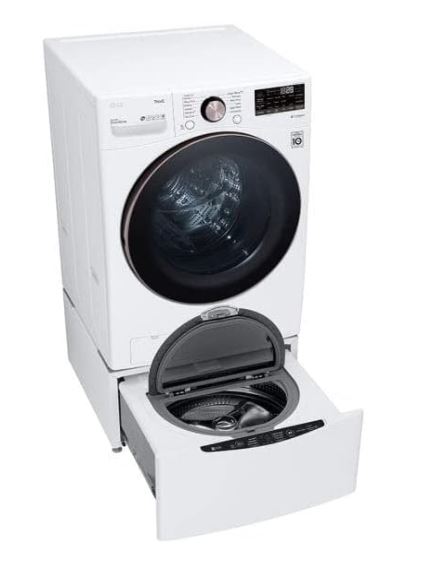
1. LG WM4000HWA — 4.5 Cu Ft Smart Front-Load Washer, White (Best LG Front-Load)
The WM4000HWA is LG’s most well-reviewed mid-range front-loader and a consistent top pick from appliance experts. It hits the sweet spot between price and performance — TurboWash 360°, AI DD sensing, and the Allergiene steam cycle all come standard.
The LoDecibel motor runs exceptionally quietly, and ThinQ app integration includes Proactive Customer Care alerts that notify you of potential issues before they escalate. Reviewed.com calls this class of LG machine the brand’s focus on “practical innovation and reliable performance.”
- 4.5 cu ft ultra-large capacity — fits king-size bedding
- TurboWash 360° — full load clean in under 30 minutes using five spray jets
- AI DD — detects fabric texture and load size; selects optimal drum motions automatically
- Allergiene Cycle — uses steam to remove up to 95% of common allergens; AAFA certified
- Sanitary Cycle — reaches extra-high temperatures for deep sanitizing
- ColdWash Technology — warm-water-level cleaning using cold water
- LoDecibel quiet operation — one of the quietest front-loaders in its class
- ThinQ App with Wi-Fi — remote start, cycle monitoring, SmartDiagnosis, Proactive Care alerts
- Energy Star certified
- Direct Drive Motor with 10-year limited warranty
Check current price and reviews on Amazon
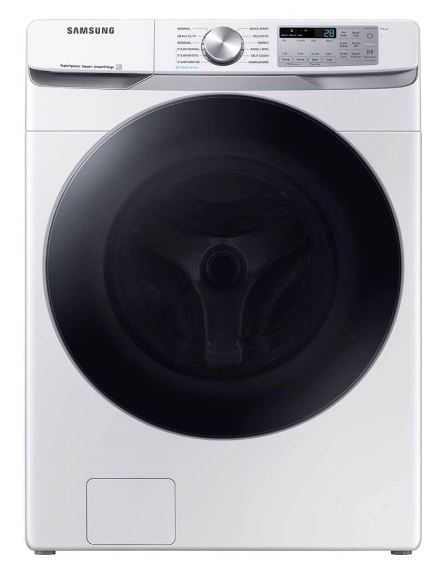
2. Samsung WF45B6300AW — 4.5 Cu Ft Smart Front-Load Washer, White (Best Samsung Front-Load)
For buyers who want Samsung’s cleaning credentials at an accessible price, the WF45B6300AW delivers the brand’s key technologies without the premium-tier price tag. Super Speed Wash handles a full load in 28 minutes, and the Self Clean+ function keeps the drum hygienic automatically between uses.
Wi-Fi connectivity via SmartThings gives you end-of-cycle alerts and remote control from your phone. It’s an excellent washer on performance — the caveat, as with all Samsung appliances, is to verify local service availability before committing.
- 4.5 cu ft large capacity — handles full family loads
- Super Speed Wash — cleans a full load in just 28 minutes
- Self Clean+ — eliminates 99% of bacteria in the drum; no manual tub cleaning needed
- Wi-Fi Smart Control via SmartThings app — remote start, alerts, and scheduling
- Vibration Reduction Technology — quiet, stable spin cycles
- Diamond Drum interior — gentle on fabrics, prevents snags
- Multiple steam settings for fabric care and sanitizing
- Energy Star certified
- Compatible with Amazon Alexa and Google Assistant
Check current price and reviews on Amazon
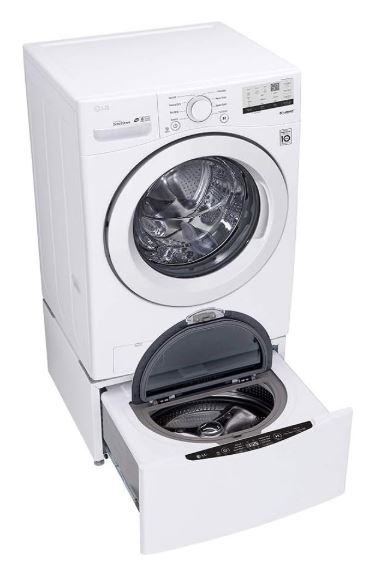
3. LG WM3400CW — 4.5 Cu Ft Front-Load Washer, White (Best Value LG)
For buyers who want LG’s direct-drive reliability and cleaning performance without paying for the full smart feature suite, the WM3400CW is the most practical entry point in the LG front-load lineup. It regularly appears on expert best-value lists and delivers the core LG experience — LoDecibel operation, 6Motion Technology, and ColdWash — at a price that competes directly with mid-range Samsung models.
It’s the right pick if you want LG’s reliability reputation and Motor warranty without the TurboWash 360° premium.
- 4.5 cu ft capacity — handles everyday family laundry loads
- 6Motion Technology — up to six drum motion combinations for fabric-appropriate cleaning
- ColdWash Technology — effective cleaning using cold water, saving energy
- LoDecibel quiet operation — suitable for open-plan homes and upstairs laundry rooms
- Allergen reduction with steam option
- Energy Star certified
- SmartDiagnosis via ThinQ app — troubleshooting and service alerts
- Stackable with compatible LG dryer using separate stacking kit
- Direct Drive Motor with 10-year limited warranty
- White finish; standard 27-inch installation footprint
Check current price and reviews on Amazon
Washer Maintenance Tips for Both Brands
A well-maintained washer — regardless of brand — will clean better and last longer. These habits apply to both LG and Samsung front-loaders.
Always use HE detergent and use less than you think. Both LG and Samsung front-loaders are high-efficiency machines calibrated for low-sudsing detergent. Excess suds interfere with cleaning, cause residue buildup, and are the number one cause of service calls on front-load washers.
Leave the door open between loads. Front-load washers are prone to mold and mildew buildup in the door gasket. Leaving the door ajar after every load allows moisture to escape and is the single most effective way to prevent odors.
Run a monthly Tub Clean cycle. Both brands have a dedicated drum-cleaning cycle. Use it monthly with a washer cleaning tablet or a cup of white vinegar. This prevents mineral buildup and detergent residue from affecting future wash performance.
Wipe the door gasket weekly. Food particles, hair, and lint collect in the rubber gasket folds. A quick wipe with a damp cloth after the last load of the day takes under a minute and prevents long-term mold issues.
Don’t overload. Both brands’ AI sensing systems calibrate to the load size. Packing the drum beyond its rated capacity prevents clothes from moving freely, reduces cleaning effectiveness, and strains the motor and suspension over time.
Also Read: Front-Load Vs Top-Load Washing Machine: Which is Better at Cleaning?
Frequently Asked Questions
Which brand cleans better — LG or Samsung?
Both clean exceptionally well under normal conditions. In independent lab tests, Samsung’s Bespoke-line front-loaders have shown slightly superior stain removal on some test protocols, while LG’s multi-motion drum approach is gentler on delicate fabrics over time. For most households running everyday laundry, the cleaning performance difference is not meaningful. Reliability and service access are the more important differentiators.
Is LG more reliable than Samsung for washers?
Based on Yale Appliance’s service data from over 33,000 real service calls, yes. LG front-load washers achieved a 2.7% first-year service rate — the lowest of any tracked brand. Samsung’s rate was 3.4%, which is still acceptable, but Yale ultimately stopped carrying Samsung in 2025 due to service infrastructure concerns. When Samsung washers need repair, parts and qualified technicians can be significantly harder to find than for LG.
What is Samsung’s EcoBubble and does it work?
EcoBubble technology mixes detergent with air and water before it enters the drum, creating a foam that penetrates fabric fibers faster and more deeply than liquid alone. It’s designed to deliver effective cleaning in cold water without requiring hot water to activate the detergent. In real-world use, it works well for lightly to moderately soiled loads and meaningfully reduces energy consumption. For heavily soiled loads with stubborn stains, a higher temperature cycle will still produce better results.
Does LG’s TurboWash actually work in 30 minutes?
Yes, for a 10 lb load under normal conditions. The five high-pressure spray jets in TurboWash 360° continuously saturate clothes from multiple angles throughout the cycle, reducing total wash time without reducing detergent contact time. Independent tests confirm cleaning performance is comparable to a full-length normal cycle on most soil levels. Very heavily soiled loads or full-capacity loads may benefit from a standard cycle.
Are Samsung washers difficult to repair?
This is the most common real-world complaint about Samsung appliances. Parts can be harder to source, fewer independent repair companies accept Samsung service calls, and some technicians decline Samsung work due to limited parts availability and technical support from the brand. The experience varies by region — in some markets, service is fine; in others, a broken Samsung washer can mean weeks of wait time. Before purchasing, it’s worth calling a local appliance repair company to ask about their Samsung service experience.
What is LG’s Direct Drive Motor and why does it matter?
LG’s Direct Drive Motor connects directly to the drum without belts, pulleys, or gears. Eliminating these mechanical intermediaries reduces the number of components that can wear out or break, results in quieter operation, and minimizes vibration. LG backs this motor with a 10-year limited warranty — significantly longer than Samsung’s standard motor warranty and a clear signal of the company’s confidence in the design’s longevity. Over a 10–15 year ownership period, this mechanical simplicity translates to fewer service calls.
The Bottom Line
On cleaning performance alone, LG and Samsung are closely matched — both are capable of excellent results, and both have lab-tested stain removal that puts them among the best washers on the market. If all you cared about was which machine gets clothes cleanest, you’d be satisfied with either.
Where the comparison tips decisively toward LG is reliability, service access, and long-term peace of mind. The data from 33,000+ real service calls is hard to argue with: LG breaks less, and when it does break, it’s easier to fix. The Direct Drive Motor warranty reinforces that confidence.
Samsung is not a bad washer — far from it. The EcoBubble technology, Super Speed cycle, and Smart Dial are genuinely innovative, and the price advantage is real. But the service infrastructure gap is a legitimate concern that deserves honest weight in your decision.
For most households, the LG WM4000HWA or the more affordable WM3400CW is the smarter long-term investment. If Samsung’s features and price point appeal to you, the WF45B6300AW is a capable machine — just confirm local service availability first.
For more appliance comparison guides, maintenance tips, and repair help, visit RepairMeYourself.com.

Hi, I’m Barlgan! I created Repair Me Yourself to empower homeowners to tackle appliance repairs with confidence. From decoding error codes to fixing cooling issues, I break down complex repairs into simple, actionable steps that save you time and money.