It’s one of the most common questions in the appliance aisle — and one of the most genuinely contested. The front-load vs top-load washer debate isn’t just about which machine looks better in your laundry room. It’s about how your clothes come out, what happens to your electricity bill, how much maintenance you’re willing to do, and whether you can live with a machine that occasionally smells like a damp basement.
After digging into testing data, real-world user experiences, and engineering specs, the honest answer is: it depends — but there is a clear winner on cleaning performance. Let’s work through it.
How Each Washer Type Actually Cleans Your Clothes
Understanding the mechanics tells you most of what you need to know before comparing anything else.
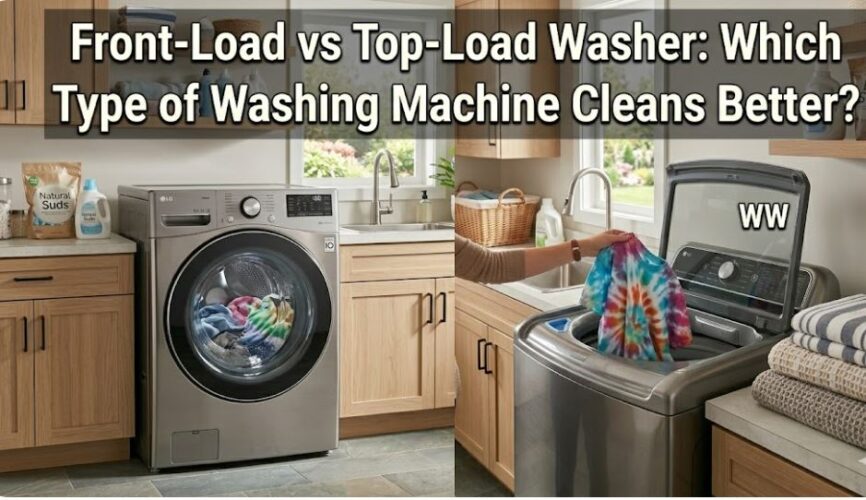
Front load washers use a tumbling motion that gently lifts and drops clothes through shallow water. This design uses less water and energy while cleaning your laundry very well. The drum rotates on a horizontal axis, and clothes are repeatedly carried up and dropped back into the water — similar to wringing a cloth by hand. Detergent gets distributed evenly, and every item in the drum gets consistent exposure.
Top-load washers work differently depending on what’s inside them. A top-load washer features a wide, drum-style opening at the top and a hinged lid. Inside, a tall agitator or a flat impeller plate at the bottom circulates laundry during the wash cycle. Agitator washers use a spindle that moves clothes quickly through the water. Impeller washers rely on a gentler motion, using the drum’s movement to clean fabric.
This fundamental mechanical difference is the core of the front-load vs top-load washer debate — and it explains nearly every data point that follows.
Front-Load Vs Top-Load Washer Cleaning Performance: Who Wins?
Front-load washers deliver superior cleaning performance and are incredibly efficient. Consumer Reports tests have found that front-load washers use the least water of any other category of washers and extract more of it, cutting dryer time and energy use. Front-load washers are often gentler on fabric and quieter than top-loaders.
Front-load washers are considered to provide the best washing performance. Their method of cleaning is far more effective as it uses a tumbling action where clothes are lifted and dropped through soapy water. The technique helps remove tough stains while minimizing damage to the fabrics.
That said, top-loaders aren’t without merit. Agitator machines can be aggressive and effective on heavily soiled workwear or muddy outdoor gear — the kind of load that benefits from brute-force scrubbing action rather than gentle tumbling. A top-load washer with a center agitator rubs garments against a vertical post. This approach is often faster and effective for cleaning aggressively. However, it can be too harsh on soft or delicate fabrics, damaging them over time.
The best front-loaders clean more thoroughly and gently than high-efficiency top-loaders and top-load agitator machines, while using less water — averaging 10 gallons compared with 13 gallons for HE top-loaders and 20 gallons for agitators. They adjust the water to the size of the load, so they’re efficient even for small loads.
Energy and Water Efficiency
This is where front-loaders pull decisively ahead.
Energy Star certified front load washers use about 45% less energy and 50% less water than a top load agitator washer. Compared to a top load impeller washer, front load washers are still 25% more energy and water efficient.
Front-load washers use an estimated 3,452 gallons of water per year compared to roughly 8,552 gallons for a conventional top-loader — a difference of more than 5,000 gallons annually. Annual water costs for a front-loader run roughly $58; for a conventional top-loader, roughly $144, a difference of about $86 per year on water alone.
The reason front-loaders win so convincingly on energy is straightforward: heating water accounts for about 90% of the energy used in a typical hot wash. Top-loaders are generally considered to use more energy because they require much more water. When running a warm or hot cycle, they pull heavily from the home’s hot water supply, which translates to a massive spike in water heater energy consumption.
Front-Load Vs Top-Load Washer Head-to-Head Comparison
| Category | Front-Load Washer | Top-Load Agitator | Top-Load HE Impeller |
|---|---|---|---|
| Cleaning performance | Excellent | Good (heavy soils) | Good (everyday loads) |
| Water use per load | ~10 gallons | ~20 gallons | ~13 gallons |
| Annual water use | ~3,452 gallons | ~8,552 gallons | ~5,000 gallons |
| Energy efficiency | Best | Poorest | Middle |
| Fabric gentleness | Excellent | Rough | Good |
| Cycle time | Longer (65–120 min) | Shorter | Moderate |
| Mold/odor risk | Higher | Very low | Low |
| Stackable | Yes | No | No |
| Typical upfront cost | Higher (~$862 median) | Lower (~$687 median) | Mid-range (~$741 median) |
| Ease of loading | Bend-down | Stand upright | Stand upright |
| Best for | Efficiency, delicates, small spaces | Heavy soils, budget buyers | Everyday families |
The Mold Problem: What Nobody Tells You Upfront
This is the biggest practical drawback of front-load washers, and it deserves an honest look.
Based on data from Consumer Reports surveys of more than 74,479 members who purchased a new washing machine between 2014 and 2024, front-load washers present some drawbacks. Most notably, they’re prone to mold, mildew, and odor. The rubber gasket around the door, which keeps water inside during a wash cycle, traps this water after a cycle and creates a damp environment that allows mold and mildew to thrive.
In a 2023 survey, 13 percent of front-load washer owners reported mold or mildew buildup in their machines, compared with only 3 percent of HE top-load washers and 1 percent of top-load agitators. And 14 percent of front-loaders were cited for odor compared with 6 percent of HE top-loaders and 3 percent of top-load agitator washers.
The good news is that this problem is largely preventable. Leaving the door ajar after each load, wiping down the gasket, cleaning the detergent dispenser tray, and running a monthly hot tub-clean cycle will keep most front-loaders odor-free. Some newer models from GE include UltraFresh technology with built-in fans and antimicrobial surfaces specifically designed to fight this problem.
Reliability: Is the Top-Loader Really More Dependable?
The traditional belief that top-loaders are dramatically more reliable than front-loaders is increasingly outdated. Based on 2026 service data, top-load washers had a 4.4 percent service rate over a 12-month period, while front-load washers were at 4.6 percent — nearly identical.
Top-loaders don’t have the same door seal issues that can lead to mold in front-load washers. They’re generally simpler machines, which means fewer parts that can fail. Many top-load washers are designed with maintenance in mind, and parts are accessible and affordable to replace compared to high-end front-load washers.
For those who prioritize long-term simplicity and low-cost repairs, a top-loader still holds a practical edge. But if you buy a quality front-loader from a reliable brand — LG and GE are consistently rated highest for service rates — the gap in reliability has largely closed.
Top Top-Load and Front-Load Washer Picks Available on Amazon
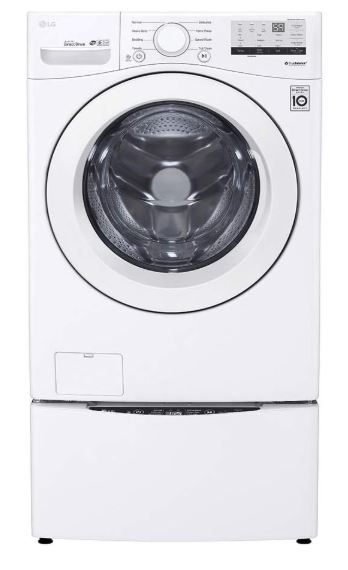
1. LG WM3400CW — 4.5 Cu. Ft. Front-Load Washer (White)
Rated the top front-load washer by both Consumer Reports and Yale Appliance based on service data, the LG WM3400CW is the benchmark machine for households that want the best clean without overcomplicating their lives. LG’s direct-drive motor comes with a 10-year warranty — a strong signal of build confidence — and the closet-depth design makes it easier to install in tight laundry areas.
- 4.5 cu. ft. ultra-large capacity handles up to 20 lbs per load
- 6Motion Technology uses six different drum motions for thorough, fabric-safe cleaning
- ColdWash Technology delivers warm-water cleaning performance using cold water
- LoDecibel quiet operation — suitable for open floor plans and upstairs laundry rooms
- Energy Star certified with a high-efficiency spin speed that reduces drying time
- Stackable with matching LG dryer using a separate stacking kit
- 10-year limited warranty on the direct-drive motor
- Available in white; no reversible door
Check current price and reviews on Amazon
2. GE GTW500ASNWS Top Load Washer
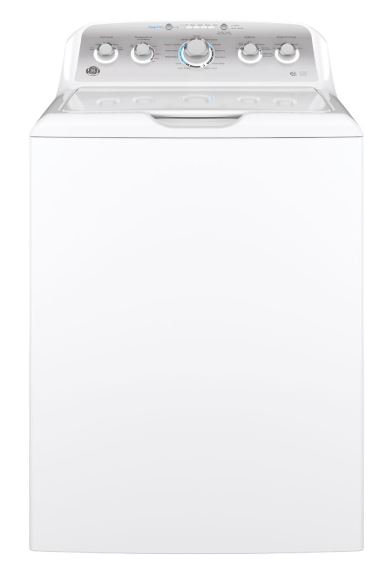
The GE GTW500ASNWS is a reliable top-load washer designed for households that want strong cleaning performance without overly complicated controls. Its 4.6 cu. ft. capacity is large enough for bulky items like comforters and towels, while the stainless steel basket helps protect clothes and improve durability.
This washer stands out for its practical features, including Deep Fill, Deep Clean, and Stain PreTreat settings that help tackle heavily soiled laundry. It also uses an impeller wash system for more usable drum space and quieter operation compared to many traditional agitator models.
Features
- 4.6 cu. ft. large-capacity stainless steel basket
- Impeller wash system for increased loading space
- Deep Clean cycle for tougher stains
- Deep Fill option for extra water levels
- Stain PreTreat settings for common stains
- Speed Wash cycle for quick loads
- ENERGY STAR certified
- 13 wash cycles and 6 water temperature settings
- Deep Rinse and optional 2nd Rinse
- 800 RPM maximum spin speed
- Simple rotary and LED controls
- Auto Balance Suspension System for smoother operation
Check current price and reviews on Amazon
3. Whirlpool WTW4957PW — Top-Load HE Washer with Removable Agitator
For households that can’t decide between agitator cleaning power and the gentleness of an impeller, Whirlpool’s 2-in-1 removable agitator washer is the only model in the industry that genuinely offers both. Remove the agitator for large loads of bedding or delicates; reinstall it when you need maximum scrubbing action on muddy sports kits or work clothes.
- 4.7 cu. ft. capacity with removable 2-in-1 agitator that converts to impeller mode
- Cold Wash cycle saves energy without sacrificing cleaning performance
- Sanitize with Oxi cycle for disinfecting colored fabrics
- Soft-close lid for quiet operation
- Single-load dispenser drawer for streamlined workflow
- Energy Star certified
- Best suited for households with mixed laundry types — both delicates and heavily soiled items
- No smart/Wi-Fi features on base model
Tips for Getting the Best Results From Either Type
Whether you go front-load or top-load, how you use the machine matters as much as which one you choose. These habits make a real difference.
Always use HE detergent in any high-efficiency washer — front-load or top-load impeller. Regular detergent creates excessive suds that interfere with cleaning and can accelerate mold buildup. Use less than the packaging suggests; most manufacturers recommend more than you actually need.
Avoid overloading. Both types clean better when clothes can move freely. In a front-loader, the tumbling action is hampered by a packed drum. In a top-loader, an unbalanced overloaded drum causes vibration, noise, and incomplete spin cycles.
Clean the machine regularly. Run a hot tub-clean cycle monthly with a washer cleaner tablet. For front-loaders, wipe the gasket after the last load of the day and leave the door slightly open. For top-loaders, periodically clean around the agitator base and leave the lid open between uses to allow the drum to dry.
Match your cycle to the load. Every washer — front or top — has a heavy-duty cycle for a reason. Use it for towels, bedding, and work clothes. Save the normal or delicate cycle for everyday laundry. Using the wrong cycle wastes water, energy, and time.
Also Read: LG Vs Samsung Washer: Which Washer Brand is Better?
Frequently Asked Questions
Do front-load washers actually clean better than top-load washers?
Yes, in most independent testing, front-load washers outperform top-loaders on stain removal, fabric care, and energy efficiency. LG models, prominent among top-rated front-load machines, earn excellent marks for washing performance, energy and water efficiency, and high marks for reliability and customer satisfaction based on Consumer Reports member surveys. That said, top-load agitator washers can be superior for very heavily soiled loads where aggressive mechanical action is needed.
Why do front-load washers take longer to wash?
Front-load washing machines may be the slowest type of washer, with a cycle time of 70 to 120 minutes per load, but they use less water and require less energy. The longer cycle is partly offset by shorter drying time, since front-loaders spin at higher speeds and extract more moisture from clothes before the cycle ends.
Can I add clothes mid-cycle to a front-load washer?
Generally no — the door is sealed and locked during a cycle for safety. Most top-load washers allow you to pause and add a forgotten item at any point before the spin phase. This is a real practical advantage for households with kids who forget socks. Some newer front-load models have begun addressing this with a small secondary door, but they remain the exception.
Are front-load washers really that much more expensive?
According to Consumer Reports surveys, front-load washers have a median cost of $862 compared with top-load high-efficiency washers at $741 and top-load agitators at $687. The gap is meaningful at purchase but narrows significantly over the machine’s lifespan through water and energy savings — front-loaders can save over $86 per year on water costs alone compared to an agitator model.
What’s the difference between a top-load agitator and a top-load HE impeller?
An agitator uses a central post that twists back and forth to scrub clothes together, making it effective on heavy soils but rougher on fabrics and higher on water usage. An HE impeller uses a low-profile rotating disc at the base of the drum that creates water circulation, using less water and treating fabrics more gently — but it doesn’t match an agitator’s brute-force cleaning on seriously dirty loads. Front-loaders outperform both for everyday cleaning with the least water and energy used.
How long do front-load and top-load washers typically last?
The average life of a washing machine ranges from 10 to 13 years, although some brands can manufacture washing machines with an even longer lifespan than the average appliance. Top-loaders with simpler mechanics can sometimes edge toward the longer end of that range with less maintenance. Front-loaders in the hands of careful owners who keep the gasket dry and run regular cleaning cycles can comfortably hit 15 years. Brand choice matters enormously — LG and GE consistently top reliability rankings in independent service data.
The Bottom Line
On straight cleaning performance and efficiency, front-load washers win the front-load vs top-load washer debate. They remove stains more effectively, use dramatically less water and energy, treat fabrics more gently, and give you the option to stack with a dryer when space is tight. The mold risk is real but manageable with consistent habits.
Top-load washers remain a legitimate choice — particularly agitator models for heavy-duty households with workwear, sports gear, or heavily soiled kids’ clothing, and for buyers who prioritize lower upfront cost, faster cycles, and the convenience of adding laundry mid-cycle. An HE impeller top-loader sits comfortably in the middle: gentler than an agitator, more affordable than most front-loaders, and a reasonable compromise for everyday family use.
Whichever you choose, buy from a reliable brand, use HE detergent, and maintain the machine regularly. A well-cared-for washer of either type will give you a decade or more of solid service — and cleaner clothes than you’d get from neglecting any machine, no matter how advanced.

Hi, I’m Barlgan! I created Repair Me Yourself to empower homeowners to tackle appliance repairs with confidence. From decoding error codes to fixing cooling issues, I break down complex repairs into simple, actionable steps that save you time and money.