
KitchenAid builds some of the most reliable dishwashers on the market. Owned by Whirlpool Corporation, the brand backs its appliances with sophisticated internal diagnostics designed to protect your machine and flag problems early before small issues escalate into expensive repairs.
When something goes wrong, your KitchenAid dishwasher speaks up. It displays an error code on the control panel, or on older models, flashes a light in a specific pattern to communicate the same information. Understanding that communication is the difference between a five-minute fix and an unnecessary service call.
This guide covers every common KitchenAid dishwasher error code, organized clearly by category, with actionable fixes and honest guidance on when to call a professional.

How KitchenAid Dishwashers Communicate Error Codes
KitchenAid uses two distinct methods to display errors, and knowing which your model uses is your first step. Both systems convey the same diagnostic information, just through different output methods.
Digital Display Models
Newer KitchenAid dishwashers with digital control panels show alphanumeric error codes directly on the screen. These codes follow a function-problem format, for example 6-1 or 3-3, where the first number identifies the system affected and the second number identifies the specific problem within that system. Digital models also store up to eight recent error codes in memory, accessible through a diagnostic cycle.
Clean Light Blink Models
Older KitchenAid HE models without a digital display signal errors by flashing the Clean light in a distinctive pattern. The light first flashes a function code, pauses for two seconds, then flashes a problem code. After a five-second pause, the full sequence repeats. For example, six flashes followed by one flash (6-1) means the inlet water system has a low water or air-in-pump problem. Always count both sets of blinks carefully and note them before looking up the code.
How to Perform a Reset
Before diagnosing any code on your KitchenAid dishwasher, always attempt a reset first. Cut power to the dishwasher at the circuit breaker for five full minutes, then restore it. Alternatively, press and hold Cancel/Drain until the light turns on, close the door, and wait for the drain cycle to complete. If the code disappears and does not return, a temporary electronic glitch caused it. If it reappears, physical diagnosis is necessary.
KitchenAid Dishwasher Error Codes by System
KitchenAid organizes its error codes by the functional system they relate to. The sections below cover each system with specific codes, their root causes, and the correct response for each one.
Control Board and Electronics (Codes 1-X and 2-X)
Control board and electronics errors affect the brain of the dishwasher. These codes indicate either a software or hardware fault at the control board level, and they range from easily resolved glitches to genuine component failures requiring professional help.
1-1 and 1-2: Control Board Relay Issues
Code 1-1 means a relay on the electronic control board is stuck. Code 1-2 indicates damaged or corrupted memory on the control board. For both codes, start with a five-minute power reset. If 1-1 clears, the relay unstuck itself during the reset. If 1-2 persists after the reset, the control board’s memory has failed and the board likely needs replacement. Wiring between the board and the door components is also worth inspecting before replacing the board outright.
2-1 and 2-2: User Interface Communication Faults
Code 2-1 means the connection between the control panel and the control board has become faulty or lost completely. Code 2-2 indicates a stuck button on the user interface. For 2-1, check the wiring harness connecting the control panel to the control board for visible damage. For 2-2, test each button on the panel individually. If the dishwasher starts a drain pump when the user interface wire harness is disconnected, the user interface board needs replacing rather than the control board.
Temperature and Sensor Faults (Codes 3-X)
Temperature and sensor codes relate to the thermistor and Optical Water Indicator (OWI) sensor, the two components that monitor water temperature and water clarity throughout the wash cycle.
3-1 and 3-2: Thermistor and OWI Sensor Faults
Both codes point to a failure in the thermistor and OWI sensor assembly. The thermistor monitors water temperature and should read approximately 50,000 ohms of resistance at room temperature when tested with a multimeter. The OWI sensor monitors water turbidity and helps the ProWash cycle adjust its intensity based on how dirty the water becomes. When either component fails, the dishwasher cannot accurately regulate wash temperatures or cycle length.
Start by checking the wiring between the control board and the thermistor/OWI assembly for damage. If the wiring is intact, the sensor assembly itself has failed and needs replacement. Importantly, many owners who receive persistent 3-3 drain-related codes find the root cause is actually a failing OWI sensor sending slow signals to the control board rather than an actual drainage problem.
3-3: OWI Calibration Failure
Code 3-3 indicates the OWI sensor failed to calibrate correctly at the start of a cycle, or that a drain check valve failure allowed dirty water to backflow into the tub and contaminate the sensor’s baseline reading. Disconnect the drain hose from the air gap or garbage disposal and pour water through it to test for backflow. If water backs up into the tub, the check valve section of the drain hose has failed and needs replacing. If no backflow occurs, the OWI sensor assembly is the likely culprit.
Heating Element Faults (Codes 7-X)
Heating element codes indicate a failure in the electrical circuit that heats water during the wash cycle and heat-dries dishes after rinsing.
7-1: Heating Element Failure
Code 7-1 means the heating element is not functioning. The element may have burned out, or the control board may not be supplying it with power. Test the heating element with a multimeter by disconnecting power, removing the lower spray arm and filter basket, and accessing the element at the bottom of the tub. A functional element typically reads between 10 and 30 ohms of resistance. A reading outside that range or an open circuit indicates element failure. Additionally, confirm that the wiring connections to the element are secure and undamaged before ordering a replacement element.
Water Supply Faults (Codes 6-X)
Water supply codes cover everything related to how water enters, circulates, and behaves inside the tub.
6-1: Low Water or Air in Pump
Code 6-1 means the electronic control does not detect water entering the dishwasher tub as expected. Start by confirming the water supply valve under the sink sits fully open. Next, inspect the water inlet hose for kinks. Also check the inlet valve screen for sediment blockage, a common issue in hard water areas. Run the hot water at your kitchen sink for 30 seconds before starting a cycle to ensure the machine fills with genuinely hot water from the first moment.
6-2: Water Inlet Valve Fault
Code 6-2 indicates the water inlet valve is not opening or closing properly. If the valve fails to open, the dishwasher cannot fill. If it fails to close, the tub can overfill. Inspect the valve and its wiring connections. Test the valve solenoid for continuity with a multimeter. If the valve fails the test, replace it. If the valve checks out, test the control board, as the fault may originate there.
6-6: Low Incoming Water Temperature
Code 6-6 means incoming water temperature falls below the dishwasher’s required minimum of 120°F. Run the hot water at your sink for 30 seconds before starting a cycle. Check your water heater’s thermostat setting, since many households run at 110°F to 115°F for scald prevention, which is below this dishwasher’s requirement. Avoid running other hot-water appliances simultaneously, such as a shower or washing machine, which reduces the temperature reaching the dishwasher.
Drain and Pump Faults (Codes 8-X and F8-E1)
Drainage codes are among the most frequently encountered KitchenAid error codes and are also the most likely to be resolved through simple maintenance rather than parts replacement.
8-1 and 8-2: Drain Pump Issues
Code 8-1 indicates a drain pump fault, while 8-2 points to a drain pump impeller obstruction. For either code, start by removing and thoroughly cleaning the filter assembly at the bottom of the tub. A clogged filter causes the drain pump to work harder and longer than designed, often triggering these codes before the pump itself has actually failed. Also inspect the drain hose for kinks and confirm the garbage disposal connection is clear.
F8-E1: Slow Drain
F8-E1, found on newer KitchenAid models with alpha-numeric displays, indicates the drain cycle took longer than the control board’s programmed threshold. This is frequently misdiagnosed as a drain pump failure when the actual cause is a sluggish OWI sensor reporting incorrect water level data. Before replacing the drain pump, clean the filter, check the hose routing, and consider whether the OWI sensor assembly needs replacement if the code persists despite clear drainage paths.
Door and Latch Faults (Codes 4-X)
Door codes tell you the dishwasher does not confirm the door is properly closed and latched, which prevents any cycle from starting or continuing.
4-1 and 4-2: Door Latch Faults
Code 4-1 means the door is open or the door latch switch does not detect closure. Code 4-2 means the door has not been opened between consecutive cycles, or the door switch fails to register an open-close event. For 4-1, check that nothing obstructs the door seal and that the latch clicks fully into place. For 4-2, open and close the door manually and attempt a fresh cycle. If either code persists after these checks, test the door switch for continuity and replace the latch assembly if the switch is defective.
Flood and Leak Detection (FAE5 / 10-5)
FAE5 or 10-5: Water Under Dishwasher
This code activates the flood protection system, meaning the dishwasher detects water in the base tray beneath the unit. Cut power immediately and do not run the machine again until the leak source is identified and repaired. Pull the dishwasher forward and inspect all hose connections, the door gasket, the circulation pump, and the drain pump for moisture or visible damage. Tighten any loose connections. If a component is cracked or perished, replace it before restoring power.
Complete KitchenAid Dishwasher Error Code Quick Reference
| Code | System | Meaning | DIY Fixable? |
|---|---|---|---|
| 1-1 | Control Board | Relay stuck on control board | Partial — reset first |
| 1-2 | Control Board | Corrupted board memory | No — board likely needs replacing |
| 2-1 | User Interface | UI to control board connection lost | Partial — check wiring |
| 2-2 | User Interface | Stuck button detected | Yes — test and replace UI |
| 3-1 / 3-2 | Thermistor/OWI | Sensor assembly failure | Yes — test and replace sensor |
| 3-3 | OWI | Calibration failure or backflow | Partial — check drain hose first |
| 4-1 | Door | Door open or latch not detected | Yes — check latch and obstruction |
| 4-2 | Door | Door not opened between cycles | Yes — open/close door; reset |
| 6-1 | Water Supply | Low water or air in pump | Yes — check supply valve and hose |
| 6-2 | Inlet Valve | Inlet valve fault | Yes — test and replace valve |
| 6-6 | Water Temp | Incoming water too cold | Yes — run hot water first |
| 7-1 | Heating Element | Element not functioning | Yes — test resistance; replace |
| 8-1 / 8-2 | Drain Pump | Drain pump fault or obstruction | Yes — clean filter first |
| F8-E1 | Drain | Slow drain detected | Partial — clean filter; check OWI |
| FAE5 / 10-5 | Flood Detection | Water in base tray | Partial — cut power; find leak |
Reset vs. Repair: Knowing the Difference
Understanding when to reset your KitchenAid dishwasher and when to dig deeper saves you from compounding a fixable issue into a more expensive one. Here is a straightforward guide to the most common situations.
| Situation | What to Do |
|---|---|
| Code appears for the first time | Always try a five-minute power reset first |
| FAE5 or 10-5 flood code appears | Cut power immediately; do not reset and run |
| Same code returns after reset | Begin physical diagnosis — something has failed |
| 1-2 persists after reset | Control board replacement likely needed |
| Drain code with no obvious blockage | Suspect and test the OWI sensor assembly |
| 7-1 with clean wiring connections | Test heating element resistance; replace if failed |
Amazon Products That Help You Fix Common KitchenAid Dishwasher Error Codes
These three products directly address the most common KitchenAid dishwasher error code causes.
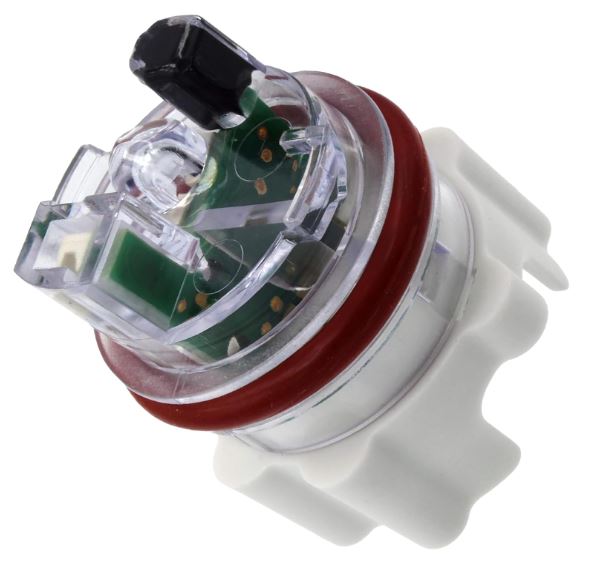
PartsBroz WPW10705575 Turbidity Sensor, Compatible with KitchenAid Dishwashers
This turbidity sensor replacement is compatible with KitchenAid, Whirlpool, Kenmore, and Maytag dishwashers and directly resolves 3-1, 3-2, 3-3, and persistent F8-E1 codes caused by OWI sensor failure. The OWI sensor monitors water clarity and temperature throughout every cycle, and when it fails, it generates misleading error codes that can send homeowners down the wrong diagnostic path. Replacing this part has resolved drain-related codes, poor cleaning, and drying failures for numerous verified buyers who found the actual root cause was sensor malfunction rather than pump failure. Compatible with multiple KitchenAid GDT, KDTE, KDFE, and KUDS model series.
Affresh Dishwasher Cleaner Tablets, 6-Count (6-Month Supply)
Monthly cleaning prevents the majority of maintenance-related KitchenAid error codes from appearing in the first place. Affresh is the number one recommended dishwasher cleaner by KitchenAid and Whirlpool, earning over 53,000 five-star ratings on Amazon for its effectiveness at removing limescale, mineral deposits, and odor-causing bacteria from internal components including the pump, spray arms, and drain hoses. Limescale buildup on sensors and components is a documented contributor to 6-6 temperature codes and 3-X sensor codes in hard water areas. Running one tablet monthly on a Normal or Heavy cycle protects your machine’s most sensitive components from accumulation damage.
Finish Jet-Dry Dishwasher Rinse Aid, 32 oz (315 Washes)
Keeping the rinse aid dispenser consistently full prevents a category of performance complaints that can indirectly contribute to sensor miscalibration and cleaning failures. Finish Jet-Dry earns consistently strong ratings from tens of thousands of verified buyers and is the most widely recommended rinse aid for KitchenAid dishwashers. It reduces surface tension during the final rinse, helping water sheet off dishes and glassware cleanly rather than beading and pooling, which improves drying performance and reduces water residue that the OWI sensor can misread as soil on subsequent cycles. At 32 oz, a single bottle covers up to 315 washes.

Preventive Maintenance That Stops KitchenAid Dishwasher Error Codes Before They Start
Consistent maintenance eliminates the majority of KitchenAid dishwasher error codes before they appear. Each habit directly targets a root cause of the most common fault categories.
| Maintenance Task | Frequency | Error Codes Prevented |
|---|---|---|
| Clean filter assembly | Monthly | 8-1, 8-2, F8-E1, 3-3 |
| Run dishwasher cleaner tablet | Monthly | 6-6, 3-X, 8-X |
| Refill rinse aid dispenser | As needed | Drying and sensor issues |
| Run hot water at sink before cycle | Every cycle | 6-6 |
| Inspect door gasket for cracks | Every 3 months | FAE5, 10-5 |
| Check and straighten drain hose | Annually | 8-1, 8-2, F8-E1 |
| Inspect all hose connections | Annually | FAE5, 10-5 |
Frequently Asked Questions
How do I enter diagnostic mode on a KitchenAid dishwasher?
Close the dishwasher door. Then press any three buttons in the sequence 1-2-3, 1-2-3, 1-2-3, pressing each button within one second of the previous one. The control panel will illuminate, and the display will show any stored error codes. Write down every code that appears before proceeding with diagnosis.
Why does my KitchenAid dishwasher show an error code even after I fix the problem?
Many KitchenAid models store error codes from previous cycles in memory even after the underlying issue resolves. Perform a full power cycle reset by cutting power at the circuit breaker for five minutes, then restore it. This clears stored codes. If the same code immediately reappears, the issue has not fully resolved.
Can I run my KitchenAid dishwasher when an error code is showing?
It depends on the code. Codes like 6-6 or 4-2 allow limited operation, though KitchenAid recommends addressing them first. Never run the machine with an active FAE5 flood code or a persistent 8-X drain code without first diagnosing the underlying cause, as doing so risks motor burnout or water damage.
What causes the 6-6 error code and why does it keep coming back?
Code 6-6 most commonly returns because the water heater thermostat is set below 120°F. Running the hot water tap at your sink for 30 seconds before starting a cycle purges the cold water from the supply line and helps the machine fill with adequately hot water from the start. If 6-6 still returns despite this step, the thermistor sensor assembly may be reading temperatures inaccurately and need replacement.
How much does it cost to repair a KitchenAid dishwasher professionally?
Simple repairs like inlet valve or OWI sensor replacement typically cost $100 to $200 in parts and labor. Control board replacements run $250 to $500 depending on the model. Heating element replacements generally fall in the $150 to $300 range. If the estimated repair cost exceeds half the price of a comparable new KitchenAid model, replacement often makes better long-term financial sense than repair.
My KitchenAid dishwasher’s Clean light is flashing. Is that an error code?
Yes. A flashing Clean light on models without a digital display is the machine’s way of communicating an error through blink patterns. Count the first set of blinks, note the two-second pause, then count the second set. The combined pattern maps to a specific function-problem code in the error table above. A steady Clean light, by contrast, simply means the cycle completed successfully.
Fix the Code, Protect the Machine, and Get Back to Your Kitchen
Every KitchenAid dishwasher error code and display symbol is a signal, not a sentence. Most point to problems you can resolve yourself in under an hour with the right information and a willingness to look before calling a technician. Start with the power reset, follow the diagnosis steps for your specific code, and use the maintenance habits above to keep codes from appearing in the first place.
The faster you act on an error code, the less damage it typically causes. A clogged filter that shows up as an 8-2 code costs nothing to fix today. Ignored for weeks, it can burn out the drain pump and cost several hundred dollars. Treat every code as useful information and your KitchenAid dishwasher will reward you with years of reliable, quiet, error-free performance.

Hi, I’m Barlgan! I created Repair Me Yourself to empower homeowners to tackle appliance repairs with confidence. From decoding error codes to fixing cooling issues, I break down complex repairs into simple, actionable steps that save you time and money.