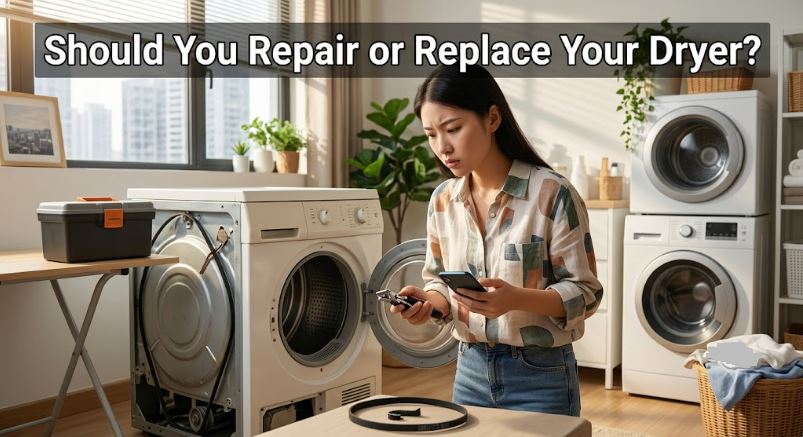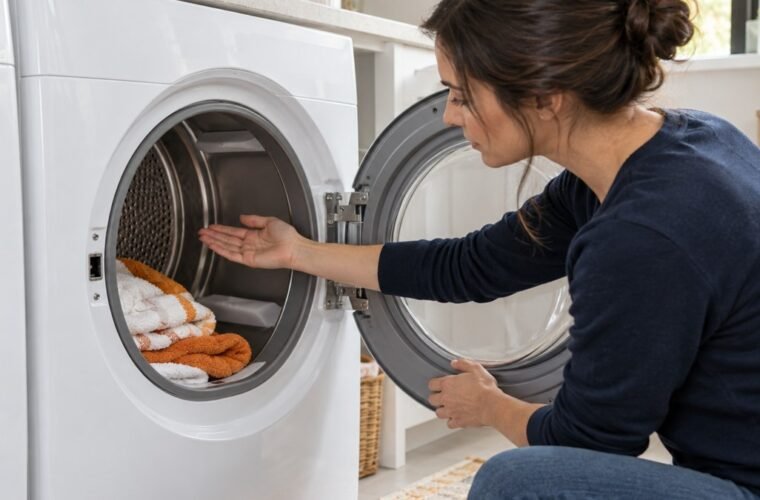
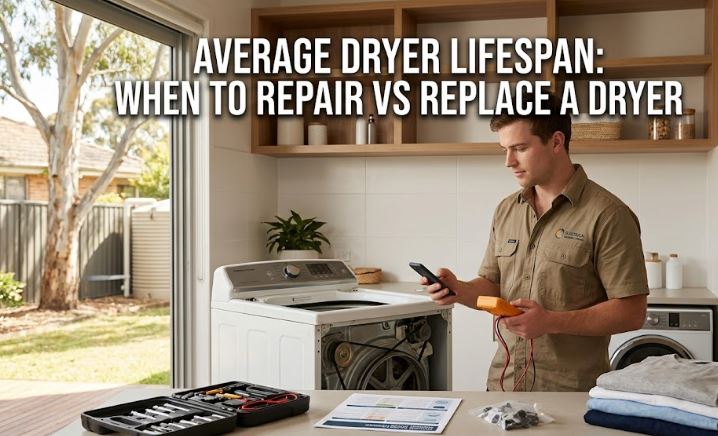
Laundry day becomes frustrating when your dryer starts taking two cycles to dry a load, makes unfamiliar noises, or suddenly stops heating. At that point, many homeowners ask the same question: how long do dryers last? Knowing the average lifespan of a dryer can help you decide whether you’re dealing with normal wear and tear or whether it’s time to start shopping for a replacement.
In most homes, dryers last between 10 and 13 years. Some continue running well beyond that with regular maintenance, while others wear out sooner because of heavy use, poor ventilation, or neglected repairs. Age alone doesn’t determine when a dryer should be replaced. Its condition, repair history, and operating efficiency matter just as much.
This guide explains how long dryers last, what affects their lifespan, the warning signs that yours is nearing the end of its service life, and simple maintenance habits that can help you get the most from your investment.
Average Dryer Lifespan
A clothes dryer is built to withstand thousands of drying cycles over its lifetime. However, every cycle places stress on components like the heating element, blower wheel, drum rollers, bearings, motor, and drive belt.
Under normal household use, here’s what you can generally expect.
| Dryer Type | Average Lifespan | Typical Household Use |
|---|---|---|
| Electric dryer | 10–13 years | Moderate to heavy |
| Gas dryer | 11–15 years | Moderate to heavy |
| Compact dryer | 8–12 years | Light to moderate |
| Commercial-grade residential dryer | 15+ years | Heavy use |
Gas dryers often last slightly longer because their heating systems generally place less electrical demand on internal components, although both gas and electric models require regular maintenance to reach their expected lifespan.
What Determines How Long a Dryer Lasts?
Two dryers purchased on the same day can have very different lifespans. One may still work reliably after 15 years, while the other needs replacement after eight. The difference usually comes down to how the appliance is used and maintained.
Several factors have the greatest impact.
Household Size
The more laundry your household produces, the more wear the dryer experiences.
For example:
- A single person may run two or three loads weekly.
- A family of six may run multiple loads every day.
More drying cycles naturally shorten the lifespan of moving parts.
Dryer Vent Maintenance
A clogged dryer vent is one of the leading causes of premature dryer wear.
Restricted airflow causes:
- Longer drying times
- Higher operating temperatures
- Increased strain on the heating system
- More frequent cycling of internal components
Cleaning the lint screen after every load helps, but it doesn’t replace annual dryer vent cleaning.
Load Size
Consistently overloading the drum forces the motor, belt, and support rollers to work harder.
Over time, this additional stress accelerates component wear.
Installation Quality
Poor installation can shorten a dryer’s life.
Common issues include:
- Crushed vent hoses
- Excessively long vent runs
- Improper gas connections
- Uneven flooring that causes vibration
Correct installation reduces unnecessary strain from the beginning.
Signs Your Dryer May Be Nearing the End of Its Life
Understanding how long do dryers last is helpful, but recognizing the warning signs is even more useful.
Many dryers give plenty of notice before they fail completely.
Clothes Take Much Longer to Dry
If drying time has gradually increased despite a clean lint screen and vent, internal components may be losing efficiency.
Heating elements, gas igniters, thermostats, or airflow issues are common causes.
Loud or Unusual Noises
A healthy dryer produces a consistent hum.
Grinding, squealing, thumping, or scraping noises often point to worn:
- Drum rollers
- Idler pulleys
- Bearings
- Blower wheels
Some of these repairs are relatively inexpensive if addressed early.
The Dryer Stops Heating
A dryer that tumbles but produces no heat may have a failed heating element, thermal fuse, igniter, or thermostat.
Depending on the appliance’s age, repairing the issue may still be worthwhile.
Frequent Breakdowns
One repair every several years isn’t unusual.
However, repeated failures involving different components often indicate that the appliance is reaching the end of its useful life.
Rust or Structural Damage
Visible rust inside the drum or extensive cabinet corrosion can eventually affect both performance and safety.
Repair or Replace? Here’s How to Decide
Not every aging dryer needs to be replaced immediately.
The decision usually depends on three things:
- The age of the appliance
- The repair cost
- The overall condition of the dryer
Repair Makes Sense When…
Consider repairing the dryer if:
- It’s less than eight years old.
- The repair involves a belt, thermostat, roller, or heating element.
- The drum and motor remain in good condition.
- It has otherwise been reliable.
Replacement Is Often the Better Choice When…
Replacement usually makes more financial sense if:
- The dryer is over 12 years old.
- Repairs involve multiple major components.
- The motor or control board has failed.
- Repair costs approach half the price of a comparable new dryer.
- Energy efficiency has noticeably declined.
Repair vs. Replace Comparison
| Situation | Repair | Replace |
|---|---|---|
| Worn drive belt | ✔ | |
| Failed thermostat | ✔ | |
| Heating element on a newer dryer | ✔ | |
| Repeated major repairs | ✔ | |
| Motor failure on an older dryer | ✔ | |
| Extensive rust damage | ✔ |
How to Help Your Dryer Last Longer
While no appliance lasts forever, a few maintenance habits can significantly increase the chances of reaching or exceeding its expected lifespan.
Before looking at specific tips, remember that most dryer failures develop gradually rather than suddenly.
Clean the Lint Filter After Every Load
This simple habit improves airflow and reduces stress on the heating system.
It also lowers the risk of lint-related fire hazards.
Clean the Dryer Vent Every Year
Even a partially blocked vent can reduce efficiency and increase internal operating temperatures.
Homes with pets or heavy dryer use may benefit from cleaning every six months.
Avoid Overloading the Dryer
Large, tightly packed loads prevent proper airflow and place unnecessary strain on the motor and drum support system.
Don’t Ignore Small Problems
A slight squeak today can become a failed bearing tomorrow.
Addressing minor issues early often prevents more expensive repairs later.
Keep the Dryer Level
An uneven appliance places extra stress on rotating components and may increase vibration during operation.
Recommended Products to Extend Dryer Life
Routine maintenance doesn’t require many tools, but having the right ones makes the job easier.
1. Holikme Dryer Vent Cleaner Kit
This flexible brush kit removes lint from dryer vents and hard-to-reach ductwork, helping maintain proper airflow.
2. Luxzio Full-Bristle Lint Brush
A long lint brush is useful for cleaning around the lint filter housing, where loose fibers often collect over time.
Common Myths About Dryer Lifespan
Many homeowners unknowingly shorten the life of their dryer because of common misconceptions.
“Cleaning the Lint Screen Is Enough”
It isn’t.
The lint screen catches only part of the lint generated during drying. The remainder travels into the vent system.
“Older Dryers Always Need Replacing”
Not necessarily.
A well-maintained dryer with a healthy motor and drum can continue operating reliably even after its average expected lifespan.
“Every Repair Means It’s Time for a New Dryer”
Many repairs—such as replacing belts, rollers, or thermostats—are relatively inexpensive and can add years of reliable service.
Dryer Lifespan at a Glance
| Question | Answer |
|---|---|
| How long do dryers last? | Typically 10–13 years |
| Gas dryer lifespan | 11–15 years |
| Electric dryer lifespan | 10–13 years |
| Biggest factor affecting lifespan | Usage and maintenance |
| Annual vent cleaning recommended? | Yes |
| Can proper maintenance extend lifespan? | Absolutely |
Frequently Asked Questions
How long do dryers last on average?
Most household dryers last between 10 and 13 years. Gas models may last slightly longer, especially when properly maintained.
Is it worth repairing a 12-year-old dryer?
It depends on the repair cost and the condition of the appliance. Minor repairs may still be worthwhile, but repeated major repairs often make replacement the better long-term investment.
What causes dryers to wear out faster?
The most common causes include clogged dryer vents, overloaded loads, neglected maintenance, heavy household use, and ignoring small mechanical problems until they become major failures.
Can cleaning the dryer vent extend its lifespan?
Yes. Proper airflow reduces heat buildup and allows the dryer to operate more efficiently, decreasing strain on internal components.
Which lasts longer, a gas or electric dryer?
Gas dryers often have a slightly longer average lifespan, although maintenance habits typically have a greater impact than the heat source itself.
What is the most common dryer repair?
Replacing worn belts, drum rollers, heating elements, thermostats, and thermal fuses are among the most common repairs performed on residential dryers.
Conclusion
Generally, when it comes to how long dryers last, expect around 10 to 13 years of reliable service, with some models lasting even longer when they’re properly maintained. Regular vent cleaning, avoiding overloaded loads, and addressing small repairs early can make a noticeable difference in how long your dryer performs efficiently.
If your dryer is becoming unreliable, compare its age, repair history, and the cost of fixing it against the price of a newer model. Sometimes a simple repair restores years of dependable service. In other cases, replacement is the more economical decision in the long run.