Bosch dishwasher rinse aid goes in the small dispenser beside the detergent cup on the inner door. Open its latch, fill with liquid rinse aid to the max line, snap the lid shut and wipe spills. Refill when your model’s rinse-aid light comes on.
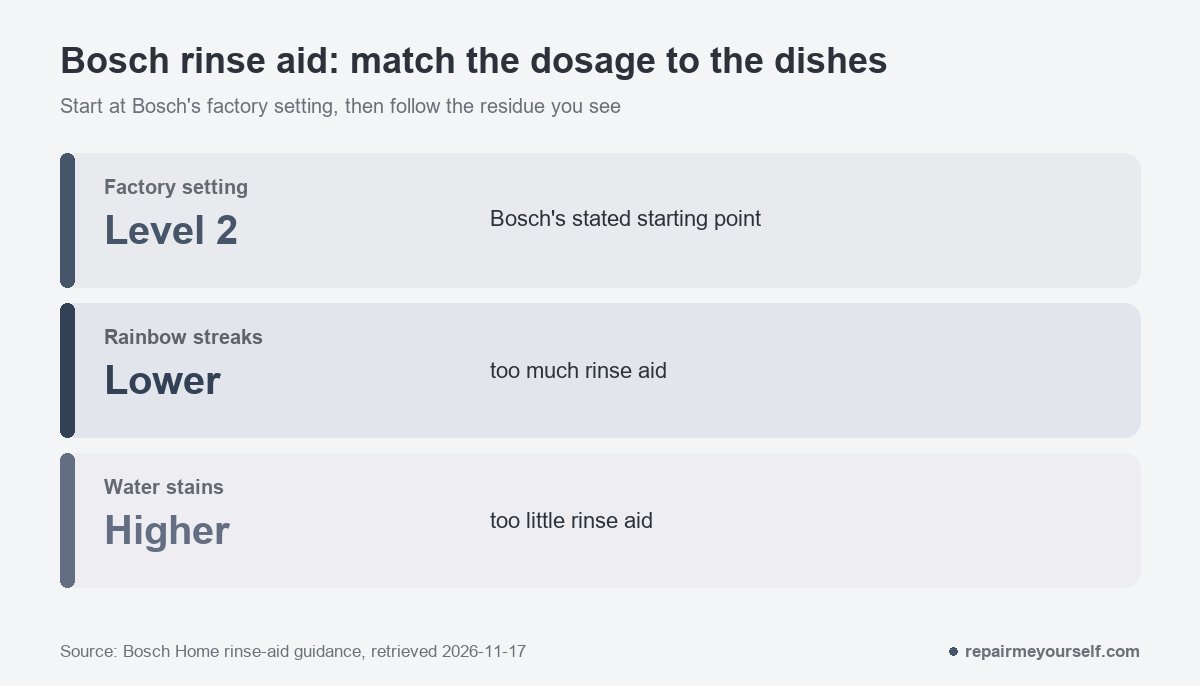
The refill takes a minute. No disassembly is needed. Bosch starts the dosage at level 2, and your dishes will show whether that setting suits your water and detergent. Use the refill light to decide when to add liquid, then use rainbow streaks or water marks to decide whether that amount needs to go down or up.
Fill the dispenser and keep the door clean
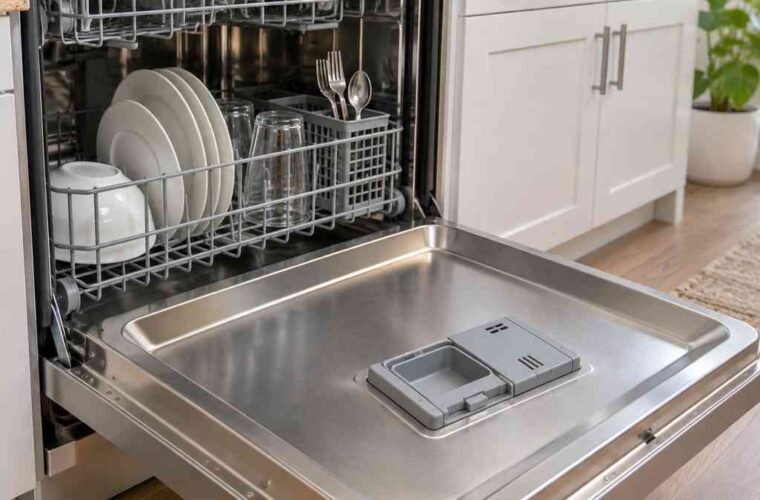
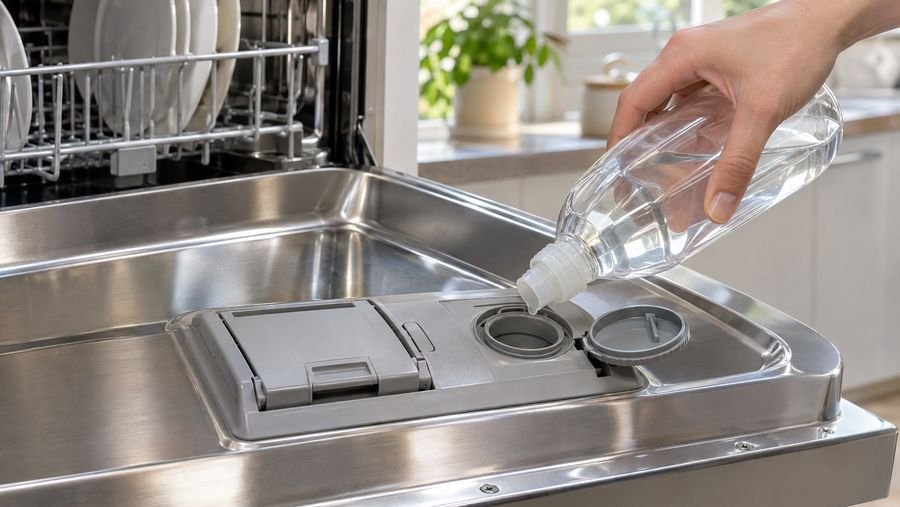
Bosch’s official rinse-aid instructions place the dispenser next to the detergent compartment on the inner door. You’ll pour liquid into it by hand, and the machine will dispense it during the program.
- Open the dishwasher door fully so the dispenser is easy to reach.
- Press the latch on the rinse-aid lid and pull the lid open.
- Pour liquid rinse aid slowly until it reaches the max line. Don’t overfill it.
- Close the lid and listen for a click. That sound confirms it is sealed.
- Wipe any liquid that puddled beside the compartment before starting a cycle.
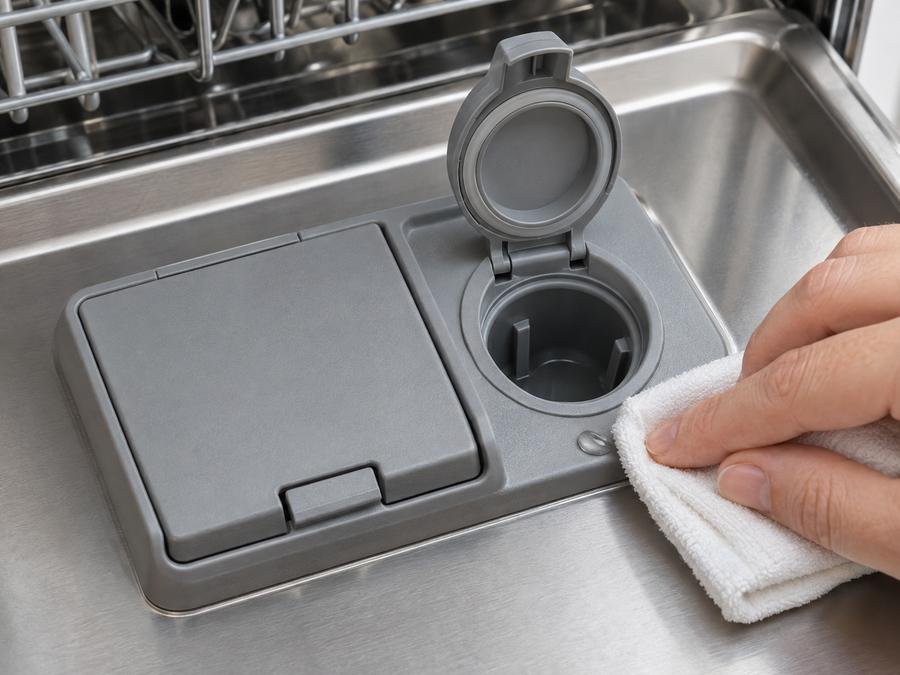
Bosch says spilled liquid can run down the inner door after you close it, so wipe the compartment rim now rather than treating later residue as an automatic leak.
A Reddit owner described being told to use only specified supplies for a new Bosch. That concern is worth separating from the mechanical instructions: Bosch’s written steps call for liquid rinse aid, without reserving the dispenser for one named brand.
“I recently bought a Bosch Series 6, 14-place dishwasher, and the technician told me something that I’m not completely convinced about.” [excerpt — the post continues]
— r/BuyItForLifeIndia, August 2026 (67 upvotes)
Choose a dishwasher rinse aid rather than a homemade substitute, which Bosch warns might damage the appliance, create a health hazard or invalidate the warranty.
Adjust the dosage from what the dishes show
Bosch says its dishwashers come preset to level 2. Leave it there until you have a normal load to judge, then use Bosch’s owner-manual lookup for the buttons on your exact model.
I saw fewer Bosch machines than Whirlpool-family machines on my service calls. When I don’t recognize a panel, I use the model manual rather than borrow a sequence from another Bosch.
See rainbow streaks? Bosch associates them with too much rinse aid, so reduce the dosage. Make a small adjustment, then judge another normal load rather than changing it repeatedly.
Seeing water stains instead? Bosch associates those with too little rinse aid, so increase the dosage. If the results don’t improve, don’t keep raising it while ignoring loading or cleaning problems.
Rinse aid lowers water’s surface tension. Water then slides off your dishes more easily. That helps limit spots and supports drying, especially with hard water, but it doesn’t heat the tub or repair a failed drying part.
What the rinse aid light means
On models with a rinse-aid refill light, Bosch says the light means you should refill the reservoir; it’s a level reminder, not a request to reset the dishwasher.
Stop at the max line.
After refilling, confirm that the lid clicked shut. If the light stays on, follow your model’s manual rather than repeatedly pouring or resetting.
Panel layouts vary, and some use a symbol rather than words. Match your panel against these Bosch dishwasher symbols and lights before treating an unfamiliar icon as a fault.
When rinse aid is not the fix
Rinse aid can reduce water spots and support drying, but it cannot remove dried food or clear a blocked filter. If dishes carry grit or old residue, clean the dishwasher filter by brand before changing more settings.
A single refill light is also different from a panel with no display at all. If every light is out, work through the separate Bosch dishwasher no-lights troubleshooting path and unplug before inspecting electrical parts.
Bosch dishwasher rinse aid questions
Is rinse aid required for a Bosch dishwasher?
You can run the dishwasher without it, but Bosch says drying performance will decrease. Water spots are also more likely, especially in a hard-water home.
Can I use any brand of rinse aid in a Bosch dishwasher?
Bosch’s written instructions specify liquid rinse aid and don’t name one mandatory brand, so choose a product made for your dishwasher rather than a homemade substitute.
How often should you add Bosch dishwasher rinse aid?
Refill when your model’s rinse-aid light appears. Don’t top up on a fixed calendar. If your panel has no such indicator, use the owner manual and inspect the dispenser during routine cleaning.
What if the Bosch rinse aid light stays on after refilling?
Confirm that you stopped at the max line and heard the lid click. If the reminder persists, use the exact model manual or contact Bosch support; the general refill instructions don’t diagnose a sensor or control fault.