
Power outages have a way of arriving at the worst possible moment, whether that is during a winter storm, a summer heat wave, or just an aging grid having a bad day. A home power station offers a quiet, fume-free way to keep the essentials running: refrigerators, medical devices, routers, lights, and laptops, all without firing up a noisy gas generator in the driveway. These battery-based systems have come a long way in recent years, with larger capacities, faster recharge times, and smarter app controls making them genuinely viable as a primary backup power source.
This guide rounds up five of the strongest power stations currently available on Amazon for home use, ranging from compact, budget-friendly units to massive expandable systems capable of running an entire household through an extended outage. Below you will find a side-by-side comparison, a buyer’s guide to help you choose the right capacity and features, in-depth reviews of each model, and answers to the most common questions shoppers have before buying.
An Overview of Top Home Power Stations for Reliable Backup Power
| Product | Capacity | AC Output | Recharge Speed | App Control | Best For |
|---|---|---|---|---|---|
| EcoFlow DELTA Pro 3 | 8,192Wh (w/ extra battery) | 4,000W (120/240V) | Fast AC + solar | Yes | Whole-home backup, large households |
| Generac GB2000 | 2,106Wh | 1,600W cont. | Up to 50% faster w/ Charge Enhancer | No | Reliable mid-size backup, simplicity |
| EGO Power+ Nexus PST3040 | Expandable (batteries sold separately) | 2,000W cont. / 3,000W peak | Depends on battery count | No | EGO tool owners, flexible capacity |
| Anker SOLIX C1000 Gen 2 | 1,024Wh | 2,000W / 3,000W peak | Full charge in 49 min | Yes | Fast recharge, compact home backup |
| EcoFlow DELTA 3 Ultra (w/ Solar Panel) | 3,072Wh | 3,600W / 7,200W surge | Solar + fast AC, expandable | Yes | Quiet operation, solar-ready backup |
Buyer’s Guide: How to Choose the Best Home Power Station
Picking the right power station comes down to matching capacity and output to how you actually plan to use it. Keep the following factors in mind before you buy.
- Battery capacity (Wh): This determines how long the unit can run your devices. Small units under 1,500Wh are fine for a laptop, phone, and a few lights, while whole-home backup for a refrigerator, sump pump, and other essentials typically calls for 2,000Wh or more.
- AC output (W): This is the maximum power the unit can deliver at once. Check the running wattage of the appliances you want to power and add them up; also check the higher peak or surge wattage rating, since appliances like refrigerators and power tools draw extra power when they first start.
- Recharge method and speed: Look at how quickly the unit recharges from a wall outlet and whether it supports solar panels, car charging, or generator input. Faster recharge times matter most if outages are frequent or prolonged.
- Expandability: Some power stations, like the EcoFlow and EGO models in this guide, allow you to add extra batteries to increase total capacity over time, which can be a smart way to manage upfront cost.
- Battery chemistry: LiFePO4 (LFP) batteries, used in most modern power stations, last significantly longer than older lithium-ion chemistries, often rated for 3,000 or more charge cycles.
- Noise and ventilation: Even battery-based units use internal fans to manage heat. If quiet operation matters, look for stated decibel ratings, especially for indoor or bedroom use.
- Smart features: App connectivity lets you monitor charge level, control outputs remotely, and receive alerts, which can be valuable for unattended backup duty in a garage or basement.
5 Best Power Stations for Home Use
The five power stations below were selected to cover a wide range of home backup needs, from compact, fast-charging units to massive expandable systems built to run a household through a multi-day outage. Each offers a different balance of capacity, portability, and smart features.
1. EF ECOFLOW DELTA Pro 3 with Extra Battery
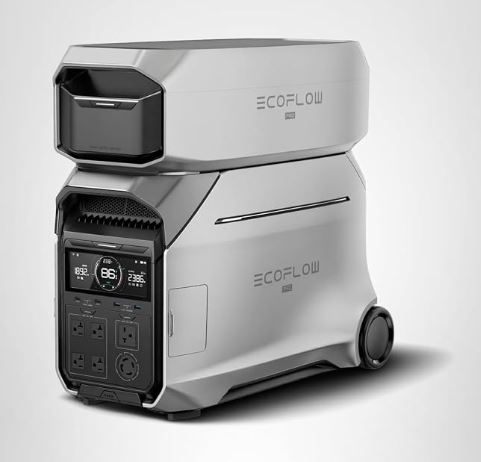
The EcoFlow DELTA Pro 3 is built for households that want serious whole-home backup capability. Paired with its included extra battery, total capacity reaches roughly 8,192Wh, enough to keep a refrigerator, Wi-Fi router, lights, and several other essentials running for an extended outage. With 4,000W of continuous AC output across 120V and 240V circuits, it can handle demanding appliances that smaller power stations simply cannot, making it one of the most capable home backup options on this list.
- Massive 8,192Wh combined capacity with the included extra battery pack
- 4,000W continuous AC output supporting both 120V and 240V appliances
- Automotive-grade LFP battery cells with IP65-rated battery pack technology for durability
- Backed by a 5-year manufacturer warranty for long-term peace of mind
- Multiple recharge methods including AC wall outlet, solar, and car charging
- Expandable system designed to scale up to larger whole-home setups over time
- Ships with an AC charging cable and the extra battery in separate packages
2. Generac GB2000 Portable Power Station with Charge Enhancer
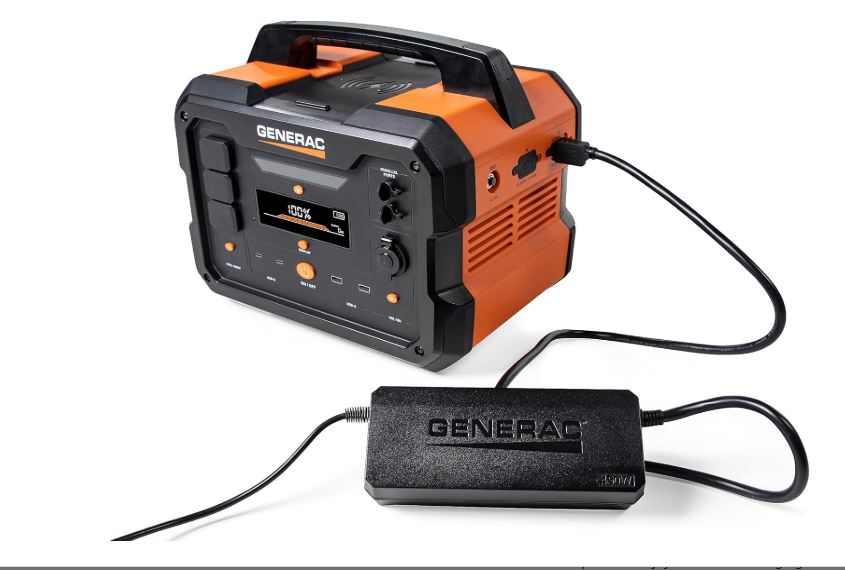
Generac brings its decades of generator expertise to the battery power station category with the GB2000, a 2,106Wh unit built for clean, emission-free backup power. This bundle includes the Generac Charge Enhancer, a 450W charger that speeds up recharge time by up to 50 percent, helping you get back to full capacity faster between outages. Its straightforward design, ergonomic handle, and rugged enclosure make it an easy unit to keep on hand without a learning curve.
- 2,106Wh capacity suitable for home, camping, or outdoor activities
- Up to 1,600 continuous watts with 3,200-watt peak surge capacity
- Includes Generac Charge Enhancer 450W charger for up to 50% faster recharging
- 0-80% recharge in roughly 3.3 hours from a standard wall outlet
- Compatible with solar, car, and generator charging inputs for flexible recharging
- Built-in 15W wireless charging pad for hassle-free device charging
- Compact, durable enclosure with an ergonomic handle for portability
3. EGO Power+ PST3040 Nexus Portable Power Station
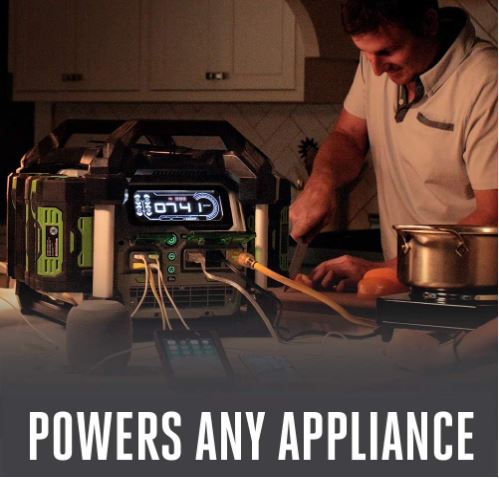
The EGO Power+ Nexus takes a different approach to home backup power by running on EGO’s 56V ARC Lithium battery platform, the same batteries used across the brand’s outdoor power tool lineup. This makes it a compelling option for anyone who already owns EGO mowers, blowers, or trimmers, since spare batteries can double as backup power capacity. The unit itself ships without batteries, letting you configure capacity based on how many EGO batteries you already own or want to add.
- 2,000 continuous watts with 3,000-watt peak output for demanding devices
- Compatible with all EGO Power+ 56V batteries, usable with 1 to 4 batteries at once
- Approved for both indoor and outdoor use, unlike traditional gas generators
- Pure sine wave output safe for sensitive electronics
- Equipped with 3 AC outlets and 4 USB ports for powering multiple devices
- Bright LED display shows real-time remaining runtime
- Quiet, emission-free operation suitable for tailgates, camping, and emergency backup
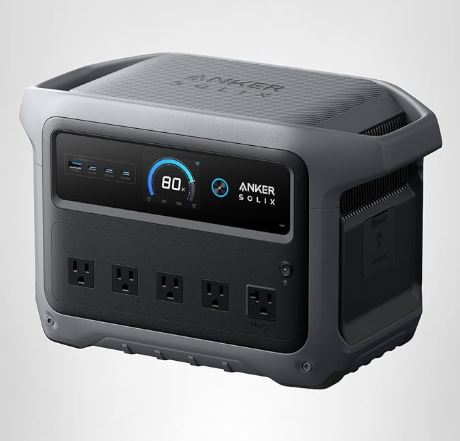
4. Anker SOLIX C1000 Gen 2 Portable Power Station
The Anker SOLIX C1000 Gen 2 stands out for its remarkably fast recharge time, reaching a full charge in about 49 minutes under ideal conditions. With 1,024Wh of LiFePO4 capacity and 2,000W of continuous output (3,000W peak), it strikes a strong balance between portability and power for home backup, remote work setups, and tiny homes. Ten output ports, including five AC outlets, give it the flexibility to power a wide range of devices simultaneously.
- 1,024Wh LiFePO4 battery capacity with 2,000W output (3,000W peak)
- Full recharge in approximately 49 minutes via UltraFast AC charging
- 10 total output ports, including 5 AC outlets, USB-A, and USB-C connections
- Six recharging modes: AC, solar, alternator, generator, hybrid, and car port
- Standby power consumption of just 9W, well below the industry average
- Integrated LCD screen for real-time status monitoring
- App-based control for remote monitoring and management
- Compact and portable at roughly 24.9 lbs
5. EF ECOFLOW DELTA 3 Ultra with 400W Solar Panel
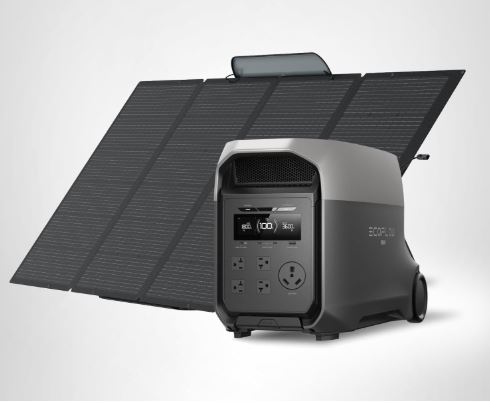
The EcoFlow DELTA 3 Ultra bundle pairs a powerful 3,072Wh power station with a 400W solar panel, giving it true off-grid charging capability right out of the box. With 3,600W of continuous output and a 7,200W surge rating, it can handle refrigerators, microwaves, heaters, and power tools, making it well suited as a primary home backup solution. Its X-Quiet 3.0 technology keeps operation down to about 25 decibels under load, while a sub-10-millisecond switchover keeps sensitive electronics like routers and medical equipment running seamlessly during an outage.
- 3,072Wh LiFePO4 capacity with 3,600W continuous output (7,200W surge)
- Includes a 400W solar panel for off-grid and backup solar charging
- Whisper-quiet operation at approximately 25dB under load thanks to X-Quiet 3.0 technology
- Under 10-millisecond UPS switchover for uninterrupted power to sensitive devices
- Capable of running refrigerators, microwaves, heaters, and power tools
- Expandable design for scaling capacity as backup needs grow
- Power station and solar panel ship in separate packages
Frequently Asked Questions
How much power station capacity do I actually need for my home?
This depends entirely on what you want to keep running and for how long. As a rough guide, a 1,000 to 1,500Wh unit can power a few essentials like lights, a router, and device charging for a day or so, while a 2,000Wh or larger unit is better suited to running a refrigerator and several other appliances through a multi-day outage. Add up the running wattage of your essential devices and multiply by the hours you want to run them to estimate the capacity you need.
Can I run a refrigerator on a home power station?
Yes, most of the units in this guide can run a standard refrigerator, since fridges typically draw 100 to 800 running watts with a higher startup surge. Just be sure the power station’s continuous and peak wattage ratings comfortably exceed your refrigerator’s specifications, and remember that a fridge cycling on and off throughout the day will draw down a smaller battery faster than expected.
Is it safe to use a battery power station indoors?
Unlike gas-powered generators, battery power stations produce no exhaust fumes and are generally safe for indoor use, which is one of their biggest advantages for home backup. That said, it is still good practice to keep the unit in a well-ventilated area away from direct heat sources, and to follow the manufacturer’s guidance on placement and operating temperature.
How long do power station batteries typically last?
Most modern home power stations use LiFePO4 (LFP) battery cells, which are rated for significantly more charge cycles than older lithium-ion batteries, often 3,000 or more cycles before capacity noticeably declines. With moderate use, that can translate to a decade or more of useful life, though actual longevity depends on charging habits, storage conditions, and how deeply the battery is discharged each cycle.
Can these power stations be charged with solar panels?
Most of the units featured here support solar charging, though not all include a panel out of the box. The EcoFlow DELTA 3 Ultra bundle reviewed above comes with a 400W solar panel included, while other models, including the EcoFlow DELTA Pro 3 and Anker SOLIX C1000 Gen 2, support solar input but require purchasing a compatible panel separately.
Also Read:
- A Guide to the Best Tools for Troubleshooting Home Appliances
- 5 Best Generators for Home Use Reviewed
Conclusion
Choosing the right home power station ultimately comes down to scale and priorities. For households that want maximum runtime and the ability to power an entire home through an extended outage, the EcoFlow DELTA Pro 3 and the solar-ready EcoFlow DELTA 3 Ultra stand out as the most capable options on this list. If your needs are more modest, or you simply want fast, dependable backup for the essentials, the Generac GB2000 and Anker SOLIX C1000 Gen 2 offer excellent capacity-to-portability ratios, with the Anker in particular standing out for its remarkably quick recharge time. The EGO Power+ Nexus remains a unique option worth considering for anyone already invested in EGO’s battery ecosystem.
Whichever model you choose, take the time to calculate your actual power needs before buying rather than assuming bigger is always better. A correctly sized power station will keep your essentials running reliably without unnecessary expense, while an undersized one can leave you without power exactly when you need it most. Use the comparison table and buyer’s guide above as your starting point, and you will be well prepared for the next outage, whatever the cause.

Hi, I’m Barlgan! I created Repair Me Yourself to empower homeowners to tackle appliance repairs with confidence. From decoding error codes to fixing cooling issues, I break down complex repairs into simple, actionable steps that save you time and money.