There is a particular kind of silence that hits a house the moment the power dies. The fridge hum stops. The clocks go dark. Within minutes, you start wondering how long the food in the freezer has.
A generator is the answer to that silence. It buys you time, comfort, and a sense of control while the grid sorts itself out. Some models simply keep a few lights on; others can run an entire house without you lifting a finger.
This guide walks through five generators worth considering for home use, from compact and quiet to massive and automatic. You will find a quick comparison table, a short guide to sizing one correctly, five detailed reviews, and answers to the questions people ask most before buying.
Best Home Generators for Home Use Side-by-Side Comparison
| Product | Running Watts | Starting Watts | Fuel Type | Type | Best For |
|---|---|---|---|---|---|
| DuroMax XP13000E | 10,500W | 13,000W | Gasoline | Portable, open frame | Central AC and major appliances |
| Honda EU3200i | 2,600W | 3,200W | Gasoline | Portable inverter | Quiet backup, RVs, electronics |
| Generac GP9500E Tri-Fuel | 9,500W (gas) | 12,500W (gas) | Gas, propane, or natural gas | Portable, open frame | Fuel flexibility, large homes |
| Generac Guardian 7291 | 26,000W (26kW) | Auto-managed | Natural gas or propane | Automatic standby | Hands-free whole-house power |
| Champion 201175 | 7,000W | 8,500W | Gasoline or propane | Portable inverter, dual fuel | Balanced power and quiet |
Five Best Home Generators Worth Your Attention
Each generator below earns its spot for a different reason. One is built for raw output, another for near-silent operation, and one simply turns itself on without you ever touching it.
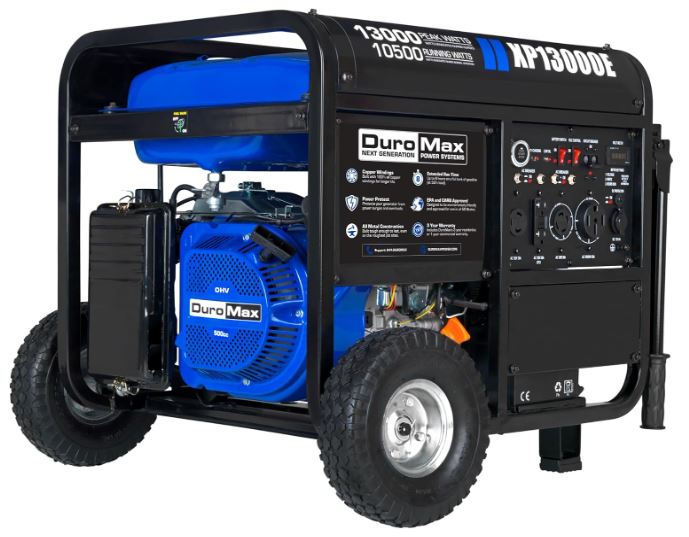
1. DuroMax XP13000E: The Heavy Lifter
The DuroMax XP13000E is built for homeowners who want standby-level power without the standby price tag. It delivers 10,500 running watts and a 13,000-watt starting surge, enough to run a central air conditioner alongside refrigerators and lights. This is the generator for people who refuse to compromise during an outage.
- 10,500 running watts with a 13,000-watt starting surge
- 500cc, 20HP OHV DuroMax engine with 100% copper windings
- Push-button electric start with backup recoil start
- Full power panel: 50A outlet, 30A twist locks, and household outlets
- CO Alert technology shuts the unit down if carbon monoxide builds up
- Roughly 8 to 8.5 hours of runtime at 50% load on an 8.3-gallon tank
- EPA and CARB approved for use in all 50 states
- Never-flat wheels and high-leverage handles for easier moving
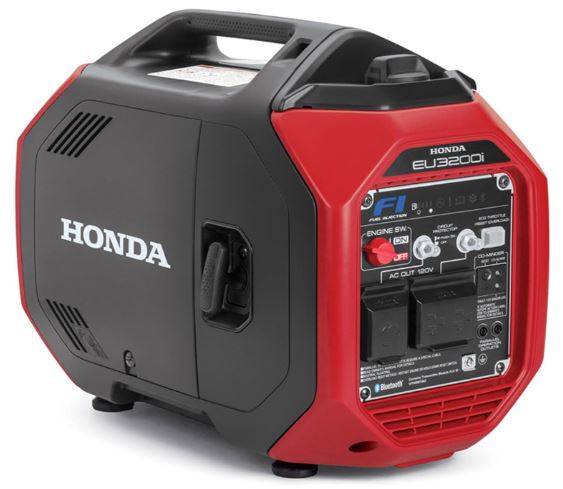
2. Honda EU3200i: The Quiet Achiever
The Honda EU3200i trades raw wattage for something many homeowners value just as much: peace and quiet. At 54 to 58 dBA, it runs about as loud as a normal conversation. It still delivers clean, stable power for RV air conditioning or a meaningful slice of home essentials.
- 2,600 running watts with a 3,200-watt starting capacity
- Operates at just 54 to 58 dBA, roughly conversation level
- CO-MINDER shuts the generator down if carbon monoxide gets dangerous
- Lightweight at under 60 lbs with two built-in carrying handles
- Fuel-injected Honda GX130 engine for efficiency and easier starts
- Runs up to 8.6 hours per tank depending on load
- Bluetooth pairing with the Honda My Generator app
- Can be paralleled with a second unit for up to 6,400 combined watts
- Backed by a 3-year residential and commercial warranty
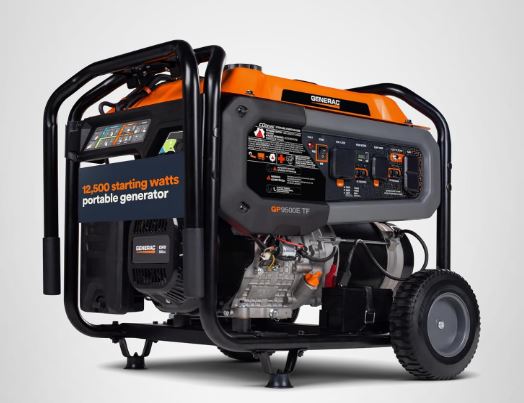
3. Generac GP9500E Tri-Fuel: The Fuel-Agnostic Option
Not sure which fuel you will have access to during the next emergency? The Generac GP9500E sidesteps the question entirely. It runs on gasoline, propane, or natural gas, switching between them with a simple dial turn, and still delivers serious output.
- 9,500 running watts and 12,500 starting watts on gasoline
- Switches between gasoline, propane, and natural gas
- COsense Technology monitors and shuts down for unsafe carbon monoxide levels
- Electric start with an included battery
- Up to 10.5 hours of runtime at 50% load on gasoline
- Covered outlets for protection in rough weather
- 120V 20A GFCI outlets plus 30A and 50A outlets for heavier loads
- Never-flat wheel kit for easier transport around the property
4. Generac Guardian 7291: The Set-and-Forget System
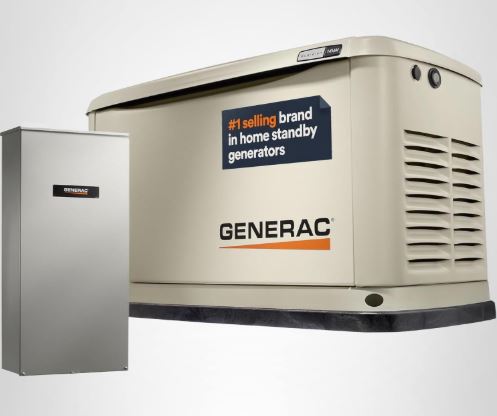
Some homeowners never want to think about generators at all, and the Generac Guardian 7291 is built for exactly that mindset. It installs permanently outside the house and starts itself within seconds of an outage. No fuel runs, no manual setup, no standing outside in a storm.
- 26,000 watts (26kW) with less than 5% total harmonic distortion
- Starts automatically within seconds of detecting an outage
- Includes a 200-amp transfer switch for whole-house integration
- Runs on natural gas or liquid propane, no gasoline storage needed
- Mobile Link Wi-Fi lets you check status and alerts remotely
- Corrosion-resistant aluminum enclosure with RhinoCoat finish
- Quiet-Test self-diagnostic mode runs at lower RPM for less noise
- Powerful enough for 4 or more 5-ton air conditioners plus other essentials
- Backed by a 5-year limited warranty
- Requires professional installation by a licensed electrician and gas technician
5. Champion 201175: The Balanced Middle Ground
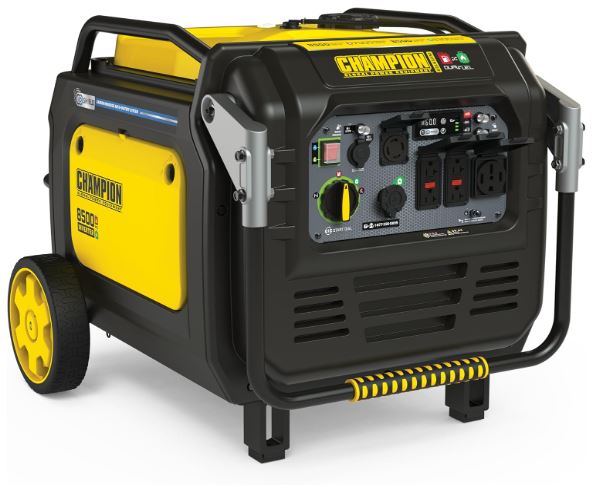
The Champion 201175 sits comfortably between the extremes on this list. It is not the loudest or the largest, but it offers a workable 7,000 running watts, dual-fuel flexibility, and inverter-clean power in one package. For many households, that balance is exactly the point.
- 7,000 running watts with an 8,500-watt starting surge
- Dual fuel: runs on gasoline or propane
- CO Shield automatically shuts the unit down when carbon monoxide is detected
- Clean sine wave output with less than 3% total harmonic distortion
- Electric start with included battery, plus manual pull-start backup
- Runs up to 14 hours on gasoline or 12 hours on propane
- Outlet panel includes a 50A outlet, a 30A locking outlet, and GFCI household outlets
- Quiet operation at roughly 61 dBA, similar to normal speech
Quick Answers Before You Buy
How big a generator does my house actually need?
It depends entirely on what you want powered. Keeping a fridge, some lights, and Wi-Fi alive usually takes 2,000 to 4,000 watts. Running central air or a well pump pushes that number into the 8,000 to 13,000-watt range, or calls for a standby system like the Guardian 7291.
What separates a portable generator from a standby generator?
A portable unit needs to be wheeled outside, fueled, and started by hand every time the power drops. A standby generator lives permanently next to your house and switches on by itself within seconds, with no input from you at all.
Is running a home generator actually safe?
Yes, as long as it stays outdoors and away from windows, doors, and vents at all times. Every generator in this guide includes carbon monoxide detection that shuts the unit down automatically if levels turn dangerous.
Do I really need a transfer switch?
If you want to power your home’s existing wiring rather than running extension cords everywhere, then yes. A licensed electrician installs it once, and it lets your generator feed chosen circuits safely without back-feeding power into utility lines.
Why choose dual-fuel or tri-fuel over gasoline only?
Gasoline can be hard to find during a widespread emergency and degrades if stored too long. Propane and natural gas solve both problems, which is why the Generac GP9500E and Champion 201175 both offer fuel flexibility as a built-in safety net.
Also Read: 5 Best Power Stations for Home Power Backup Reviewed!
Picking Your Power
There is no single best generator, only the best one for your situation. If you want a hands-off system that never asks for your attention, the Generac Guardian 7291 is the clear winner. If raw, affordable capacity matters more, the DuroMax XP13000E and Generac GP9500E both bring serious power to the table.
For households that prioritize quiet operation and electronics-safe power, the Honda EU3200i and Champion 201175 are worth a close look. Each strikes a different balance between sound, fuel type, and output.
Whichever you choose, start by calculating your home’s real wattage needs rather than guessing. Pair the right generator with a proper transfer switch and sensible outdoor placement, and the next outage becomes a minor inconvenience instead of a genuine crisis.

Hi, I’m Barlgan! I created Repair Me Yourself to empower homeowners to tackle appliance repairs with confidence. From decoding error codes to fixing cooling issues, I break down complex repairs into simple, actionable steps that save you time and money.