Why does my dishwasher smell? Because food, grease and standing water sit in the machine between cycles. Most of the time the filter at the bottom of the tub is the first place to look. If the smell keeps coming back after a clean filter, the cause is often the sink-side drain, not the machine.
The smell tells you where to start. I’ve opened plenty of doors on service calls and the nose gets it right more often than the manual does.
Why does my dishwasher smell? Match the smell to the source
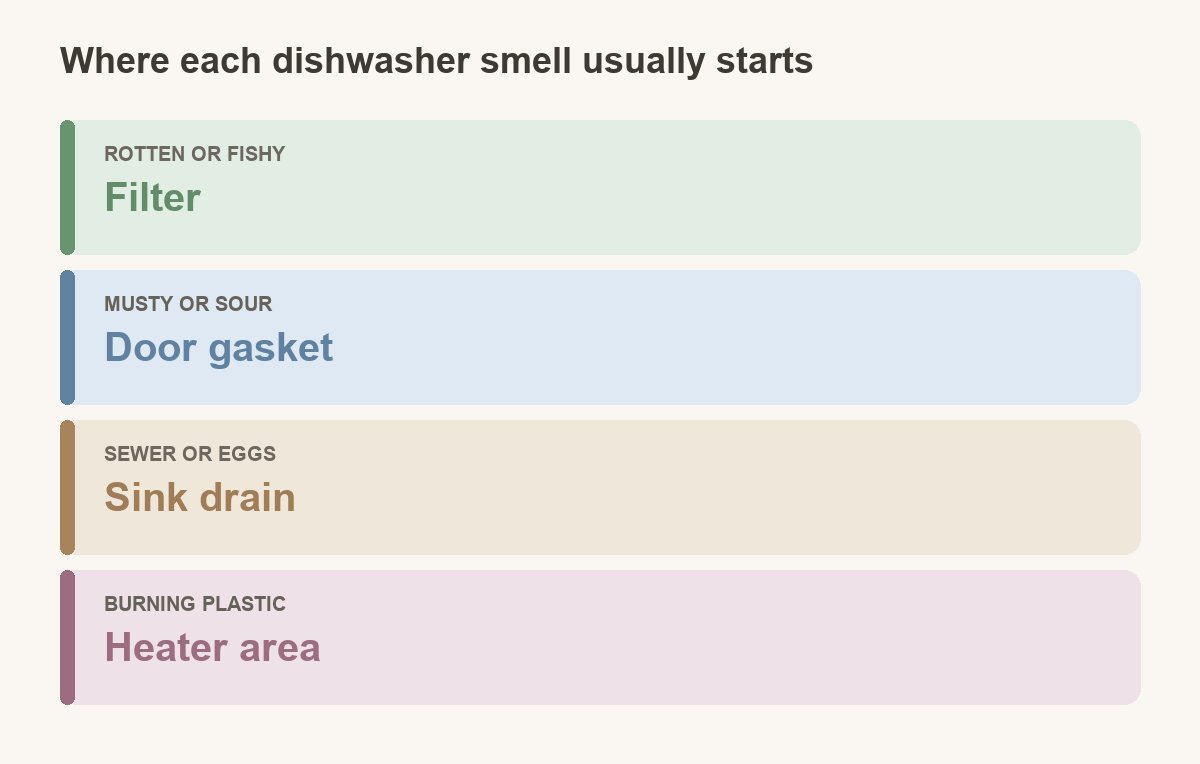
Smell type is the quickest filter for a dishwasher problem. It won’t always be right, but it tells you which part to check first, and that saves time.
- Rotten food or fishy: trapped food in the filter or on the tub floor.
- Musty or sour: damp residue in the door gasket and the lower edge of the door.
- Sewer or rotten eggs: the sink drain or garbage disposal side of the plumbing.
- Burning plastic: something melted near the heating element. Stop the machine.
- New plastic or chemical: a brand-new machine, and usually temporary.
Work from the cheapest check to the most expensive one. Every step below costs nothing but a few minutes, and it saves you a service call more often than you’d think.
Filter and tub floor first
Whirlpool’s odor page lists food trapped in the filter, spray arms or tub bottom as a cause. It also lists water left at the bottom by a drain problem or blocked filter. Its guidance is to clean the filter at least once a month (Whirlpool, Removing Odors in your Dishwasher).
Bosch says the same thing from the other direction: with every cycle, food particles and debris get stuck in the filter. Its US support page tells you to rinse the filter under water with soap and a soft brush.
Here’s the order I use:
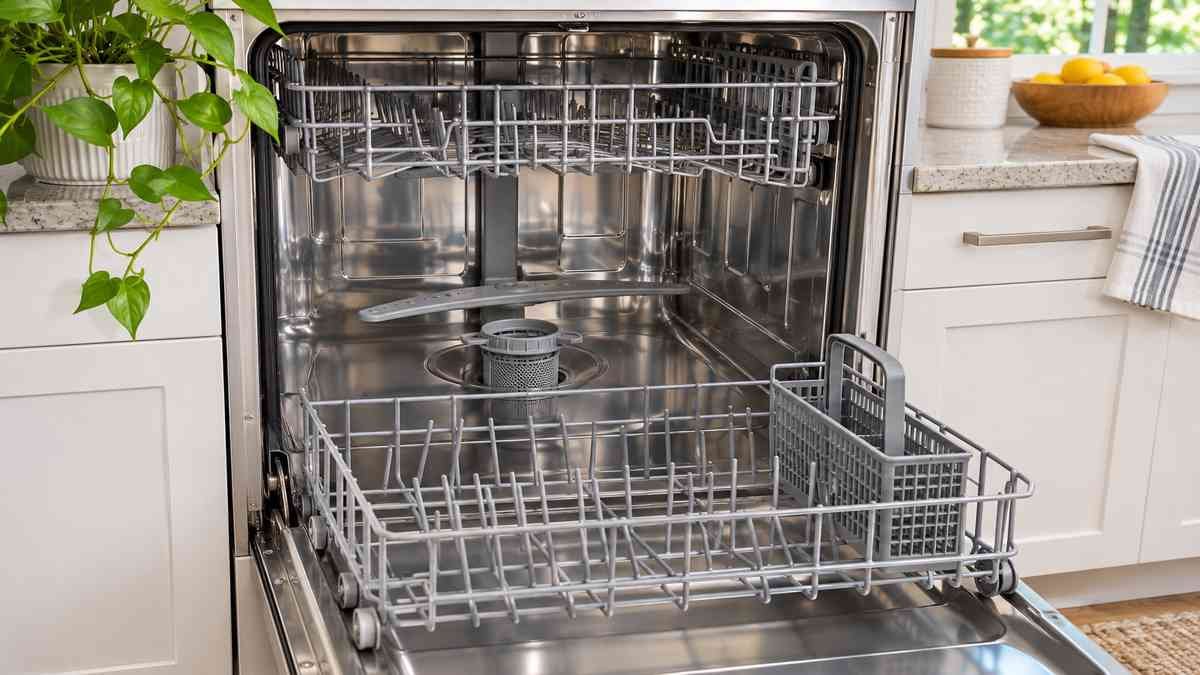
- Unplug the machine, or switch off its breaker, and pull out the bottom rack.
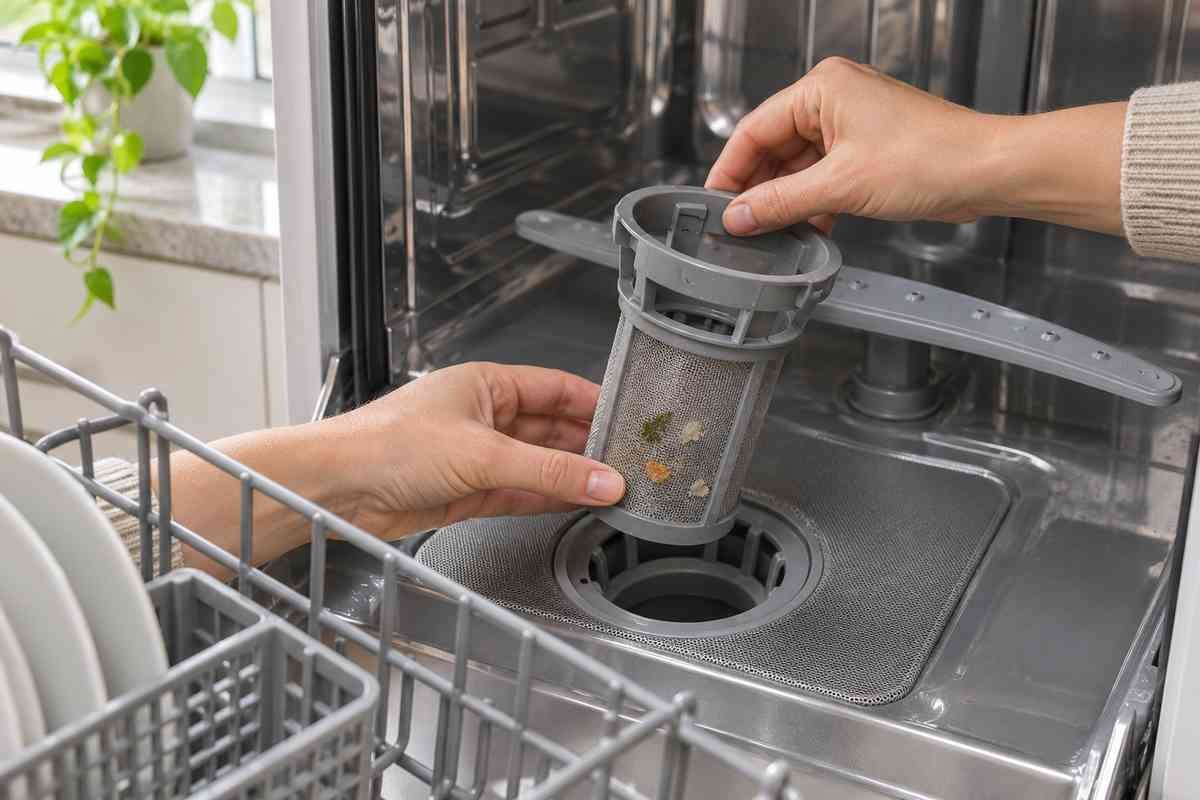
- Take out the filter. Twist or release it the way your manual shows. Don’t force it.
- Rinse it under hot water with dish soap and a soft brush. Skip steel wool and anything abrasive.
- Look under the filter. Wipe the tub floor and the sump with a damp cloth and pick out any glass, bone or label scraps.
- Put the filter back and make sure it’s locked in. A loose filter lets food through to the pump.
Removal differs by brand, so I wrote a separate walkthrough: how to clean a dishwasher filter. Open it if yours isn’t a plain twist-out.
If you see standing water after the cycle, you’ve got a drain problem too. Start with why a dishwasher won’t drain, because no cleaner will fix a smell that’s fed by water that never leaves.
Spray arms and the door gasket
Spray arms don’t smell on their own. Clogged holes leave residue behind. Bosch tells you to check them by running the arm under water and looking for blocked holes, then to loosen debris with a toothpick.
One r/CleaningTips commenter put the hard-water version plainly:
“I’ve heard the spray arms can harbor lots of gross stuff, especially with hard water. They should be removable and soak in a vinegar solution. I’m sure there’s tutorials online how exactly to do this as I’ve never done it with my machine.”
– r/CleaningTips, October 2026 (160 upvotes)
The gasket is the other spot people skip. Whirlpool says to clean the rubber seals around the door with a damp cloth and mild detergent. Run your finger along the folds. If it comes away gray or slimy, that’s your musty smell.
On service calls, the tub often looked clean while the lower edge of the door and the gasket folds still held grime. Wipe those, then leave the door cracked open after the cycle so the inside can dry.
When the smell is coming from the sink side
The sink-side drain is the cause people miss. If a clean filter, clean arms and a wiped gasket didn’t help, stop scrubbing the tub and look at the plumbing.
Whirlpool’s odor steps include checking the drain and the garbage disposer for food or obstructions. Run the disposer and flush the sink drain first. A sewer smell that only shows up when the dishwasher runs often traces back there.
An r/Appliances thread about a sewage-smelling GE dishwasher turned to the installation. One commenter guessed at the cause:
“I’ll bet your drain hose isn’t looped high enough and the smell is traveling from the P-Trap connection”
– r/Appliances (17 upvotes)
That’s a forum guess, not a diagnosis. Still, a drain hose that sags or isn’t looped up under the counter is a fair thing to inspect. Don’t pull the hose off unless you’re comfortable with a bucket and towels.
New-machine and burning smells
A new machine can smell like plastic. Whirlpool lists three normal manufacturing odors: plastic for about two weeks, petroleum from sound-deadening material for four to six weeks, and varnish from the motor for about a month.
Burning plastic on an older machine is different. Stop the cycle and unplug it. Let the heating element cool, then look for melted plastic that fell near it. Smell burning or anything electrical with nothing obvious? Stop using it and call a pro.
If you also suspect a defect rather than a mess, look up your model on the appliance recall lookup before you pay for a repair.
Cleaner cycles, vinegar and bleach, and keeping it gone
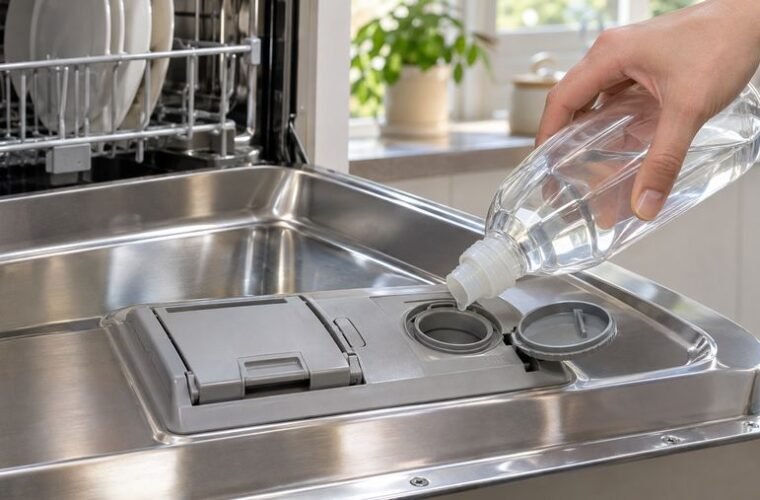
After the parts are clean, a cleaner cycle handles what you can’t reach. Whirlpool says to use affresh or white vinegar for the interior. Its plastic-odor page gives the vinegar method: two cups in a glass measuring cup on the bottom rack, a full cycle with no detergent, and air dry instead of heated dry (Whirlpool, Plastic Tub Odor).
Bosch’s US page takes a different route. It recommends Bosch dishwasher cleaner a few times a year for greasy residue and Bosch descaler for limescale in hard water. For either one, you add one box to the bottom and run the hottest, longest cycle.
So should you run vinegar through your dishwasher? Yes, if your maker documents it, as Whirlpool does. If your manual only names a branded cleaner, as Bosch’s page does, use that one.
What about bleach? Neither of those pages lists bleach as a cleaning step. I’d stay with the cleaner your manual names, and I’d never put two cleaners in the same cycle.
To keep the smell from returning:
- Clean the filter at least monthly, per Whirlpool.
- Scrape plates, but you don’t need to rinse them spotless.
- If dishes will sit a while, use a rinse-only or rinse-and-hold cycle. Whirlpool lists unwashed dishes left for long periods as an odor cause.
- Crack the door after the cycle so the tub can dry.
Stop and call a pro if the sewer smell returns right after a full clean, water stays in the tub after every cycle, or you smell burning with nothing obvious melted. Those problems sit in the drain, the plumbing or the heater, and another cleaning cycle won’t touch them.
A smell that comes back within days of a clean tub is telling you the tub was never the problem. Look at the sink next.