Dishwasher soap dispenser not opening? Check what’s in front of it before you blame the part. Most of the time the door is blocked, gummed up or never latched. GE’s own help page on a detergent cup not opening puts dish loading first, then old detergent, then pods that bind the cover.
So check the cheap things before you order a dispenser. You can do most of them in a few minutes. Go in this order:
- Something in the lower rack is blocking the door.
- Old, damp or caked detergent is gluing the door shut.
- A pod or tablet is binding the cover.
- The cup wasn’t latched right, or the cycle didn’t start clean.
- The dispenser’s latch, spring or actuator has failed.
Dishwasher soap dispenser not opening? Look at the lower rack first
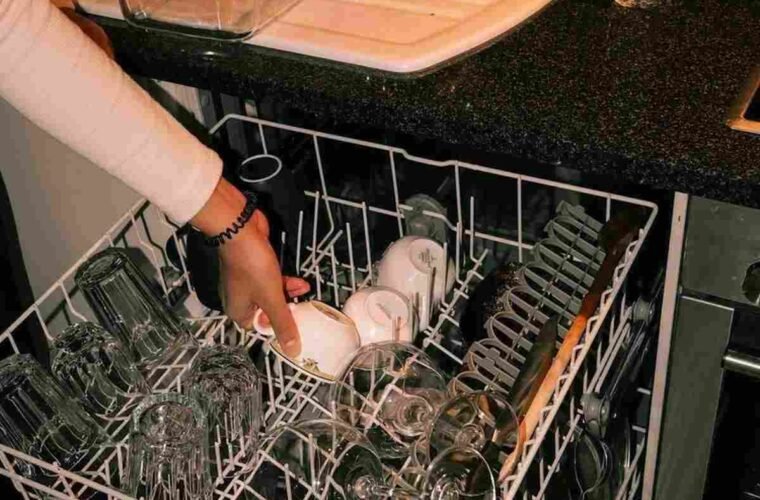
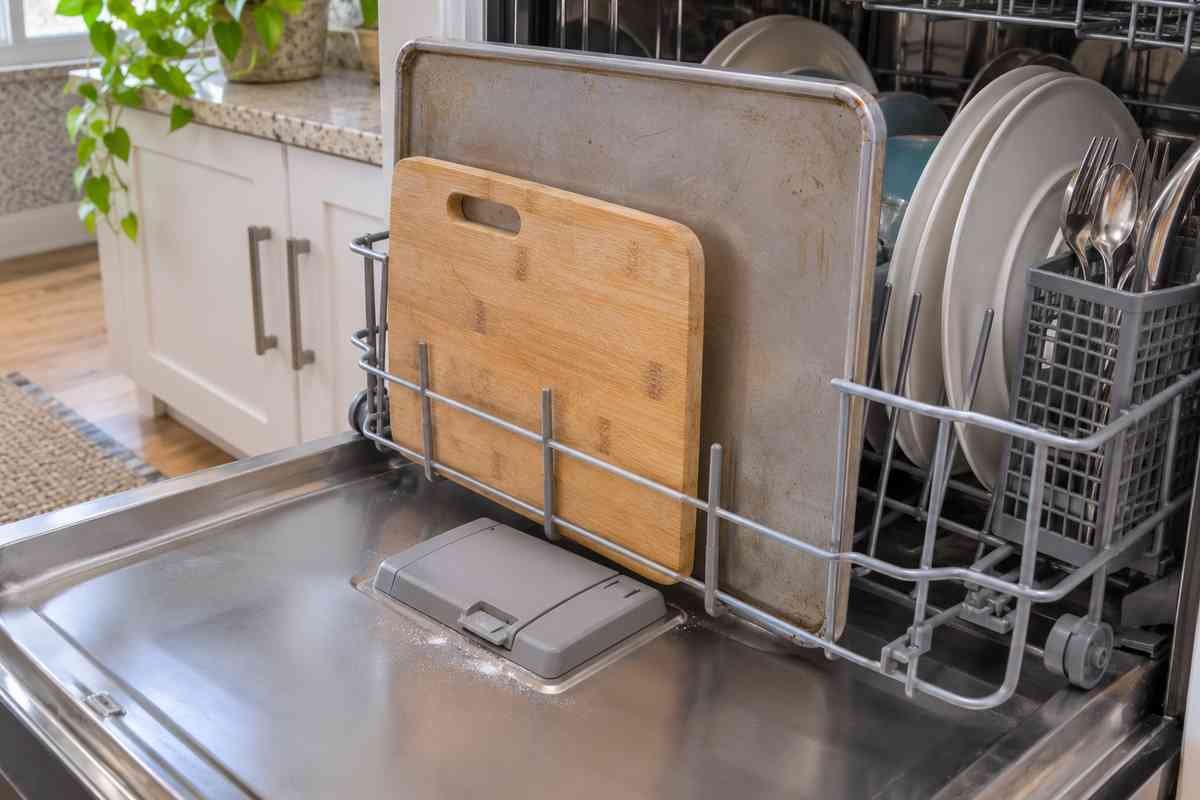
Most dispenser doors swing open into the tub. If you’ve loaded a pan, a cutting board or a tall platter in front of the cup, the door can’t move. Your detergent stays sealed in.
Whirlpool’s detergent door guidance asks the same first question. Are dishes, utensils or the racks themselves blocking the dispenser? It also says the water action has to reach the cup.
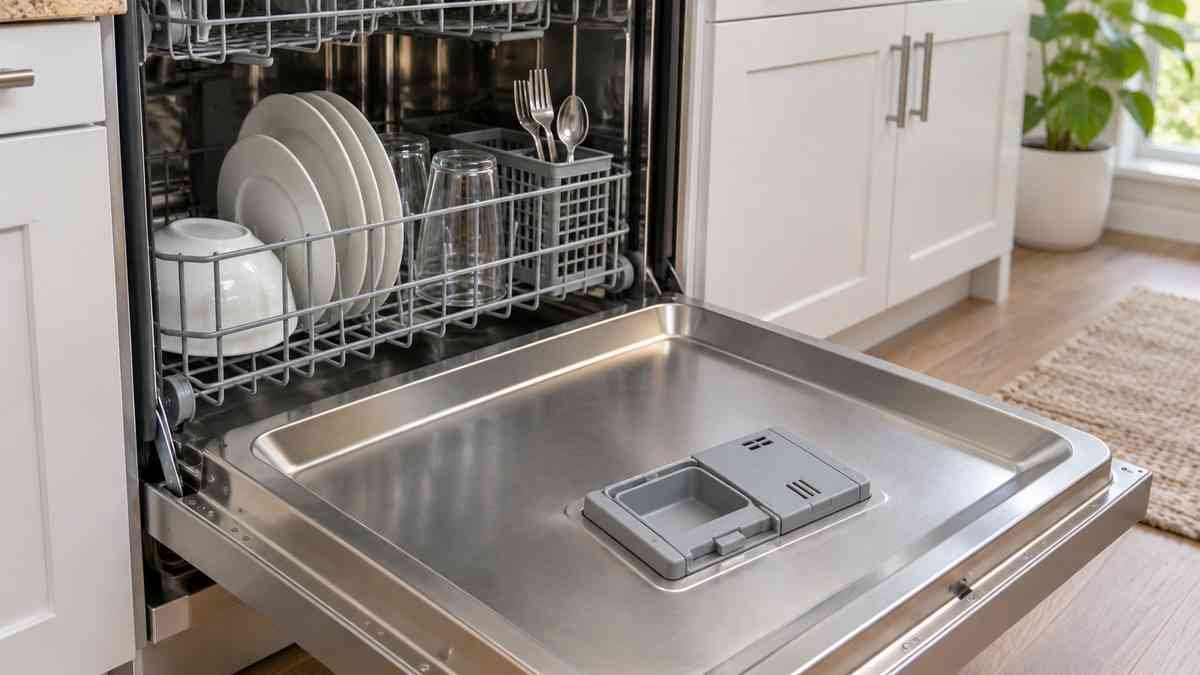
That second point matters. GE explains that a flip-open cup normally opens up against the upper rack, to about 45 degrees. The lower spray arm then shoots water into the open cup and washes the soap out.
So the door can open and you can still find the detergent sitting there. A tall item can block the spray, too.
“I have had this happen when something being washed is blocking the detergent door.”
– r/Appliances, April 2026 (23 upvotes)
Another reply in that thread gives the easiest test there is. Run the machine with no dishes and see if the door opens.
If it opens on an empty run, the part works and you’ve got a loading problem. Here’s what to move:
- Baking sheets and cutting boards standing up near the front of the lower rack.
- Pot and pan handles sticking up toward the door.
- Tall glasses or bottles in the lower rack, right in line with the cup.
- Wooden spoons or utensils lying across the front. Whirlpool names these as door blockers.
Put flat, tall items toward the back or the far side. Then close the door and look at the cup. You should see a clear path in front of it.
Check the detergent and the cup itself
An empty run that still leaves the door shut points at the cup. Open the door and look before you reach for tools.
Old or damp detergent
Whirlpool says older detergent exposed to air clumps, dissolves poorly and can make the dispenser door stick to the detergent itself. GE adds that powder should be fresh and loose, not lumpy.
Store your detergent in a tightly closed container, somewhere cool and dry. Whirlpool also says to add it just before you start a cycle, not hours ahead.
Moisture in the cup works the same way. One commenter on r/appliancerepair put it simply: “Make sure the dispenser is dry before you put the pod in.” Wipe the cup dry with a towel before you load the pod.
Pods and tablets that bind the cover
GE says tablets and pods must not bind the cover. They need to sit lined up in the cup’s opening. A pod that’s jammed in sideways can press against the door from inside, so the latch can’t release.
If you see a pod squashed flat or bulging, try the next one lying flat. Use automatic dishwasher detergent only. Whirlpool is clear on that.
Residue in the latch
Old detergent builds up around the latch and hinge. GE says you should wipe it out. Whirlpool adds that food and debris can also leave a door stuck, and says to clean the dishwasher about every 30 days.
Wipe the cup, the inside of the door and the latch with a damp cloth. Open and close the door by hand a few times. You want it to snap shut and pop open without dragging.
Residue in the cup often shows up as residue on your dishes, too. Our guide to a dishwasher leaving residue on dishes covers that side. A clogged filter can starve the spray arm, so it’s worth checking how to clean the dishwasher filter while you have the door open.
Make sure the cup latched and the cycle started clean
This step is easy to overlook. GE says the dishwasher must be off before you add detergent, or the cup won’t latch. If you fill the cup mid-cycle or right after a cancel, the door may never lock in place.
Your cover closes one of three ways. GE describes each type:
- Round cover with a handle: turn it clockwise to close. Turning it counterclockwise releases it.
- Square flip-up cover: press it down to close. Pressing the front lever releases it.
- Sliding cover: it moves with a lever on the side.
Make sure no detergent or food is caught in the latch as it closes. Then reset the control so the next cycle starts from the beginning.
On an electronic GE model, press Start/Reset twice, and GE says the unit then runs for about 90 seconds to pump out any water left from the last cycle. On a mechanical model, turn the timer a full turn to OFF. GE notes the timer itself can be out of position or locked up on those machines.
Whirlpool doesn’t use a reset button. Our steps for how to reset a Whirlpool dishwasher walk through the power cycle instead.
Does the cup fail to latch at all? Then the closing side is the problem, not the opening. A dishwasher door that doesn’t seal can cause its own trouble, which our page on a dishwasher door that won’t latch closed covers.
When the dispenser part has failed
If the door stays shut on an empty run, the cup is clean and dry, and it latched correctly, the part is next. Most of my service calls were Whirlpool, Maytag and KitchenAid machines, and I always pull the tech sheet before touching a dispenser. It shows you how your model opens the door.
Repair Clinic’s dispenser guide lists the parts that do the work. Different models use a solenoid, a wax motor or a bi-metal actuator to release the latch. A spring then helps push the door open.
Look for the plain mechanical failures first:
- A broken or missing door spring.
- A cracked lever, door pin or cover slide.
- A latch that’s jammed or worn round.
The electrical parts need a meter, and Repair Clinic says you can test the solenoid or the bi-metal actuator for continuity with a multimeter. Unplug the dishwasher or switch off its breaker and shut off the water before you open the inner door panel.
If you find a failed part, plan on the whole dispenser. Repair Clinic says solenoids usually aren’t sold separately. Whirlpool says a replacement kit is available, with the part number based on your model number.
GE gives one more clue. If you press Start/Reset and the control doesn’t blink or beep, and the cup still won’t work, the trip mechanism likely has a mechanical problem. GE calls that a service call.
Before you buy parts for an older machine, check whether your model has an open recall. Our appliance recall lookup searches CPSC recalls by brand. For other faults, the dishwasher troubleshooting guide works through the whole machine.
Soap dispenser questions
Why isn’t my dishwasher releasing the tablet?
Usually a dish is blocking the door, the tablet is binding the cover, or the cup is damp. You can sort it out with an empty cycle first. If the door opens with no dishes, change how you load the lower rack. If it doesn’t, clean and dry the cup and try a tablet lying flat.
Can I just toss the pod into the tub?
Whirlpool says to always put pre-measured detergents in the main compartment and close the lid. It also explains that detergent outside the cup goes into the wash as soon as the cycle starts. The cup is timed to release during the main wash. A loose pod is a stopgap, not a fix, so get the dispenser working again.