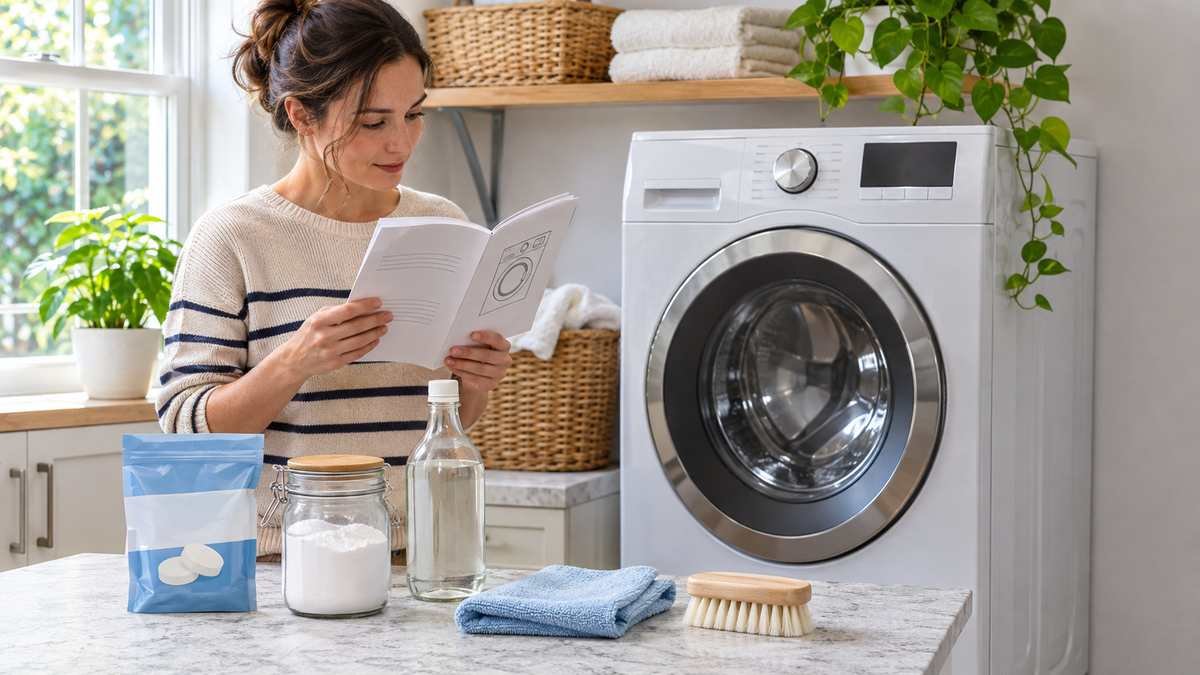
If you’re looking up how to clean washing machine with vinegar and baking soda, here’s the short version. Don’t pour vinegar into the drum. Whirlpool warns that its acidity can weaken the rubber seals and hoses over time, and Maytag calls baking soda safe “unlike vinegar.”
Use your washer’s own clean cycle with a washer cleaner tablet, or bleach if your manual allows it. Baking soda is fine in most washers, Maytag says.
Save the vinegar for the dispenser drawer and the outside of the machine. And don’t mix the two. They react with each other, and what’s left doesn’t clean much.
Most of my service calls were Whirlpool, Maytag and KitchenAid machines, so I follow Whirlpool’s guidance here. Below is what each cleaner does, where it belongs, and the steps for front-load and top-load washers.
Should you mix vinegar and baking soda in a washer?
No. Mixed together, vinegar and baking soda cancel each other out. You get water, sodium acetate and carbon dioxide, which is the fizz. That’s how Nathan Kilah, a chemistry lecturer at the University of Tasmania, explains it in a piece for The Conversation.
He calls the fizzing a visual placebo.
In most cases, he writes, you’ll want to use vinegar or baking soda on its own, depending on what you’re cleaning. The bubbles look like they’re working. They aren’t doing anything either cleaner couldn’t do better alone.
A reply on r/laundry put the same point more bluntly, when someone asked about adding both to a wash:
“Together they will cancel each other out and make lots of co2 bubbles in the process.” u/Objective-Apple7805 on Reddit
So if you use both, use them in different places or on different days. Never pour them in together and expect a deeper clean.
How to clean washing machine with vinegar and baking soda the safe way
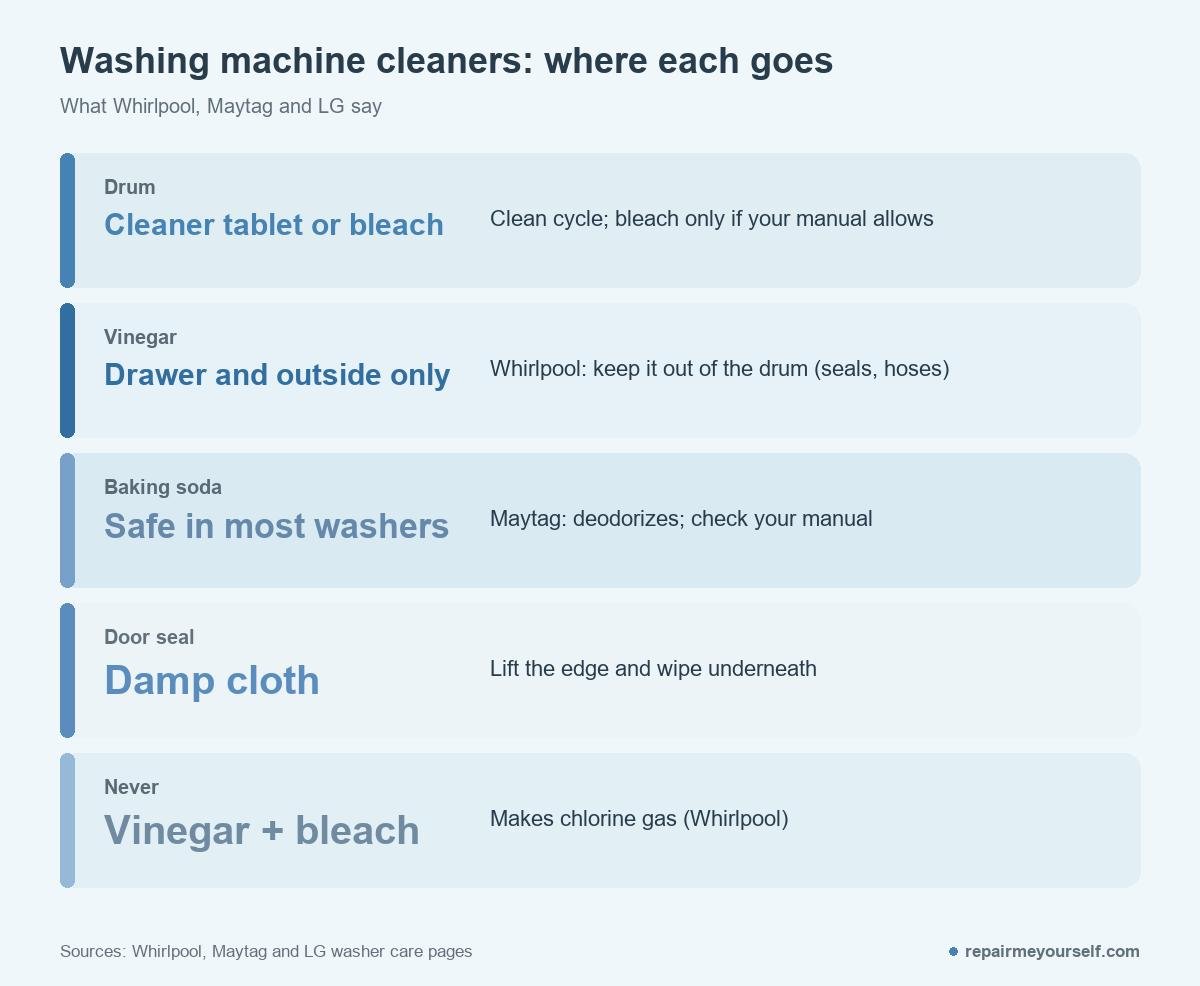
The safe way is to keep vinegar for the dispenser drawer and the outside, use baking soda on its own, and let the washer’s clean cycle handle the drum. The washer makers spell that out.
They don’t agree completely, but none of them names vinegar as the best drum cleaner. Here’s where each one stands:
- Whirlpool: keep vinegar out of the drum. Its vinegar guide says the acidity can cause damage over time, especially to rubber seals and hoses, and could lead to costly repairs.
- Maytag: baking soda is safe in most washers, “unlike vinegar.” Maytag’s own steps use a cleaner tablet or liquid chlorine bleach instead.
- LG: its washer odor page lists bleach, vinegar or a commercial cleaner for Tub Clean. It adds that bleach or a commercial cleaner are the recommended ones, and work in most cases.
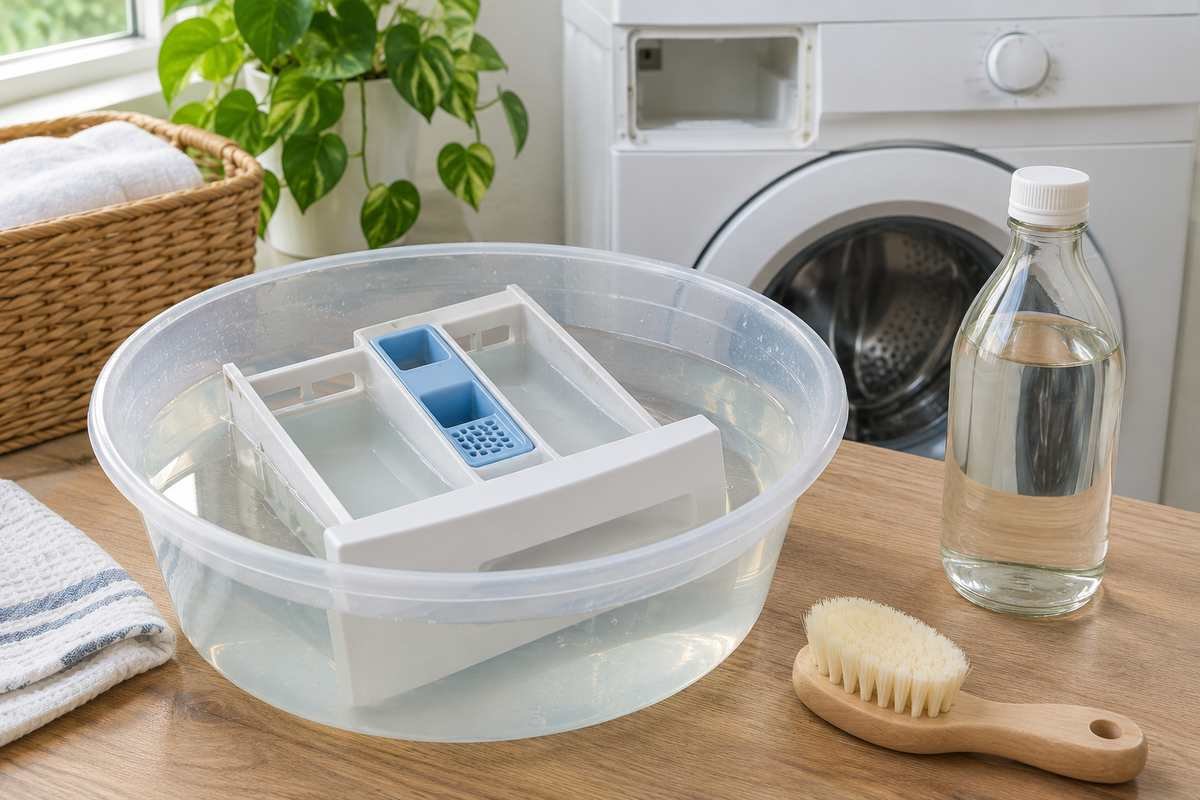
Whirlpool still finds two jobs you can give vinegar. You can soak removable dispenser drawers in equal parts white vinegar and water. You can also wipe the outside of the washer with a cloth dampened in a vinegar-water mix, then dry it with a soft cloth.
One rule matters more than any of that. Never mix vinegar, or any acid, with bleach. Whirlpool warns that the combination makes chlorine gas, which can be toxic.
If you’ve just run vinegar through the machine and want to switch to bleach, rinse it out first. A reply on r/CleaningTips gave careful advice:
“Don’t add vinegar or any acid in the same cycle, ventilate the room, and use the washer-clean cycle or the bleach amount on the machine/bleach label.” u/l0rAxC on Reddit
How to clean a front-load washer, step by step
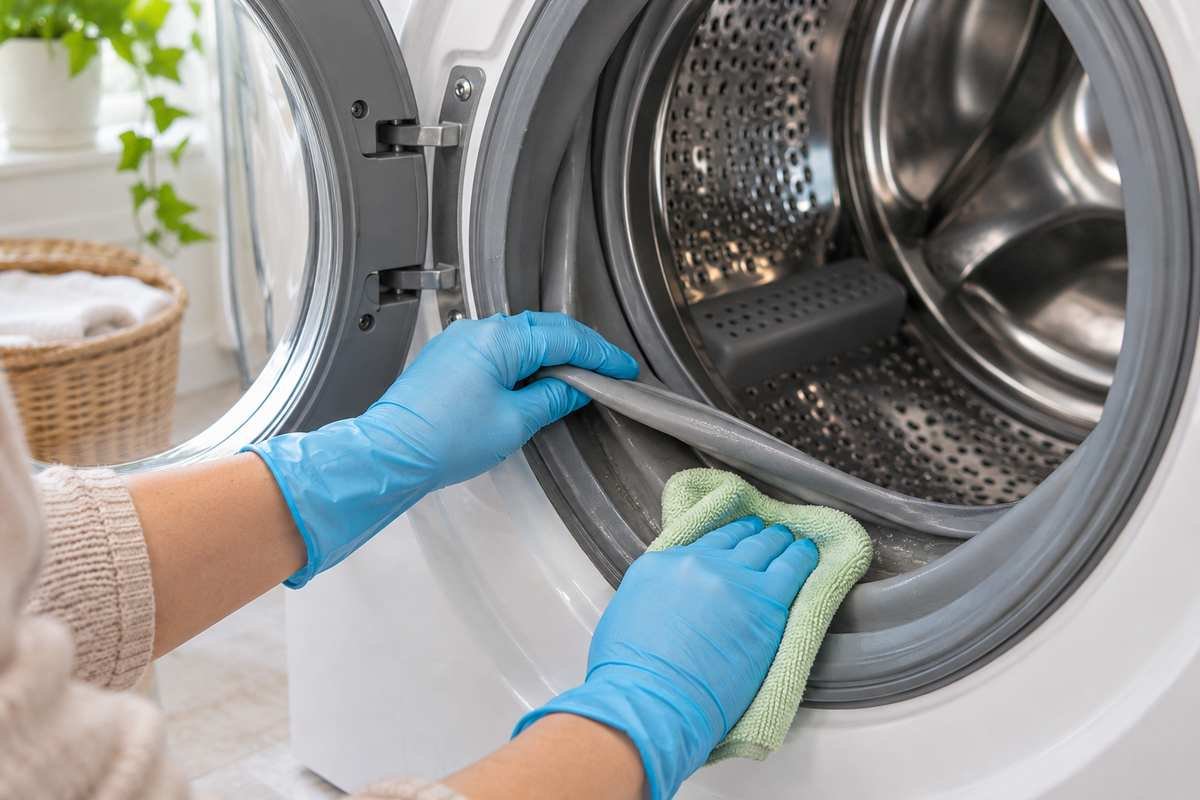
On a front-load washer, run the clean cycle with a cleaner tablet, then work on the rubber door seal and the dispenser by hand. Maytag’s steps have you lift the seal’s edge and wipe underneath, so it gets its own step.
- Run the clean cycle. Empty the drum and put a washer cleaner tablet in the bottom of the tub. Then close the door and pick your washer’s cleaning cycle. If you don’t have tablets, Maytag says you may be able to use liquid chlorine bleach. Check your manual first, though, because bleach shouldn’t be used in certain front-load models.
- Wipe the door seal. Wipe the outside of the rubber seal with a damp cloth. Then lift the edge and wipe the surfaces underneath too.
- Clean the dispenser. Pull the drawer out until you feel resistance. Some come all the way out, some don’t, and Maytag notes they generally aren’t dishwasher safe. If yours does, soak it in the half-vinegar, half-water mix and scrub it with a soft brush. Rinse it, dry it and slide it back in.
- Clean the drain pump filter. Whirlpool suggests cleaning it now and then on a front-loader that gives you access to it. Your manual shows where it is. Expect some water when you open it, so put a towel down first.
- Wipe the outside with a soft damp cloth, and use only mild cleaners on the finish.
- Leave the door open so the drum and seal can dry.
If the seal has black spots that won’t wipe off, that’s mildew. Our guide to a washing machine leaving black marks on clothes covers that side of it.
How to clean a top-load washer
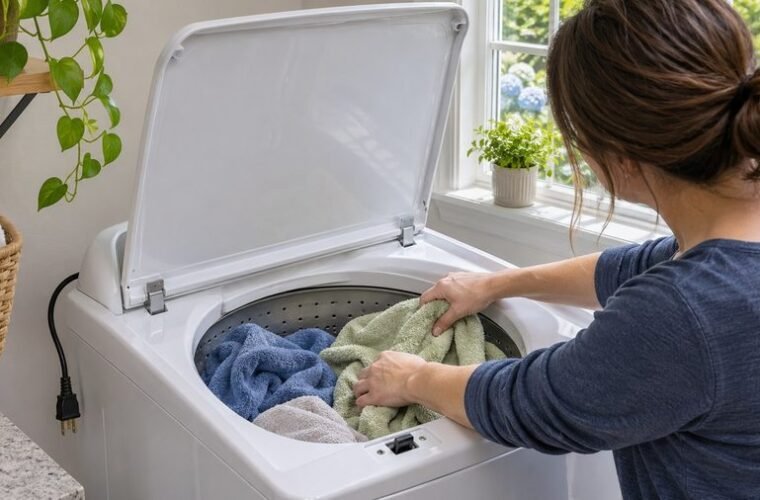
A top-load washer gets the same clean cycle, plus a rinse to clear the cleaner and a look at the agitator. Here are the steps from Maytag’s and Whirlpool’s guides:
- Run the clean cycle with a cleaner tablet in the empty tub, or bleach if your manual allows it.
- Run a rinse and spin when it ends. Maytag says this clears away any leftover cleanser on a top-loader.
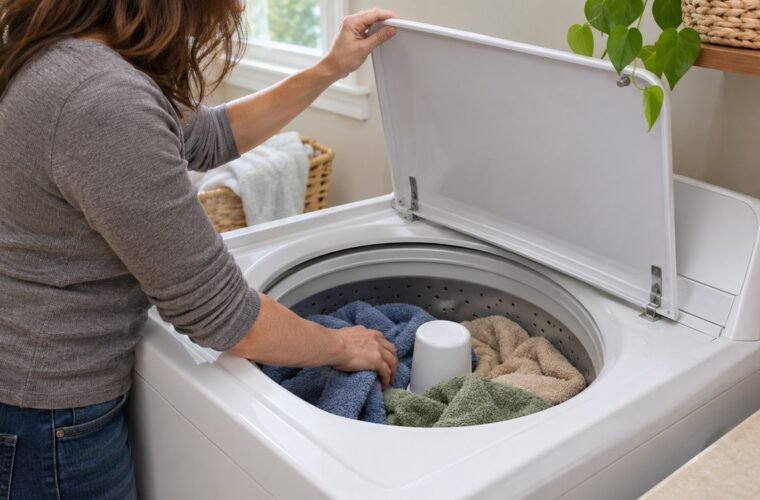
- Clean the agitator if yours has one. Some have a removable cap so you can clean inside with a cloth or brush. Whirlpool says not to force the cap if you feel resistance, so check your model’s manual.
- Check the lint filter. Depending on the model, Whirlpool says it may be in the agitator or near the top of the wash tub.
- Wipe the inside of the lid and the top of the tub with a damp cloth.
- Leave the lid open to let the tub dry.
Not sure which kind of machine you’re buying next? Our front-load vs top-load washer comparison covers how much upkeep each one needs.
Where baking soda does help
Baking soda is the gentler of the two, and it’s the one the washer makers don’t warn against. Maytag says it’s safe in most washing machines. It can deodorize both the machine and your clothes.
Maytag still adds one condition: check your owner’s manual first. Use baking soda on its own, not in the same load as vinegar, and follow the amount on the box.
Don’t expect it to replace a proper clean cycle, though, if you’ve got a real smell. When a washer smells musty, LG and Maytag both point you to a cleaner tablet or bleach, not to a home remedy.
If the smell keeps coming back
A smell that comes back after one clean usually needs repeated cleaning and less detergent. LG’s fix for a smelly washer is to run 3 Tub Clean cycles back to back with a commercial washer cleaner. After that, it says to run Tub Clean at least once a week until the odor is gone.
Then cut back on detergent. LG suggests 2 tablespoons, or 1 if it’s concentrated, and warns that using more can cause buildup and more odor later.
The makers also share a few habits you can keep so the smell doesn’t come back:
- Leave the door or lid open after each wash so the inside dries.
- Take clean laundry out promptly when the cycle ends.
- Wash with warm or hot water once in a while. Maytag says it helps slow soil and detergent buildup.
- Wipe the door seal periodically.
If the mildew is too far gone for a tub cleaner, LG says to call a local appliance repair shop. LG’s own techs don’t do that work.
If the smell comes with water on the floor, check our guide to a washing machine leaking from the bottom as well.
Cleaning a washing machine: questions
How often should you clean a washing machine?
Maytag says about once every 30 washes. LG adds that if a musty smell has already set in, you should run Tub Clean weekly until it’s gone.
Can vinegar damage a washing machine?
Whirlpool says it can. Its guide warns that vinegar’s acidity can weaken rubber seals and hoses over time, and that putting it in the drum can lead to costly repairs. Using it on the dispenser drawers and the outside of the machine is fine.
Can you use vinegar and bleach together?
No, never. Whirlpool warns that mixing vinegar or any acid with bleach creates chlorine gas, which can be toxic. If you’ve used one, rinse the machine before using the other.