
Most homeowners assume that “frozen equals frozen,” but the reality is far more nuanced. A freezer operating at 10°F might feel cold to the touch, yet it’s allowing slow bacterial activity and accelerating freezer burn. The difference between 0°F and 10°F could mean the distinction between food that lasts twelve months and food that degrades within weeks.
Your freezer should be set at 0°F (-18°C) according to the United States Department of Agriculture (USDA) Food Safety and Inspection Service. This isn’t just a suggestion; it’s the precise temperature at which bacterial growth stops completely, food quality remains stable, and your frozen items stay safe for months.
The stakes are higher than you might think. Beyond food safety concerns, improper freezer temperatures cost American households an estimated $1,800 annually in wasted food, according to research from the Natural Resources Defense Council. Factor in the energy waste from incorrectly calibrated appliances, and the consequences of ignoring your freezer’s temperature become impossible to dismiss.
This comprehensive guide will walk you through everything you need to know about freezer temperatures, from the science behind the 0°F standard to practical troubleshooting when your freezer won’t cooperate.
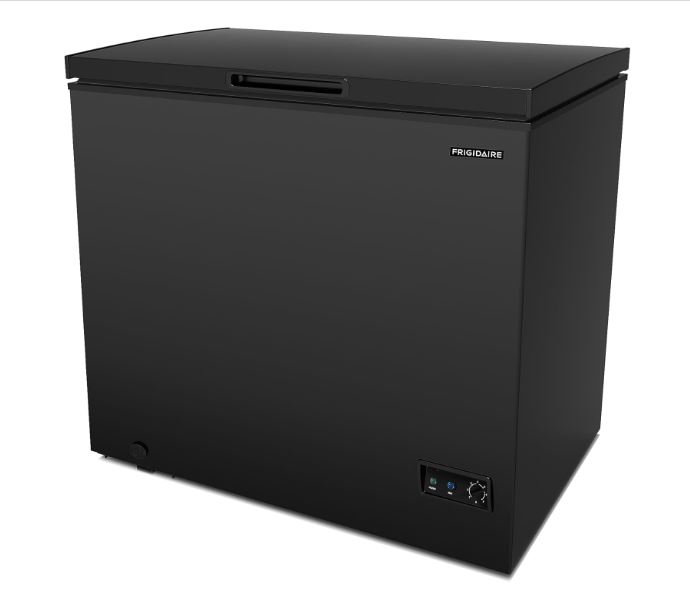
The Science-Backed Standard: Why 0°F Matters
Understanding the specific temperature requirement for freezers requires looking at both food safety regulations and the underlying science that informed these standards.
The USDA and FDA Recommendation
The 0°F (-18°C) standard isn’t arbitrary. After extensive research into microbial behavior, food chemistry, and long-term preservation, the USDA Food Safety and Inspection Service established this temperature in conjunction with the Food and Drug Administration. At exactly 0°F, three critical processes occur simultaneously:
Bacterial dormancy becomes absolute. While freezing doesn’t eliminate bacteria, it renders them completely inactive. Any temperature above 0°F allows minimal enzymatic activity that, over time, degrades food quality and potentially allows pathogen survival.
Ice crystal formation stabilizes. At 0°F, the water molecules in food form small, stable ice crystals. Warmer freezing temperatures create larger crystals that puncture cell walls, leading to mushiness when thawed and accelerating freezer burn.
Enzyme activity ceases. Natural enzymes in food continue breaking down nutrients and flavors even in frozen conditions, unless the temperature drops to 0°F or below, where this degradation halts.
Best Temperature for Freezer Comparison
Different freezing applications require different temperature targets based on storage duration and food type:
| Freezer Type | Recommended Temperature | Primary Use | Typical Storage Duration |
|---|---|---|---|
| Home freezer (standard) | 0°F (-18°C) | Long-term food storage | 6-12 months |
| Deep freezer | -10°F to 0°F (-23°C to -18°C) | Extended preservation | 12-24 months |
| Commercial blast freezer | -40°F (-40°C) | Rapid freezing | Processing only |
| Laboratory freezer | -80°F (-62°C) | Scientific samples | Indefinite |
For residential use, maintaining 0°F provides the optimal balance between food preservation, energy consumption, and equipment longevity.
Historical Context of the 0°F Standard
The 0°F recommendation emerged from 1940s research by Clarence Birdseye and subsequent USDA studies in the 1950s and 1960s. Researchers discovered that this temperature represented a threshold where food deterioration slowed to imperceptible levels over reasonable storage periods.
While commercial operations often use colder temperatures for specific applications, decades of data confirm that 0°F meets all safety and quality requirements for home food storage.
How Different Temperatures Impact Your Frozen Food
The temperature inside your freezer determines far more than just whether items stay solid. Each degree variation creates cascading effects on food safety, texture, nutritional value, and shelf life.
Temperature Range Performance Comparison
Here’s what actually happens to your frozen food at various temperature settings:
| Temperature Range | Bacterial Activity | Food Quality Retention | Freezer Burn Risk | Safe Storage Duration | Energy Efficiency |
|---|---|---|---|---|---|
| 20°F to 32°F (-7°C to 0°C) | Active to slow | Very poor | Develops in days | Unsafe; do not use | N/A |
| 10°F to 20°F (-12°C to -7°C) | Very slow | Poor | Develops in 2-4 weeks | 1-2 months maximum | Poor |
| 5°F to 10°F (-15°C to -12°C) | Nearly stopped | Fair | Develops in 2-3 months | 3-4 months | Fair |
| 0°F to 5°F (-18°C to -15°C) | Stopped | Good to excellent | Minimal with proper packaging | 8-12 months | Good |
| -10°F to 0°F (-23°C to -18°C) | Stopped | Excellent | Very minimal | 12-18 months | Acceptable |
| Below -10°F (below -23°C) | Stopped | Excellent | Negligible | 18+ months | Poor (unnecessary) |
Real-World Implications by Temperature
At 15°F (-9°C): Your freezer feels cold, ice cream is frozen solid, and nothing seems wrong. However, moisture gradually migrates from food surfaces, creating ice crystals and dehydration. Ground beef stored for three months develops gray-brown oxidation. Bread becomes stale despite being frozen. Vegetables lose their crisp texture even before thawing.
At 10°F (-12°C): Ice cream develops that grainy, crystalline texture within weeks. Frozen berries stick together in solid clumps. Meat begins showing signs of freezer burn after just one month. The temperature is cold enough to prevent obvious spoilage but warm enough to allow quality degradation.
At 5°F (-15°C): Getting closer to optimal, but still problematic for long-term storage. Most foods remain safe for 4-6 months, but you’ll notice flavor deterioration before any safety issues arise. This is where many older freezers or those with faulty thermostats operate.
At 0°F (-18°C): The sweet spot. Properly packaged food maintains quality for the full recommended storage duration. Ice cream stays creamy. Meats retain their color and moisture. Vegetables preserve their nutrients and texture.
Below 0°F (below -18°C): Slightly better preservation, but the energy cost outweighs minimal benefits for home use. Commercial operations use these temperatures for rapid freezing or ultra-long storage, but residential freezers running this cold waste electricity without meaningful improvement in food safety.
Category-Specific Freezer Temperature Effects
Different food types respond distinctly to temperature variations, making proper freezer settings particularly important depending on what you’re storing.
Meat, Poultry, and Seafood
These protein-rich foods are especially vulnerable to temperature fluctuations. At proper 0°F storage:
- Beef and pork: Maintain color and moisture for 6-12 months when vacuum-sealed
- Ground meats: Hold quality for 3-4 months due to increased surface area
- Poultry: Preserve texture and prevent oxidation for 9-12 months
- Fish and shellfish: Stay fresh for 3-6 months, depending on fat content
Above 5°F, oxidation accelerates dramatically. Red meat develops that characteristic gray-brown surface discoloration within 4-6 weeks. Fish oils become rancid, creating off-flavors. Poultry skin dries out and becomes papery.
Prepared Foods and Leftovers
Cooked dishes face unique challenges in freezer storage:
- Casseroles and baked dishes: Maintain structure at 0°F; separate and become watery above 5°F
- Soups and stews: Fat separation occurs more rapidly at warmer temperatures
- Sauces: Emulsions break down when stored above 3°F
- Baked goods: Proper temperature prevents staling (which continues even when frozen if temperature is too warm)
Ice Cream: Your Freezer’s Litmus Test
Professional appliance technicians often recommend the “ice cream test” for freezer temperature assessment. Ice cream should be firm but scoopable straight from the freezer at 0°F. If it’s:
- Rock solid: Your freezer is likely below -5°F (colder than necessary)
- Perfectly firm but scoopable: Right around 0°F (ideal)
- Noticeably soft: Above 5°F (too warm)
- Easily scooped or partially melted: Above 10°F (immediate adjustment needed)
This simple test provides instant feedback without any equipment.
Fruits and Vegetables
Produce requires 0°F to maintain cellular integrity:
- Blanched vegetables: Enzyme activity completely stops at 0°F; continues slowly above 3°F, causing color and flavor changes
- Berries: Cell walls remain intact at proper temperature; rupture and release juice when stored too warm
- Vitamin retention: Studies show vitamin C degradation occurs 3-5 times faster at 10°F compared to 0°F
Professional Temperature Testing Methods
Your freezer’s built-in temperature display might show 0°F while the actual interior temperature tells a different story. Understanding how to accurately measure freezer temperature is essential for food safety.
Why Built-In Displays Mislead
Most freezer temperature displays have significant limitations:
- They measure the set point, not the actual achieved temperature
- Sensors typically monitor only one location (often near the cooling element)
- Power-saver modes may disable accurate monitoring
- Calibration drifts over time, especially in units older than 5 years
- They don’t account for temperature fluctuations during defrost cycles
After examining dozens of freezers with independent thermometers, I’ve found that built-in displays can be off by 5-10 degrees, a critical difference for food safety.
The Correct Testing Procedure
Accurate freezer temperature measurement requires the right equipment and methodology:
Equipment needed:
- Freezer thermometer rated for -20°F to 80°F range
- Glass of water (for alternative testing method)
- Notebook for recording measurements over 24 hours
Step-by-step testing process:
- Purchase a quality freezer thermometer (View on Amazon). Look for models specifically designed for freezer use (not combination fridge/freezer types). Digital thermometers with external displays allow checking temperature without opening the door.
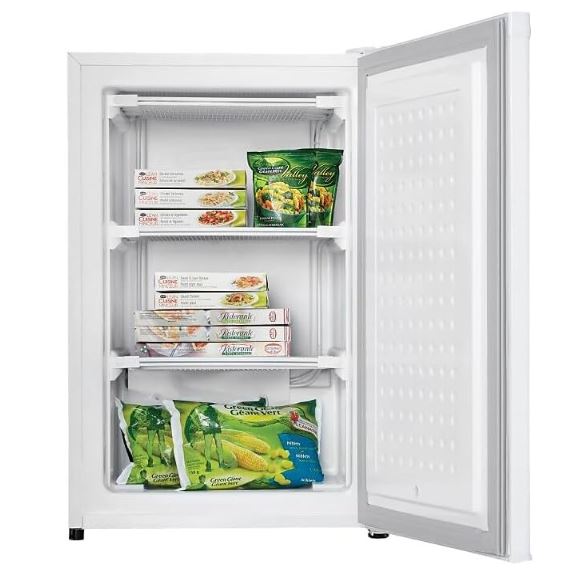
- Identify cold and warm zones. Every freezer has temperature variations. Upright freezers are coldest at the bottom (cold air sinks), warmest at the top and door. Chest freezers are coldest at the bottom, relatively uniform throughout the middle, warmest at the lid seal. Freezer compartments are coldest at the back wall, warmest at the door and near the fridge section.
- Place thermometer in the center zone. For upright freezers, position it on the middle shelf, centered front-to-back. For chest freezers, suspend it midway between bottom and top, avoiding contact with walls.
- Wait 24 hours before reading. Freezers cycle on and off. A single reading might catch a defrost cycle or recent door opening. The 24-hour average provides accuracy.
- Check multiple locations. After determining your center temperature, test corners, door shelves, and the bottom. Differences exceeding 5°F indicate airflow problems.
- Record the temperature at different times. Check morning, afternoon, and evening to identify patterns related to kitchen activity or ambient temperature changes.
The Water Glass Alternative Method
If you don’t have a freezer thermometer immediately available:
- Fill a small glass 2/3 full with water and place it in the freezer center
- Wait 24 hours for complete freezing
- Check the result. A solid ice block means temperature is 0°F or below (good). A slushy or soft center indicates temperature is above 5°F (too warm). Not fully frozen means temperature is above 15°F (critical problem).
This method won’t give you precise numbers but confirms whether your freezer is in the safe zone.
Standalone vs. Combination Unit Differences
Freezer type significantly impacts temperature consistency:
Standalone freezers (chest or upright) feature:
- Dedicated compressor optimized for 0°F
- Better insulation
- Less frequent door openings
- More stable temperature control
- Typically maintain ±2°F variation
Refrigerator-freezer combinations include:
- Single compressor serving both compartments
- Temperature balancing between fridge and freezer
- More frequent door openings (especially top freezers)
- Defrost cycles affect both sections
- Often show ±5°F variation
Combination units require more frequent monitoring and may struggle to maintain exactly 0°F during heavy use.
Read Also: How Long Can Food Stay in the Fridge Without Power?
Troubleshooting Common Freezer Temperature Problems
Even well-maintained freezers encounter temperature control issues. Recognizing problems early and understanding solutions can save hundreds of dollars in lost food and repair costs.
Problem 1: Freezer Won’t Reach 0°F
When your freezer struggles to achieve proper temperature, several culprits might be responsible, listed here by likelihood:
Dirty condenser coils (60% of cases): Dust accumulation prevents heat dissipation, forcing the compressor to work harder while achieving less cooling.
Solution: Unplug the freezer, locate coils (usually on the back or beneath the unit), and vacuum thoroughly using a brush attachment. Repeat every 6 months.
Faulty door seal (25% of cases): Damaged or dirty gaskets allow warm air infiltration. Test by closing the door on a dollar bill; if you can pull it out without resistance, the seal is compromised.
Solution: Clean gaskets with warm soapy water and check for cracks. Replace if damaged (usually $50-100 for parts).
Overloading (10% of cases): Blocking air vents prevents cold air circulation.
Solution: Ensure vents are clear and items aren’t packed so tightly that air can’t flow. Maintain at least 75% full but not over-packed.
Thermostat malfunction (3% of cases): The temperature control mechanism fails to signal the compressor properly.
Solution: Try adjusting the thermostat to a colder setting. If no change occurs within 24 hours, professional replacement is needed.
Refrigerant leak (2% of cases): Loss of refrigerant prevents adequate cooling. Signs include hissing sounds, compressor running constantly, or frost buildup in unusual patterns.
Solution: Professional repair only ($300-600).
Normal frost-free cycle: If your freezer periodically seems too warm, it might be in its automatic defrost cycle. These cycles typically last 20-30 minutes every 8-12 hours. This is normal and shouldn’t raise internal temperature above 10°F.
Problem 2: Wild Temperature Fluctuations
Consistent temperature is as important as the correct average temperature. If readings swing from -5°F to 15°F:
Primary cause: door seal integrity. Even minor seal damage creates cycles of cold loss and aggressive cooling. Check the entire seal perimeter, paying special attention to corners and high-wear areas.
Defrost cycle extremes also contribute. Some older frost-free models show dramatic temperature swings during defrost. If fluctuations coincide with 8-12 hour intervals, this is normal for the model but indicates it’s time to upgrade to a more stable unit.
Airflow obstruction forces the compressor to cycle more frequently and aggressively. Reorganize contents to ensure air circulation pathways remain clear.
Ambient temperature extremes create challenges. Freezers in unheated garages or hot utility rooms struggle to maintain stable temperatures. If ambient temperature exceeds 110°F or drops below 32°F, consider relocating the unit or adding climate control to the space.
Problem 3: Freezer Running Too Cold (Below -10°F)
Excessive cold wastes energy without providing food safety benefits. It could be a result of:
Thermostat set too low: Simply adjust the temperature control to a warmer setting. Make small changes (1-2 degrees at a time) and wait 24 hours between adjustments.
Stuck thermostat: If adjusting the control produces no temperature change, the thermostat may be mechanically stuck in the “coldest” position. This requires professional replacement.
Defrost timer malfunction: A defrost timer stuck in cooling mode runs the compressor continuously, driving temperatures down. Signs include constant compressor operation and excessive energy consumption. Professional diagnosis required.
Problem 4: Excessive Frost and Ice Accumulation
While some frost is normal in manual-defrost freezers, excessive buildup indicates problems:
High humidity exposure: Each door opening introduces moisture, which freezes on cold surfaces. Solution: Minimize door opening duration, ensure door closes completely, and avoid storing warm items.
Door seal failure: Gaps allow humid air infiltration. Even small gaps cause disproportionate frost buildup. Solution: Repair or replace door gaskets.
Drain tube blockage (frost-free models): The defrost drain can become clogged with ice or debris, causing water to freeze inside the compartment. Solution: Locate drain (usually at the back bottom), pour warm water through to clear blockage, or use a turkey baster to flush the line.
Temperature setting too cold: Paradoxically, extremely cold settings (below -10°F) can increase frost formation because defrost cycles become less effective. Solution: Adjust to 0°F.
Problem 5: Post-Power Outage Recovery
Power interruptions create unique food safety challenges. Here’s how to assess and respond:
Temperature recovery timeline:
- Empty freezer: 4-6 hours to return to 0°F after power restoration
- Half-full freezer: 6-8 hours
- Full freezer: 8-12 hours
Food safety decision matrix:
| Food Type | Still Contains Ice Crystals | Fully Thawed, Cold (40°F or below) | Fully Thawed, Warm (above 40°F) |
|---|---|---|---|
| Meat, poultry, seafood | Safe to refreeze (quality loss) | Cook immediately or refreeze | Discard |
| Ice cream, frozen desserts | Safe to refreeze (texture loss) | Discard | Discard |
| Vegetables (blanched) | Safe to refreeze | Cook immediately or refreeze | Discard |
| Fruits | Safe to refreeze | Safe to refreeze (use soon) | Discard if above 40°F for 2+ hours |
| Bread, baked goods | Safe to refreeze | Safe to refreeze | Safe to refreeze |
Prevention strategies:
- Keep freezer 75% full (add frozen water jugs if needed)
- Avoid opening door during outages (full freezer stays cold 48 hours if unopened)
- Consider backup power for extended outages in critical situations
- Dry ice provides emergency cooling (25 pounds keeps 10 cubic feet cold for 3-4 days)
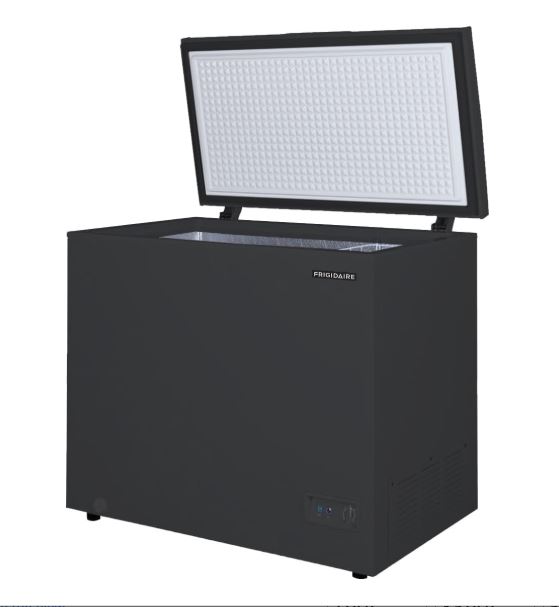
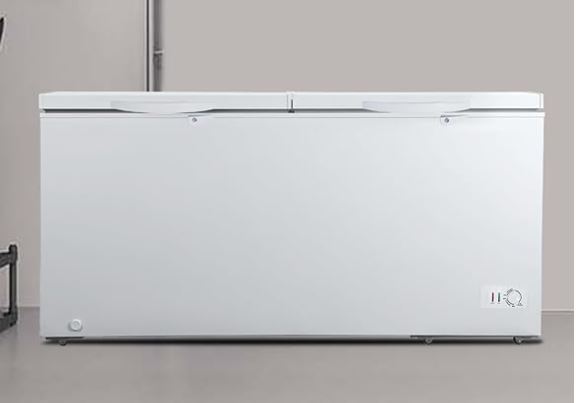
Chest Freezer vs. Upright Freezer Temperature Management
The design differences between chest and upright freezers create distinct temperature management considerations that affect both performance and food organization.
Design-Based Temperature Performance
The fundamental difference in how these freezers are constructed impacts their ability to maintain consistent temperatures.
Chest freezers maintain temperature more efficiently because cold air is denser than warm air. When you open a chest freezer lid, the cold air stays inside (it sinks and has nowhere to go). Opening an upright freezer door, conversely, allows cold air to spill out immediately, requiring the compressor to work harder to recover.
Temperature recovery comparison:
- Chest freezer after 30-second opening: Returns to 0°F in 3-5 minutes
- Upright freezer after 30-second opening: Returns to 0°F in 8-12 minutes
This difference becomes substantial in households that access the freezer frequently for meal preparation.
Energy efficiency follows temperature stability. Chest freezers typically consume 10-25% less electricity than comparably-sized upright models because they maintain more consistent temperatures with less compressor cycling.
Temperature uniformity patterns also differ:
Chest freezers feature coldest zones at the bottom and near the compressor, moderate zones in the middle layers, and warmest zones near the lid seal and top layer. Overall variation is typically 2-3°F from coldest to warmest.
Upright freezers have coldest zones at the back wall and bottom shelves, moderate zones on middle shelves away from the door, and warmest zones on door shelves and the top shelf. Overall variation is typically 5-7°F from coldest to warmest.
Read Also: Essential Home Appliance Diagnostic Tools Every Homeowner Needs
Recommended Adjustments by Freezer Type
For chest freezers:
- Set thermostat to exactly 0°F (the design naturally maintains this)
- No seasonal adjustments typically needed
- Focus on organization to minimize lid opening time
- Use baskets to create zones, keeping frequently accessed items on top
For upright freezers:
- Consider setting 1-2 degrees colder than 0°F to compensate for door openings
- In high-traffic households, -2°F may maintain better average temperature
- Rotate items from door shelves to interior after a few weeks
- Avoid storing critical long-term items in door compartments
Organization Strategies That Maintain Temperature
How you organize freezer contents directly impacts temperature stability:
Chest freezer organization:
- Create an inventory system (contents are harder to see)
- Use sliding baskets for frequently accessed items
- Place heavy, long-term items on the bottom
- Fill gaps with frozen water bottles to stabilize temperature
- The “layer cake” method: organize by access frequency, not food type
Upright freezer organization:
- Dedicate door shelves to items used within 1-2 months
- Place long-term storage on bottom shelves toward the back
- Keep middle shelves at 75% capacity for air circulation
- Use bins to minimize time spent searching with door open
- Label everything clearly for quick identification
The frozen water bottle stabilization technique works for both types: Fill gaps with 2-liter bottles of frozen water. These act as thermal mass, helping maintain temperature during power fluctuations and reducing compressor cycling. When you need the space, remove bottles; as you accumulate new frozen items, they’ll serve the same stabilizing function.
Balancing Energy Efficiency with Food Safety
The intersection of proper food preservation and responsible energy consumption requires understanding where to prioritize and where flexibility exists.
The Efficiency Sweet Spot Analysis
Operating your freezer at exactly 0°F isn’t just about food safety; it’s also the most energy-efficient safe temperature. Here’s why:
Energy consumption by temperature setting:
- At -10°F: Baseline energy use + 25-30% additional consumption
- At -5°F: Baseline + 12-15% additional
- At 0°F: Baseline (optimal efficiency for safety)
- At 5°F: Baseline – 8-10%, but compromised food safety
- At 10°F: Baseline – 15-18%, but significant safety concerns
For every degree below 0°F, you increase annual energy costs by approximately $8-12 for a standard 20 cubic foot freezer, without any food safety benefit.
Energy Star data on freezer operation:
According to Energy Star certification standards, freezers account for 5-7% of total household energy consumption in homes with standalone units. A freezer running at 0°F uses approximately 300-600 kWh annually, depending on size and efficiency rating.
Running that same freezer at -10°F increases consumption to 400-780 kWh, an increase of $12-22 annually at average electricity rates.
The calculation becomes more concerning with older, less efficient models. A 15-year-old freezer running 10 degrees colder than necessary could add $50-75 to annual electricity costs.
Best Practices for Maintaining 0°F Efficiently
Several strategies help you maintain the safe 0°F temperature while minimizing energy waste:
Maintain 75% capacity:
Surprisingly, a partially full freezer (around 75% capacity) operates more efficiently than either an empty or completely packed one. Empty spaces allow excessive air circulation and temperature fluctuation.
Overpacking blocks vents and prevents proper airflow. The 75% rule provides thermal mass while maintaining circulation.
If your freezer is less than half full, add frozen water bottles or bags of ice to improve efficiency.
Location matters significantly:
- Best: Conditioned basement (60-70°F ambient)
- Good: Climate-controlled garage or utility room
- Acceptable: Kitchen location (despite warmth, convenience reduces door opening time)
- Poor: Unconditioned garage in extreme climates
- Worst: Near heat sources (furnace, water heater, sunny windows)
For every 10°F increase in ambient temperature, freezer energy consumption increases 5-8%. A freezer in a 95°F garage uses substantially more energy than the same model in a 68°F basement.
Annual maintenance schedule that preserves efficiency:
- Every 3 months: Clean door gaskets and check seal integrity
- Every 6 months: Vacuum condenser coils (doubles efficiency if previously dirty)
- Annually: Defrost manual-defrost models completely (even 1/4 inch of frost increases energy use by 30%)
- Every 2 years: Check and replace door gaskets if worn
- Every 5 years: Have a technician check refrigerant levels and compressor function
Door opening habits impact efficiency dramatically. Average door opening time:
- Quick grab (well-organized freezer): 10-15 seconds, minimal impact
- Searching through items: 45-60 seconds, 8-12 minute recovery time
- Prolonged sorting/reorganizing: 2-3 minutes, 20-30 minute recovery time
Reduce opening time by:
- Maintaining an inventory list on the freezer door
- Using clear bins or bags that allow visual identification
- Planning what you need before opening
- Organizing by meal planning schedule
Smart Features vs. Manual Defrosting Trade-Offs
Modern frost-free freezers offer convenience but with efficiency implications:
Frost-free (auto-defrost) models:
- Pros: No manual defrosting required, consistent temperature maintenance, reduced frost buildup
- Cons: 20-30% higher energy consumption, periodic warming cycles, higher purchase price
- Best for: High-traffic households, those storing food for 6-12 months maximum
Manual defrost models:
- Pros: 20-30% more energy efficient, more stable constant temperature, lower purchase cost
- Cons: Requires defrosting 1-2 times annually, frost buildup reduces efficiency if neglected
- Best for: Long-term food storage, households with low freezer traffic, energy-conscious consumers
The “break-even” point: If you defrost manually twice annually and maintain minimal frost between defrosting, manual models save $30-50 yearly in electricity versus frost-free equivalents.
When Upgrading Makes Financial Sense
Replacing an old freezer with a newer and more efficient model (View on Amazon) can pay for itself through energy savings:
Efficiency gains calculator:
- 20+ year old freezer: Uses approximately 1,000-1,400 kWh annually
- 10-15 year old freezer: Uses approximately 600-800 kWh annually
- New Energy Star freezer: Uses approximately 300-400 kWh annually
At $0.13/kWh (national average), replacing a 20-year-old freezer with a new Energy Star model saves $90-130 annually. With new freezers costing $400-800, the payback period is 4-8 years, plus you eliminate food safety risks from unreliable temperature control in aging units.
Consider upgrading if your freezer:
- Is more than 15 years old
- Has a broken seal or door that doesn’t close properly
- Runs constantly without cycling off
- Shows inconsistent temperature readings
- Makes unusual noises or has visible frost buildup issues
Managing Freezer Performance Across Seasons and Environments
Environmental factors surrounding your freezer significantly impact its ability to maintain proper temperature, particularly in extreme conditions.
Garage Freezers in Extreme Climates
Garage placement offers convenient extra storage but creates temperature control challenges in regions with severe seasonal weather.
Winter complications in unheated garages:
When ambient temperature drops below 32°F, counterintuitive problems emerge. Most freezer thermostats sense that the surrounding air is already cold and reduce or stop compressor operation. Meanwhile, the freezer’s defrost cycle continues on schedule, potentially warming the interior above safe levels.
In extreme cold (below 0°F ambient), some freezers actually warm up rather than maintain proper temperature because the compressor rarely runs while defrost cycles proceed normally.
Solutions for cold garage environments:
- Install a “garage kit” or “winter kit” (available for most brands, $50-150) that modifies thermostat operation for cold environments
- Choose freezers specifically rated for garage use (View on Amazon), operating range typically 0-110°F ambient
- Insulate the garage or create an insulated enclosure around the freezer
- Monitor temperature weekly during winter months
Summer heat challenges:
High ambient temperatures force the compressor to work continuously, struggling to achieve 0°F while consuming excessive energy.
Critical temperature thresholds:
- 90°F ambient: Freezer operates normally with increased cycling
- 95-100°F ambient: May struggle to reach 0°F, achieving 5-8°F instead
- Above 100°F ambient: Unlikely to maintain safe temperature; compressor may overheat
- Above 110°F ambient: Potential compressor failure
Solutions for hot environments:
- Ensure adequate ventilation (3-4 inches clearance on all sides)
- Add a small fan to improve air circulation around condenser coils
- Consider portable air conditioning (View on Amazon) for the space during extreme heat
- Never place in direct sunlight or near heat sources
Humidity’s Impact on Freezer Performance
High humidity doesn’t just create frost buildup; it actively works against temperature maintenance:
- Each door opening in high humidity introduces moisture that freezes on coils
- Ice buildup on coils acts as insulation, reducing cooling efficiency
- The compressor works harder but achieves less actual cooling
- Food items develop ice crystal coating more quickly
In humid climates (>70% relative humidity), consider:
- Running a dehumidifier in the freezer’s location
- Defrosting manual models more frequently (every 4-6 months instead of annually)
- Using frost-free models despite energy cost premium
- Wiping down items before storage to remove surface moisture
Altitude Effects on Freezer Performance
A lesser-known factor: freezers lose approximately 3% efficiency for every 1,000 feet above sea level. At 5,000 feet elevation, your freezer works 15% harder to achieve the same temperature.
This occurs because:
- Reduced air pressure decreases heat transfer efficiency
- Compressor works against less atmospheric resistance (counterintuitively making cooling less efficient)
- Refrigerant behavior changes at lower pressures
For high-altitude locations (above 4,000 feet), choose freezers with higher BTU ratings or expect slightly higher energy consumption to maintain 0°F.
Should You Adjust Temperature Seasonally?
The short answer: generally no, but with specific exceptions.
Standard recommendation: Keep your freezer at 0°F year-round. The energy saved by raising temperature in winter is negligible and creates food safety risks.
Exception 1 (unheated garage winter storage): If using a freezer in a space that drops below 32°F ambient, you may need to adjust the thermostat slightly colder to compensate for reduced compressor operation.
Exception 2 (extreme summer heat): If ambient temperature regularly exceeds 95°F and your freezer struggles to reach 0°F, adjusting the thermostat colder might help, though this is treating a symptom rather than solving the underlying environmental problem.
Exception 3 (vacation or extended absence): Some people raise freezer temperature to 5-10°F when leaving for extended periods to save energy. While this reduces costs, returning items to 0°F immediately upon return is critical for safety.
The risks of seasonal adjustment outweigh potential savings. Temperature changes require 24-48 hours to stabilize, during which food safety may be compromised. The modest energy savings (typically $5-10 per season) rarely justify the hassle and risk.
Also Read:
- What Temperature Should a Refrigerator Be Set At?
- Why The Water Dispenser Works But the Ice Maker Doesn’t
Frequently Asked Questions
Is 10 degrees OK for a freezer?
No, 10°F is not adequate for safe long-term food storage. While food will stay frozen at this temperature, bacteria remain partially active, and freezer burn develops rapidly. The USDA specifically requires 0°F or below for safe freezing. At 10°F, most foods should be consumed within 1-2 months rather than the 6-12 months possible at proper temperature. Ice cream texture also suffers noticeably at 10°F, becoming grainy and developing ice crystals within weeks.
What number should my freezer be set to on a 1-7 dial?
Most dial-controlled freezers use higher numbers for colder temperatures, but the actual setting for 0°F varies by manufacturer. Typically, setting the dial to 4-5 achieves 0°F, but you must verify with a thermometer rather than guessing. Some manufacturers reverse this (1 being coldest), so consult your owner’s manual. Never assume the middle setting is correct; always confirm actual temperature with an appliance thermometer placed in the freezer center for 24 hours.
How do I know if my freezer is cold enough?
The most reliable method is checking with a freezer thermometer, which should read 0°F or below. Without a thermometer, observe ice cream consistency; it should be firm but scoopable. If ice cream is rock-hard, your freezer is too cold (below -5°F). If it’s soft or easily scooped, the temperature is above 5°F and needs adjustment. Additionally, food shouldn’t show signs of freezer burn within the first 3-4 months of proper storage, and ice cube trays should freeze solid within 3-4 hours.
Can a freezer be too cold?
Yes, though it’s rarely a safety concern. Freezers running below -10°F waste energy without providing additional food preservation benefits. Extremely cold temperatures (below -20°F) can actually damage certain foods. Lettuce and other high-water vegetables become excessively brittle, and some glass containers may crack from extreme cold. The energy waste is the primary concern: every degree below 0°F increases electricity consumption by approximately 5% without improving food safety. Optimal temperature is exactly 0°F, not colder.
What temperature kills bacteria in a freezer?
This is a common misconception; freezing does not kill bacteria. At 0°F, bacterial growth stops completely, rendering bacteria dormant but alive. When food thaws, bacteria become active again. This is why thawed food must be cooked to appropriate temperatures (165°F for poultry, 145°F for whole cuts of meat) to kill bacteria. Only cooking reaches temperatures that destroy bacteria. Freezing is a preservation method, not a sterilization method. This distinction is critical for food safety; never assume frozen food is bacteria-free.
How long does it take a freezer to get to 0 degrees?
A new or recently defrosted freezer typically requires 4-6 hours to reach 0°F when empty, and 12-24 hours to stabilize completely at this temperature when loaded with room-temperature items. Never add large quantities of warm food at once; this can raise the internal temperature dangerously and overwork the compressor. Instead, add no more than 2-3 pounds of room-temperature food per cubic foot of freezer space per day. If you must freeze large quantities (like after hunting or bulk shopping), run the freezer empty at 0°F for 24 hours first, then add items gradually.
Should I keep my freezer in the garage?
Garage placement is acceptable if the freezer is rated for garage use and your climate isn’t extreme. Standard freezers operate reliably in 55-110°F ambient temperatures. If your garage drops below 32°F in winter or exceeds 100°F in summer, choose a model specifically designed for garage environments or consider an alternative location. Garage freezers work best in climate-controlled garages or in moderate climates. Always ensure adequate ventilation around the unit. Garage placement often leads to the mistake of pushing the freezer against walls to save space, which blocks necessary airflow and reduces efficiency by 15-20%.
Does a full freezer use less energy?
Yes, but only to a point. A freezer that’s approximately 75% full operates most efficiently because frozen items act as thermal mass, helping maintain temperature between compressor cycles. An empty freezer has only air, which warms quickly, causing more frequent compressor cycling. However, an overstuffed freezer (95-100% full) blocks airflow, making the compressor work harder and creating warm spots. If your freezer is less than half full, add frozen water bottles or ice packs to improve efficiency. Think of the 75% rule: full enough for thermal mass, empty enough for air circulation.
Also read:
Take Action: Ensuring Your Freezer Operates at 0°F
Maintaining proper freezer temperature isn’t complicated, but it requires intentional monitoring rather than set-it-and-forget-it operation. The difference between a freezer running at 0°F versus 10°F translates directly into food safety, quality retention, and your household budget.
Start with these three immediate actions:
First, invest in a quality freezer thermometer (costing $8-15) and place it in your freezer’s center area. Wait 24 hours, then check the reading. If it’s not between -2°F and 2°F, adjust your thermostat and recheck after another 24 hours.
Second, examine the door seal by closing the door on a dollar bill. If you can pull it out easily, your gasket needs cleaning or replacement. This single issue causes most home freezer temperature failures.
Third, vacuum your condenser coils if you haven’t done so in the past six months. This simple maintenance task can improve efficiency by 25% and help your freezer reach proper temperature more reliably.
Long-term maintenance: Check your freezer temperature monthly, clean coils twice yearly, and maintain that 75% full sweet spot for optimal efficiency and performance.
Your freezer works around the clock to preserve your food investment and protect your family’s health. Give it the attention it deserves by ensuring it operates at the scientifically validated standard of 0°F. The peace of mind (knowing your food is safe and your money isn’t being wasted) makes the minimal effort worthwhile.

Hi, I’m Barlgan! I created Repair Me Yourself to empower homeowners to tackle appliance repairs with confidence. From decoding error codes to fixing cooling issues, I break down complex repairs into simple, actionable steps that save you time and money.