
Every appliance repair starts with a choice that most beginners don’t realize they’re making. Pick up a screwdriver and start removing panels, or spend two minutes confirming that it’s actually safe to proceed. Experienced repair technicians make that two-minute safety check without thinking — it’s automatic, habitual, and non-negotiable. Beginners skip it because nothing bad has happened yet.
Appliance repair involves real hazards. Household electricity at 120V or 240V can cause cardiac arrest. A microwave capacitor holds a lethal charge hours after the plug is pulled. A gas fitting that’s slightly loose fills a room silently. Hot components burn without warning. Understanding these hazards and owning the tools that protect against them isn’t optional safety theatre — it’s the foundation that makes everything else in appliance repair possible.
This guide covers safety tools a repairer needs for fixing appliances at home, what each one protects against, and which specific models are worth owning.
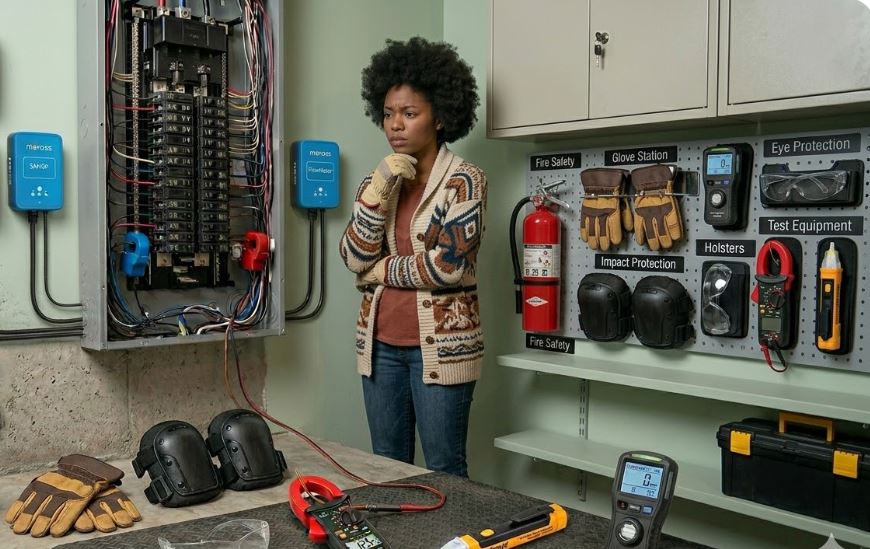
Quick Reference: Essential Safety Tools for Fixing Appliances
| Safety Tool | Hazard Addressed | Skill Level | Price Range |
|---|---|---|---|
| Non-contact voltage tester | Live electrical contact | Beginner | $15–$30 |
| Insulated screwdriver set | Accidental live contact | Beginner | $20–$60 |
| Rubber insulating gloves | Electrical shock | Beginner–Intermediate | $25–$80 |
| Safety glasses / goggles | Eye injury from debris | Beginner | $8–$25 |
| Combustible gas detector | Gas leak ignition | Beginner | $35–$75 |
| Multimeter with CAT rating | Unsafe electrical testing | Beginner–Intermediate | $45–$160 |
| GFCI outlet / plug adapter | Ground fault electrocution | Beginner | $15–$40 |
| Capacitor discharge tool | Microwave capacitor charge | Intermediate | $15–$40 |
| Work gloves | Cuts, burns, abrasion | Beginner | $10–$25 |
| Knee pads | Joint injury during floor work | Beginner | $15–$40 |
| Fire extinguisher | Electrical or general fire | Beginner | $25–$60 |
| First aid kit | General injury response | Beginner | $15–$50 |
The Hazard Landscape in Appliance Repair
Before getting into specific tools, it helps to understand the actual hazard categories in appliance repair — because different repairs involve different risks and the tools you need depend on what you’re working on.
Electrical Hazards
The most prevalent risk across all appliance repair work. Standard 120V household current can cause ventricular fibrillation at exposure levels well below what most people perceive as dangerous. A 240V circuit — used for dryers, ovens, and air conditioning — is significantly more hazardous still.
Electrical hazards in appliance repair come from three sources: residual charge in a circuit that you assumed was de-energized, a miswired outlet delivering voltage where you don’t expect it, and components like microwave capacitors that store lethal charges independently of the mains supply.
Gas Hazards
Any repair on a gas range, dryer, water heater, or furnace involves potential gas exposure. A fitting that’s slightly loose during reassembly, a connection that wasn’t fully tightened after a component replacement, or a flexible connector disturbed during appliance movement — any of these can introduce a slow leak that accumulates in an enclosed space.
Mechanical and Thermal Hazards
Sharp sheet metal edges inside appliance cabinets cut without warning. Drum edges, panel brackets, and component housings all have edges that are dangerous to unprotected hands. Heating elements, motor housings, and compressor bodies run hot enough to cause contact burns during operation. Compressed springs in certain mechanisms release suddenly when a retaining fastener is removed.
Chemical Hazards
Older appliances may contain asbestos insulation — particularly in appliances manufactured before 1980. Refrigerant from older refrigerators and air conditioners can cause frostbite on contact and oxygen displacement in enclosed spaces. Cleaning agents used inside appliances can cause eye and skin irritation.
Layer 1: Electrical Safety Tools
Non-Contact Voltage Tester
This is the single most important safety tool in appliance repair — the tool that gets picked up before any other tool is touched. A non-contact voltage tester detects live AC voltage through the electromagnetic field surrounding a wire without any physical contact. Hold it near a wire, terminal, or outlet slot. It beeps and lights up if voltage is present. It takes two seconds.
The critical habit is using it every time — not just when you’re uncertain. Experienced technicians don’t skip this step because they’re experienced. They’re experienced partly because they never skip this step.
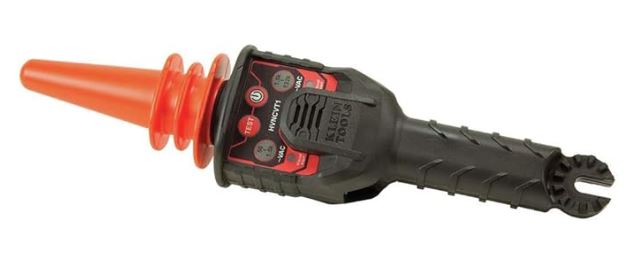
Recommended: Klein Tools HVNCVT-1 Dual-Range Non-Contact High-Voltage Tester (View on Amazon)
Insulated Screwdrivers
Standard screwdrivers have no protection against live contact. An insulated screwdriver has a non-conductive coating rated to 1000V on the shaft and handle — so that if the tip contacts a live terminal accidentally, the insulation prevents current from travelling up the shaft to your hand.
This matters specifically in situations where you’re working near a circuit that can’t be fully de-energized — testing a live outlet, probing a terminal block with the machine plugged in for diagnostic purposes, or working near a component that retains charge after power removal.
Wiha and Wera both manufacture VDE-rated insulated screwdriver sets that meet IEC 60900 standards — the internationally recognized safety benchmark for insulated hand tools. VDE-rated means independently tested and certified to 10,000V withstand, rated for 1000V working voltage.
Recommended: WERA – 05006617001 Set and Wiha 28390 Insulated SlimLine Interchangeable Set (View on Amazon)
Rubber Insulating Gloves
Insulated rubber gloves rated for electrical work provide a physical barrier between your hands and any live components. For most appliance repair work — where the protocol is to confirm power off before touching anything — gloves serve as a backup protection layer rather than a primary one.
They become primary protection in specific scenarios: working near live 240V terminals during diagnostic testing, handling components adjacent to live circuits, and any work where full circuit isolation isn’t possible. Voltage-rated gloves are classified from Class 00 (500V) through Class 4 (40,000V). For residential appliance work, Class 00 or Class 0 (1000V) covers the full range of household voltages.
Rubber electrical gloves require regular inspection for pinholes and tears — a damaged glove provides false confidence. Inspect by inflating the glove by rolling the cuff and checking for air leakage before each use.
Recommended: MAGID Rubber Insulating Electrical Safety Gloves (View on Amazon)
Capacitor Discharge Tool
Microwave ovens are the one appliance category where the safety protocol is fundamentally different from all others. The high-voltage capacitor inside a microwave stores a charge of up to 2100V — enough to cause cardiac arrest — and retains this charge for hours or days after the unit is unplugged. Touching the capacitor terminals without discharging it first is potentially fatal.
A capacitor discharge tool is a resistor-based device that safely dissipates the stored charge before any internal microwave component is touched. Connect the tool leads across the capacitor terminals — using insulated probes — and the resistor bleeds the charge to zero in a controlled, safe manner.
Never attempt to discharge a microwave capacitor with a screwdriver — the instantaneous discharge can damage the capacitor, create an arc flash, and provide no protection to the person holding the screwdriver. A purpose-built discharge tool costs $15–$40 and is the only safe approach.
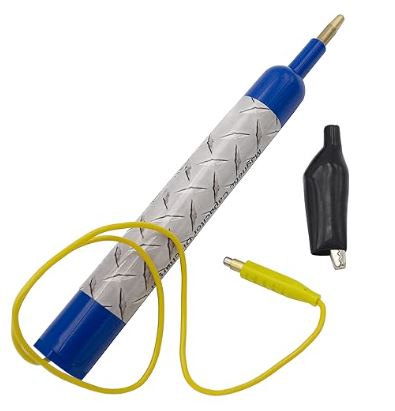
Recommended: Supplying Demand CAPDIS Capacitor Discharge Pen Tool (View on Amazon)
GFCI Outlet Adapter
A Ground Fault Circuit Interrupter detects current leakage to ground — the electrical signature of current passing through a human body — and interrupts the circuit in under 25 milliseconds. This is fast enough to prevent electrocution in most ground fault scenarios.
For appliance repair, a portable GFCI plug adapter provides ground fault protection on any outlet where the appliance’s power cord plugs in during testing. If a fault occurs during a powered test — a damaged wire contacting a metal chassis, a component short to ground — the GFCI trips before the current reaches a dangerous duration.
Many modern homes have GFCI-protected circuits in kitchens and laundry areas. If yours doesn’t, a portable GFCI adapter provides this protection immediately without any wiring changes.
Recommended: Southwire ADAPTER 1 OUTLET YELLOW (View on Amazon)
Layer 2: Gas Safety Tools
Combustible Gas Detector
Any repair involving a gas appliance — range, dryer, water heater, furnace — requires a combustible gas detector to verify that all connections are leak-free after the repair is complete. A fitting that’s hand-tight but not wrench-tight, a connection that was disturbed during a component replacement, a flexible connector that was stressed during appliance movement — all of these can introduce leaks invisible to the nose at concentrations the detector catches immediately.
The UEi CD100A uses a catalytic bead sensor — significantly more resistant to false positives from cooking and cleaning odours than cheaper semiconductor sensors — and detects methane and propane at 50 ppm with a sub-second response time. Always check every gas connection after any repair involving a gas appliance before returning it to service.
Recommended: Klein Tools ET120 Gas Leak Detector (View on Amazon)
Layer 3: Physical Protection Tools
Safety Glasses
Sheet metal edges inside appliances are sharp enough to cut deeply on contact. Springs release suddenly. Cleaning agents spray. Components under pressure discharge unexpectedly. Safety glasses are the simplest physical protection tool and the one most consistently skipped by beginners who assume they won’t need them.
Wear them every time a panel comes off. The risk of eye injury from a spring-loaded component or a metal edge doesn’t scale with experience — it’s equally present on your first repair and your hundredth.
The 3M SecureFit 400 Series provides wraparound protection, optical clarity, and anti-scratch coating in a comfortable design that doesn’t interfere with close inspection work. At under $10 a pair there’s no reasonable argument for not wearing them.

Recommended: 3M Safety Glasses for Men and Women (View on Amazon)
Work Gloves
Cut-resistant work gloves protect against the sheet metal edges that are present in almost every appliance cabinet. Look for gloves with ANSI cut level A4 or higher — this rating indicates resistance to cuts from sharp edges under pressure, which is the relevant hazard when handling sheet metal panels, drum components, and internal brackets.
The balance to strike is cut resistance against dexterity — thick gloves that prevent cuts also prevent the fine motor control needed for wiring connections and small fastener work. Thin cut-resistant gloves rated to A4 provide meaningful protection while maintaining enough dexterity for detail work.
Recommended: Mechanix Tactical Specialty Pursuit D5 Cut Resistant Covert Work Gloves (View on Amazon)
Knee Pads
A significant portion of appliance repair work happens at floor level — accessing front-load washer components, working on dishwasher connections, reaching beneath refrigerators, examining dryer exhaust connections. Hard floor surfaces cause genuine joint pain and distraction during extended floor-level work, which increases the likelihood of rushing and mistakes.
Gel-cushion knee pads worn during floor work cost $15–$40 and make the difference between comfortable, unhurried repair work and an increasingly uncomfortable session where the priority becomes finishing quickly rather than finishing correctly.
Recommended: NoCry Professional Knee Pads (View on Amazon)
Layer 4: Emergency Response Tools
Fire Extinguisher
Electrical fires can start from a component short-circuit during a powered test. A fire extinguisher rated ABC — covering ordinary combustibles, flammable liquids, and electrical fires — should be within reach in any space where appliance repair work is performed.
The Amerex B402 is a 2.5 lb dry chemical extinguisher rated ABC that mounts to a wall bracket and covers the range of fire types possible in an appliance repair context. Check the pressure gauge annually and replace after any use.
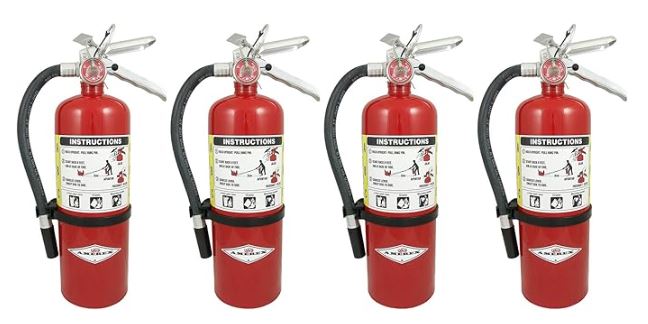
Recommended: Amerex B402 ABC Fire Extinguisher (View on Amazon)
First Aid Kit
Burns from hot components, cuts from sheet metal edges, and eye irritation from cleaning agents are the most common minor injuries in appliance repair. A stocked first aid kit within arm’s reach of the work area covers immediate response to these injuries without interrupting the repair to search the house for supplies.
A kit covering burns, cuts, and eye irrigation — burn gel sachets, adhesive bandages in multiple sizes, sterile eye wash, and nitrile gloves for wound handling — covers the appliance repair injury profile specifically.
Recommended: Best Survivor Comprehensive First Aid Kit (View on Amazon)
Safety Tool Checklist by Repair Type
| Repair Type | Essential Safety Tools |
|---|---|
| Any electrical appliance | Voltage tester, safety glasses, multimeter |
| 240V appliances (dryer, oven) | Voltage tester, insulated screwdrivers, rubber gloves |
| Gas appliances | Gas detector, voltage tester, safety glasses |
| Microwave oven | Capacitor discharge tool, rubber gloves, voltage tester |
| Refrigerator | Safety glasses, work gloves, voltage tester |
| Washing machine / dishwasher | Safety glasses, work gloves, GFCI adapter |
| Floor-level work | Knee pads, safety glasses, headlamp |
Frequently Asked Questions
Do I really need safety tools for simple appliance repairs?
Yes — particularly the non-contact voltage tester. Even the simplest repair involves opening a panel near electrical components, and the voltage tester confirms in two seconds that those components are de-energized. The injury risk doesn’t scale with repair complexity. A simple repair done without safety confirmation carries the same electrical hazard as a complex one.
What is the most important safety tool for appliance repair?
The non-contact voltage tester is the single most important safety tool for appliance repair. It’s the first tool used before every repair and the one that prevents the most common serious injury in DIY electrical work — contact with a live circuit that was assumed to be de-energized. Every other safety tool matters, but this one is the gate that has to open before anything else begins.
Is it safe to repair a microwave at home?
The external cabinet cleaning, door latch inspection, and turntable motor replacement are safe home repairs if power is confirmed off. Internal microwave repairs — anything involving the magnetron, transformer, or capacitor — are not safe without specific high-voltage training and a proper capacitor discharge tool used correctly. The capacitor charge is lethal and not visible, and the margin for error is zero. For internal microwave faults, professional repair is the right call.
Do I need rubber gloves for standard appliance repair?
For appliance work where you’re confirming power off before touching any wiring or terminals, rubber insulating gloves are an additional safety layer rather than a primary requirement. They become essential when any diagnostic work requires testing near live circuits — measuring voltage at terminals, testing components adjacent to energized sections, or working on 240V appliances where the voltage level is significantly more dangerous than 120V.
What type of fire extinguisher do I need for appliance repair?
An ABC-rated dry chemical extinguisher covers all fire types relevant to appliance repair — ordinary combustibles like surrounding flooring and cabinetry, and electrical fires from component shorts. Keep it within reach during any powered testing and check the pressure gauge annually. Know how to use it before you need it — the PASS technique (Pull, Aim, Squeeze, Sweep) takes less than a minute to learn and works on all dry chemical extinguishers.
How do I know if an outlet is safe before connecting an appliance?
Use a plug-in outlet tester — the Sperry STK001 costs under $15 and identifies open ground, reversed polarity, open neutral, and other wiring faults in three seconds. A miswired outlet can cause appliances to behave erratically, create shock hazards from chassis contact, and interfere with GFCI protection. Checking the outlet takes no skill and prevents misdiagnosing an appliance fault that’s actually a supply fault.
Also Read:
- What Tools to Improve the Efficiency and Cooling of Home Appliances?
- Do Smart Plugs Help to Diagnose Power Issues with Home Appliances?
- What is the Best Inspection Camera for Home Appliances?
Conclusion
Safety tools for fixing appliances aren’t optional equipment for cautious people — they’re the foundation that makes accurate diagnosis and confident repair possible in the first place. Rushing past safety confirmation to get to the repair faster is exactly the approach that leads to the injuries and incidents that give DIY appliance repair an undeserved reputation for danger.
Build the safety layer first. Start with the non-contact voltage tester and safety glasses — under $35 combined and present at every repair from the first one forward. Add insulated screwdrivers, rubber gloves, and a gas detector as your repair scope expands to 240V appliances and gas appliances. Keep a fire extinguisher and first aid kit accessible in the workspace at all times.
Every tool in this guide exists because a specific, real hazard exists in appliance repair work. Own the tool before you encounter the hazard — not after.
Browse appliance repair safety tools on Amazon and build the safety layer that every repair deserves.

Hi, I’m Barlgan! I created Repair Me Yourself to empower homeowners to tackle appliance repairs with confidence. From decoding error codes to fixing cooling issues, I break down complex repairs into simple, actionable steps that save you time and money.