
There are few appliance failures as immediately disruptive as a washing machine full of standing water. If you own a front-loader, you can’t open the door without a flood; if you have a top-loader, your clothes are marooned in a gray, cooling soup. The clock is ticking before that water starts to smell, and the laundry pile isn’t getting any smaller.
The good news? A washing machine that is not draining is one of the most DIY-friendly repairs. Most issues trace back to three root causes: a physical blockage (socks, coins, or lint), a failed drain pump, or a faulty safety switch (lid or door lock).
By following a systematic approach—draining the water, clearing the path, and testing the electronics—you can likely fix the issue for the cost of a cheap replacement part.
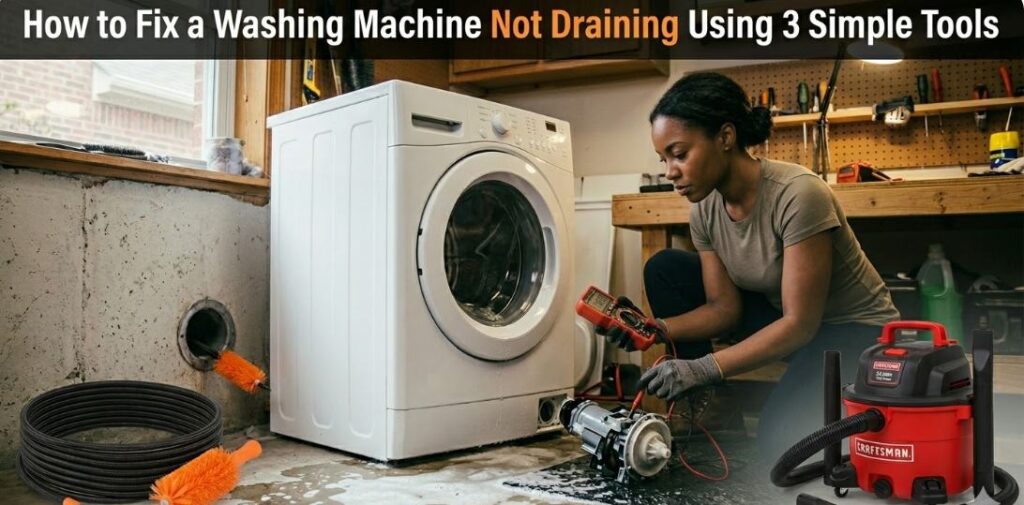
Quick-Reference Diagnostic Tool Kit for Washing Machine Not Draining
To diagnose a drainage issue properly, you need to manage the water and test the components. These three appliance repair tools are Amazon best-sellers that cover every stage of the process.
| Tool | Role in Diagnosis | Approx. Price |
| CRAFTSMAN 2.5 Gallon Wet/Dry Vac | Removes standing water from the drum safely | $35–$55 |
| Holikme 30ft Flexible Cleaning Kit | Clears deep blockages from the drain hose | $10–$18 |
| KAIWEETS HT118A Digital Multimeter | Tests the pump motor and door/lid switches | $30–$45 |
Common Causes of a Washing Machine Not Draining
Before disassembling your machine, identify your symptoms. A machine that hums is usually blocked; a machine that is silent usually has an electrical fault.
| Cause | Machine Type | DIY Fixable? | Typical Part Cost |
| Clogged Pump Filter | Front-Load | Yes | $0 (Cleaning) |
| Kinked Drain Hose | Both | Yes | $0 (Reposition) |
| Object in Pump Impeller | Both | Yes | $0 (Removal) |
| Failed Drain Pump | Both | Yes | $25–$80 |
| Broken Lid Switch | Top-Load | Yes | $10–$30 |
| Faulty Door Lock | Front-Load | Yes | $20–$60 |
Step 1: Remove Standing Water (The Clean Way)
Working on a machine full of water is a recipe for a ruined floor. Before you open the pump filter or pull the machine out, you must empty the drum.
The Tool: The CRAFTSMAN 2.5 Gallon Wet/Dry Vac (View on Amazon) is the perfect size for this. Its 2.5 Peak HP is strong enough to pull water through a drain hose, and its compact size fits into tight laundry rooms.
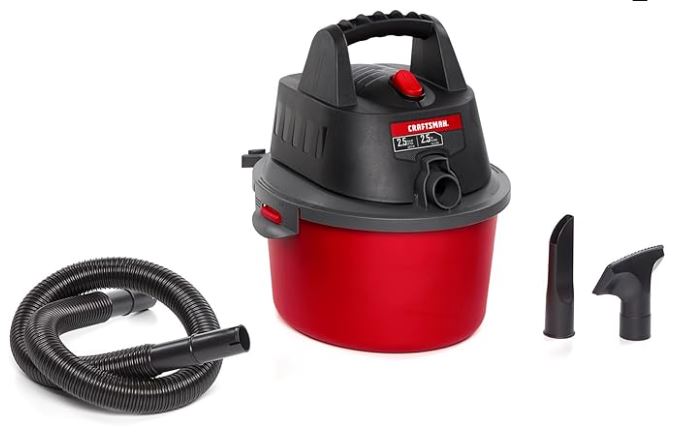
The Process: * For Front-Loaders: Open the small access door at the bottom front. Use the vacuum to suck water from the emergency drain tube (the tiny hose next to the big filter cap).
- For Top-Loaders: Simply use the vacuum hose directly in the drum to suck out the standing water.
- Pro Tip: Remove the paper filter from your shop vac before using it for liquids to avoid ruining the filter.
Step 2: Clear the Physical Drain Path
Once the water is out, check the “plumbing” of the machine. 90% of front-loader issues are solved right here.
1. The Pump Filter (Front-Loaders Only)
Unscrew the large circular cap at the bottom of the machine. Have a towel ready for the “residual” water (usually about a cup). You will often find coins, bra wires, or baby socks caught here. Clean the mesh and ensure the plastic impeller (the fan blade inside) spins freely.
2. The Drain Hose
Check the corrugated hose at the back of the machine. If it’s pushed too far into the wall’s standpipe, it can create a siphoning effect that prevents the machine from ever finishing a cycle.
The Tool: If the hose isn’t kinked but feels heavy/blocked, use the Holikme 30ft Flexible Rods (View on Amazon). While marketed for dryer vents, these interlocking nylon rods are flexible enough to snake through a washing machine’s drain hose to break up “slugs” of compacted detergent and lint.
Step 3: Test the Electrical Components
If the filters are clean and the hoses are clear, the problem is likely a “dead” component. This is where you need a multimeter.
The Tool: The KAIWEETS HT118A (View on Amazon) is ideal because of its Continuity and Resistance settings.
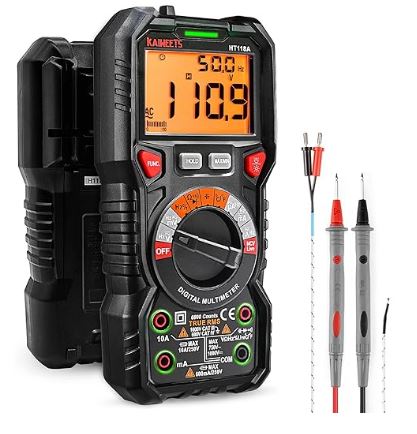
Testing the Drain Pump Motor
Access the pump (usually at the bottom of the machine). Unplug the two wires leading to the pump motor and touch your multimeter probes to the terminals.
- Good Result: A reading between 10 and 40 Ohms ($\Omega$).
- Bad Result: An “OL” (Open Loop) reading, meaning the motor’s internal wiring has burned out.
Testing the Lid Switch or Door Lock
If the machine doesn’t know the door is closed, it won’t drain for safety reasons.
- Top-Loaders: Use the KAIWEETS “Continuity” (beep) mode. With the lid closed, the switch should beep. If it stays silent, the switch is broken.
- Front-Loaders: Test the door latch assembly. If the wax motor inside the latch fails, the machine won’t initiate the drain/spin sequence.
Frequently Asked Questions
How do I know if the washing machine pump is actually broken or just blocked?
Listen for the sound. A humming or vibrating pump usually means something is physically stuck in the blades (like a coin). A silent pump usually means the motor has failed electrically or isn’t receiving power from the control board. Use your multimeter to confirm before buying a new part.
Why does my washer drain sometimes but not others?
Intermittent draining is often caused by a “floated” item in the outer tub—like a small sock or a face cloth—that occasionally gets sucked into the drain hole and then floats away when the machine stops. It can also be a sign of a pump motor that is overheating and seizing up halfway through a day of laundry.
Can a clogged dryer vent affect my washing machine?
No, they are separate systems. However, many homeowners find that if their dryer vent is clogged (causing long dry times), they notice the “wet clothes” in the washer more often because the whole laundry process is backed up. If you’re buying the Holikme 30ft Kit (View on Amazon) for your washer hose, use it on your dryer vent too—it’s a lifesaver.
Is it safe to tilt my washing machine to reach the pump?
For top-load washers, you can usually tilt them back (securely!) to access the pump from underneath. Do not tilt a front-load washer on its side or back without shipping bolts installed, as you can damage the suspension springs or the drum. Front-loaders are best accessed by removing the front or back panels while the machine is upright.
Relevant:
- Does a Washing Machine Drain into the Sewer Line? (Answered)
- Does a Washing Machine Need a Backflow Preventer? (Explained)
When to Call a Professional
If you have tested the pump, the lid switch, and cleared the hoses, and the machine still won’t drain, the Control Board is likely the culprit. Since boards are expensive (often $200+) and non-returnable once installed, it’s worth having a technician confirm the diagnosis before you invest in the “brain” of the machine.
Conclusion
Don’t let a puddle of water intimidate you. With a Craftsman Wet/Dry Vac to handle the mess, a Holikme Rod to clear the path, and a KAIWEETS Multimeter to check the vitals, you have everything you need to fix a washing machine not draining. You’ll save the $150 service fee and have a much better understanding of how your home works.

Hi, I’m Barlgan! I created Repair Me Yourself to empower homeowners to tackle appliance repairs with confidence. From decoding error codes to fixing cooling issues, I break down complex repairs into simple, actionable steps that save you time and money.