
Summer heat arrived and your Mitsubishi mini split suddenly stopped blowing cold air. The unit runs, makes normal sounds, and appears to operate properly. But the air coming from the vents feels warm, barely cool, or just room temperature.
This disappointing problem transforms your comfort system into an expensive fan that circulates warm air instead of providing the cooling relief you desperately need. Whether your Mitsubishi mini split isn’t cooling at all, produces weak cooling that barely lowers room temperature, or worked perfectly yesterday but failed today, this comprehensive guide addresses every scenario preventing cold air output.
We’ll diagnose issues from simple thermostat settings to complex refrigerant problems, providing professional troubleshooting steps and proven solutions that restore ice-cold air without unnecessary service calls.
When Mitsubishi mini splits don’t blow cold air, the problem typically involves incorrect mode selection, clogged air filters restricting heat transfer, dirty evaporator coils preventing cooling, refrigerant leaks reducing system capacity, failed compressors not generating cooling, thermostat malfunctions, outdoor unit issues preventing operation, or frozen evaporator coils blocking airflow. Most cooling failures resolve through systematic troubleshooting: verifying cool mode selection, cleaning filters and coils, checking outdoor unit operation, resetting the system, inspecting for refrigerant leaks, and addressing error codes that pinpoint specific component failures.
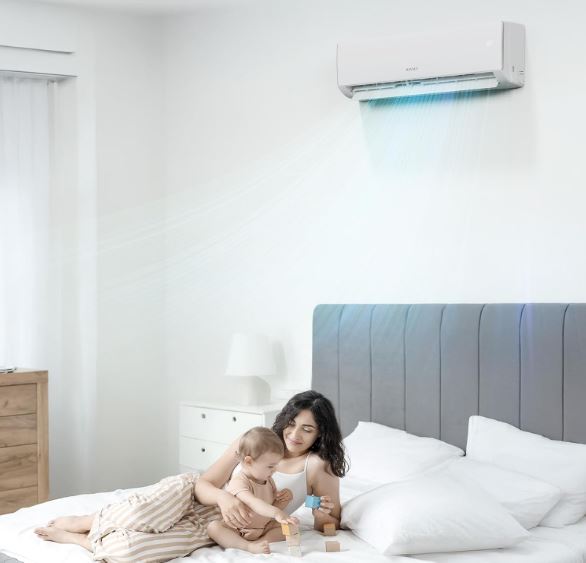
Quick Mitsubishi Mini Split Cold Air Problem Diagnostic Chart
| Symptom Pattern | Airflow Status | Compressor Sound | Indoor Coil Condition | Most Likely Cause | Fix Difficulty |
| No cold, good airflow | Normal volume | Running (humming) | Normal | Wrong mode selected | Easy – DIY |
| No cold, weak airflow | Reduced significantly | May not run | Possibly frozen | Extremely dirty filter | Easy – DIY |
| Barely cool air | Normal volume | Running normally | Normal | Low refrigerant | Professional |
| Cold then stops | Cycles on/off | Starts then stops | May freeze | Dirty coil or low refrigerant | Moderate – DIY to Pro |
| Room temp air only | Normal volume | Not running | Normal | Compressor failure | Professional |
| Cold outdoor air blows in | Normal volume | Running | Normal | Reversing valve stuck | Professional |
| Intermittent cooling | Varies | Cycles unpredictably | Normal | Thermostat or sensor | Moderate – DIY |
| Ice visible on unit | Little to no flow | Running continuously | Frozen solid | Severe airflow restriction | Easy – requires defrost |
Understanding How Mitsubishi Mini Splits Create Cold Air
Comprehending the cooling process helps identify where problems occur. Mitsubishi mini splits use refrigeration cycles identical in principle to refrigerators.
The system doesn’t create cold—it removes heat. This distinction is fundamental to understanding cooling failures.
Refrigerant circulates between indoor and outdoor units through copper lines. This refrigerant absorbs heat indoors and releases it outdoors.
The indoor evaporator coil gets extremely cold (typically 40-50°F surface temperature). Room air blown across this cold coil loses heat energy.
The compressor in the outdoor unit pressurizes refrigerant, enabling the heat transfer process. Without compressor operation, no cooling occurs.
The expansion valve meters refrigerant flow rate. Proper metering is critical—too little flow means insufficient cooling, too much causes freezing.
Air must flow across the cold coil continuously. Restricted airflow from dirty filters or coils prevents heat transfer despite the coil being cold.
Why Isn’t My Mitsubishi Mini Split Blowing Cold Air? Top Causes
Identifying the specific cause requires systematic elimination. These issues account for 95% of cooling complaints.
Wrong Operating Mode Selected
The most common “problem” isn’t mechanical failure—users simply haven’t selected cooling mode properly.
Cause: The remote shows the unit is on but it’s in FAN, DRY, or AUTO mode instead of COOL mode.
Symptoms: Unit runs and circulates air normally. Air feels neutral—neither warm nor cold. Display doesn’t show snowflake icon or “COOL” text.
Why it happens: Mode button pressed incorrectly, someone changed settings, or remote defaulted to different mode after battery change.
Fix: Press “MODE” button on remote repeatedly until “COOL” or snowflake icon displays. Each press cycles through modes.
Set temperature at least 5-7 degrees below current room temperature. Small differentials (1-2 degrees) might not trigger compressor operation.
Wait 3 minutes after mode selection. Compressor delay protection prevents immediate restart after recent operation.
Verification: Check that compressor in outdoor unit starts within 3-5 minutes. You should hear it running and feel warm air exhausting from outdoor unit.
Clogged or Dirty Air Filters
Filters are the number one maintenance item preventing cold air output. Restricted airflow makes cooling impossible.
Cause: Weeks or months of accumulated dust, pet hair, pollen, and debris blocking filter mesh.
Symptoms: Weak airflow from indoor unit. Unit runs but barely cools. Ice might form on indoor coil. System shuts off on safety switches.
Science behind it: Cooling requires air flowing across the cold evaporator coil. Blocked filters prevent airflow. The coil gets cold but can’t transfer that cold to room air.
Severely restricted airflow causes coil temperature to drop below 32°F. Moisture in the air freezes on the coil. Ice buildup worsens the restriction progressively.
Fix: Open the front panel of the indoor unit. Slide filter out carefully—note orientation for reinstallation.
Hold filter up to light. If you can’t see through it clearly, it’s too dirty to function properly.
Wash reusable filters under running water. Use mild dish soap for heavy soil. Scrub gently—filters are delicate plastic mesh.
Rinse thoroughly until water runs completely clear. Squeeze excess water out gently.
Dry completely—minimum 4-6 hours, preferably 24 hours. Never reinstall damp filters. Moisture drips onto electronics causing damage.
Prevention: Clean filters every 2 weeks during heavy use. Monthly is absolute minimum. Set recurring phone reminders.
Dirty Indoor Evaporator Coil
The coil behind the filter accumulates dust despite filter protection. This prevents heat transfer.
Cause: Dust bypassing filters, years of accumulation, or operating without filters during installation.
Symptoms: Progressively declining cooling over weeks or months. Unit works harder but cools less. High energy bills. Musty odors.
Diagnosis: Remove filter and shine flashlight on coil. It should appear metallic and relatively clean. Heavy dust or fuzzy appearance indicates cleaning needed.
Fix: Turn off power at breaker. Remove front cover for access. Some models require removing additional panels.
Use coil cleaner foam designed for evaporator coils. Spray generously on coil, wait 10-15 minutes for foam to work.
The foam liquefies dirt and drains away. Use soft brush for stubborn spots. Never use high-pressure water. This bends delicate fins.
Straighten bent fins with a fin comb tool. Bent fins significantly restrict airflow even after cleaning.
Professional option: Annual professional coil cleaning ($150-$250) thoroughly cleans hard-to-reach areas. Consider this for 3+ year old units never professionally serviced.
Low Refrigerant Charge
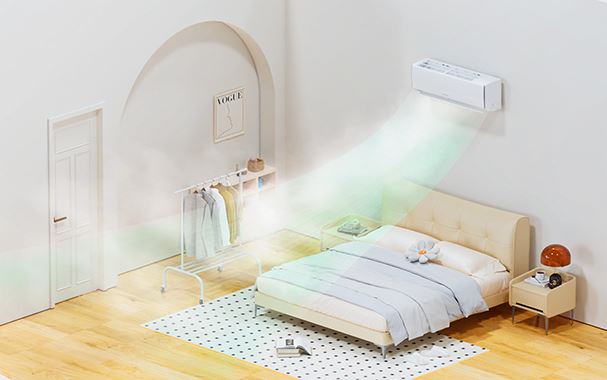
Refrigerant carries heat from inside to outside. Insufficient refrigerant drastically reduces cooling capacity.
Cause: Refrigerant leaks at connections, damaged refrigerant lines, or improper installation charging. Refrigerant doesn’t “run out”—only leaks cause low levels.
Symptoms: Unit runs constantly but barely cools. Temperature drops only 2-5°F instead of reaching set temperature. Ice forms on refrigerant lines. Hissing sounds near connections.
Visual inspection: Look at refrigerant lines at outdoor unit. Ice or frost on lines during cooling operation indicates low refrigerant.
Check for oily residue around refrigerant connections. Refrigerant carries compressor oil—leaks leave oily spots.
Temperature measurement: Cooling should produce 15-25°F temperature differential between return air and supply air. Lower differentials suggest refrigerant problems.
Fix: Refrigerant work requires EPA Section 608 certification. Federal law prohibits DIY refrigerant handling.
Professional diagnosis costs $100-$200. Leak detection, repair, and recharge costs $400-$1,200 depending on leak location and system size.
Economic consideration: For mini splits under $1,500 or systems 8+ years old, refrigerant repair might not make economic sense versus replacement.
Compressor Not Operating
The compressor is the heart of the cooling system. Without it, absolutely no cooling occurs.
Cause: Electrical failure, failed start components (capacitor or contactor), mechanical seizure, or thermal overload protection activated.
Symptoms: Indoor fan runs normally but no cold air. Outdoor unit silent or makes clicking sounds without compressor running. No warm air exhausting from outdoor unit.
Diagnosis: Listen carefully at outdoor unit when system should be cooling. Compressor produces deep, steady humming.
Clicking without humming indicates compressor tries to start but can’t. Capacitor failure or mechanical seizure likely.
Complete silence from outdoor unit suggests no power reaching compressor or failed contactor.
Electrical testing: Check voltage at outdoor disconnect. Should read 208-230V. No voltage indicates electrical supply problems.
Measure voltage at compressor terminals. Voltage present but no operation indicates compressor internal failure.
Capacitor check: Failed capacitors prevent compressor starting. Visual inspection reveals bulging, leaking, or burn marks.
Fix: Capacitor replacement costs $80-$150 installed. Contactor replacement costs $100-$200 installed.
Compressor replacement costs $1,200-$2,500 installed. This often exceeds mini split replacement value, especially for single-zone systems.
Frozen Evaporator Coil
Ice formation on the indoor coil completely blocks airflow. No cooling occurs despite the coil being extremely cold.
Cause: Severely restricted airflow (dirty filters/coils), low refrigerant causing excessive temperature drop, operating in cooling mode when outdoor temperature is too low (below 60°F).
Symptoms: Little or no airflow from indoor unit. Visible ice on coil (look through filter opening). Water dripping from indoor unit. Unit was cooling fine, then suddenly stopped.
Immediate action: Turn off cooling immediately. Switch to FAN mode to help melt ice, or turn off completely if water threatens damage.
Never chip or scrape ice from coils. This damages delicate fins and can puncture refrigerant lines.
Defrost time: Complete melting takes 2-8 hours depending on ice thickness. Place towels underneath to catch water.
Identify cause: After defrosting, determine why freezing occurred. Check filter—if extremely dirty, that’s the cause.
If filter is clean, low refrigerant is likely. Look for ice on refrigerant lines or oily residue indicating leaks.
Prevention: Never operate cooling when outdoor temperature drops below 60°F. Don’t set thermostat below 68°F in cooling mode.
Outdoor Unit Not Running
The outdoor condenser must run for cooling to occur. Indoor unit alone cannot cool.
Cause: Tripped breaker, blown fuses in disconnect box, failed contactor, control board not sending signals, or outdoor unit locked out on error.
Symptoms: Indoor fan runs normally. Outdoor unit completely silent. No vibration or heat at outdoor unit.
Troubleshooting steps:
Check outdoor disconnect switch—ensure it’s in ON position. Inspect fuses in disconnect box. Blown fuses appear blackened or have broken elements.
Listen for clicking at outdoor unit when cooling should start. Clicking indicates contactor engaging. No clicking suggests control signal not reaching outdoor unit.
Measure voltage at outdoor disconnect. Should read 208-230V. No voltage indicates breaker or wiring problems.
Control wiring: Low-voltage wiring between indoor and outdoor units carries control signals. Broken wires prevent outdoor unit operation.
Trace control wire bundle. Look for damage from landscaping equipment, animals, or weather.
Fix: Reset tripped breakers. Replace blown fuses with exact amperage matches (common ratings: 15A, 20A, 30A).
Repair damaged control wiring. Contactors cost $100-$200 installed. Control board replacement costs $250-$600.
Thermostat and Sensor Failures
Temperature sensors control system operation. Failed sensors cause inappropriate cooling behavior.
Cause: Age-related sensor failure, moisture damage, electrical surges, or physical damage.
Symptoms: Unit claims room is at set temperature when it’s clearly not. Erratic cycling—too much cooling then insufficient. Temperature reading on display doesn’t match actual room temperature by 5+ degrees.
Sensor types: Room temperature sensor (thermistor) monitors air temperature. Coil temperature sensors monitor evaporator and condenser temperatures.
Testing: Place accurate thermometer near indoor unit. Compare reading to unit’s display after 30 minutes. Significant variance indicates sensor problems.
Error codes: Sensor failures generate specific error codes: E1 (outdoor thermistor), E3 (indoor coil sensor), E5 (outdoor coil sensor) on many Mitsubishi models.
Fix: Sensor replacement requires accessing internal components. Sensors cost $20-$60. Professional installation costs $150-$300 total.
Sensors plug into control boards with simple connectors. DIYers comfortable with electronics can replace them following service manuals.
Reversing Valve Stuck in Heat Mode
Reversing valves control refrigerant flow direction. Stuck valves can lock the system in heating mode.
Cause: Mechanical sticking from contamination, electrical failure preventing valve actuation, or refrigerant pressure preventing valve movement.
Symptoms: Unit worked perfectly for cooling all season, suddenly produces warm air. Switching to heat mode works normally. Only cooling mode is affected.
Diagnosis: Listen when switching from heat to cool mode. Properly functioning valve makes audible click or swoosh within 3-5 seconds.
No sound suggests valve isn’t receiving electrical signal or is mechanically stuck.
Temperature testing: In cooling mode, feel refrigerant lines at outdoor unit. Large line (suction) should be cold. Small line (liquid) should be warm/hot.
If temperatures are reversed (large line hot, small line cold), the valve is stuck in heating position.
Fix: Reversing valve repair requires professional service. Technicians test electrical signals and refrigerant pressures.
Valve replacement costs $300-$700 installed. Sometimes valves can be unstuck through pressure cycling or mechanical manipulation, reducing cost.
Step-by-Step Mitsubishi Mini Split Troubleshooting Process
Systematic diagnosis identifies problems efficiently. Follow this sequence for best results.
Step 1: Verify Cooling Mode and Settings
Action: Check remote control display. Confirm “COOL” or snowflake icon shows.
Press MODE button if necessary until cooling mode displays. Set temperature to 68-70°F (well below room temperature).
Wait: Allow 3-5 minutes after making changes. Compressor delay protection prevents immediate operation.
Outcome: If this fixes the problem, no mechanical issue exists. Educate household members about proper mode selection.
Step 2: Inspect and Clean Air Filters
Action: Open front panel. Remove air filter noting installation orientation.
Hold filter up to bright light. If you can’t see through it easily, it needs cleaning.
Wash under running water with mild soap. Rinse completely. Dry thoroughly (4-24 hours).
Wait: After reinstalling clean filter, run system for 20 minutes. Assess cooling improvement.
Outcome: If cooling improves significantly, filter was the problem. Establish better cleaning schedule (every 2 weeks).
Step 3: Check Outdoor Unit Operation
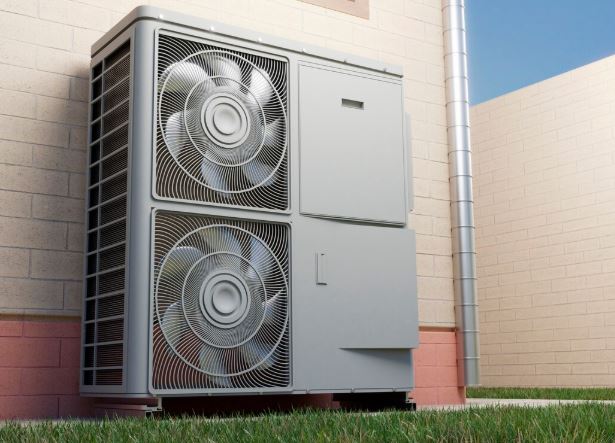
Action: Go outside while system runs in cooling mode. Listen and observe outdoor unit.
Compressor should produce steady humming. Fan should spin, moving air upward. Warm air should exhaust from top.
Troubleshooting: If outdoor unit is silent, check disconnect switch and fuses. Verify breaker isn’t tripped.
If clicking occurs without compressor running, suspect capacitor or compressor failure.
Outcome: Non-operating outdoor unit requires electrical diagnosis or component replacement.
Step 4: Inspect for Ice Formation
Action: Look at indoor coil through filter opening. Shine flashlight for better visibility.
Check refrigerant lines at indoor and outdoor units. Feel them—should be cold but not frozen.
Response: If ice is present, turn off cooling immediately. Allow complete defrost (2-8 hours).
After defrosting, address underlying cause: clean filter if dirty, reduce temperature setting, or call for refrigerant diagnosis.
Outcome: Recurring ice formation indicates low refrigerant or persistent airflow restrictions requiring professional service.
Step 5: Test Thermostat Function
Action: Set temperature to extreme cold (60°F). System should respond aggressively.
Place accurate thermometer near indoor unit. Compare actual temperature to displayed temperature after 30 minutes.
Assessment: Discrepancy exceeding 3-4 degrees indicates sensor problems.
Erratic operation (too much cooling, then insufficient) also suggests sensor issues.
Outcome: Sensor failures require replacement. This is moderate difficulty repair for DIYers or professional service ($150-$300).
Step 6: Measure Temperature Differential
Action: Use accurate thermometer. Measure air temperature entering indoor unit (return air).
Measure air temperature leaving indoor unit (supply air). Calculate difference.
Normal range: Properly functioning cooling produces 15-25°F temperature differential. Example: 78°F return air, 58°F supply air = 20°F differential (good).
Diagnosis: Differential under 10°F indicates insufficient cooling—likely refrigerant problems or compressor issues.
Differential over 30°F with weak airflow suggests extreme restriction or frozen coil.
Outcome: Low differentials despite proper airflow require professional refrigerant diagnosis.
Step 7: Check for Error Codes
Action: Observe indoor unit display and LED indicators. Note any flashing patterns or error messages.
Count flashes carefully. Most Mitsubishi models use flash codes: number of flashes indicates specific problems.
Documentation: Write down error codes. Take video of flash patterns for reference when consulting manuals or technicians.
Interpretation: Consult your service manual for error code meanings. Common codes: E1 (thermistor), E3 (sensor), E5 (communication).
Outcome: Error codes provide specific direction for repairs. They dramatically reduce diagnostic guesswork.
Step 8: Perform System Reset
Action: If no obvious cause is found, perform complete reset.
Turn off unit using remote. Turn off breaker to both indoor and outdoor units. Wait 10 minutes.
Restore power. Wait 3 minutes before turning unit on. Reconfigure settings.
Assessment: Observe operation for 30 minutes. Note any improvements or continuing problems.
Outcome: If reset solves the problem, electronic glitch was the cause. If problems persist, hardware failure exists requiring professional service.
Advanced Mitsubishi Mini Split Cooling Problem Diagnosis
When basic troubleshooting doesn’t reveal the cause, deeper investigation is necessary.
Refrigerant System Analysis
Professional refrigerant diagnosis uses specialized equipment measuring pressures and temperatures throughout the system.
Pressure testing: Manifold gauges connect to service ports. Pressure readings compare to manufacturer specifications.
Low-side pressure too low indicates insufficient refrigerant. Low-side pressure too high suggests metering device problems.
High-side pressure too low confirms insufficient refrigerant or compressor weakness. High-side pressure too high indicates blocked airflow or overcharge.
Superheat and subcooling: These calculations use temperature and pressure measurements. They precisely indicate refrigerant charge status.
Proper superheat (8-12°F typically) indicates correct evaporator refrigerant flow. Proper subcooling (8-12°F typically) indicates correct condenser operation.
Leak detection: Electronic leak detectors “sniff” for refrigerant molecules. UV dye injected into the system reveals leak locations under UV light.
Common leak locations: flare fittings at indoor and outdoor units, brazed joints on refrigerant lines, service ports, and coil connections.
Electrical System Comprehensive Testing
Electrical problems prevent cooling despite mechanically sound components.
Voltage measurements: Test voltages at multiple points: outdoor disconnect (208-230V), indoor unit power (115V or 230V), control voltages (24V).
Low voltage indicates supply problems. No voltage indicates broken circuits or failed components.
Amperage draw: Measure compressor and fan motor current. Compare to nameplate specifications.
High amperage indicates mechanical problems or short circuits. Low amperage suggests weak components or supply issues.
Resistance testing: With power off, measure resistance of compressor windings, fan motors, and sensors.
Infinite resistance indicates open circuits. Zero resistance indicates short circuits. Values should match specifications.
Contactor and relay testing: These electrical switches control component operation. Failed switches appear burned or pitted.
Test for continuity when closed, infinite resistance when open. Replace any showing damage or incorrect operation.
Airflow and Mechanical Assessment
Proper airflow is essential for cooling. Restrictions anywhere in the system reduce capacity.
Static pressure measurement: Measure air pressure difference across coil. High pressure drop indicates restriction.
Blower performance: Verify blower wheel spins freely. Check for debris, damage, or bearing wear.
Measure blower speed (RPM). Compare to specifications. Slow speed indicates motor problems or control issues.
Ductwork inspection: For ducted mini splits, verify all ducts are connected and unobstructed.
Disconnected ducts waste cooling. Crushed or kinked ducts restrict airflow preventing proper cooling.
Coil fin condition: Count bent fins per inch. More than 30% bent fins per section significantly restricts airflow.
Straighten fins with fin comb. This improves airflow by 15-30% in severely damaged coils.
Preventive Maintenance for Reliable Cooling by a Mitsubishi Mini Split
Consistent maintenance prevents most cooling failures. Small investments of time prevent expensive repairs.
Monthly Cooling Season Tasks
Filter cleaning: The single most important maintenance task. Clean every 2 weeks during active cooling season.
Dirty filters cause 60% of all cooling complaints. This 5-minute task prevents service calls costing $150-$300.
Visual inspection: Look for unusual sounds, smells, water leaks, or performance changes. Early detection prevents major failures.
Outdoor unit clearing: Remove leaves, grass clippings, and debris from around outdoor unit. Ensure 24 inches clearance all directions.
Thermostat battery check: Replace annually or when display dims. Weak batteries prevent proper operation.
Seasonal Deep Cleaning
Pre-summer preparation: Before cooling season, perform comprehensive cleaning and testing.
Clean filters thoroughly. Inspect coils—clean if visibly dirty. Test cooling operation on mild days before heat arrives.
Mid-summer inspection: During peak use, monitor for declining performance. Energy bill increases indicate developing problems.
End-of-season maintenance: Clean thoroughly before storage or winter shutdown. Address any problems before next cooling season.
Annual Professional Service
Professional maintenance catches problems before they cause failures.
Technicians perform tasks beyond homeowner capability:
Complete coil cleaning: Professional equipment and chemicals clean more thoroughly than DIY methods.
Refrigerant pressure verification: Confirms proper charge without leaks. Early leak detection prevents compressor damage from low refrigerant operation.
Electrical system testing: Measures voltages, currents, and resistances throughout the system. Identifies weak components before failure.
Component wear assessment: Technicians identify capacitors, contactors, and bearings approaching failure. Planned replacement prevents emergency breakdowns.
Annual service costs $150-$250. This investment prevents $500-$2,000 emergency repairs during heat waves.
System Optimization Tips
Proper sizing confirmation: Verify your mini split capacity matches room size. Undersized units can’t cool adequately regardless of maintenance.
Insulation improvement: Better insulation reduces cooling load. Seal air leaks, add insulation, upgrade windows for maximum efficiency.
Strategic shading: Close blinds and curtains on sun-facing windows. This reduces solar heat gain by 40-60%.
Temperature management: Set thermostat to 72-75°F. Each degree below 72°F increases energy use 3-5% and stresses components.
Ceiling fans: Use fans to circulate cool air. This allows higher thermostat settings while maintaining comfort.
Cost Analysis: Repair Vs Replace
Understanding repair economics helps make informed decisions about fixing versus replacing non-cooling mini splits.
| Problem Type | Repair Cost Range | Typical Repair Value | Replace Consider If |
| Filter cleaning (service call) | $120-$180 | Usually unnecessary—DIY | Never replace for this |
| Coil cleaning | $150-$300 | Good value | Unit 10+ years old |
| Refrigerant leak repair + recharge | $400-$1,200 | Consider unit age | Unit 8+ years or under $1,500 value |
| Capacitor replacement | $80-$150 | Excellent value | Never replace for this alone |
| Contactor replacement | $100-$200 | Excellent value | Never replace for this alone |
| Control board replacement | $250-$600 | Good for newer units | Unit 10+ years old |
| Fan motor replacement | $300-$650 | Usually worthwhile | Unit 10+ years with other issues |
| Compressor replacement | $1,200-$2,500 | Rarely worthwhile | Almost always replace |
| Complete system replacement | $2,500-$5,000 | N/A | When repairs exceed 50% of this |
The 50% Rule: If repair costs exceed 50% of replacement value, replacement usually makes better financial sense.
Age consideration: Units under 5 years old justify most repairs. Units 10+ years old rarely justify repairs exceeding $500.
Efficiency improvements: New models are 25-35% more efficient than 10-year-old units. Energy savings offset replacement costs over 3-5 years.
Seeking to replace your old Mitsubishi mini split? Check out the newest mini split air conditioner systems on Amazon!
Frequently Asked Questions
Why is my Mitsubishi mini split running but not cooling?
Running without cooling indicates: wrong mode selected (verify COOL mode active), compressor not operating (listen at outdoor unit for humming), low refrigerant preventing heat transfer, frozen evaporator coil blocking airflow, or extremely dirty filters/coils. Check mode selection first—this is the most common cause. Clean filters second. If outdoor unit isn’t running or making clicking sounds, compressor or capacitor problems exist. Temperature differential between supply and return air should be 15-25°F—lower indicates refrigerant or compressor issues requiring professional diagnosis.
How long does it take for a Mitsubishi mini split to blow cold air?
After turning on in cooling mode, expect cold air within 3-5 minutes. The compressor needs time to pressurize refrigerant and begin heat transfer. Initial air might feel neutral or slightly cool during startup. Full cooling capacity develops within 5-10 minutes. If no cold air appears after 15 minutes, troubleshoot for actual problems: verify cooling mode selected, check that outdoor unit runs, ensure filters are clean. Extremely hot rooms (90°F+) might take 15-20 minutes to produce noticeably cold air as the system works to overcome large temperature differential.
Can a dirty filter cause my mini split to stop cooling completely?
Yes, severely clogged filters prevent airflow across the evaporator coil. Even though the coil gets extremely cold, it can’t transfer that cold to blocked air. Additionally, restricted airflow causes coil temperature to drop below 32°F. Moisture freezes on the coil. Ice buildup completely blocks remaining airflow. The result is no cold air despite the unit running. This is the most common cause of cooling failure and the easiest to fix. Clean filters every 2 weeks during cooling season. Severely dirty filters can reduce cooling capacity by 50-70% or stop cooling entirely.
Why does my Mitsubishi mini split work sometimes but not other times?
Intermittent cooling by a Mitsubishi mini split often indicates thermostat sensor failure, loose electrical connections creating intermittent contact, low refrigerant charge borderline low, capacitor weakening (starts sometimes but not consistently), or control board issues.
Monitor exactly when your Mitsubishi mini split system fails. Only during peak heat suggests capacity limitations. Random failures suggest electrical or control problems. Document patterns before calling service technicians – knowing when and how often failures occur helps technicians diagnose efficiently. This saves diagnostic time and reduces service costs.
Is it normal for my mini split to stop cooling briefly during operation?
Brief cooling pauses (3-5 minutes) every 20-30 minutes are normal operation in auto fan mode. The system cycles to maintain set temperature precisely. However, frequent very short cycles (every 5-10 minutes) indicate problems: oversized unit for the space, thermostat location in direct airflow, dirty filters, low refrigerant, or control issues. Cooling should run at least 10-15 minutes per cycle for efficient operation. If your unit runs 3 minutes, stops 5 minutes, repeats constantly, this short-cycling wastes energy and requires troubleshooting.
What should I check first when my mini split stops blowing cold air suddenly?
Check in this order: (1) Verify cooling mode is selected and temperature is set well below room temperature. (2) Check outdoor unit is running—listen for compressor humming and feel for warm exhaust air. (3) Inspect filters—remove and hold up to light; if you can’t see through easily, clean them. (4) Look for ice formation on indoor coil through filter opening. (5) Check circuit breakers for both indoor and outdoor units. (6) Document any error codes or LED flash patterns. These six checks identify 80% of cooling problems and take under 10 minutes to complete.
How much does it cost to fix a Mitsubishi mini split that won’t cool?
Simple fixes cost $0-$150: mode selection correction (free), filter cleaning (free DIY or $120-$180 professional), capacitor replacement ($80-$150). Moderate repairs cost $250-$700: control board replacement ($250-$600), coil cleaning plus refrigerant top-off ($350-$700). Major repairs cost $800-$2,500: refrigerant leak detection and repair ($400-$1,200), compressor replacement ($1,200-$2,500). Diagnostic fees range $100-$200 and usually apply toward repairs. Get estimates before authorizing work. For units 8+ years old with repair costs exceeding $800, replacement often makes better economic sense than repair.
Can low refrigerant cause no cooling at all or just weak cooling?
Low refrigerant causes varying symptoms depending on severity. Mild loss (10-20% low) produces weak cooling—unit runs constantly but barely lowers temperature. Moderate loss (30-50% low) causes intermittent cooling—works somewhat when outdoor temperatures are moderate but fails when hot. Severe loss (60%+ low) causes no cooling at all—compressor might not even start due to low-pressure switch protection. Low refrigerant always indicates leaks—refrigerant doesn’t deplete naturally. Signs include: ice on refrigerant lines, hissing sounds, oily residue at connections, progressively declining cooling over days or weeks.
Conclusion: Restoring Ice-Cold Air to Your Mitsubishi Mini Split
Mitsubishi mini splits that won’t blow cold air usually suffer from simple, fixable problems rather than catastrophic failures. Most cooling issues trace to dirty filters, incorrect mode selection, outdoor unit problems, or refrigerant system issues. Understanding the cooling process—how refrigerant absorbs indoor heat and releases it outdoors—helps identify where the chain breaks.
Start troubleshooting systematically: verify cooling mode and settings, clean filters thoroughly, check outdoor unit operation, inspect for ice formation, and perform system resets. These basic steps resolve 70% of all cooling complaints without professional intervention or parts purchases.
Recognize when professional service becomes necessary. Refrigerant work, compressor problems, complex electrical issues, and control board failures require specialized tools, EPA certification, and technical expertise. Attempting these repairs yourself risks equipment damage, safety hazards, voided warranties, and legal issues with refrigerant handling.
Preventive maintenance is your strongest defense against cooling failures. Monthly filter cleaning during cooling season, annual professional service, and prompt attention to developing problems prevent emergency breakdowns during summer heat waves. A $200 annual tune-up prevents $1,500 emergency repairs when you need cooling most desperately.

Hi, I’m Barlgan! I created Repair Me Yourself to empower homeowners to tackle appliance repairs with confidence. From decoding error codes to fixing cooling issues, I break down complex repairs into simple, actionable steps that save you time and money.