
Your Maytag washer performs flawlessly through wash and rinse cycles, then drains perfectly—but mysteriously refuses to spin, leaving clothes waterlogged and dripping. This specific failure pattern tells an important diagnostic story: your drain pump works, water evacuation succeeds, yet something blocks the transition to high-speed rotation.
Unlike washers that fail to drain and spin, your machine demonstrates partial functionality that narrows potential causes significantly. The successful drainage proves certain components work correctly while the spin refusal points directly toward lid mechanisms, drive components, or safety interlocks preventing that final critical phase where centrifugal force should extract moisture from your laundry.
When a Maytag washer drains successfully but refuses to spin, the problem typically involves lid lock malfunctions preventing safety engagement, faulty lid switches failing to confirm closure, worn drive components unable to handle spin loads, unbalanced load detection triggering shutdowns, shift actuator failures preventing mode transitions, or control board issues disrupting spin commands. The working drain system eliminates pump and drainage path problems, focusing troubleshooting on spin-specific mechanisms and safety interlocks.
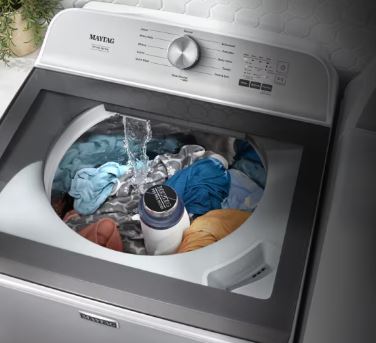
Maytag Washer Drains But Won’t Spin Quick Diagnostic Guide
| System Component | Drainage Impact | Spin Impact | Key Diagnostic Test | Repair Complexity |
| Drain pump | Directly affects | No direct impact | Water evacuation test | Easy |
| Lid lock assembly | No impact | Prevents spin entirely | Lock engagement test | Easy-Moderate |
| Lid switch | No impact | Blocks spin command | Continuity testing | Easy-Moderate |
| Drive belt | No impact | Prevents all rotation | Visual inspection | Moderate |
| Motor coupling | No impact | Stops power transmission | Empty spin test | Moderate |
| Shift actuator | No impact | Blocks spin mode | Mode transition test | Moderate-Hard |
| Control board | May affect both | Controls spin signals | Error code reading | Hard |
| Suspension system | No impact | Triggers safety shutdown | Basket movement test | Moderate |
Why Is My Maytag Washer Draining But Not Spinning?
The “drains but won’t spin” symptom pattern reveals crucial information about which systems function correctly and where failures actually exist.
What Successful Drainage Tells You
When your Maytag washer drains completely, multiple systems demonstrate proper function.
The drain pump motor operates correctly. Electrical connections supply power and the motor converts it to mechanical rotation.
The pump impeller spins freely without blockages. Debris hasn’t jammed the pump mechanism preventing water movement.
Drain hoses remain clear and unobstructed. Water flows through these passages without restriction.
The control board sends proper drain commands. Electronics successfully initiate and monitor the drainage process.
Water level sensors accurately detect empty conditions. The machine recognizes when drainage completes successfully.
This working drainage system eliminates 30-40% of potential washing machine failures. You’ve automatically ruled out major problem categories.
Why Drainage Success Doesn’t Guarantee Spinning
The drain and spin cycles use different mechanical systems and safety requirements creating independent failure points.
Drainage operates at relatively low speeds. The drain pump runs at moderate RPM without extreme mechanical stress.
Spinning requires high-speed basket rotation reaching 800-1,200 RPM. This extreme speed creates enormous centrifugal forces.
Different drive components handle these distinct operations. Some washers use separate systems for agitation, drainage, and spinning.
Additional safety interlocks protect spin cycles specifically. The lid must lock securely—a requirement absent during drainage.
Load balance matters critically during spinning. Unbalanced loads safely drain but can’t safely spin.
Higher mechanical loads stress worn components. Drive belts and couplings tolerate drainage but fail under spin demands.
The Diagnostic Advantage
This specific symptom pattern accelerates troubleshooting by eliminating unnecessary investigation paths.
Skip drain pump inspection and testing. You’ve already confirmed this system works through observed drainage.
Ignore drain hose routing and connections. These components function properly as demonstrated by successful water evacuation.
Focus exclusively on spin-specific mechanisms. Lid locks, drive systems, and safety interlocks deserve attention.
Examine high-load mechanical components. Parts tolerating low-speed operation but failing under spin stress become prime suspects.
Check spin cycle safety prerequisites. Balance detection, lid closure, and water level confirmation all specifically affect spinning.
This focused approach saves troubleshooting time. You’ll reach accurate diagnosis faster by concentrating efforts appropriately.
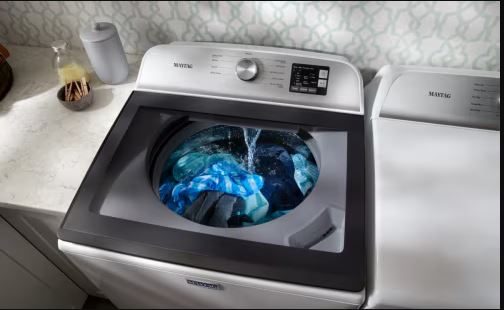
Understanding Maytag Spin Cycle Prerequisites
Maytag washers verify multiple conditions before allowing spin cycles. Understanding these requirements reveals where failures occur.
Lid Lock Engagement Verification
Modern top-loading Maytag washers include mandatory lid locks. These safety devices prevent access during high-speed spinning.
The control board commands lid lock engagement. A motorized actuator extends a locking pin securing the lid.
A switch confirms successful lock engagement. This electrical signal reports to the control board verifying secure closure.
Without confirmed lock engagement, spinning never initiates. The machine protects users by refusing to operate with potentially accessible spinning baskets.
Failed lid locks represent the most common cause of drain-without-spin failures. It could also be why your Maytag washer won’t start. The lock mechanism breaks, switches fail, or alignment issues prevent proper engagement.
Water Level Empty Confirmation
The washer must verify complete water evacuation before spinning begins. Spinning with water present creates dangerous imbalance.
Pressure sensors monitor water level continuously. These devices detect air pressure in tubes connected to the wash tub.
As water drains, air pressure changes dramatically. The sensor interprets these pressure variations as water level changes.
The control board waits for “empty” signals. Until sensors confirm no water remains, spinning commands don’t issue.
Faulty pressure sensors occasionally report inaccurate levels. The sensor reads “water present” despite successful drainage preventing spin cycle initiation.
Clogged pressure sensor tubes create similar problems. Debris or soap buildup blocks air pressure changes preventing accurate level detection.
Load Balance Acceptance
Balanced loads spin smoothly generating minimal vibration. Unbalanced loads create violent shaking risking mechanical damage.
Sensors monitor basket movement during initial spin acceleration. Excessive wobble indicates unacceptable load distribution.
The control board analyzes sensor data deciding whether spinning can proceed safely. Detected imbalance triggers automatic shutdown.
Modern Maytag washers attempt automatic load redistribution. The machine adds water, agitates briefly, drains again, then retries spinning.
After multiple unsuccessful redistribution attempts, the cycle ends. Clothes remain wet and the spin cycle abandons further efforts.
This safety system works perfectly but frustrates users. The washer functions correctly by refusing to spin dangerously unbalanced loads.
Drive System Engagement Capability
The mechanical drive system must successfully engage spin mode. This transition requires functioning components throughout the power transmission path.
Motors must provide adequate torque. Sufficient rotational force must reach the wash basket through drive mechanisms.
Belts must grip pulleys firmly. Slipping belts can’t transmit power effectively preventing basket acceleration.
Couplings must remain intact. Direct-drive systems depend on these connectors linking motors to transmissions.
Transmissions must shift into spin mode. Mechanical actuators reposition internal components enabling high-speed rotation.
Any failure along this power transmission path prevents spinning. The drain pump operates independently, explaining why drainage succeeds while spinning fails.
How Do I Fix My Maytag Washer That Won’t Spin?
Systematic repair approaches address the most likely causes first, progressing toward complex possibilities only after eliminating simpler explanations. Here’s how to fix the non-spinning washer:
Step 1: Verify Load Balance
Before assuming mechanical failures, eliminate the most common cause of spin refusal.
Open the washer and examine load distribution. Look for items bunched on one side or tangled together.
Remove all items and manually redistribute them. Spread heavy items around the basket perimeter balancing weight.
Reduce load size if necessary. Overfilled washers can’t redistribute effectively preventing successful balance achievement.
Restart the spin cycle with the redistributed load. Many “failures” resolve completely through proper loading alone.
If spinning occurs successfully, your washer never malfunctioned. Improve future loading practices preventing recurrence.
Persistent spin refusal despite proper loading indicates actual mechanical or electrical problems requiring repair.
Step 2: Check Lid Lock Function
Lid lock issues cause the majority of drain-without-spin failures requiring actual repairs.
Close the lid firmly and start a spin cycle. Listen for lid lock engagement sounds—typically clicking or mechanical movement.
Observe the lid lock indicator if your model includes one. An illuminated lock icon confirms successful engagement.
Try gently lifting the lid during spin cycle initiation. Properly functioning locks prevent lid opening completely.
If the lid opens easily or no lock sounds occur, the lid lock assembly requires attention.
Inspect the lid strike plate physically. This metal component on the lid must align perfectly with the lock mechanism.
Look for bent, broken, or misaligned strike plates. Even slight damage prevents proper lock engagement.
Check the lock assembly itself for broken plastic components. Access typically requires lifting the washer’s top panel.
Test the lock switch electrically using a digital multimeter (View on Amazon). With the lid closed and locked, the switch should show continuity.
Replace failed lid lock assemblies with OEM parts. Aftermarket locks often lack proper fit causing continued problems.
Step 3: Inspect Drive Belt Condition
Belt-driven Maytag models depend on this component for power transmission. Worn belts often tolerate low-speed operations but fail under spin loads.
Unplug the washer and access the drive belt. This typically requires removing front or rear panels depending on model.
Examine the belt visually for obvious damage. Look for cracks, fraying, glazing, or missing chunks.
Check belt tension manually. Proper tension allows approximately 1/2 inch deflection when pressed firmly.
Excessive slack indicates stretching or improper tension adjustment. The belt can’t grip pulleys adequately transmitting power.
Try rotating the motor pulley by hand. The wash basket should rotate correspondingly if the belt functions properly.
If the motor pulley turns without basket movement, the belt slips completely. Replacement becomes mandatory.
Install new belts matching OEM specifications exactly. Generic belts may have incorrect dimensions causing operational problems.
Route replacement belts precisely following original paths. Photograph the original routing before removal documenting proper configuration.

Step 4: Test Motor Coupling Integrity
Direct-drive Maytag washers use motor couplings instead of belts. These fail predictably causing spin problems while drainage continues working.
Access the motor coupling by removing cabinet panels. The coupling sits between motor and transmission shafts.
Look for broken rubber or plastic pieces. Failed couplings often shed fragments that appear in the wash tub.
Try manually rotating the wash basket. Excessive free play indicates coupling failure allowing independent rotation.
Listen during spin cycle attempts. Operating motors without corresponding basket movement confirm coupling problems.
Replacing motor couplings requires substantial disassembly. The wash tub must be removed accessing components beneath.
Follow manufacturer service procedures exactly. Improper reassembly creates additional problems compounding original failures.
New couplings cost $20-40 but labor intensity makes this a 2-3 hour repair. Consider professional service if uncomfortable with extensive disassembly.
Step 5: Examine Lid Switch Operation
Beyond lid locks, mechanical lid switches provide control signals. These simpler components fail independently causing spin prevention.
Locate the lid switch mounted near the lid hinge area. Access typically requires lifting the top panel.
Disconnect the switch wire connector. Use a multimeter testing continuity across switch terminals.
Manually press the switch actuator simulating lid closure. Continuity should change when the switch activates.
Intermittent or absent continuity indicates switch failure. Replace these inexpensive components restoring proper operation.
Verify the lid properly actuates the switch when closing. Adjustment or alignment corrections sometimes restore function without replacement.
Test switch operation through multiple cycles. Intermittent failures create frustrating problems that don’t always manifest during testing.
Replace marginal switches preventively. These inexpensive components ($15-30) aren’t worth risking continued problems.
Step 6: Reset Control Board Electronics
Electronic glitches occasionally prevent spin commands despite proper mechanical function. Complete resets clear many software-based problems.
Unplug the washer from the wall outlet. Wait 5-10 minutes allowing complete electrical discharge.
Press and hold the START button for 30 seconds while unplugged. This further drains capacitor charges resetting memory.
Reconnect power and attempt normal operation. Many electronic anomalies clear through full power cycling.
Enter diagnostic mode if available on your model. Run automated tests checking all systems systematically.
Record any error codes displayed. Research these codes identifying specific problems the control board detected.
Persistent problems after reset indicate actual component failures rather than temporary electronic glitches.
How Do You Reset the Spin Cycle on a Maytag Washer?
Resetting spin cycles involves both electronic resets clearing temporary faults and mechanical resets addressing physical component issues.
Electronic Spin Cycle Reset
Control board resets clear software glitches and restore proper command sequences.
Basic Power Reset
Unplug the washer for 5 minutes minimum. This discharges control board capacitors clearing temporary memory.
Longer reset periods prove more effective. Waiting 10-15 minutes ensures complete electrical discharge throughout all circuits.
After reconnecting power, allow the washer to reinitialize fully. The control board boots up reestablishing normal operating parameters.
Deep Reset Procedure
For persistent problems, perform more thorough electronic resets.
Unplug the washer completely. While unplugged, press and hold POWER and START simultaneously for 30 seconds.
This additional step drains charges from all capacitors throughout the electrical system. More comprehensive discharge clears deeper glitches.
Diagnostic Mode Reset
Access your washer’s diagnostic mode for targeted resets.
Enter diagnostic mode following your specific model’s button sequence. These vary between Maytag model lines.
Navigate to calibration or reset functions. These options restore factory default settings clearing accumulated errors.
Run the full calibration cycle. This process tests all systems reestablishing baseline operational parameters.
Exit diagnostic mode properly. Improper exit leaves the machine in test mode preventing normal operation.
Mechanical Spin System Reset
Physical component resets address mechanical issues preventing spin cycle engagement.
Lid Lock Reset – Cycle the lid lock mechanism clearing jammed or stuck locks.
Manually disengage any stuck lid locks. Access the lock assembly and carefully release mechanical components.
Clean the lock mechanism removing debris or obstructions. Lint and soap residue cause binding preventing proper engagement.
Lubricate moving parts sparingly using appropriate lubricants. Avoid excessive application attracting more debris.
Test lock operation repeatedly. Cycle the mechanism 10-20 times ensuring consistent reliable engagement.
Load Redistribution Reset – Address balance-related spin refusals through manual intervention.
Remove approximately half the load. Run a spin cycle with reduced quantity establishing the washer operates mechanically.
Success with smaller loads confirms balance sensitivity. The washer functions properly but requires better load distribution.
Reload items in smaller quantities using proper distribution techniques. Avoid washing single heavy items alone.
Belt Tension Reset – Restore proper drive belt tension on belt-driven models.
Access the belt tension adjustment mechanism. Most Maytag washers use either motor-mount positioning or idler pulley systems.
Adjust tension according to specifications. Belts should deflect 1/2 inch under firm pressure applied mid-span.
Verify tension consistency around the entire belt circumference. Uneven tension indicates twisted belts requiring replacement.
Why Won’t My Maytag Washer Agitate or Spin?
When washers refuse both agitation and spinning, the problem involves components affecting all rotational operations rather than spin-specific mechanisms.
Common Causes of Complete Rotation Failure
Multiple failure points prevent all basket rotation including both agitation and spinning.
Complete Drive Belt Failure – Broken belts can’t transmit any rotational power.
Belts sometimes snap completely separating into two pieces. This total failure stops all motor-to-basket power transmission.
The motor runs producing sounds but the basket never moves. This symptom immediately suggests drive system failure.
Inspect the belt for complete breakage. Look for separated sections or missing belt material.
Replace broken belts immediately. Continued operation damages motors and pulleys attempting to drive non-existent belts.
Motor Coupling Destruction – Failed couplings affect all rotational modes.
Direct-drive couplings sometimes shatter completely. The motor and transmission separate entirely preventing any power transmission.
You’ll hear motor operation without any basket movement whatsoever. The complete disconnect creates this distinctive symptom.
Broken coupling pieces often wash up into the tub. Look for white or black rubber fragments appearing mysteriously.
Motor Failure – Dead motors produce no rotational power.
Motors sometimes fail electrically. No humming, no operation, no sound occurs during cycle attempts.
Complete silence during agitation or spin attempts suggests motor death. However, verify electrical supply before condemning motors.
Test voltage at motor terminals. Adequate voltage with no motor response confirms motor failure.
Transmission Internal Failure – Transmission problems prevent power output.
Transmissions occasionally fail internally. Input shafts rotate but output shafts remain stationary.
This complete disconnect prevents both agitation and spinning. The motor works but power never reaches the basket.
Grinding sounds during operation warn of imminent transmission failure. Metal debris in oil indicates severe internal damage.
Transmission replacement costs $200-400 plus labor. On older washers, this repair often doesn’t make economic sense.
Diagnostic Differences From Spin-Only Failures
Distinguishing between complete failure and spin-only problems focuses troubleshooting appropriately.
Test agitation function specifically. Start a wash cycle observing whether agitation occurs normally.
Successful agitation proves motors, basic drive systems, and control boards function. The problem isolates to spin-specific components.
Absent agitation indicates more fundamental failures. Motors, couplings, belts, or transmissions require attention.
This distinction determines whether simple fixes suffice or major repairs become necessary.
How Do I Reset My Maytag Washer That Won’t Spin?
Targeted reset procedures address spin-specific problems without affecting other operational aspects.
Spin Cycle Fault Code Clearing
Error codes sometimes prevent spin cycle operation. Clearing these codes restores function when no actual failures exist.
Enter diagnostic mode accessing stored error codes. Record all displayed codes before clearing them.
Navigate to the error code clearing function. This option erases fault memory resetting the control board.
Exit diagnostic mode and test operation. If actual component failures caused codes, they’ll immediately regenerate.
Codes that don’t return indicate temporary faults or false alarms. The system now operates normally.
Persistent code regeneration indicates real problems. Research specific codes identifying actual component failures requiring repair.
Spin Mode Recalibration
Calibration procedures teach control boards proper spin cycle parameters.
Access calibration mode through specific button sequences. These vary by model requiring manual consultation.
Start the calibration cycle with an empty washer. The machine runs through various speed profiles establishing baselines.
Allow complete calibration without interruption. Power loss during calibration corrupts control board data.
The process takes 5-15 minutes depending on model. The washer automatically tests all operational modes.
After calibration completes, test normal spin cycles. Recalibrated systems often resolve mysterious spin problems.
Physical Component Reset Procedures
Some reset procedures involve manually cycling mechanical components.
Shift Actuator Reset – Manually cycle the shift actuator clearing stuck positions.
Access the actuator beneath the washer. Disconnect electrical connections temporarily.
Manually move the actuator arm through its full range of motion. Work it back and forth 10-15 times.
This physical cycling can free stuck mechanisms. Reconnect electrical connections and test operation.
Suspension System Reset – Reset suspension components to proper positions.
Rock the wash basket gently in all directions. This movement helps suspension components seat properly.
Check that all suspension rods or springs remain attached at both ends. Detached components prevent proper basket positioning.
Ensure the basket sits level and centered. Mispositioned baskets trigger safety systems preventing spinning.

How to Fix the Spin Cycle on a Maytag Washing Machine
Comprehensive spin cycle repairs address both common problems and complex failures requiring technical expertise.
Lid Lock Assembly Complete Repair
Lid lock problems create the majority of spin-only failures. Complete repair ensures long-term reliability.
Diagnosis – Confirm lid lock failure through systematic testing.
Observe lock engagement attempts. Working locks produce audible clicks and visible actuator movement.
Test switch continuity with the lid locked. Proper switches show continuity changes when actuated.
Check strike plate alignment. Misalignment prevents the lock from engaging the strike properly.
Replacement Procedure – Install new lid lock assemblies correctly.
Order exact replacement parts using your model number. Lid locks are highly model-specific.
Access the lock by lifting the washer’s top panel. The lock mounts on the cabinet side or beneath the top.
Photograph wire connections before disconnecting anything. Reference photos prevent reconnection errors.
Remove mounting screws securing the old lock assembly. Note exact positioning for proper replacement installation.
Install the new lock ensuring proper orientation. Improper positioning prevents correct strike engagement.
Reconnect wires according to reference photos. Reversed connections prevent proper operation.
Test lock function before reassembling completely. Verify engagement, locking, and switch operation.
Drive Belt Complete Service
Thorough belt service includes inspection, adjustment, and replacement when necessary.
Inspection – Assess belt condition comprehensively.
Remove access panels revealing the belt. Examine all visible belt surfaces.
Look for cracks perpendicular to belt length. These indicate age-related deterioration.
Check for glazing creating shiny smooth surfaces. Lost texture reduces grip.
Inspect edges for fraying or damage. Edge wear indicates alignment problems.
Tension Adjustment – Restore proper belt tension before replacing marginally worn belts.
Locate the tension adjustment mechanism. This varies by model using motor mounts or idler pulleys.
Loosen motor mounting bolts allowing motor repositioning. Moving the motor adjusts belt tension.
Adjust until belt deflection measures 1/2 inch under firm pressure. Too tight damages bearings; too loose allows slipping.
Tighten all mounting bolts securely. Vibration loosens inadequately tightened fasteners.
Belt Replacement – Install new belts when adjustment can’t restore proper function.
Purchase OEM belts matching exact specifications. Generic belts often have wrong dimensions.
Photograph belt routing around all pulleys. Complex paths require documentation.
Remove the old belt carefully noting any difficulties. Replacement installation mirrors removal.
Route the new belt precisely matching original configuration. Improper routing causes rapid wear.
Verify tension and tracking after installation. The belt should remain centered on pulleys during rotation.
Shift Actuator Repair
Shift actuators control transmission mode changes. Failures prevent spinning while agitation continues working.
Testing – Verify actuator function before replacement.
Access the actuator mounted on or near the transmission. Disconnect wire harnesses.
Test resistance across actuator terminals using a multimeter. Compare readings to service manual specifications.
Apply power directly to the actuator terminals. Working actuators should produce audible mechanical movement.
Failed actuators show infinite resistance or no mechanical response to power application.
Replacement – Install new actuators restoring proper mode shifting.
Order model-specific actuators. These components aren’t universal across Maytag models.
Remove mounting fasteners securing the old actuator. Note exact positioning and orientation.
Disconnect mechanical linkages to transmission components. Photograph connections before disassembly.
Install the new actuator ensuring proper mechanical engagement. Improper positioning prevents transmission shifting.
Reconnect electrical connections and test operation. Verify mode transitions before final reassembly.
Find suitable replacement parts for Maytag washing machine on Amazon, including lid lock assemblies, suspension rods, shift actuators and more.
Maytag Washer Spin Cycle Not Working Properly
Partial spin cycle function creates different symptoms than complete spin failure requiring distinct diagnostic approaches.
Intermittent Spin Failures
Cycles that sometimes spin but frequently fail indicate different problems than complete failures.
Thermal Cutout Issues – Overheating motors trigger protective shutoffs.
Motors sometimes overheat during operation. Thermal protection circuits shut down motors preventing damage.
After cooling, motors resume operation normally. This creates intermittent symptoms that seem random.
Overheating stems from various causes. Bearing wear increases friction generating excessive heat.
Inadequate ventilation prevents cooling. Lint accumulation blocks ventilation passages trapping heat.
Clean motor ventilation thoroughly. Remove all accumulated lint and debris.
Check motor bearings manually. Rough rotation or resistance indicates bearing problems.
Replace motors showing bearing deterioration. Continued operation risks complete failure and potential fire hazards.
Loose Electrical Connections – Vibration loosens wire connections over time.
Intermittent electrical contact creates unpredictable failures. Connections work sometimes but fail when vibration shifts wires.
Inspect all wire connections throughout the machine. Tighten any loose connections securely.
Look for corroded terminals. Oxidation increases resistance causing intermittent contact problems.
Clean corroded connections using electrical contact cleaner. Restore proper metal-to-metal contact.
Apply dielectric grease to connections preventing future corrosion. This conductive paste maintains proper contact.
Slow Spin Speed Problems
Washers that spin slowly fail to extract adequate water leaving clothes too wet.
Belt Slippage – Worn belts slip under load preventing full speed achievement.
Partially worn belts sometimes maintain grip at low speeds but slip during acceleration.
The basket rotates but never reaches proper spin velocity. Clothes remain considerably wetter than normal.
Glazed belt surfaces can’t grip pulleys adequately. The belt slides rather than transmitting full power.
Replace slipping belts even when not visibly damaged. Lost grip indicates functional failure.
Motor Capacitor Degradation – Weak capacitors reduce motor torque.
Start capacitors provide extra torque during motor starting. These components weaken over time.
Degraded capacitors reduce available starting torque. Motors struggle reaching full speed under load.
The motor runs but sounds labored. Maximum speed remains below normal operational levels.
Test capacitors using capacitance meters. Readings significantly below rating indicate replacement necessity.
Replace weak capacitors with exact replacements. Incorrect capacitance values prevent proper motor operation.
Transmission Wear – Internal transmission wear reduces efficiency.
Worn transmission components create slippage internally. Input rotation doesn’t fully translate to output rotation.
Gradual speed reduction over months indicates progressive wear. The deterioration accelerates over time.
Oil leaks suggest seal failure. Lost lubrication accelerates internal wear dramatically.
Transmission replacement or rebuilding costs $200-500. Consider machine age before authorizing expensive repairs.
Noisy Spin Cycles
Unusual sounds during spinning indicate mechanical problems requiring attention.
Grinding sounds suggest bearing failures. Metal-on-metal contact creates these harsh noises.
Squealing indicates belt problems. Slipping belts or misalignment produces high-pitched sounds.
Banging reveals suspension issues. Failed shocks or broken suspension rods allow basket contact.
Clicking suggests loose components. Fasteners working loose create repetitive clicking synchronized with rotation.
Address noisy operation promptly. Continued operation accelerates damage increasing repair costs.
Advanced Diagnostic Techniques
When basic troubleshooting doesn’t reveal problems, advanced methods pinpoint elusive failures.
Electrical Testing Procedures
Systematic electrical testing identifies component failures definitively.
Test voltage at motor terminals during spin attempts. Adequate voltage without motor response confirms motor failure.
Measure control board output signals. Proper signals reaching failed components indicate component rather than control problems.
Check continuity through wire harnesses. Broken wires create symptoms identical to component failures.
Test sensors and switches individually. Isolated testing removes variables preventing accurate diagnosis.
Diagnostic Mode Utilization
Built-in diagnostic modes provide valuable troubleshooting information.
Enter diagnostic mode following model-specific procedures. Button sequences vary between Maytag model lines.
Run automatic diagnostic cycles. These test all systems reporting results through LED patterns or displays.
Interpret error codes accurately. Research codes thoroughly understanding exact indicated failures.
Test individual components through manual diagnostic modes. Activate specific systems isolating their operation.
Document all diagnostic results. Records prevent confusion and duplicate efforts.
Professional Assessment Considerations
Complex problems sometimes require professional expertise.
Intermittent problems that don’t manifest during testing frustrate DIY troubleshooting. Technicians use different approaches capturing elusive failures.
Multiple simultaneous problems suggest cascading failures. Professional diagnosis identifies relationships between issues.
Expensive component replacement candidates justify professional confirmation. Prevent unnecessary spending through expert verification.
Warranty coverage mandates authorized service. DIY repairs void remaining warranty protection.
Preventive Measures
Regular maintenance prevents many spin cycle failures before they develop.
Clean the washer monthly removing detergent residue. Buildup affects mechanical components gradually.
Inspect and test lid locks quarterly. Catch developing problems before complete failure.
Check belt condition annually on belt-driven models. Replace deteriorating belts before breakage.
Maintain proper loading practices. Consistent overloading accelerates mechanical wear.
Use appropriate detergents in correct quantities. Excess suds contribute to component deterioration.
Address small problems immediately. Minor issues become major failures when ignored.
Frequently Asked Questions
Why does my Maytag washer drain completely but leave clothes soaking wet?
Successful drainage with wet clothes indicates spin cycle failure not drainage problems. The drain pump works perfectly but spinning never occurs. Check lid lock function, drive belt condition, and load balance. These three causes account for 80% of drain-without-spin failures requiring actual repairs.
Can I manually spin my Maytag washer if the automatic spin won’t work?
Most Maytag washers don’t offer manual spin override functions. Safety interlocks prevent operation when problems exist. You can’t bypass lid locks or balance detection. Instead, diagnose and repair the actual cause. Temporary workarounds don’t exist for safety-related spin prevention.
How long should a Maytag washer spin cycle last?
Normal spin cycles run 5-12 minutes depending on load size and cycle selection. High-speed spinning extracts maximum water during the first 3-5 minutes. Extended spinning provides diminishing returns. If your washer attempts spinning for over 15 minutes, problems exist preventing normal completion.
Why does my washer spin sometimes but not always?
Intermittent spin failures indicate marginal component condition or environmental factors. Thermal cutouts from overheating create intermittent problems. Loose electrical connections work sometimes but fail when vibration shifts wires. Load-dependent failures suggest balance sensitivity. Document when failures occur identifying patterns that reveal causes.
Will resetting my Maytag washer fix the spin cycle?
Electronic resets clear software glitches and temporary faults. If actual component failures exist, resets won’t help. Try resetting first since it costs nothing and takes minutes. Persistent problems after reset indicate real mechanical or electrical failures requiring component repair or replacement.
Can a clogged drain cause spin cycle problems even if water drains?
Partially restricted drains sometimes allow complete water evacuation but prevent the washer from confirming empty status. Slow drainage creates timing problems. The control board may timeout waiting for empty confirmation. Clean drain paths completely even when drainage appears adequate ensuring proper sensor operation.
How much does it cost to fix a Maytag washer that drains but won’t spin?
Repair costs range from $0 for load redistribution to $500+ for transmission replacement. Lid lock repairs run $45-80 DIY or $150-250 professionally. Drive belts cost $25-50 DIY or $150-250 installed. Shift actuators run $60-100 DIY or $200-350 professionally. Most drain-without-spin repairs fall in the $50-200 range.
Achieving Spin Cycle Success
A Maytag washer that drains but won’t spin presents a focused troubleshooting challenge. The successful drainage narrows potential causes significantly.
Your drain pump works perfectly. Water evacuation succeeds completely. Drainage paths remain clear. These verified working systems eliminate major problem categories.
Focus troubleshooting on spin-specific components and safety interlocks. Lid locks fail frequently creating most drain-without-spin scenarios. Drive belts wear tolerating low speeds but failing under spin loads.
Start with simple checks requiring minimal time or expense. Load redistribution costs nothing yet fixes many apparent failures. Lid lock inspection takes minutes revealing obvious problems.
Progress systematically toward complex possibilities. Exhaust simple explanations before attempting major disassembly or expensive repairs.
Electronic resets clear many mysterious problems. Spend five minutes resetting before assuming mechanical failures.
Know your limitations recognizing when professional help becomes appropriate. Complex electrical diagnostics and major mechanical repairs exceed most homeowner capabilities.
Consider economic factors weighing repair costs against machine age and value. Sometimes replacement provides better value than expensive repairs.
Document your troubleshooting process. Records prevent duplicate efforts and provide valuable information for professionals if needed.
Your Maytag washer wants to spin—something simply prevents that final crucial step. Systematic diagnosis reveals the obstacle allowing targeted effective repair.

Hi, I’m Barlgan! I created Repair Me Yourself to empower homeowners to tackle appliance repairs with confidence. From decoding error codes to fixing cooling issues, I break down complex repairs into simple, actionable steps that save you time and money.