You load wet clothes into your Maytag Bravos XL dryer, press start, and nothing happens. Or maybe it clicks, beeps, or lights up, but the drum just refuses to turn. This frustrating scenario leaves you standing there with damp laundry and mounting questions about what went wrong with your previously reliable appliance.
The Maytag Bravos XL dryer won’t start issue affects thousands of owners every year, and it shows up in various confusing ways. Sometimes the dryer appears completely dead with no signs of life. Other times it acknowledges your commands but simply won’t execute them. Understanding which specific symptom you’re experiencing will guide you toward effective troubleshooting and help you identify the actual problem.
A Maytag Bravos XL dryer won’t start due to five primary failure categories. The most common is a blown thermal fuse from overheating, which requires replacement. Other causes include door switch failure preventing the safety interlock from closing, a broken drive belt that causes the motor to run without turning the drum, a failed start switch from wear that prevents signal transmission to the control board, or start relay malfunction that interrupts power delivery to the motor.
The specific symptom you’re seeing (clicking, beeping, powering on without starting, or complete unresponsiveness) indicates which component has failed. Thermal fuse failures account for about 40% of no-start issues, door switch problems represent roughly 25%, and drive belt breaks cause about 20% of cases where motors run but drums don’t turn.
This troubleshooting guide breaks down every reason your Bravos XL dryer might refuse to start, covering everything from simple door latch issues to more complex thermal fuse failures. We’ll walk you through systematic diagnostic procedures and practical solutions for each scenario you might encounter. Whether your dryer clicks, beeps, powers on without starting, or remains completely unresponsive, you’ll find targeted answers here that address your specific situation.
Quick Fix Guide for a Non-Starting Maytag Bravos XL Dryer
Before diving deep, try these quick checks:
- Check Power Supply – Verify the outlet, circuit breaker, and power cord connection
- Test Door Switch – Make sure the door closes completely and the latch engages properly
- Inspect Thermal Fuse – Located on the blower housing, this one-time safety device fails frequently
- Verify Start Switch – Press firmly and hold for 2-3 seconds to ensure proper contact
- Examine Drive Belt – A broken belt prevents drum rotation even when the motor functions
- Test Start Relay – Controls power delivery to the motor during startup
- Check for Error Codes – Some models display diagnostic codes that point directly to problems
Quick Reference for a Maytag Bravos XL Dryer That Won’t Start
| Symptom | Most Likely Cause | Quick Test | DIY Difficulty |
|---|---|---|---|
| Clicks but won’t start | Door switch or start relay failure | Test door closure, listen for relay click | Easy |
| Turns on but won’t start | Thermal fuse blown or belt broken | Feel for heat at back, check belt | Moderate |
| Beeps but won’t start | Control board acknowledging but not executing | Run diagnostic mode | Moderate |
| Won’t start cycle | Start switch worn or wiring issue | Test switch continuity | Easy-Moderate |
| Completely dead | Power supply or thermal fuse | Check breaker, test fuse | Easy-Moderate |
Understanding Your Maytag Bravos XL Dryer Startup Sequence
Your dryer follows a specific startup sequence every time you press that start button. Understanding this process helps you identify exactly where the failure is occurring, since each step must complete successfully before the dryer will operate normally.
Normal Startup Process Step-by-Step
The control board receives power the moment you plug in the dryer, which energizes the display and control panel. When lights illuminate on the panel, you know electrical supply is reaching the main components.
Closing the door activates the door switch, which is a critical safety interlock that must engage before anything else can happen. The control board monitors this switch continuously throughout operation, and if the door isn’t properly closed, nothing will work.
When you press the start button, it sends a signal to the control board telling it to begin the cycle. The board then verifies that all safety conditions have been met, including door closure and the absence of any overheating conditions that would make operation unsafe.
Once everything checks out, the control board energizes the start relay. This relay acts as a switch that delivers power to the drive motor, which begins spinning the drum via the belt connection. Simultaneously, the board activates either the heating element (electric models) or gas valve (gas models), and the blower motor engages to pull air through the entire system. This complete sequence takes only 1-2 seconds under normal circumstances.
Safety Interlocks Preventing Startup
Multiple safety devices work together to protect against hazardous operation by preventing the dryer from starting under unsafe conditions. Understanding these interlocks helps you diagnose no-start issues more effectively since any one of them can shut down the entire system.
The thermal fuse monitors your dryer’s internal temperature constantly. If the temperature exceeds safe limits at any point, this fuse blows permanently as a one-time safety device. Once blown, your dryer won’t start again until you replace this component.
The door switch prevents operation whenever the door is open, protecting users from injury. The drum simply won’t spin unless the door closes completely and activates this switch properly.
The high-limit thermostat also protects against overheating, but unlike the thermal fuse, this component resets automatically once temperatures drop back to safe levels. It temporarily prevents starting during overheat conditions but doesn’t require replacement.
Some Bravos XL models include moisture sensors that can affect startup behavior. When these sensors malfunction, they occasionally prevent cycle initiation, and these issues typically present as intermittent problems that come and go.
Component Interaction During Startup
The start switch and door switch have to work together perfectly for your dryer to operate. Both must close their circuits simultaneously, and either one failing will prevent the entire startup sequence from completing.
Your control board serves as the system’s brain, receiving inputs from all switches and sensors throughout the dryer. Based on this data, it makes the go or no-go decision about whether conditions are safe to start the cycle.
The start relay acts as a power switch specifically for the motor since the control board can’t directly handle the high current the motor draws. The relay bridges this gap safely by using a small control signal from the board to switch the much larger motor current.
The drive motor relies completely on the belt for transferring its rotation to the drum. When the motor operates but the drum doesn’t move, this indicates belt failure, which is a common issue that confuses many owners who hear the motor running but don’t see any results.
Maytag Bravos XL Dryer Clicks But Won’t Start
When you hear clicking sounds coming from your dryer, it means the start relay is energizing. This confirms that power is reaching the control board successfully, and the clicking without actual starting narrows your diagnostic focus significantly to just a few possible culprits.
Understanding the Clicking Sound
The relay click happens when the control board attempts to start the motor. This electromagnetic switch makes an audible click when it closes, and hearing this sound confirms that at least part of your system is functioning properly.
Single clicks followed by silence suggest the relay itself has problems. The relay closes initially but doesn’t maintain the connection, and this intermittent contact prevents the motor from operating normally.
Rapid clicking indicates that the control board is repeatedly trying to start the cycle. It senses failure each time and keeps attempting to complete the sequence, and this pattern typically suggests either motor problems or wiring issues preventing proper operation.
The location where you hear the click helps with diagnosis as well. Relays typically mount near the control board in the upper portion of the dryer, so identifying where the sound originates confirms whether you’re dealing with relay involvement.
Door Switch as Primary Culprit
The door switch fails frequently on Bravos XL dryers despite being a relatively inexpensive component. This small part wears out from repeated use over years of operation, and when it fails, it prevents the startup sequence from completing.
Test your door switch by opening and closing the door while listening carefully. You should hear a distinct click when the door closes fully, and no click suggests either switch failure or misalignment issues.
Inspect the door striker plate on the door itself while you’re checking things. This plastic piece engages with the switch mechanism, and worn or broken strikers simply can’t activate the switch properly even when the door closes.
You can access the door switch by removing the front panel of your dryer. It’s typically located on the right side of the cabinet, and once you can see it, disconnect the wires and test it with a multimeter (View on Amazon).
Measure the switch continuity with the door in the closed position. The switch should show zero ohms resistance when closed, while infinite resistance indicates the switch has failed and needs replacement.
Replacement door switches cost between $15 and $30 depending on where you buy them. Installation takes about 20-30 minutes for most DIYers with basic skills, and this simple repair solves many clicking issues immediately.
Start Relay Failure Diagnosis
The start relay can fail in a partially closed position where it clicks but doesn’t actually complete the electrical circuit. This prevents current from flowing to the motor even though you hear the relay trying to engage.
Locate the relay either on the control board itself or mounted nearby in the cabinet. It appears as a small rectangular component, and you should check it carefully for burn marks or visible damage that indicates failure.
Testing the relay requires removing it from the circuit and using a multimeter to check both coil resistance and contact continuity. The specific values you should see vary by model, so you’ll want to look up the specifications for your particular dryer.
Relay replacement typically costs between $20 and $40. Some relays mount directly to the control board and require careful soldering work, while others simply plug into wire harnesses and disconnect easily.
Intermittent relay failures are particularly frustrating during diagnosis. The dryer works sometimes but not others, and these partial failures gradually worsen over time until they become permanent and the relay stops working altogether.
Motor Start Problems
Sometimes the motor itself makes clicking sounds when it tries to start but can’t quite get going. Seized motors or worn bearings prevent rotation, and the clicking comes from the motor struggling against internal resistance.
Test whether your motor is the problem by manually rotating the drum from inside. Turn it by hand and feel for any resistance or binding. Smooth, easy rotation indicates the motor isn’t seized and the problem lies elsewhere.
Listen carefully to distinguish between motor clicks and relay clicks since they sound somewhat different. Motor clicks tend to be lower pitched and originate from the lower areas of the dryer, while relay clicks come from the upper control areas where the electronics live.
Check the motor wiring connections at the motor terminals to make sure everything is secure. Loose connections create high resistance in the circuit, which prevents adequate current from flowing to start the motor properly.
You can measure motor winding resistance with a multimeter and compare your readings to the specifications in your service manual. Failed windings will show up as either open circuits (infinite resistance) or shorted circuits (very low resistance).
Motor replacement is a major repair that costs between $150 and $300 for parts alone, not including labor if you hire someone. This repair requires significant disassembly of your dryer, so you’ll want to consider the age of your appliance before proceeding with this expensive fix.
Maytag Bravos XL Dryer Turns On But Won’t Start
When your display illuminates and buttons respond normally, yet pressing start accomplishes absolutely nothing, this scenario tells you that the power supply is working fine but something in the startup sequence is failing. The disconnect is happening somewhere between the control input and actual motor activation, which points to specific components.
Control Panel Response Without Action
Your control board is receiving power and operating normally at this point. Lights work, sounds play, and button responses happen perfectly, but the failure occurs in the chain between control input and motor activation.
This symptom completely eliminates power supply problems from your diagnostic list. You can focus your attention on components between the control board and motor, with the safety interlocks becoming your primary suspects.
Try testing all the different cycle selections to determine if specific cycles work while others don’t. Sometimes one cycle functions normally while others refuse to start, and this pattern indicates control board logic issues rather than simple component failure.
Experiment with different temperature and time settings as well. Occasionally specific combinations of settings prevent starting in ways that seem illogical, and this software-like behavior suggests problems within the control board itself.
Document exactly which buttons work and which don’t respond as expected. This information helps technicians diagnose control board issues more quickly if you end up needing professional help, and detailed observations can speed up repairs significantly.
Thermal Fuse Testing and Replacement
The thermal fuse represents the single most common cause of this particular symptom. Located on the blower housing, this safety device blows during overheating events and once it blows, it never resets on its own.
When you have a blown thermal fuse, the complete no-start happens despite the panel functioning perfectly. Your dryer might tumble manually if you spin it by hand, but it won’t power on for a cycle, and no other obvious failures will be present to explain the problem.
Access the thermal fuse by removing either the front or rear panel depending on your model. It’s mounted directly on the blower housing, which is a metal box located near the drum. You can follow the wires leading to it for easier identification if you’re not sure what you’re looking for.
Remove the thermal fuse by disconnecting the wire terminals from both ends. Test its continuity with a multimeter set to the resistance function. Working fuses should show zero ohms resistance, while blown fuses show infinite resistance indicating an open circuit.
Replace any blown thermal fuses immediately since they’re relatively inexpensive at $10-$20 and install in just a few minutes. However, you absolutely must identify why the fuse blew before operating your dryer again, or you’ll just blow another fuse.
Common causes that blow thermal fuses include restricted venting systems, clogged lint traps, or failed thermostats that allow temperatures to climb too high. Clean all your venting thoroughly from the dryer to the outside exhaust, and verify that your lint trap is clean and properly installed before running another cycle.
High-Limit Thermostat Issues
The high-limit thermostat works alongside the thermal fuse to protect against overheating. It cycles power on and off during overheat conditions temporarily, but unlike the thermal fuse, this component resets automatically once temperatures drop back to safe levels.
Failed high-limit thermostats sometimes stick in the open position, which prevents starting even after temperatures have dropped back to normal. Testing requires using a multimeter to check for continuity through the component.
The high-limit thermostat typically mounts very close to the thermal fuse on the blower housing. Some models place it on the heating element housing instead, so you’ll want to consult service diagrams for your specific model to find the exact location.
Test the thermostat at room temperature when the dryer has been off for a while. It should show continuity at normal temperatures, and if it shows an open circuit when cool, replacement becomes necessary.
High-limit thermostat replacement costs between $15 and $35. These install very similarly to thermal fuses using the same basic procedure, and you’ll often find that both components need replacing simultaneously on older dryers that have been running hot.
Operating Thermostat Problems
The operating thermostat controls cycle temperature during normal operation rather than just protecting against dangerous conditions. Failed operating thermostats can prevent starting on some models since they’re part of the control system that regulates heat cycling.
Thermostats mount either on the blower housing or near heating elements depending on their specific function. Multiple thermostats exist in your dryer for different temperature ranges, so you’ll need to identify the correct one using wiring diagrams for your model.
Test each thermostat for continuity at room temperature using your multimeter. Most operating thermostats should show continuity when cool, and open circuits at room temperature indicate failure.
Replace any thermostats showing improper continuity readings. These cost between $20 and $40 each depending on the specific type, and proper dryer operation requires all thermostats functioning correctly within their designed parameters.

Maytag Bravos XL Dryer Beeps But Won’t Start
When your dryer beeps in response to button presses, it means the control board is acknowledging your start command. However, something is preventing the board from executing that command and actually starting the cycle. This auditory feedback confirms communication is working but reveals that execution is failing somewhere in the chain.
Decoding Beep Patterns
Single beeps typically acknowledge button presses as normal feedback. Multiple beeps in sequence often indicate errors or warnings about conditions the dryer has detected, and these patterns provide valuable diagnostic clues about what’s wrong.
Continuous beeping suggests error conditions that require your attention before the dryer will operate. The control board uses these beeps to alert you to problems it has detected, so you should check for any error codes showing on the display.
Beep-and-stop patterns indicate the board is attempting to start cycles but then aborting the attempt. The board tries initiating the sequence and then stops, and safety interlocks typically cause this particular pattern of behavior.
Consult your user manual for information about what different beep codes mean for your specific model. Manufacturers use different patterns to indicate specific alerts, and your manual decodes these signals so you know exactly what the dryer is trying to tell you.
Record the beep patterns you’re hearing, including the count and timing between beeps. This information proves helpful for troubleshooting on your own, and you should definitely share these details with technicians if you end up needing professional help.
Door Latch Alignment Issues
Misaligned door latches create a situation where the door closes but doesn’t actually engage the switch properly. The control board receives an incomplete door-closed signal, so it beeps to acknowledge your command but won’t start the cycle to protect your safety.
Inspect how your door aligns when closing by observing whether it sits flush against the frame. Any visible gaps indicate alignment problems that need correction before the dryer will operate normally.
Check the striker plate on the door itself since this plastic component wears down over time with repeated use. Worn strikers don’t extend far enough to activate the switch properly even when the door appears closed.
Examine the door hinges for any looseness or damage that might be affecting alignment. Worn hinges allow the door to sag slightly, which prevents the striker from engaging properly with the switch mechanism.
Adjust door alignment by loosening the hinge screws just slightly, then shifting the door position until proper alignment occurs. Once you’ve got it positioned correctly, tighten the screws back down to secure the new position.
Replace worn striker plates if adjustment doesn’t solve the problem. These cost between $10 and $20 and either press-fit into place or screw onto the door, making replacement a simple 5-10 minute job.
Start Switch Internal Failure
A failed start button could be the reason your dryer won’t start. The start switch can develop partial internal failures where it signals the control board but doesn’t actually complete the electrical circuits needed for operation. The control board receives these partial signals, which triggers the beep sounds but doesn’t result in actual starting.
Press your start button and pay attention to how it feels under your finger. It should click decisively with good tactile feedback, and mushy or unresponsive button action indicates wear inside the switch mechanism.
Inspect the start switch from the rear of the control panel if you can access it. Look carefully for burn marks, cracks, or other obvious physical damage that would indicate the switch has failed.
Test start switch continuity by accessing its electrical terminals with a multimeter. The switch should show continuity only when pressed down, and continuous conductivity or no continuity at all indicates the switch has failed.
Start switch replacement requires removing the control panel to access the switch. Switches cost between $20 and $40 depending on the specific type your model uses, and installation difficulty varies based on how accessible the panel is on your particular dryer.
Control Board Logic Errors
Control boards occasionally develop logic errors from power surges or electrical interference that acts like software glitches. These electronic malfunctions prevent normal operation even though the board has enough function to beep at you, confirming it has some level of operation but revealing corrupted logic somewhere in its circuits.
Perform a control board reset by unplugging your dryer completely from the wall. Wait a full 5 minutes to allow all internal capacitors to discharge completely, then reconnect power and test operation again.
Some Bravos XL models reset using specific button combinations held down simultaneously. Press the designated buttons for several seconds according to your model’s requirements, and consult your manual for the exact reset procedure for your specific dryer.
Run diagnostic mode if your model supports this feature. Diagnostic mode reveals error codes and provides information about system status that helps identify problems. Follow the diagnostic procedures outlined in your service manual to access and interpret this information.
Control board replacement costs between $150 and $300 for the part alone, with professional installation adding another $100-$200 typically. This represents a major repair that requires careful consideration, especially if your dryer is older and might develop additional problems soon.
Maytag Bravos XL Dryer Won’t Start Cycle
You press start and maybe the drum tumbles briefly or the display changes, but the actual drying cycle never truly begins. Or perhaps the dryer seems ready to go but won’t initiate the drying sequence no matter what you do. This specific failure indicates problems that occur after the initial startup sequence begins.
Cycle Selector Switch Problems
The cycle selector dial or buttons determine which specific program the dryer should run. When these selectors fail, they prevent cycle initiation because the dryer recognizes your start command but can’t identify which cycle you want it to run.
Rotate the cycle selector and feel for smooth, distinct positions as you move through the options. Each position should click firmly into place, and loose or grinding sensations indicate internal wear in the switch mechanism.
Test the selector switch by trying all available cycle options one by one. Sometimes specific positions fail while others continue working normally, and this pattern definitively confirms selector problems rather than other issues.
Access the selector switch from behind the control panel where you can see its connections. Multi-position switches have numerous terminals for all the different settings, and testing requires checking continuity at each position according to wiring diagrams.
Cycle selector replacement typically costs between $30 and $60. Installation requires careful documentation of wire connections, so take clear photos before disconnecting any wires to ensure you can reconnect everything correctly.
Moisture Sensor Failures
Moisture sensors tell the control board when your clothes have dried sufficiently. Failed sensors confuse the board about starting requirements, and some models won’t even initiate cycles when they can’t get proper readings from faulty sensors.
Locate the moisture sensor bars inside your drum. These appear as two metal strips mounted on the drum wall, and you should clean them thoroughly with rubbing alcohol to remove any residue buildup.
Test your sensors by checking continuity between the two bars. Dry sensors show very high resistance, while wet sensors show lower resistance, and the resistance should change noticeably when you wet the bars slightly.
Sensor failure specifically prevents cycles that use automatic dry settings. Try using timed dry cycles instead as a test, and if timed cycles work fine while auto cycles don’t, your sensors have definitely failed.
Replace moisture sensors if testing confirms failure. These cost between $40 and $80 and mount directly to the drum, requiring some disassembly to access. Replacement difficulty varies significantly depending on your specific model’s design.
Temperature Setting Issues
Incorrect temperature selections sometimes prevent certain cycles from starting. The control board verifies that setting combinations are compatible with the selected cycle, and incompatible selections cause the board to abort startup.
Try different temperature settings with each cycle type to see if specific combinations work. Some cycles require specific temperature ranges to function, so you’ll want to verify that your setting combinations are actually compatible.
Blocked or failed temperature sensors prevent starting in some cases because these sensors verify air temperature within the system. Failed sensors can’t confirm safe operating conditions, so the control board refuses to start the cycle.
Clean all vents to ensure proper airflow throughout your dryer. Restricted airflow directly affects temperature sensor readings, and proper ventilation enables sensors to provide accurate information to the control board.
Test temperature sensors by measuring their resistance with a multimeter. Resistance values should change predictably with temperature, and you can compare your readings to the specifications in your service manual.
Timer and Control Module Issues
Mechanical timers on older models sometimes fail and prevent cycle progression. Modern electronic controls develop similar issues that stop cycles from running properly, and either type of failure prevents proper cycle execution.
Listen for timer motor operation when you press start. Working timers produce a faint humming sound that you can hear if you listen carefully, and complete silence suggests the timer motor has failed.
Inspect timer mechanisms for visible damage if you can access them. Look for burnt contacts or broken plastic parts, since physical damage requires complete replacement rather than repair.
Electronic control modules fail from power surges or simply from age and wear. These modules govern all your dryer’s functions, and failure presents varied symptoms including no-start conditions that seem to have no pattern.
Control module replacement costs between $100 and $300 for the part. This component represents the brain of your entire dryer, and professional installation ensures proper programming and connection to all the other systems.
Complete Power Supply Verification
Before you start diagnosing complex component failures, take time to verify your basic power supply thoroughly. Many Maytag Bravos XL dryer won’t start issues actually trace back to simple electrical problems, and systematic verification prevents you from wasting time and money on unnecessary repairs.
Outlet and Circuit Breaker Testing
Test your outlet by plugging in a lamp or phone charger to confirm it’s actually delivering power. Plug in another device and verify it works normally, since dead outlets happen more frequently than most people expect.
Check your home’s electrical panel for tripped circuit breakers. Dryers use 240-volt circuits with two breakers connected together, and both breakers must remain in the ON position for your dryer to receive full power.
A partially tripped breaker sits in a middle position between ON and OFF, which many people miss when checking. Flip any suspicious breaker fully OFF and then back ON to reset it properly, which restores the connection.
Look for GFCI or AFCI breakers that might have tripped in your panel. These advanced breakers protect against specific types of faults, and reset buttons appear right on the breaker face when they trip.
Measure outlet voltage using a multimeter if you have one available. Dryers need a full 240 volts total across both hot legs of the circuit, and low voltage prevents proper operation even if the outlet appears to work.
Power Cord and Terminal Block Inspection
The power cord connecting your dryer to the outlet carries substantial current and needs to be in perfect condition. This heavy-duty cord takes a beating over years of use, and damage or looseness causes serious problems.
Unplug your dryer and inspect the entire length of the cord thoroughly. Look for any fraying, cuts, or heat damage to the insulation, since damaged cords require immediate replacement for safety reasons.
Check the connection at the dryer’s terminal block by removing the rear access panel for visibility. All terminal connections should be tight and clean without any signs of overheating.
Loose terminal connections create high resistance in the circuit, which prevents adequate current from flowing to power your dryer. Tighten all terminal screws firmly using a screwdriver or wrench.
Inspect terminals carefully for corrosion or burning damage. Green or black discoloration indicates problems that have been developing over time, and you’ll need to clean corroded terminals or replace damaged ones completely.
Internal Wiring Inspection
Internal wiring connects all the components to the control system, and vibration from normal operation gradually loosens these connections over years of use. Rodent damage occasionally occurs too, especially if your dryer is in a garage or basement.
Remove access panels to reach the internal wiring and harness connections. Look for any disconnected wires or damaged insulation, since frayed insulation causes short circuits that prevent proper operation.
Check every wire harness connection at each component by pushing the connectors firmly to ensure they’re completely seated. Loose connections cause intermittent failures that come and go unpredictably.
Inspect carefully for burn marks anywhere in the wiring, which indicate overheating problems. Burnt wiring requires immediate attention since this presents serious fire hazards if you ignore it.
Trace wiring paths from the control board to all major components throughout the dryer. Verify that no breaks or damage exist anywhere in the system, and damaged wiring typically needs professional repair since it requires proper splicing and insulation techniques.
Drive Belt Inspection and Replacement
The drive belt connects your motor to the drum, transferring the motor’s rotation to actually spin your clothes. When this belt breaks, the motor runs and you can hear it operating, but the drum doesn’t rotate at all. This common failure creates very specific symptoms that help you identify the problem quickly.
Symptoms of Broken Drive Belt
The motor runs audibly but the drum stays completely still. You hear humming or running sounds without any drum movement, and manually spinning the drum by hand feels unusually free and easy.
The drum spins far too easily by hand without the normal resistance you’d expect. A properly installed belt creates noticeable rotational resistance, but broken belts eliminate this resistance completely so the drum spins like it’s not connected to anything.
You can inspect for belt problems through the lint trap opening or rear panel without full disassembly. Look for the belt around the drum’s outer circumference, and a missing or hanging belt is obviously broken.
Some models allow you to see belt pieces that have fallen inside the dryer cabinet. These rubber chunks accumulate near the blower area, and their presence confirms that your belt has definitely failed.
Accessing the Drive Belt
Belt replacement requires at least partial disassembly of your dryer. Different models use different access methods, so you’ll need to remove either front panels or rear panels depending on your specific model’s design.
For front panel removal, locate the screws or clips holding it in place around the edges. Tilt the panel forward and lift it up and away from the cabinet, which exposes the drum and belt area for access.
Rear panel removal gives you access to the belt from behind instead. Remove all the screws around the panel perimeter, then lift the panel away carefully to avoid snagging any wires.
Some models require you to remove the top panel first before you can access anything else. Release the clips at the front corners, slide the top backward, and then lift it away from the cabinet.
Document how the belt routes around all the pulleys before you remove anything. Take photos from multiple angles showing the exact path, because belt routing mistakes during reinstallation will prevent proper operation.
Selecting and Installing Replacement Belt
Genuine Maytag belts ensure proper fit and longevity that justifies the slightly higher cost. Aftermarket belts (View on Amazon) work in most cases but vary significantly in quality, so make sure you note your complete model number when ordering parts.
Belts typically cost between $15 and $30 depending on where you purchase them. Some models use special idler pulleys that wear out with the belt, and replacement kits that include both components cost between $30 and $50.
Loop the new belt around the drum first, making sure the ribbed side contacts the drum surface. The smooth side should face outward toward the pulleys for proper grip and long life.
Route the belt under the idler pulley according to your photos, which maintains proper tension in the system. Incorrect routing causes slipping or extremely rapid wear that will have you replacing the belt again soon.
Stretch the belt around the motor pulley to complete the installation. This requires significant force sometimes and can be tricky to get right, so work carefully to avoid pinching your fingers in the process.
Rotate the drum several complete revolutions by hand to test belt seating. The belt should track smoothly in its path without slipping off the pulleys, and listen for any unusual sounds that might indicate improper installation.
Advanced Diagnostic Procedures
When basic troubleshooting fails to reveal the problem, advanced diagnostics help identify more obscure issues that aren’t immediately obvious. These procedures require more skill and specialized tools than basic checks, but they prevent you from replacing parts unnecessarily based on guesswork.
Entering Diagnostic Mode
Many Bravos XL dryers include built-in diagnostic test modes that display error codes and run component tests. These diagnostic features are incredibly helpful, but accessing them varies significantly by model.
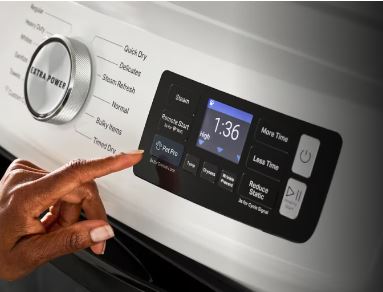
The most common entry method involves pressing specific button combinations simultaneously. Hold them down for 3-5 seconds until the display changes to show you’re in diagnostic mode. Typical combinations include pressing Signal and Extra Dry at the same time.
The display shows some kind of test mode confirmation when you’ve successfully entered diagnostics. Numbers or codes replace the normal displays you see during regular operation, and you’ll need to consult service manuals to understand what these codes mean.
Navigate through different tests using the cycle selector dial. Each position runs different component tests that check specific parts of your dryer, and the start button activates individual tests so you can check each system.
Exit diagnostic mode by unplugging the dryer or cycling power off and back on. This returns everything to normal operation mode, and you should definitely document any error codes you found before exiting so you don’t lose that information.
Component Testing Procedures
Test your door switch by checking continuity with a multimeter. Access the terminals and measure resistance, which should show zero ohms with the door closed and infinite resistance with the door open.
Thermal fuse testing requires removing the component from its circuit completely. Test continuity between the terminals, and any resistance reading at all indicates failure requiring replacement.
Test the start switch using the same continuity checking method. Pressed switches should show continuity between the terminals, while released switches should show open circuits.
Motor testing involves measuring winding resistance using a multimeter. The exact specifications vary by model, so you’ll need to compare your readings to the values listed in your service manual for accurate diagnosis.
Heating element testing checks for both continuity through the element and grounding to the frame. Elements should typically show between 10 and 50 ohms resistance, while any continuity to the metal frame indicates a dangerous ground short.
Using Multimeter for Diagnostics
Set your multimeter to the resistance function (ohms) when doing continuity testing. Zero resistance indicates a complete circuit with good connectivity, while infinite resistance indicates an open circuit or failed component.
Voltage testing requires the dryer to be powered on, which is potentially dangerous. Set your multimeter to AC voltage mode and test outlet voltage first to confirm you’re getting the full 240 volts your dryer needs.
Test voltage at component terminals during operation attempts to see if they’re actually receiving power. This identifies whether problems are upstream in the power delivery or in the components themselves, since no voltage at a component means the problem is in the wiring.
Current draw testing requires specialized clamp-on ammeters that measure actual current flow. These tools measure how much current flows through wires, and excessive current readings indicate shorted components drawing too much power.
Document all your meter readings for future reference and comparison. Keep notes about what you tested and what readings you got, then compare your findings to specifications in service manuals. This data guides repair decisions accurately and prevents guesswork.
Professional Repair vs DIY Decision Guide
Determining whether to tackle repairs yourself or hire a professional depends on multiple factors including your skill level, available tools, time constraints, and the costs involved. Being honest with yourself about your abilities prevents wasted effort and potentially dangerous situations.
DIY-Appropriate Repairs
| Repair | Difficulty | Time Required | Parts Cost | Tools Needed | Success Rate |
|---|---|---|---|---|---|
| Door Switch | Easy | 30 minutes | $15-$30 | Screwdrivers, multimeter | 95% |
| Thermal Fuse | Easy-Moderate | 45 minutes | $10-$20 | Screwdrivers, multimeter | 90% |
| Drive Belt | Moderate | 60 minutes | $15-$30 | Screwdrivers, pliers | 85% |
| Start Switch | Moderate | 45 minutes | $20-$40 | Screwdrivers, multimeter | 85% |
| High-Limit Thermostat | Moderate | 45 minutes | $15-$35 | Screwdrivers, multimeter | 90% |
Professional-Level Repairs
Control board replacement requires electronic expertise and proper diagnostic skills. Without proper diagnosis, you risk replacing a perfectly good board and wasting $150-$300 on parts that weren’t the problem.
Motor replacement involves handling heavy components and making electrical connections correctly. Incorrect installation creates serious safety hazards, so this repair clearly suits professional technicians who do this work regularly.
Gas valve and igniter work needs specialized knowledge about gas systems. Gas leaks present extremely serious dangers including explosions and carbon monoxide poisoning, so you should always hire qualified professionals for any gas appliance components.
Drum bearing replacement requires complete disassembly of your entire dryer. This labor-intensive repair takes 3-4 hours even for experienced technicians, and special tools often become necessary for proper reassembly.
Cost-Benefit Analysis
Compare potential repair costs against new dryer prices before committing to expensive repairs. New dryers range from $600 to $1,200 typically, and repairs exceeding 50% of replacement cost rarely make financial sense.
Dryers under 5 years old generally warrant most repairs since they still have significant life remaining. The expected remaining lifespan justifies your investment in fixing problems, while older dryers need more careful evaluation.
Factor in energy efficiency improvements that come with new models. Modern dryers use 20-30% less energy than older models, and these savings accumulate over years to offset some of the purchase cost.
Consider how often you’ve needed repairs over the past 2 years. Multiple repairs suggest overall deterioration of your appliance, and a replacement dryer (View on Amazon) often becomes more economical than continuing to fix an aging machine.
Check whether you have extended warranties that might cover repairs. Some retailers offer protection plans that cover parts and labor, and some credit cards automatically extend manufacturer warranties, so verify your coverage before paying out of pocket.
Preventive Maintenance Preventing No-Start Issues
Regular maintenance prevents many Maytag Bravos XL dryer won’t start problems before they develop. Simple habits extend your dryer’s life significantly and keep it running reliably, and prevention always costs far less than repairs after problems occur.
Monthly Maintenance Tasks
Clean your lint trap before every single load without any exceptions. This basic habit prevents about 75% of all dryer problems and takes only 5 seconds of your time, potentially saving you thousands in repair costs.
Vacuum around and under your dryer monthly to remove lint that accumulates in surprising places. External cleanliness prevents lint from finding its way into internal components where it causes real problems.
Wipe the moisture sensors with rubbing alcohol every month to prevent residue buildup. This 30-second task prevents sensor problems that can cause starting issues and operational malfunctions.
Check your door seal condition while you’re doing regular cleaning. Worn seals affect how well the switch engages, so replace any damaged seals to maintain proper door closure.
Verify that your dryer sits level using a carpenter’s level. Vibration gradually shifts position over time, and keeping things level ensures proper belt tracking and smooth operation.
Quarterly Maintenance Schedule
Clean your entire vent system quarterly from the dryer connection all the way to the exterior exhaust point. Proper venting prevents thermal fuse failures, which represent the most common cause of no-start conditions.
Vacuum the dryer interior by accessing through the lint trap opening with narrow attachments. Reach as deep inside as possible to remove accumulated lint from hidden areas where it builds up invisibly.
Inspect your drive belt for signs of wear like cracks, fraying, or glazing on the surface. Replace belts showing significant wear before they actually break and leave you with wet clothes.
Test door switch operation by listening for consistent clicks when you close the door. Consistent clicking confirms proper function, while inconsistent sounds suggest problems are developing.
Check all visible wiring connections for looseness or corrosion. Look for any signs of overheating or damage, and tighten and clean connections to maintain reliable electrical performance.
Annual Deep Maintenance
Remove the rear panel to inspect internal components and look for excessive lint accumulation. Vacuum thoroughly to clean all accessible areas inside the cabinet where lint collects.
Inspect your heating element visually for any breaks or signs of grounding to the frame. Visual inspection reveals obvious damage that needs addressing before it causes complete failure.
Check motor mountings for any looseness that could cause vibration issues. Secure mounting prevents problems and excessive wear on components, so tighten any loose mounting hardware you find.
Lubricate motor bearings if they’re accessible and not sealed units. Some models have permanently sealed bearings that don’t need lubrication, so follow manufacturer recommendations for your specific model.
Consider scheduling professional maintenance inspection annually. Technicians can identify developing problems before they cause breakdowns, and annual service typically costs $100-$150 but often prevents major repairs.

FAQs
Why does my Maytag Bravos XL dryer click but not start?
Clicking indicates the start relay is engaging, which confirms your control board is sending start signals. However, the motor isn’t receiving proper power or can’t run for some reason.
Test your door switch first since failed switches prevent the complete startup sequence. Listen for the door clicking when you close it firmly, and no click suggests switch failure or alignment problems.
Check the thermal fuse located on the blower housing next. Blown fuses prevent all operation despite the relay clicking, and you’ll need to test continuity with a multimeter to verify the fuse condition.
Inspect your drive belt for breaks while you’re troubleshooting. The motor may be running normally but can’t turn the drum without the belt, so manually spin the drum and feel for the normal resistance a belt creates.
Examine start relay contacts for burning or sticking if everything else checks out. Failed relays click when energized but don’t actually complete the electrical circuit properly, so visual inspection often reveals damage.
What causes my Bravos XL dryer to turn on but not start?
This symptom indicates power is reaching the control board successfully since the panel responds to inputs. However, cycle execution fails despite the board appearing to function, and safety interlocks typically cause this problem.
The thermal fuse represents the most common culprit for this particular issue. This safety device blows during overheating events, so you’ll need to replace it and address whatever caused the overheating in the first place.
Door switch failures prevent starting despite the panel operating normally. The switch must close completely to signal proper door closure to the control board, so test switch continuity to verify it’s working.
High-limit thermostats that stick in the open position prevent starting as well. Unlike thermal fuses, these reset automatically under normal circumstances, so test at room temperature for continuity to check their condition.
Control board failures cause varied symptoms including this one. Internal component failures prevent cycle execution even though other board functions work fine, and this typically requires professional diagnosis.
Why does my dryer beep but won’t start the cycle?
Beeping confirms the control board receives and acknowledges your commands. However, something prevents the board from executing those commands, which narrows your diagnostic focus significantly.
Check door alignment and latch engagement carefully. Misaligned doors don’t activate switches fully even though they appear closed, so adjust door position for proper closure and switch activation.
Test your start switch for proper operation since worn switches provide partial signals. The board acknowledges receipt but can’t execute the command, so check switch continuity with a multimeter.
Run diagnostic mode to check for error codes if your model supports this feature. Beeps often accompany specific error conditions, and these codes identify particular problems the dryer has detected.
Perform a control board reset by unplugging for 5 minutes if nothing else reveals the problem. Electronic glitches occasionally prevent operation, and resets clear these temporary issues without requiring any repairs.
How do I fix a Bravos XL that won’t start at all?
Complete lack of response suggests power supply problems as the most likely cause. Verify your outlet works and check the circuit breaker first, then test outlet voltage to confirm you’re getting the full 240 volts required.
Check the thermal fuse immediately after verifying power supply. This represents the most common failure causing complete no-start conditions, so test for continuity and replace if it shows open.
Inspect all wiring connections at the terminal block where power enters the dryer. Loose connections prevent adequate current flow throughout the system, so tighten all terminals securely.
Test your door switch for continuity since failed switches prevent any operation. The switch must close properly when the door shuts, so verify it shows zero ohms resistance when closed.
If all these tests pass, suspect control board failure. This requires professional diagnosis typically since control boards cost $150-$300 plus installation, making accurate diagnosis essential before spending that kind of money.
Can I replace the thermal fuse myself?
Yes, thermal fuse replacement is definitely suitable for most DIYers with basic skills. This straightforward repair requires only basic tools, and the success rate exceeds 90% for careful workers who follow instructions.
Unplug your dryer completely before starting any work. Access the blower housing by removing either the front or rear panel depending on your model, and the thermal fuse mounts directly on this housing.
Disconnect the wire terminals and note their positions for reconnection. Test the removed fuse to confirm failure before installing a replacement, since you should only replace it if testing shows no continuity.
Install the new fuse by connecting wires identically to how they were attached originally. Secure the mounting to ensure proper operation, but don’t overtighten the screws since that can damage the new fuse.
Identify and correct whatever caused the overheating that blew the fuse originally. Clean all venting thoroughly from the dryer to the outside, and verify proper airflow before operating your dryer again or you’ll just blow another fuse.
What tools do I need for dryer repair?
Basic repairs need screwdrivers in both Phillips and flat head configurations. These access panels and remove components throughout the dryer, and magnetic tips prevent frustration from dropped screws.
A multimeter proves essential for any electrical testing you’ll need to do. Digital multimeters cost between $20 and $40 and let you test continuity, voltage, and resistance in all the electrical components.
Pliers help with wire connections and removing various clips throughout the dryer. Needle-nose pliers reach into tight spaces easily, while slip-joint pliers handle larger tasks like belt installation.
Socket sets assist with some fasteners you’ll encounter. Quarter-inch or 5/16-inch sockets are commonly needed, and ratcheting handles speed up your work significantly.
A flashlight illuminates dark interior areas where you need to see clearly. LED headlamps work even better since they free both hands for working, and proper lighting prevents mistakes and potential injuries.
How long should a Maytag Bravos XL dryer last?
With proper maintenance, you can typically expect 10-15 years of service from your Bravos XL. Heavy use shortens this lifespan while light use extends it, and the quality of your maintenance habits matters tremendously.
The first 5 years usually operate trouble-free in most cases. Manufacturing defects appear early if they’re going to show up at all, and your warranty typically covers these early failures.
Years 6-10 bring increasing component failures as normal wear takes its toll. Thermal fuses, switches, and belts wear out and need replacement, but these repairs remain economical compared to replacement.
After 10 years, you’ll likely face multiple component failures occurring close together. Repair costs escalate as several parts fail within short time periods, and replacement often makes more financial sense than continuing repairs.
Usage intensity affects lifespan dramatically regardless of maintenance. Families washing 10 or more loads weekly put significantly more stress on components than light users, while people using their dryers just a few times weekly can extend life well beyond 15 years.
When should I replace instead of repair?
Replace dryers over 12 years old that face major repairs like control boards, motors, or drum bearings. These expensive repairs rarely justify their cost in older machines, and new dryers include full warranties plus significant efficiency improvements.
Calculate your total repair costs over the past 2 years and see what you’ve spent. If you’re exceeding $300-$400 in repairs, replacement makes more sense financially since you’re dealing with overall deterioration.
If you’re facing a $400 or higher repair on a dryer that’s 8+ years old, replacement is probably your better choice. New models cost between $600 and $1,200, and that investment provides 10 or more years of reliable service.
Consider the energy efficiency gains that come with new models. Modern dryers use 20-30% less energy than older models, and these savings accumulate over time to offset some of your purchase cost.
Conclusion: Getting Your Maytag Bravos XL Dryer Running Again
Maytag Bravos XL dryer won’t start issues are frustrating, but they usually trace back to identifiable causes that you can diagnose systematically. Most of these repairs are actually suitable for DIY attempts if you have basic skills and the right tools.
Start with simple verification steps before you dive into complex repairs. Check your power supply, door closure, and basic connections first since these eliminate the most common oversights that cause problems.
Understanding your dryer’s specific symptoms provides important guidance for diagnosis. Clicking sounds, beeping patterns, and partial responses all indicate different failures, so matching symptoms to likely causes speeds up your repair process significantly.
The thermal fuse represents the single most common failure you’ll encounter. This inexpensive part prevents many no-start cases, so you should always test this component early in your diagnostic process.
Don’t ignore the underlying causes when you’re replacing components. Thermal fuses blow for specific reasons, so you need to address ventilation problems and overheating issues before operating your dryer again.
Regular maintenance prevents most no-start issues from developing in the first place. Monthly lint removal and quarterly vent cleaning work wonders for longevity, and these simple tasks extend your dryer’s life dramatically.
Know when to call professionals rather than attempting DIY repairs. Simple component replacements suit most homeowners, but complex electrical work and anything involving gas requires professional expertise.
Your Maytag Bravos XL dryer serves reliably when you maintain it properly. Understanding no-start symptoms transforms frustrating breakdowns into solvable problems, empowering you to restore function quickly while avoiding unnecessary service calls and expensive repair bills.

Hi, I’m Barlgan! I created Repair Me Yourself to empower homeowners to tackle appliance repairs with confidence. From decoding error codes to fixing cooling issues, I break down complex repairs into simple, actionable steps that save you time and money.