
You’ve considered it more than once. Maybe your roommate keeps eating your groceries without asking. Perhaps you’re managing a household with dietary restrictions or medications stored in the fridge. Or maybe you run a business where unauthorized fridge access poses liability risks.
The solution seems simple enough: put a lock on your refrigerator. But then the questions start flooding in. Is this even legal? Will it violate housing codes? And what about in shared living situations or with minors in the home?
So, is it illegal to put a lock on your refrigerator?
Putting a lock on your refrigerator is generally legal in most situations, including private homes, rental properties you own, and businesses. However, specific circumstances can create legal complications. Locking a fridge containing a minor’s only access to food may constitute neglect, tenant rights laws may restrict locks in certain rental situations, and workplace refrigerators have different regulations than home units. The legality depends on your relationship to others in the space, the purpose of the lock, and local housing or employment laws.
This guide examines the legal landscape around refrigerator locks from every angle. You’ll learn when locks are perfectly legal, when they enter gray areas, and when they cross into prohibited territory.
We’ll cover practical lock options for different refrigerator types, from standard models to side-by-side units. Whether you’re a parent, roommate, landlord, business owner, or someone with unique storage needs, you’ll understand exactly where you stand legally and what options you have.
Is It Illegal to Put a Lock on Your Refrigerator? Quick Guide
| Situation | Generally Legal? | Potential Issues | Best Practice |
|---|---|---|---|
| Your own home, no dependents | Yes | None | Any lock type works |
| Your home with minor children | Yes, with exceptions | Child neglect if restricting food access | Lock specific items, not entire fridge |
| Rental property (you’re the landlord) | Yes | Tenant rights vary by location | Check local landlord-tenant laws |
| Rental property (you’re the tenant) | Usually yes | May violate lease terms | Review lease, get landlord approval |
| Shared apartment with roommates | Yes | Not a legal issue, but relationship one | Written agreement helps |
| Nursing home or care facility | No | Residents’ rights laws | Requires medical justification |
| Workplace common areas | Yes | May need HR approval | Company policy determines rules |
| Retail or commercial settings | Yes | Health code compliance required | Specific commercial locks needed |
| Dorm rooms or student housing | Maybe | Check institution policies | Often explicitly prohibited |
| Group homes or shelters | Varies | Depends on facility licensing | Must meet care standards |
Understanding the Legal Framework Around Refrigerator Locks
There’s no federal law in the United States specifically addressing refrigerator locks in private residences. This puts refrigerator locks in the realm of property rights, which are generally protected under constitutional law.
As the owner or legal occupant of a property, you have broad authority to control access to your possessions. Your refrigerator and its contents are your personal property.
Courts have consistently upheld property owners’ rights to secure their belongings in reasonable ways. Locks on refrigerators fall into this category of reasonable security measures.
However, your right to lock a refrigerator isn’t absolute. It’s limited by other legal obligations and relationships.
If you have legal responsibilities toward other people (children, tenants, employees, or care recipients), those responsibilities can override your property rights.
The key legal question isn’t “Can I put a lock on my fridge?” but rather “Does locking my fridge violate any legal duty I have to others?”
Three main legal frameworks intersect with refrigerator locks: family law (child welfare and domestic relations), landlord-tenant law (housing rights and lease agreements), and employment law (workplace regulations and discrimination). Each creates different boundaries around what’s allowed.
State and local laws vary significantly on these issues. What’s perfectly acceptable in Texas might violate tenant protection laws in California or New York.
Always check your specific jurisdiction’s regulations before installing locks in situations involving other people’s rights or welfare.
When Locking Your Refrigerator Is Completely Legal
Let’s start with the straightforward scenarios where you can lock your fridge without any legal concerns whatsoever. These situations involve no conflicting legal obligations or protected parties.
Your Private Home as the Sole Adult Occupant
If you’re the only adult in your household with no dependents or other occupants, you have complete authority to lock your refrigerator. This is your property in your private residence.
No law restricts your right to secure your belongings.
People in this category might lock refrigerators to control personal eating habits, secure expensive specialty ingredients, or maintain separation in shared living arrangements where everyone has their own fridge.
The installation doesn’t require anyone’s permission. You can use any lock type you prefer.
Commercial refrigerator locks, cable locks, padlocks with hasps, or even smart locks with digital access codes are all perfectly legal options. You don’t need to justify your reasons to anyone.
Your Home With Adult Roommates or Housemates
Adult roommates sharing a residence can legally lock their personal refrigerators or designated sections of a shared fridge. Each adult has property rights over their own food and possessions.
The relationship between roommates is generally contractual (based on your lease or rental agreement). If the agreement doesn’t prohibit refrigerator locks, they’re allowed.
Most standard roommate situations don’t involve laws that would prevent this.
Many shared living arrangements use mini-fridges in individual rooms, each with its own lock.
This is completely legal and increasingly common in urban areas with high housing costs. For shared refrigerators, combination locks on specific drawers or sections work well.
Document any agreements about fridge access in writing. While not legally required, this prevents disputes and creates clear expectations.
If conflicts arise, they’re contract disputes between individuals, not legal violations.
Rental Properties Where You’re the Landlord
Landlords can install locks on refrigerators in furnished rental units or common areas of multi-unit buildings. As the property owner, you control which amenities you provide and how.
If you supply a refrigerator as part of the rental, you can lock it if there’s a legitimate business reason.
Common scenarios include short-term vacation rentals where you store supplies, or boarding house situations where meal service is included and you need to control inventory.
The key requirement is that locks don’t violate your lease agreement or interfere with the tenant’s “quiet enjoyment” of the property. If you promise a working refrigerator as part of the rental, locking it entirely could breach the lease.
Some landlords install locks on common-area refrigerators in buildings with shared kitchens. This is legal as long as alternative food storage is available or specified in the lease.
Check your state’s landlord-tenant laws. Some jurisdictions have specific habitability requirements regarding kitchen appliances and food storage.
Business and Commercial Settings
Businesses have clear rights to lock refrigerators on their premises. Employee break room refrigerators, restaurant walk-in coolers, retail display cases can all be legally secured.
Businesses often have compelling reasons: inventory control, health code compliance, theft prevention, and liability management.
Workplace refrigerators containing medications, specimens, or hazardous materials must be locked per OSHA or health regulations.
Some companies lock break room refrigerators overnight or during certain shifts. This is legal as long as it doesn’t discriminate against protected classes of employees.
For example, you can’t lock the fridge only during shifts worked predominantly by one demographic group.
Commercial kitchen refrigerators with lock-and-key systems are standard in the food service industry.
They’re often required by health inspectors to maintain food safety and temperature control documentation. Restaurants, hospitals, schools, and catering businesses universally use locking refrigeration units.
Retail refrigerators and freezers with locks prevent theft and tampering. Liquor stores, convenience stores, and grocery stores legally lock high-value items like expensive meats and alcohol.
Legal Gray Areas and Situations Requiring Caution
These scenarios aren’t automatically illegal, but they involve legal considerations that could create problems if not handled correctly. Proceed carefully and consider legal advice in these situations.
Locking Refrigerators With Minors in the Household
This is the most legally complex scenario. Parents have broad authority to manage their households and make decisions about children’s diets.
However, this authority has limits defined by child welfare laws.
Completely denying a child access to food constitutes neglect and is illegal in all 50 states.
Child Protective Services can intervene if a parent locks food away in a manner that deprives children of adequate nutrition. The legal standard is whether the child’s basic needs are being met.
If a child has reasonable access to sufficient, nutritious food through other means, locking the refrigerator may be acceptable.
For example, locking a fridge containing alcohol, medications, or expensive specialty items while providing a separate stocked pantry and secondary fridge is generally fine.
Courts evaluate these situations based on the child’s age, health needs, and overall welfare. A temporary lock to prevent a toddler from accessing hazardous items (like expired food or medications) is different from systematically denying a teenager access to all food.
Intention matters legally. Locks used for safety (preventing young children from accessing dangerous items) or managing medical conditions (like diabetes where food timing matters) are viewed more favorably.
Locks used punitively or to deliberately deprive children of adequate food will trigger legal intervention.
If you’re considering refrigerator locks with minors in your home, consult your pediatrician and document the medical or safety reasons.
Keep records showing your children have adequate food access through other means. In custody disputes, the other parent can use refrigerator locks as evidence of neglect if not properly justified.
Rental Properties Where You’re the Tenant
Tenants generally have the right to install removable locks on refrigerators in their rental units. This falls under your right to secure personal property.
However, lease terms can restrict alterations to appliances. Some leases prohibit modifications that could damage the property or appliances.
Permanent locks requiring drilling or adhesive might violate these clauses. Temporary, removable locks are safer choices legally.
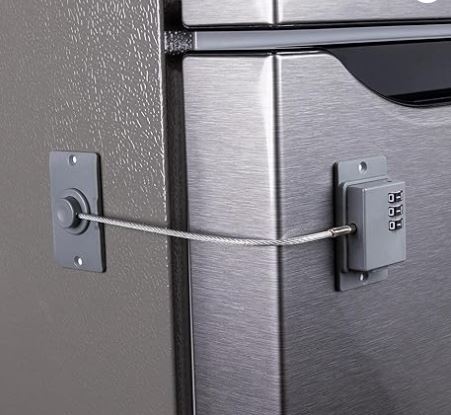
Cable locks, combination locks that loop around handles, or magnetic locks that don’t require installation work best.
In shared rental situations (multiple tenants on one lease), refrigerator locks can trigger disputes.
If the refrigerator is a shared amenity listed in the lease, one tenant locking it might violate other tenants’ rights. Your lease likely addresses shared appliance usage.
Before installing locks, review your lease agreement thoroughly. If it’s silent on appliance locks, you’re probably safe.
If it prohibits modifications without landlord approval, get written permission first. This protects you from lease violations or security deposit deductions.
Some tenant rights laws in cities like New York, San Francisco, and Seattle give tenants extensive rights to reasonable modifications. Research your local tenant protection statutes.
Care Facilities, Group Homes, and Assisted Living
Locking refrigerators in facilities housing vulnerable populations requires careful legal navigation. Nursing homes, group homes for adults with disabilities, and assisted living facilities must comply with residents’ rights laws.
These laws vary by state but generally guarantee residents access to food and personal belongings.
Federal regulations for Medicare/Medicaid-certified facilities prohibit restricting residents’ access to food without medical justification documented by a physician.
Facilities can lock refrigerators only when necessary for residents’ health or safety. For example, diabetic patients may need controlled access to certain foods.
Residents with cognitive impairments might need protection from food poisoning or overeating. These situations require documented care plans with medical orders.
Group homes and halfway houses have different rules depending on their licensing. Some are legally required to provide unrestricted food access as part of basic care standards.
Others, like substance abuse treatment facilities, may have more flexibility in controlling food access as part of treatment protocols.
If you manage or work in such a facility, consult your licensing authority and an attorney specializing in healthcare law.
Improper food restrictions can result in licensing violations, lawsuits, and criminal charges.
Personal refrigerators in residents’ private rooms are treated differently than common-area refrigerators.
Residents usually have more autonomy over their personal spaces and belongings. Check your facility’s specific regulations.
Shared Housing Governed by Institution Policies
College dormitories, military barracks, and other institutional housing often have explicit policies about appliance modifications and room security. These policies can prohibit refrigerator locks even though no law specifically bans them.
When you agree to live in institutional housing, you typically sign agreements accepting the institution’s rules. Violating these policies isn’t illegal in a criminal sense, but it can trigger disciplinary action, eviction, or loss of housing privileges.
Universities often prohibit locks on dormitory refrigerators because of fire safety concerns. In emergencies, staff need immediate access to all spaces and items.
Locked appliances can delay emergency responses. Military housing has similar regulations based on readiness and inspection requirements.
Check your student handbook, housing agreement, or military housing regulations before installing any locks. Many institutions consider this a modification requiring prior approval.
If you have a legitimate need (medical food storage, expensive dietary restrictions), you may be able to get an exception. Document your request and the institution’s response in writing.
Types of Refrigerator Locks for Adults and Their Applications
Once you’ve determined that locking your refrigerator is legal in your situation, you need the right lock type. Different refrigerators and circumstances require different locking mechanisms.
Basic Refrigerator Locks for Standard Models
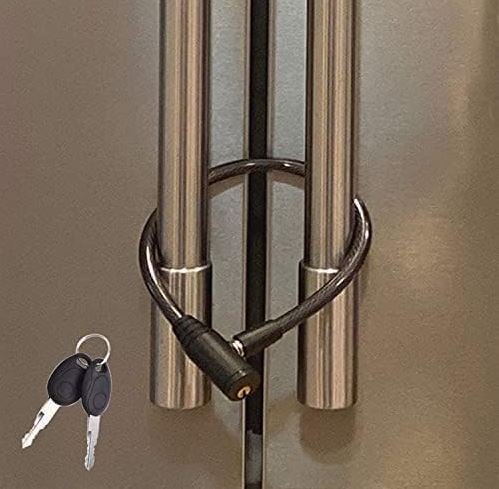
Standard top-freezer and bottom-freezer refrigerators are the easiest to secure. Simple cable locks (View on Amazon) work well for these units.
They loop around both door handles and secure with a combination or key lock. Cable locks cost $15-30 and install in seconds without tools. They’re completely removable, making them ideal for rental situations.
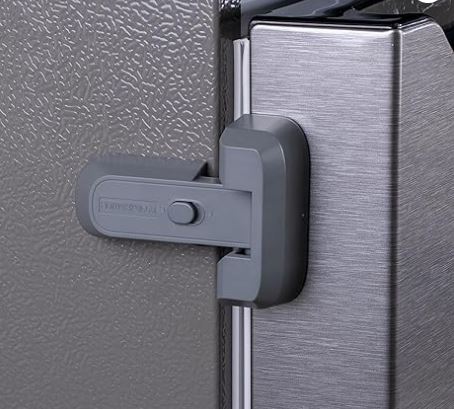
Adhesive refrigerator locks (View on Amazon) mount to the refrigerator doors and use childproof mechanisms that require specific push-and-pull sequences adults can master.
Originally designed for child safety, they work equally well for adult access control. These cost $10-25 and remove cleanly with dental floss or adhesive remover.
Padlock hasps (View on Amazon) provide the most secure option but require drilling holes in the refrigerator. This creates permanent modifications that may violate rental agreements.
Only use hasps if you own the refrigerator or have landlord permission. Installation takes 15-30 minutes and costs $20-40 for materials.
Side by Side Refrigerator Lock Solutions
Side-by-side refrigerators present unique locking challenges because the doors meet in the middle without a center frame. Standard cable locks often don’t work well on these models.
Specialized side-by-side refrigerator locks (View on Amazon) address this design. They use adjustable straps or cables that wrap around both doors and secure at a central point.
Brands like Fridgi Lock and Jool Baby make models specifically for side-by-side units. These cost $25-45.
U-shaped locks designed for motorcycles and bicycles also work on side-by-side refrigerators. Loop the U-lock through both door handles.
These provide high security and cost $30-60. They’re bulkier but extremely difficult to defeat.
For French door refrigerators (similar to side-by-side but with a bottom freezer drawer), the same solutions work for the upper doors. The freezer drawer usually requires a separate lock—cabinet locks or sliding drawer locks work well and cost $10-20.
Refrigerator With Lock and Key Systems
Some refrigerators come with built-in lock systems, typically commercial or medical-grade units. These aren’t common in residential settings but are worth knowing about.
Medical refrigerators for medication storage include keyed locks as a standard feature. They’re required for controlled substance storage in clinical settings.
These refrigerators cost $500-2,000 for residential-sized units.
Commercial refrigerators for restaurants and food service (View on Amazon) often include integrated lock systems.
If you’re purchasing a new refrigerator specifically because you need locking capability, consider commercial models. They’re more expensive but purpose-built for security.
For existing refrigerators, aftermarket lock-and-key systems are available. These install on the door handles or hinges and operate with traditional keys.
Installation complexity varies—some require drilling, others use existing mounting points. Costs range from $40-100 depending on the system.
Professional installation ensures proper function and costs an additional $75-150.
Smart Locks and Digital Access Control
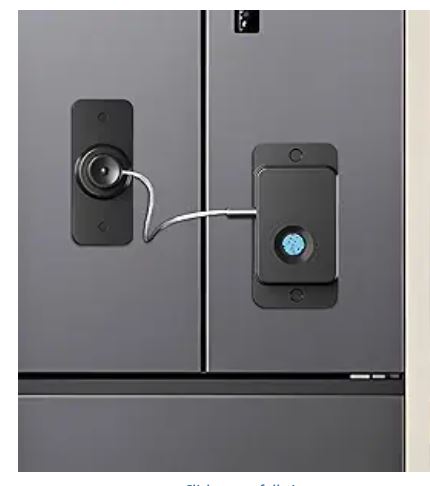
Technology offers sophisticated refrigerator lock solutions using smart home integration. Smart locks (View on Amazon) with Bluetooth or Wi-Fi connectivity allow remote access control and activity logging.
You can grant time-limited access, track when the refrigerator opens, and control access from your smartphone. These systems cost $80-200.
Installation requires power—most run on batteries, but some need electrical connections. They work best with refrigerators in locations with strong Wi-Fi signals.
Smart locks provide audit trails useful in business settings or shared living arrangements.
Digital keypad locks eliminate physical keys that can be copied.
Users enter PIN codes to unlock the refrigerator. Codes can be changed regularly and different codes assigned to different users.
These systems cost $60-150 and run on batteries. They’re ideal for roommate situations where access needs frequent updating.
Practical Considerations for Locking the Refrigerator (Beyond Legality)
Legal permission is just the first consideration. Practical factors determine whether a refrigerator lock actually solves your problem or creates new ones.
Relationship Impacts and Communication
Locking a shared refrigerator sends a strong message about trust and boundaries. In roommate situations, it can escalate tensions even when legally allowed.
Before installing locks, have honest conversations with everyone affected. Explain your reasons clearly.
Offer solutions that meet everyone’s needs—perhaps designated shelves rather than locks, or a cost-sharing system for commonly stolen items.
In family situations with older children or teens, locks can damage relationships and trust.
Consider whether alternative approaches might work better—conversations about boundaries, labeled personal items, or separate mini-fridges. Sometimes the relationship cost of locks exceeds their benefit.
Document agreements in writing when possible. If roommates agree to individual locks on personal mini-fridges, put it in writing.
This prevents future disputes and shows everyone consented to the arrangement.
Emergency Access and Safety Considerations
Locked refrigerators create potential emergency access issues. If someone has a medical emergency or the power fails, locked fridges complicate responses.
Fire departments and emergency medical technicians may need rapid access. Consider using locks with emergency override features or keeping spare keys in accessible locations.
For business settings, make sure managers or supervisors have master keys to all locked refrigerators. This allows emergency access without destroying locks or property.
Power failures pose unique problems. When refrigeration fails, food spoils quickly.
Locked refrigerators prevent people from salvaging items or adding ice to maintain temperature. If you live in areas prone to power outages, factor this into your locking strategy.
Maintenance and Repair Access
Locked refrigerators complicate appliance maintenance and repairs. If your refrigerator malfunctions, repair technicians need full access including interior components.
Some repairs require removing doors entirely. If you’ve installed permanent locks with drilled mounting holes, you may need to remove them before repairs.
In rental situations, remember that landlords typically retain rights to access and maintain their appliances. If the refrigerator breaks, your landlord’s repair person needs access.
Refusing to unlock it could violate your lease or delay critical repairs.
Choose lock types that remove quickly when maintenance is needed.
Cable locks and magnetic locks work well for this purpose. Keep keys or combinations readily available (but secure from unauthorized users).
Cost-Benefit Analysis
Refrigerator locks range from $10 to over $200 depending on type and sophistication. Weigh this cost against the value of what you’re protecting.
If you’re mainly preventing casual snacking of inexpensive items, a $10 cable lock makes sense. For protecting expensive medical supplies or specialty dietary products worth hundreds of dollars, investing in a $150 smart lock with activity tracking is justified.
Consider indirect costs too. Locks can damage finishes or leave residue when removed.
In rentals, you might lose security deposit money for damage. Installation time and effort matter—some locks take 2 minutes to install, others require hours and professional help.
Factor in relationship costs as discussed above. Sometimes the social or family friction created by locks costs more than replacing stolen groceries.
Alternatives to Physical Refrigerator Locks
If legal concerns, practical limitations, or relationship issues make refrigerator locks problematic, several alternatives can achieve similar results without the complications. These solutions address the underlying problems locks aim to solve.
Mini-Fridges and Personal Storage Solutions
Personal mini-refrigerators in private spaces (bedrooms, offices) give you complete control without impacting shared appliances.
Mini-fridges (View on Amazon) cost $100-300 for decent quality. They use minimal electricity and don’t require anyone’s permission to install.
This solution works perfectly in roommate situations, college dorms (where allowed), and family homes where adults want private storage. You can lock your bedroom door rather than the fridge itself, avoiding appliance-specific restrictions.
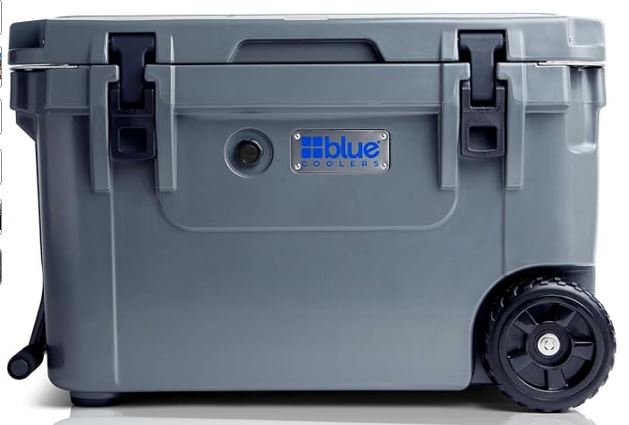
Lockable coolers (View on Amazon) provide portable cold storage for valuable items. Medical-grade lockable coolers cost $80-200 and maintain temperature for hours. These work well for medications, special dietary items, or temporary situations.
Designated Shelves and Organization Systems
Clear shelf assignments with labels and dividers often solve access problems without locks. In shared refrigerators, assign each person specific shelves or bins.
Use colored labels or markers to identify ownership. Transparent storage containers with labels make boundaries clear.
Most food theft in shared situations is opportunistic rather than malicious—people grab whatever’s convenient. Making personal items clearly marked and slightly less convenient to access reduces problems significantly.
Written agreements about refrigerator usage and shopping protocols help. If roommates agree to “ask before eating” rules and consequences for violations, many lock-worthy situations resolve themselves.
Smart Monitoring Without Locks
Surveillance cameras (View on Amazon) positioned to view refrigerator doors provide deterrence without physical barriers. Knowing they’re being watched stops most unauthorized access.
Small security cameras cost $30-80 and record to cloud storage. This approach raises privacy concerns in some living situations, so discuss openly before installing cameras.
Smart home sensors that track door openings create activity logs without restricting access. You’ll know when the refrigerator opens and can correlate this with missing items.
Some roommates find this level of monitoring intrusive, so transparency is crucial.
Inventory apps help track food items and their owners without locks or cameras.
Apps like NoWaste or Fridge Pal let roommates log their purchases and monitor consumption. This creates accountability without confrontation.
Also Read:
- Refrigerator Light Comes On But Nothing Else? (Quick Fix!)
- How Long is Cake Good for in the Fridge? (Answered!)
Frequently Asked Questions
Can you put a lock on your refrigerator legally?
Yes, you can legally put a lock on your refrigerator in most situations, especially in your own home or on refrigerators you own. Property rights generally protect your ability to secure your belongings, including appliances and food.
However, specific circumstances can complicate this. Locking food away from dependent minors might constitute neglect, rental agreements might restrict appliance modifications, and workplace policies might prohibit it.
The legality depends on your relationship to others in the space and any legal obligations you have toward them.
Always check lease agreements, institutional policies, and local laws before installing locks. In straightforward situations like your private home or adult roommate arrangements, refrigerator locks are completely legal.
Is locking the fridge illegal if you have children?
Locking the fridge with children in the home isn’t automatically illegal, but it requires careful consideration. Parents can legally restrict access to certain foods, alcohol, or medications in their refrigerator for safety or health reasons.
However, completely denying children access to adequate nutrition constitutes child neglect and is illegal in all states.
The key legal question is whether children have reasonable access to sufficient, nutritious food through other means.
Locking a refrigerator containing only specialty items, alcohol, or medications while providing a fully stocked pantry and unlocked secondary food storage is generally legal.
Locking the only source of food in a home and restricting children’s access to adequate nutrition will trigger Child Protective Services intervention.
Document medical or safety reasons for locks, make sure children have alternative food access, and consult your pediatrician if the situation involves medical dietary management.
What are the best refrigerator locks for adults?
The best refrigerator locks for adults depend on your refrigerator type and situation. Cable locks ($15-30) work excellently for standard refrigerators—they loop around door handles and use combination or key locks.
They’re removable and require no installation, making them ideal for rentals.
For side-by-side refrigerators, specialized straps designed for double doors work best ($25-45).
Smart locks with digital keypads or Bluetooth control ($60-200) offer sophisticated access control with PIN codes and activity tracking, perfect for business settings or tech-savvy households.
Padlock hasps provide maximum security but require drilling and permanent modification ($20-40 plus installation).
For temporary situations or rentals, adhesive childproof locks ($10-25) remove cleanly and work on most refrigerator types. Choose based on your security needs, budget, and whether you need removable or permanent installation.
Can landlords legally lock refrigerators in rental properties?
Landlords can legally lock refrigerators in their rental properties under certain circumstances, but this requires careful legal consideration. If the refrigerator is in a common area of a multi-unit building, landlords have more freedom to control access.
If the refrigerator is part of a furnished rental unit and included in the lease as an amenity, locking it might breach the rental agreement and interfere with tenant’s quiet enjoyment.
Landlords in vacation rentals or boarding houses where meal service is included have legitimate reasons to lock refrigerators containing their business inventory.
The key legal requirement is that locks don’t violate lease terms or local habitability standards. Some jurisdictions require landlords to provide working refrigeration as part of minimum habitability.
Check your state’s landlord-tenant laws and make sure your lease clearly addresses appliance access and restrictions. If you promise “working refrigerator” in the lease, locking it entirely could be a breach of contract.
Are refrigerator locks with keys better than combination locks?
The choice between keyed and combination refrigerator locks depends on your specific needs and situation. Key locks provide quicker access and don’t require remembering codes, but keys can be lost, copied, or stolen without your knowledge.
This creates security vulnerabilities in shared living situations.
Combination locks eliminate key management issues and allow easy code changes when access needs change (like when roommates move out).
However, combinations can be forgotten, observed by unauthorized people, or shared inadvertently.
For business settings, key locks with master key systems work well—management has master keys while individual employees have restricted access.
For roommate situations, combination locks reduce conflicts over who has keys.
Smart locks with digital keypads offer the best of both worlds—no physical keys to manage, easy code changes, and activity logs showing who accessed the refrigerator when.
These cost more ($60-200) but provide superior access control. Choose based on who needs access, how often access permissions change, and your comfort with technology.
Can refrigerator locks be used in workplace break rooms legally?
Yes, employers can legally lock refrigerators in workplace break rooms, subject to company policy and non-discrimination requirements. Employers have broad authority to manage their facilities and property, including appliances in common areas.
Common reasons include overnight security, inventory control in settings with provided food, or restricting access during certain shifts.
The locks cannot discriminate against protected classes—you can’t lock refrigerators only during shifts worked predominantly by specific demographic groups.
Employers should apply lock policies uniformly across all employees and shifts.
Some companies lock break room refrigerators outside business hours for security, which is completely legal.
Others use locks to separate employee food from catering or event supplies stored in the same refrigerator.
If your workplace wants to lock break room refrigerators, establish clear written policies, communicate them to all employees, and make sure the policy has legitimate business justification.
Consult your HR department or employment attorney to ensure compliance with workplace regulations. Union contracts sometimes address break room amenities and might restrict management’s ability to limit access.
What should I do if my roommate locks the shared refrigerator?
If your roommate locks a shared refrigerator without agreement, address it through communication and your lease agreement. First, have a direct conversation about why they installed the lock and whether your food is being secured separately or if you’re locked out entirely.
Many refrigerator lock situations stem from food theft or boundary violations that can be resolved through discussion and written agreements about respect for personal food.
Review your lease agreement—it likely addresses shared appliances and amenities.
If the refrigerator is listed as a shared amenity and one roommate unilaterally locks it, they may be violating the lease. Document the situation with photos and dates, then contact your landlord.
They have authority to enforce lease terms.
If you’re all on the same lease as co-tenants, you have equal rights to shared appliances.
If your roommate owns the refrigerator personally, they have more control over it—consider purchasing your own mini-fridge.
For ongoing disputes, mediation services or roommate agreements drafted together can establish clear boundaries.
If the situation severely impacts your ability to store food and maintain health, and communication fails, consult with local tenant advocacy organizations about your rights and options.
Conclusion: Is It Illegal to Put a Lock on Your Refrigerator?
The legality of locking your refrigerator isn’t a simple yes-or-no question. It’s a nuanced issue dependent on your specific situation, relationships, and location.
In straightforward scenarios like your private home without dependents or adult roommate arrangements, refrigerator locks are completely legal and increasingly common.
Property rights protect your ability to secure your belongings, including the food in your refrigerator.
The complications arise when other people’s rights intersect with yours—children’s right to adequate nutrition, tenants’ rights to amenities promised in leases, employees’ rights to non-discriminatory workplace policies, and care facility residents’ rights to reasonable food access.
These relationships create legal boundaries around otherwise allowed actions.
Before installing any lock, carefully evaluate not just legality but practicality.
Locks can damage relationships, create emergency access issues, complicate repairs, and sometimes cost more than the problems they solve. Alternatives like personal mini-fridges, clear labeling systems, and written agreements often achieve better results with fewer complications.
When you do choose locks, select appropriate types for your refrigerator style—specialized solutions exist for side-by-side models, standard refrigerators, and commercial units.
Technology offers sophisticated options like smart locks with access logging and remote control.
Always check lease agreements, institutional policies, and local regulations before installation. Document your reasons, especially in situations involving minors or vulnerable individuals.
And remember that the goal isn’t just legal compliance—it’s solving the underlying problem of food security, boundaries, and respect in shared spaces. Sometimes a conversation works better than a lock.

Hi, I’m Barlgan! I created Repair Me Yourself to empower homeowners to tackle appliance repairs with confidence. From decoding error codes to fixing cooling issues, I break down complex repairs into simple, actionable steps that save you time and money.