
Your refrigerator is one of the hardest-working appliances in your home, running 24/7 to keep your food fresh and safe. Whether you’re noticing your fridge isn’t cooling properly or planning your next major purchase, understanding refrigerator lifespans can save you thousands of dollars.
Most refrigerators last between 10 to 20 years, with an average lifespan of 13 years. Top-freezer models typically last the longest at 15-20 years, while more complex French door models average 10-15 years. Brand matters significantly, with Whirlpool, Maytag, and GE typically outlasting newer brands like Samsung and LG.
The good news is that with proper care and the right brand choice, your refrigerator can serve you well for many years. The lifespan varies significantly depending on the type, brand, and how well you maintain it.
In this guide, we’ll break down exactly how long different refrigerator types and brands last, what factors affect longevity, and how to maximize your appliance’s lifespan.
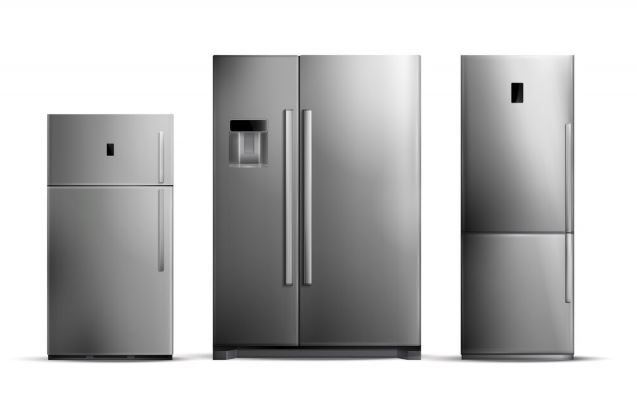
Refrigerator Lifespan at a Glance
| Refrigerator Type | Average Lifespan |
|---|---|
| Top-Freezer | 15-20 years |
| Bottom-Freezer | 13-17 years |
| Side-by-Side | 12-15 years |
| French Door | 10-15 years |
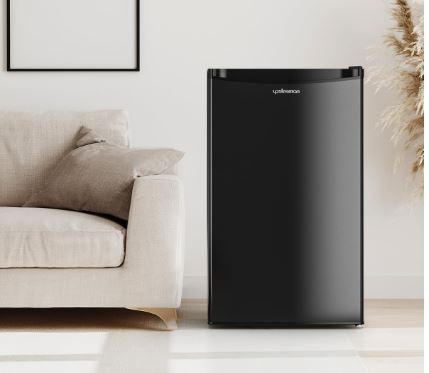
| Compact/Mini | 8-12 years |
| Refrigerator Brand | Average Lifespan |
|---|---|
| GE | 13-19 years |
| Maytag | 14-17 years |
| Whirlpool | 13-17 years |
| KitchenAid | 12-16 years |
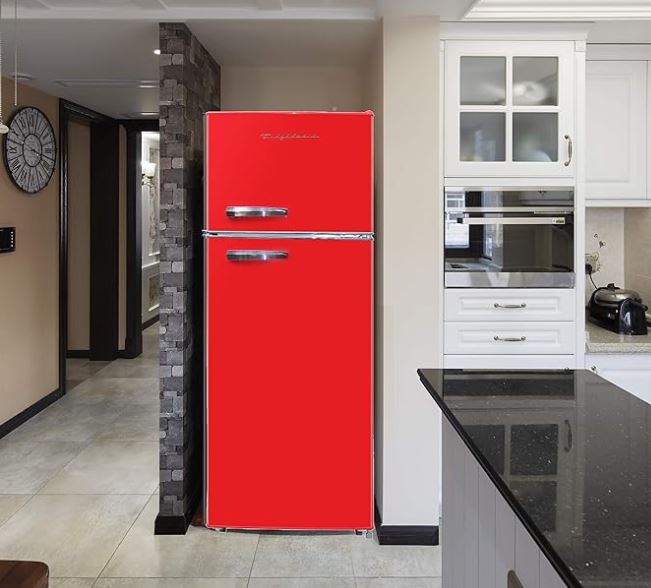
| Frigidaire | 10-15 years |
| Samsung | 10-15 years |
| LG | 10-15 years |
| Haier | 10-13 years |
Average Refrigerator Lifespan by Type
Not all refrigerators are created equal when it comes to longevity. The configuration and complexity of your fridge play a huge role in determining how long it will serve your household.
Generally speaking, simpler designs with fewer moving parts and advanced features tend to last longer. Let’s break down what you can expect from each type.
Top-Freezer Refrigerators
Average lifespan: 15-20 years
Top-freezer refrigerators are the workhorses of the appliance world. These classic models put the freezer compartment above the fresh food section, and they’re built to last.
The simple design means fewer components that can break down. They also typically use less energy than their more sophisticated counterparts.
If you’re looking for pure longevity and reliability, it’s hard to beat a top-freezer model. Many families report using the same top-freezer refrigerator for two decades or more with minimal repairs.
They may not have all the bells and whistles of modern French door models. What they lack in features, they make up for in dependability.
Bottom-Freezer Refrigerators
Average lifespan: 13-17 years
Bottom-freezer models flip the script by placing the freezer compartment at ground level. This puts fresh food at eye level, which many people find more convenient for daily use.
These refrigerators still offer good longevity. The additional drawer mechanisms and more complex airflow systems can introduce potential failure points.
The pullout freezer drawer contains more moving parts than a simple door. This can require maintenance or replacement over time.
Still, bottom-freezer models from reputable brands offer excellent value. They will serve most households well for a decade and a half or more.
Side-by-Side Refrigerators
Average lifespan: 12-15 years
Side-by-side refrigerators split the appliance vertically, with the freezer on one side and fresh food on the other. This design became extremely popular in the 1990s and 2000s.
The narrow doors work well in tight kitchens. They also offer convenient eye-level access to both compartments.
However, the increased complexity comes at a cost to longevity. The dual cooling systems, through-the-door ice and water dispensers (common on these models), and additional door seals create more opportunities for problems.
You can still get a solid 12-15 years from a quality side-by-side, especially with regular refrigerator maintenance.
French Door Refrigerators
Average lifespan: 10-15 years
French door refrigerators combine side-by-side upper doors for the fresh food section with a bottom freezer drawer. They often include features like door-in-door compartments, dual ice makers, and sophisticated temperature controls.
All those premium features mean more components that can fail. Complex electronics, multiple temperature zones, and intricate door mechanisms can develop issues earlier than simpler models.
That said, 10-15 years is still a reasonable lifespan. Many people feel the convenience and features are worth the trade-off in longevity.
Compact and Mini Fridges
Average lifespan: 8-12 years
Compact and mini refrigerators typically have shorter lifespans than their full-sized counterparts. The smaller compressors work harder relative to their size, and these units often use less expensive components.
If you’re using a mini fridge for occasional use or light duty, you might stretch it beyond 12 years. However, heavy daily use will likely bring you closer to that 8-year mark. After that, you may need to get a replacement (View on Amazon)
How Long Do Refrigerators Last by Brand?
Brand reputation matters when it comes to appliance longevity. Certain manufacturers have built reputations for reliability over decades, while others prioritize innovation and features over time-tested durability.
Here’s what you can expect from major refrigerator brands.
Samsung Refrigerator Lifespan
Average: 10-15 years
Samsung entered the appliance market relatively recently but quickly gained attention with stunning designs and cutting-edge technology. Their refrigerators feature impressive innovations like FlexZone drawers, Family Hub touchscreens, and sleek finishes.
However, Samsung’s reliability record has been mixed. The brand has faced class-action lawsuits over ice maker failures and compressor issues in certain model years.
Early French door models from the 2010s were particularly problematic. That said, Samsung has worked to improve quality, and their newer models show better reliability.
With proper maintenance, expect 10-15 years, though some owners report issues arising around the 5-7 year mark. Common problems include ice maker failures, compressor problems on certain models, and electronic control board malfunctions.
Samsung does offer a 10-year warranty on their digital inverter compressors on newer models. This provides some peace of mind for buyers.
LG Refrigerator Lifespan
Average: 10-15 years
LG competes directly with Samsung in the premium refrigerator space. They offer similar advanced features and modern designs.
The company pioneered linear compressor technology, which they claim is more efficient and reliable than traditional compressors. LG stands behind their products with a 10-year warranty on their linear compressor, one of the best in the industry.
LG’s reliability record sits somewhere in the middle of the pack. Like Samsung, they’ve faced some compressor-related complaints, particularly with their French door models from certain production years.
Owners generally report good experiences with LG fridges. Many reach the 12-15 year mark without major issues.
The InstaView and door-in-door features have proven relatively reliable. However, the smart home features and touchscreens can experience glitches over time.
Whirlpool Refrigerator Lifespan
Average: 13-17 years
Whirlpool is an American appliance icon. Their fridges have earned a reputation for no-nonsense reliability.
The company focuses on building durable, serviceable appliances rather than chasing every trendy feature. This approach shows in their longevity numbers.
Whirlpool refrigerators consistently rank high in reliability surveys. Many owners report 15+ years of service with only minor repairs.
The brand offers good availability of parts. Their straightforward designs mean most appliance repair technicians can work on them without specialized training.
Whether you choose a basic top-freezer model or a more feature-rich French door, Whirlpool delivers solid value and dependability.
GE Refrigerator Lifespan
Average: 13-19 years
General Electric has been making refrigerators since 1927, and that experience shows. GE fridges are known for longevity, with many models easily reaching or exceeding the 15-year mark.
The company offers several lines at different price points. These include the standard GE, GE Profile, and upscale GE Café.
GE Appliances is now owned by Haier, a Chinese company, though manufacturing and design largely remain in the United States. The ownership change occurred in 2016, so it’s still too early to know if this will affect long-term quality.
GE’s top-freezer and side-by-side models are particularly long-lasting. Their French door models also perform well, with robust construction and readily available parts making repairs economical when needed.
Maytag Refrigerator Lifespan
Average: 14-17 years
Maytag built its reputation on durability. The brand is now owned by Whirlpool but maintains its focus on longevity.
Maytag refrigerators feature commercial-grade components in many models. They come with a 10-year limited parts warranty on the compressor and sealed refrigeration system, among the best in the industry.
Their PowerCold feature and heavy-duty shelving underscore the brand’s durability focus. If you want a refrigerator that will last and can handle heavy use from a large family, Maytag deserves serious consideration.
While they may cost slightly more upfront, the longevity often makes them a better value over time.
KitchenAid Refrigerator Lifespan
Average: 12-16 years
KitchenAid, also part of the Whirlpool family, positions itself as a premium brand. They offer professional-style features and upscale finishes.
Their refrigerators blend aesthetics with solid performance. They sit between Whirlpool’s pure reliability focus and the feature-packed approach of Asian brands.
KitchenAid refrigerators generally perform well over their lifespan. Build quality justifies the premium price.
The brand offers sophisticated features like ExtendFresh temperature management and under-shelf LED lighting while maintaining good reliability. Parts availability is good thanks to Whirlpool’s supply chain.
Frigidaire Refrigerator Lifespan
Average: 10-15 years
Frigidaire occupies the budget-friendly end of the market while still delivering decent reliability. Owned by Electrolux, Frigidaire offers decent basic fridges at accessible price points.
This makes them popular with first-time homebuyers and rental properties. The trade-off for the lower price is typically a shorter lifespan compared to premium brands.
Frigidaire’s simpler models (View on Amazon) tend to last longer than their feature-packed ones. This follows the general rule that complexity reduces longevity.
For shoppers on a budget, Frigidaire represents solid value. Just don’t expect the same 17-20 year lifespan you might get from a Maytag or GE at twice the price.
Haier Refrigerator Lifespan
Average: 10-13 years
Haier is the world’s largest appliance manufacturer. The brand remains less recognized in North America than established names.
Beyond owning GE Appliances, Haier sells refrigerators under its own brand. They focus on compact models, wine coolers, and budget-friendly full-size options.
Haier-branded refrigerators generally offer shorter lifespans than premium American brands, though they’re improving. The company’s acquisition of GE Appliances has given them access to better technology and manufacturing expertise.
For secondary refrigerators, small households, or budget-conscious buyers, Haier offers decent value. Just be realistic about the 10-13 year lifespan and factor that into your purchase decision.
Signs Your Refrigerator Is Dying
Wondering if your refrigerator is approaching the end of its life? Watch for these warning signs that indicate it might be time to start shopping for a replacement.
Excessive condensation or frost buildup: If you’re constantly wiping moisture from inside your fridge or your freezer looks like an ice cave, the sealed system may be failing.
Food spoiling faster than normal: When milk goes bad before the expiration date or lettuce wilts within days, your refrigerator isn’t maintaining proper temperatures.
Constantly running or loud noises: Refrigerators should cycle on and off. If yours runs constantly or makes grinding, buzzing, or clicking noises, the compressor or fan motor may be struggling.
Temperature fluctuations: Your fridge should maintain a steady 37-40°F. If it’s too warm one day and too cold the next, something’s wrong with the temperature control system.
Rising energy bills: An aging refrigerator loses efficiency, causing your electricity costs to climb. If your utility bills are creeping up without explanation, your old fridge might be the culprit.
Compressor cycling frequently: The compressor should run for several minutes at a time. If it’s turning on and off every few minutes, it’s working too hard and likely failing.
Water leaking: Puddles inside or around your refrigerator indicate drain problems, broken water lines, or seal failures. These are all expensive repairs.
Age factor: If your refrigerator is over 10 years old AND showing any of these symptoms, a replacement fridge (View on Amazon) usually makes more financial sense than repair.
What Affects Refrigerator Longevity?
Understanding what influences how long your refrigerator lasts can help you make smarter decisions. Several key factors determine whether you’ll get 10 years or 20 years from your investment.
Maintenance Practices
Regular maintenance is the single biggest factor you can control. A well-maintained refrigerator can easily outlast an identical model that never receives attention.
Coil cleaning: Your refrigerator’s condenser coils release heat from inside the unit. When these coils get clogged with dust and pet hair, your refrigerator works harder and runs hotter.
Clean the coils every six months if you have pets, or annually if you don’t. This simple task can add years to your appliance’s life.
Door seal inspection: Those rubber gaskets around your refrigerator doors keep cold air in and warm air out. Check them regularly for cracks, gaps, or looseness.
A simple test: close the door on a dollar bill. If you can pull it out easily, your seal needs replacing.
New door gaskets (View on Amazon) can save hundreds in energy costs. They also prevent premature compressor failure.
Temperature settings: Keep your refrigerator between 37-40°F and your freezer at 0°F. Colder settings waste energy and make your compressor work harder without providing additional food safety benefits.
Usage Patterns
How you use your refrigerator dramatically impacts its lifespan. Treat it well, and it’ll return the favor with years of reliable service.
Door opening frequency: Every time you open the refrigerator door, cold air escapes and warm, humid air enters. Large families who constantly open doors put more stress on the cooling system.
Minimize how long doors stay open. Teach kids to decide what they want before opening the door.
Overloading issues: While it’s tempting to cram every inch of space, overloading restricts airflow inside the refrigerator. Your appliance needs space for air to circulate to maintain even temperatures.
Conversely, an empty refrigerator also works harder because there’s less thermal mass to help maintain temperature.
Proper food storage: Store hot food safely by letting it cool before refrigerating. Otherwise, your compressor will work overtime removing that heat.
Use airtight food containers (View on Amazon) to reduce moisture, which makes your refrigerator work harder to maintain low humidity.
Environmental Factors
Where your refrigerator lives and the conditions it operates in significantly affect longevity.
Kitchen temperature and humidity: Refrigerators in hot garages or un-air-conditioned spaces work much harder and wear out faster. If you’re using a second refrigerator in your garage, expect a shorter lifespan.
High humidity also forces your refrigerator to work harder to control interior moisture.
Ventilation space: Every refrigerator needs breathing room. Check your owner’s manual, but generally leave 1-2 inches on each side and 2-3 inches behind the unit.
Built-in models have specific clearance requirements. Restricted airflow makes your compressor overheat and fail prematurely.
Power surge protection: Electrical spikes from lightning or grid fluctuations can fry your refrigerator’s control boards and compressor. Use a good quality surge protector (View on Amazon) for cheap insurance on an expensive appliance.
Build Quality and Price Point
Premium refrigerators typically use better compressors, heavier-gauge steel, and higher-quality components throughout. A $3,000 refrigerator usually outlasts an $800 model.
That said, the sweet spot for value often sits in the mid-range. Basic models from reputable brands like Whirlpool or GE around $1,200-$1,800 often provide the best balance of features, quality, and longevity.
The ultra-budget and ultra-premium ends of the market both present trade-offs in either longevity or initial cost.

How to Make Your Refrigerator Last Longer
Want to maximize your refrigerator’s lifespan? These ten practical tips can add years to your appliance’s life and save you money on energy and repairs.
1. Clean condenser coils every 6-12 months
This is the single most important maintenance task. Unplug your refrigerator, pull it out from the wall, and vacuum or brush the coils on the back or bottom. This 15-minute task twice a year can prevent premature compressor failure.
2. Check and replace door gaskets when worn
Test your door seals by closing the door on a piece of paper. If it slides out easily, replace the gasket. This prevents cold air loss and reduces compressor run time.
3. Keep refrigerator at optimal temperature
Set your fresh food compartment to 37-40°F and your freezer to 0°F. Use an appliance thermometer to verify accuracy. Many refrigerators run warmer or colder than their settings indicate.
4. Don’t overload shelves
Leave space for air circulation. Your refrigerator uses airflow to distribute cold temperatures evenly. Packing every cubic inch blocks vents and forces longer compressor cycles.
5. Ensure proper ventilation clearance
Leave recommended space around your refrigerator: typically 1-2 inches on sides and top, 2-3 inches in back. This allows heat dissipation and prevents overheating.
6. Use surge protectors
Electrical spikes damage sensitive electronics and compressors. A $30 surge protector can save you from a $1,500 repair or total loss.
7. Level the refrigerator properly
Use a level to ensure your refrigerator sits perfectly level or slightly tilted back per manufacturer specs. This ensures doors close properly and drain lines work correctly.
8. Avoid placing near heat sources
Don’t position your refrigerator next to ovens, dishwashers, or in direct sunlight from windows. Ambient heat makes your refrigerator work harder and shortens its lifespan.
9. Regular defrosting (if applicable)
If you have a manual defrost freezer, defrost when ice buildup reaches 1/4 inch. Excessive ice makes your freezer inefficient and can damage components.
10. Professional maintenance every few years
Consider having an appliance technician inspect your refrigerator every 3-5 years. They can spot developing problems before they become expensive failures.
They can also perform preventive maintenance like tightening connections and checking refrigerant levels.
Repair vs. Replace: Making the Right Decision
When your refrigerator breaks down, you face a difficult decision: repair or replace? Here’s how to make the right choice for your situation.
The 50% rule provides a good starting point: if the repair costs more than 50% of what a comparable new refrigerator would cost, replacement usually makes more sense.
For example, if a new refrigerator costs $1,200 and your repair estimate is $700, you’re better off buying new.
Age-Based Decision Guide
| Refrigerator Age | Recommendation |
|---|---|
| Under 5 years | Almost always repair unless catastrophic failure |
| 5-8 years | Repair if cost is under 50% of replacement |
| 8-12 years | Consider age, repair cost, and energy efficiency carefully |
| Over 12 years | Lean toward replacement unless repair is very minor |
Common Repair Costs
| Component | Average Repair Cost |
|---|---|
| Compressor replacement | $400-$800 |
| Evaporator fan motor | $200-$400 |
| Control board | $300-$600 |
| Door gasket | $100-$250 |
| Thermostat | $150-$300 |
| Ice maker | $200-$400 |
Energy Efficiency Considerations
Energy efficiency tips the scales toward replacement for older units. A refrigerator from 2005 uses roughly twice the electricity of a 2025 model.
Over 10 years, those energy savings can amount to $1,000 or more. This essentially pays for a significant portion of a new refrigerator.
If your refrigerator is over 10 years old, requires a major repair, and you were already considering upgrading, replacement usually offers better value. You’ll gain improved energy efficiency, better features, and the peace of mind of a new warranty.
Refer to our refrigerator troubleshooting guide if you suspect an issue with your refrigerator.
Frequently Asked Questions
How long should a fridge last on average?
Most refrigerators last 10-18 years, with an average around 13 years. Simple top-freezer models often reach 15-20 years, while complex French door models typically last 10-15 years.
What refrigerator brand lasts the longest?
Whirlpool, Maytag, and GE consistently deliver the longest lifespans, often 13-19 years. These established American brands prioritize durability over cutting-edge features.
How long do Samsung refrigerators last?
Samsung refrigerators typically last 10-15 years with proper maintenance. Some owners report issues around 5-7 years, particularly with ice makers and compressors in certain model years. Newer models show improved reliability.
How long do LG refrigerators last?
LG refrigerators average 10-15 years of service. The company’s linear compressor comes with a 10-year warranty. Most owners report satisfactory performance, with many units reaching 12-15 years without major issues.
Is a 20-year-old refrigerator worth keeping?
Generally no, unless it’s working perfectly and repair costs are minimal. A 20-year-old refrigerator uses roughly twice the electricity of a modern model, costing you $100-$200 extra annually.
How often should you replace your refrigerator?
Replace your refrigerator when repair costs exceed 50% of replacement cost, when it’s 15+ years old with problems, or when it’s 10+ years old and showing multiple failure symptoms.
Do French door refrigerators last as long as top freezers?
No, French door refrigerators typically last 3-5 years less than top-freezer models. The additional complexity creates more potential failure points. French doors average 10-15 years while top freezers reach 15-20 years.
What are the most reliable refrigerator brands?
Whirlpool, Maytag, GE, and Bosch consistently rank as the most reliable brands in consumer surveys and repair industry reports. These brands focus on proven technology and build quality.
How long do commercial refrigerators last?
Commercial refrigerators typically last 15-20 years with proper professional maintenance. They’re built with heavy-duty compressors, thicker insulation, and commercial-grade components.
Conclusion
Understanding how long refrigerators last empowers you to make smarter buying decisions and maximize your investment. While the average refrigerator lasts about 13 years, you can significantly influence that number through brand selection, proper maintenance, and how you use your appliance daily.
Remember these key takeaways: simpler designs generally outlast complex ones. Established brands like Whirlpool, Maytag, and GE typically deliver better longevity than newer market entrants.
Regular maintenance, especially cleaning condenser coils, can add years to any refrigerator’s life. This is one of the easiest ways to extend your appliance’s lifespan.
If you’re currently shopping for a refrigerator, consider not just the purchase price but the total cost of ownership over the appliance’s lifetime. A slightly more expensive model that lasts 17 years instead of 12 often provides better value.
And if your current refrigerator is approaching 10-12 years old, start planning for replacement rather than waiting for an emergency.
Take a moment today to check your refrigerator’s age and condition. Clean those condenser coils, inspect the door seals, and verify the temperature settings.
These simple actions cost nothing but can give you years of additional reliable service.

Hi, I’m Barlgan! I created Repair Me Yourself to empower homeowners to tackle appliance repairs with confidence. From decoding error codes to fixing cooling issues, I break down complex repairs into simple, actionable steps that save you time and money.