
You press the dispenser lever expecting a quick glass of cold water, but instead you get a pathetic trickle that takes forever to fill even a small cup.
Your Frigidaire refrigerator’s water dispenser used to work perfectly. Now it’s so slow that you’re tempted to just fill glasses from the sink.
Before you call a repair technician or assume your refrigerator is dying, understand that slow water dispensers have specific, fixable causes. Most of them don’t require professional help or expensive parts.
The culprit is usually something simple: a clogged filter, kinked water line, low household water pressure, or frozen supply tube. Sometimes it’s a failing water inlet valve that’s partially blocked.
A Frigidaire refrigerator water dispenser that flows slowly is typically caused by a clogged or expired water filter, low home water pressure below 20 PSI, a partially frozen water line in the freezer, or mineral deposits restricting the water inlet valve. Most slow dispenser issues can be resolved in under 30 minutes without professional help.
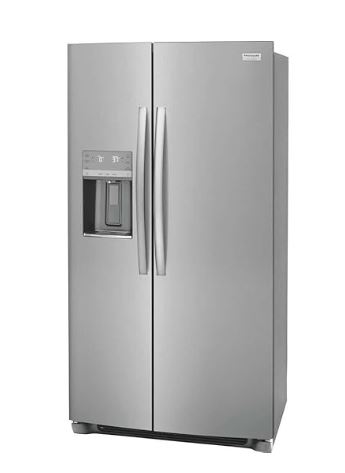
Quick Diagnosis Guide for a Slow Frigidaire Refrigerator Water Dispenser
| Symptom | Most Likely Cause | Quick Test |
| Slow, steady trickle | Clogged water filter | Remove filter, test flow |
| Very slow or stops completely | Frozen water line | Check freezer temperature |
| Slow after filter change | Air in system or wrong filter | Run dispenser 5 minutes |
| Gradually getting slower | Filter needs replacement | Check filter age (6 months?) |
| Slow dispenser, weak ice maker | Low household water pressure | Test kitchen faucet flow |
| Intermittent slow flow | Kinked or pinched water line | Inspect line behind fridge |
Understanding Your Frigidaire Refrigerator Water Dispenser System
Before troubleshooting, it helps to understand how water reaches your glass.
Water flows from your home’s supply line through a shutoff valve, then to the refrigerator’s water inlet valve at the back of the unit.
From there, it travels through tubing that runs up the back of the fridge and into the freezer compartment. This is where freezing can occur if conditions aren’t right.
The water then passes through the filter housing. Your water filter is the system’s bottleneck by design—it removes contaminants but also restricts flow when clogged.
After filtering, clean water travels through more tubing to the dispenser valve in the door. When you press the lever, this valve opens and water flows through the dispenser spout.
Each component in this path can slow water flow. Identifying which one is the problem requires systematic testing.
Start Here: Test Your Water Filter
The water filter is the number one cause of slow dispenser flow in Frigidaire refrigerators. Start your troubleshooting here before anything else.
Remove the Filter and Test Flow
Locate your water filter. In most Frigidaire models, it’s in the upper right corner of the fridge compartment or in the base grille.
Remove the filter completely by turning it counterclockwise or pressing the release button (depending on your model).
With the filter removed, press the water dispenser lever. The filter bypass cap should allow water to flow—if it doesn’t, your model requires the cap installed.
If water flows much faster without the filter, you’ve confirmed the filter is your problem. This is extremely common and easily fixed.
Replace Filters Every Six Months
Frigidaire recommends replacing water filters every six months or 200 gallons, whichever comes first.
Many people forget or ignore this maintenance schedule. A filter that’s 12-18 months old is almost certainly clogged with sediment and minerals.
Even if your water looks clean, filters trap microscopic particles that accumulate over time. The filter media becomes progressively more restricted.
If you have particularly hard water or sediment-heavy water, you might need to replace filters every 4 months instead of 6.
Genuine Frigidaire filters (like the PureSource models) are designed to maintain proper flow throughout their lifespan. Generic off-brand filters often clog faster.
Install Filters Correctly
A partially seated filter causes slow flow because water can’t pass through properly.
After installing a new filter, turn it clockwise until it locks firmly into place. You should hear or feel a distinct click.
Some models have a locking tab or button that must engage. If the filter sits loosely, water flow will be restricted.
After installing a new filter, run 2-3 gallons of water through the dispenser before drinking. This flushes manufacturing residue and purges air from the lines.
Use the Right Filter Model
Using an incorrect filter model creates flow restrictions even if it physically fits.
Check your refrigerator’s model number and match it to Frigidaire’s filter compatibility chart. Common Frigidaire filters include PureSource Ultra, PureSource 3, and PureSource 2.
Third-party filters must meet NSF certification standards. Cheap, uncertified filters often have poor internal flow channels that restrict water unnecessarily.

Find the right Frigidaire refrigerator water filter on Amazon!
Check Your Home’s Water Pressure
Frigidaire refrigerators require minimum household water pressure of 20 PSI for proper dispenser operation. Optimal performance needs 40-60 PSI.
Test Your Water Pressure
The simplest test is comparing your kitchen faucet flow to your dispenser.
Turn your kitchen faucet on full blast. If water flow seems weak or has noticeably less pressure than normal, you have a household water pressure problem.
For accurate measurement, buy an inexpensive water pressure gauge (View on Amazon) that screws onto an outdoor hose bib. Test the pressure—it should read 40-60 PSI for residential plumbing.
If pressure is below 20 PSI, no amount of refrigerator troubleshooting will fix your slow dispenser. The refrigerator simply doesn’t have enough water pressure to operate properly.
Address Low Pressure Issues
Low household water pressure has several possible causes.
Partially closed main water valve is common after plumbing work. Check your home’s main shutoff valve—it should be fully open.
Pressure-reducing valves can be adjusted if your home has one. These are typically installed where water enters the house.
Clogged supply lines from mineral buildup require professional plumbing attention. This is especially common in homes with very hard water.
Old galvanized pipes accumulate rust and corrosion that restricts flow. Replacing these pipes is expensive but sometimes necessary.
If your neighborhood has consistently low water pressure, contact your water utility. They can sometimes adjust pressure or identify system problems.
Inspect for a Frozen Water Supply Line
A partially frozen water line is one of the most common Frigidaire slow water dispenser causes, especially in winter or if your freezer runs too cold.
Identify Freezing Location
The water supply tube runs through your freezer compartment to reach the dispenser in the door.
In Frigidaire refrigerators, this tube is typically visible along the left side of the freezer or hidden behind a cover panel.
When the tube freezes partially, water can still flow but very slowly. Complete freezing blocks flow entirely.
You won’t always see ice on the outside of the tube. Internal freezing restricts flow before exterior frost appears.
Check Freezer Temperature
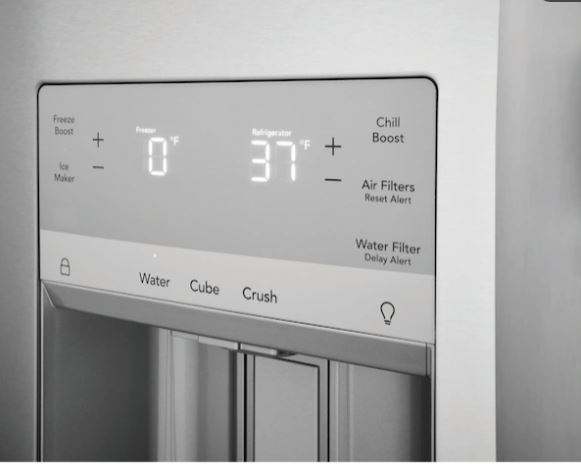
Your freezer should maintain 0°F for food safety. If it’s running at -5°F or colder, the water line is more prone to freezing.
Use a freezer thermometer to verify actual temperature. Don’t rely solely on the control setting—verify the actual temperature.
Adjust the freezer temperature control slightly warmer if it’s running excessively cold. Even 2-3 degrees can prevent line freezing without compromising food safety.
Thaw the Water Line
If you suspect freezing, unplug the refrigerator and let it thaw for 4-6 hours with doors open.
For faster results, use a hair dryer on low heat. Direct warm air at the water line, being careful not to overheat or melt plastic components.
Never use high heat, open flames, or sharp objects to address ice. You’ll damage components or puncture the water line.
After thawing, check if water flow improves. If it does, you’ve confirmed freezing was the issue.
Prevent Future Freezing
Ensure the freezer door seals properly. Warm, humid air entering causes frost buildup that can freeze water lines.
Check that items aren’t blocking freezer vents. Good air circulation prevents cold spots where water lines freeze.
Some technicians wrap the water supply tube with foam pipe insulation available at hardware stores. This provides extra protection against freezing.
If freezing recurs despite these measures, the water line may be routed too close to the evaporator coil. This requires professional rerouting.
Inspect the Water Inlet Valve
The water inlet valve at the back of your refrigerator controls water flow to both the dispenser and ice maker.
Locate and Examine the Valve
Unplug the refrigerator and pull it away from the wall so you can access the back panel.
The water inlet valve is where your home’s water line connects to the refrigerator. It’s typically at the bottom center or bottom left of the back panel.
Look for corrosion, mineral deposits, or visible damage. Heavy scaling indicates hard water buildup that restricts flow.
Remove the water line connection and inspect the valve inlet screens. These fine mesh screens catch debris but can clog with sediment.
Clean Inlet Screens
If the screens show sediment or mineral buildup, clean them carefully.
Remove the screens with needle-nose pliers. Rinse them under running water while gently brushing with an old toothbrush.
For stubborn mineral deposits, soak screens in white vinegar for 30 minutes, then rinse thoroughly.
Reinstall the screens carefully—they must seat properly or you’ll get leaks. Don’t overtighten the water line connection.
Test Valve Function
The inlet valve contains solenoids that open when the dispenser activates or ice maker fills.
With the refrigerator plugged in, listen at the valve while someone presses the dispenser lever. You should hear a clicking sound as the solenoid activates.
If the valve clicks but water flows slowly, the valve ports are partially restricted. If it doesn’t click at all, the solenoid has failed electrically.
Testing valve resistance requires a multimeter. Each solenoid should read 200-500 ohms. Infinite resistance means the coil is open and the valve needs replacement.
Replace a Failed Inlet Valve
Inlet valves (View on Amazon) cost $30-60 and are straightforward to replace.
Shut off the water supply valve behind the refrigerator. Unplug the unit.
Disconnect the water line and electrical connections. Remove the mounting screws holding the valve to the refrigerator.
Install the new valve, making sure all connections are tight and properly seated. Purge air from the line before pushing the refrigerator back into place.
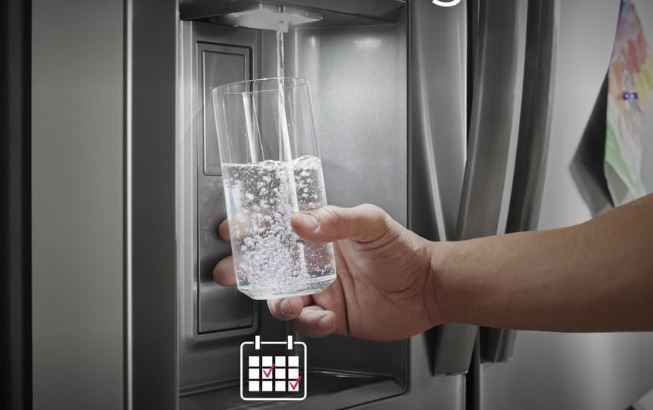
Check Water Line Connection and Routing
The water line between your home’s plumbing and the refrigerator can develop problems that restrict flow.
Inspect the External Water Line
Look at the water line running from the wall shutoff valve to the refrigerator.
Copper tubing can develop kinks if the refrigerator was pulled out roughly. Even a slight bend can restrict flow.
Plastic tubing (common with ice maker installation kits) can pinch or crush where it passes under the refrigerator or through cabinets.
The line should have gentle curves, not sharp 90-degree bends. Sharp bends reduce flow significantly.
Verify the Shutoff Valve is Fully Open
The shutoff valve behind or near the refrigerator might not be completely open.
These valves can be stiff, especially if they haven’t been turned in years. What feels “open” might only be 80% open.
Turn the valve counterclockwise as far as it will go. You should feel it stop at the fully open position.
Saddle valves (which pierce into existing pipe) are notorious for poor flow and frequent clogging. If you have one, consider replacing it with a proper T-valve connection.
Replace Old or Damaged Supply Lines
If your water line is more than 10 years old or shows any damage, replacement is inexpensive and improves flow.
Use braided stainless steel supply lines rated for refrigerator use. These resist kinking and last longer than plastic or copper.
Ensure you buy the correct length. Lines that are too short create stress; lines that are too long can kink behind the refrigerator.
When connecting, use thread seal tape on threaded connections but don’t overtighten. Overtightening can crack plastic fittings.
Address Air in the Water Lines
Air trapped in water lines causes sputtering and slow flow, especially after filter changes or extended periods without dispenser use.
Purge Air from the System
After any maintenance that disconnects water lines or replaces filters, air enters the system.
Run the water dispenser continuously for 3-5 minutes. You’ll see spurts and sputtering as air purges from the lines.
Fill and dump several pitchers of water. Don’t just run it for a few seconds—sustained flow is necessary to move all air out.
The first few glasses after a filter change often flow slowly because air pockets restrict flow. This resolves as you continue dispensing water.
Prevent Air Entry
Ensure all connections are tight. Loose connections allow air to enter the system when the dispenser isn’t running.
When replacing a water filter, minimize the time the housing is open. Air enters through the open filter housing.
Some Frigidaire models have a bypass cap that must be installed if you remove the filter. Without this cap, air can enter and water won’t flow properly.
Clean the Dispenser Actuator and Valve
The dispenser mechanism in your refrigerator door can develop problems that appear as slow flow.
Access the Door Dispenser Components
This requires partial disassembly of the freezer door interior panel.
Remove ice bucket and any screws securing the interior door panel. Carefully pry the panel away to access the dispenser components.
The dispenser actuator is the paddle or lever you press. Behind it is the dispenser valve that controls water release.
Look for ice buildup around the dispenser area. This commonly occurs and restricts water flow through the dispenser spout.
Clean Mineral Deposits
If you have hard water, mineral deposits can accumulate in the dispenser valve and spout.
Mix equal parts white vinegar and warm water. Use a small brush or pipe cleaner to clean visible deposits from the spout opening.
For internal valve cleaning, run diluted vinegar through the dispenser by placing a bowl of vinegar mixture where the water line connects inside the door.
This is more involved and may require disconnecting the line, so consider whether the effort justifies potential improvement.
Check Dispenser Valve Operation
The dispenser valve should open fully when the actuator is pressed.
With the door panel removed, have someone press the dispenser lever while you observe the valve. It should snap open decisively.
If the valve opens sluggishly or only partially, it may have failed mechanically. Dispenser valves aren’t usually sold separately—you typically replace the entire dispenser assembly.
Test with Bypass Mode
Many Frigidaire refrigerators allow you to bypass the water filter temporarily to diagnose whether the filter is causing slow flow.
Install a Bypass Plug
Some models include a filter bypass plug. This is a plastic cap that replaces the filter and allows water to flow without filtration.
If you don’t have a bypass plug, they’re available from Frigidaire parts suppliers for $10-15. Search for your refrigerator’s model number and “filter bypass.”
Install the bypass plug where the filter normally goes. Follow the same installation procedure as a filter.
Dispense water and check if flow improves dramatically. If it does, the filter was definitely your problem.
When Bypass Doesn’t Help
If water still flows slowly with the filter bypassed, you’ve ruled out the filter as the cause.
This points to issues with water pressure, frozen lines, inlet valve restriction, or the dispenser valve itself.
Continue through the other troubleshooting steps to identify the actual cause.
Don’t run your refrigerator permanently in bypass mode. Unfiltered water can contain contaminants and sediment that could damage the ice maker over time.
Consider Water Quality and Sediment Issues
If you’ve addressed all mechanical causes but still have slow flow, water quality might be the underlying issue.
Hard Water Complications
Hard water contains high concentrations of calcium and magnesium. These minerals accumulate throughout your refrigerator’s water system.
Filters clog faster with hard water. Inlet valves develop mineral deposits. Even the dispenser valve and tubing can accumulate scale.
If you have hard water (above 7 grains per gallon), you’ll need more frequent filter changes—every 3-4 months instead of 6.
Consider installing a whole-house water softener (View on Amazon) if hard water affects multiple appliances. This is a significant investment but solves many problems.
Well Water Considerations
Private well water often contains sediment and minerals municipal water doesn’t have.
Well water users should install a whole-house sediment filter before water reaches appliances. This prevents rapid clogging of refrigerator filters.
Iron and sulfur in well water can be particularly problematic. These require specialized filtration beyond what refrigerator filters provide.
Test your well water annually. High iron content may require an iron filter before water reaches your refrigerator.
Sediment in Water Lines
If your home has old plumbing or your municipality recently performed water main work, sediment can enter your lines.
This sediment lodges in inlet valve screens, clogs filters rapidly, and restricts flow throughout the system.
After water main work or plumbing repairs, flush your household water lines before using the refrigerator dispenser. Run outdoor hose bibs for several minutes.
Installing a point-of-use sediment filter before the refrigerator provides extra protection. These cost $30-50 and are easy to install.
When to Call a Professional
Most Frigidaire slow water dispenser issues are DIY-fixable, but some situations require professional help, especially if it proceeds from slow dispensing to the water dispenser not working at all.
Complex Refrigerator Door Issues
If the problem involves extensive door disassembly or removing insulation panels, consider professional service.
Refrigerator doors contain intricate components. Improper reassembly can cause insulation gaps, door alignment problems, or water leaks.
If you’re uncomfortable working inside the door cavity, a technician can diagnose and repair dispenser valve issues properly.
Refrigeration System Involvement
If the freezer isn’t maintaining proper temperature and causing line freezing, the refrigeration system may need professional attention.
This could indicate failing thermistors, control board issues, or refrigerant problems. These aren’t DIY repairs.
Persistent freezing that occurs even at proper temperature settings may indicate a defrost system problem requiring professional diagnosis.
Plumbing Modifications
If your issue requires rerouting household water lines or replacing saddle valves with proper T-connections, hire a plumber unless you’re experienced with plumbing.
Improper connections can cause leaks that damage floors and cabinets. This is especially true with copper pipe work requiring soldering.
If low household water pressure is the root cause, addressing it requires plumbing expertise beyond appliance repair.
Warranty Considerations
If your Frigidaire refrigerator is under warranty, professional service may be free or discounted.
Attempting DIY repairs can void warranties on newer units. Check your warranty status before disassembling components.
Document any professional service calls. If recurring problems appear within the warranty period, this documentation supports warranty claims.
Maintenance Tips to Prevent Slow Frigidaire Refrigerator Water Dispenser
Preventive maintenance keeps your Frigidaire water dispenser flowing properly and extends its lifespan.
Replace Filters on Schedule
Set a reminder for every six months to replace your water filter. This single step prevents most slow flow issues.
Mark the filter installation date on your calendar or use the filter indicator light if your model has one.
Keep a spare filter on hand so you’re never without one when replacement time arrives. Filters don’t expire on the shelf.
Flush the System Monthly
Even with regular filter changes, sediment can accumulate in water lines.
Once monthly, dispense 2-3 glasses of water even if you haven’t used the dispenser. This flushes sediment and prevents stagnation.
After vacations or extended periods without use, run the dispenser for several minutes before drinking. Stagnant water can taste stale.
Monitor Water Pressure
Be aware of changes in household water pressure. If kitchen faucets suddenly have less pressure, your refrigerator dispenser will too.
Address household plumbing issues promptly before they affect appliances. Low pressure stresses the inlet valve and can cause premature failure.
Check Freezer Temperature
Verify your freezer maintains 0°F. Excessively cold settings increase the risk of water line freezing.
If you notice frost buildup inside the freezer or along the back wall, address it before it causes water line problems.
Inspect Connections Annually
Once yearly, pull the refrigerator out and inspect water line connections.
Look for leaks, corrosion, kinks, or damage. Early detection prevents major issues.
Tighten any connections that have loosened over time. Vibration from the compressor can gradually loosen fittings.
Frequently Asked Questions
How long does it take to fill a glass after replacing the water filter?
After replacing a water filter, expect slower flow for the first 2-3 glasses as air purges from the system.
Run the dispenser for 3-5 minutes continuously after filter replacement. This flushes air and manufacturing residue.
Flow should return to normal speed within 5 minutes of continuous use. If it doesn’t, the filter may be incorrectly installed or defective.
Why is my Frigidaire water dispenser slow but the ice maker works fine?
The ice maker and dispenser share the same water supply up to the inlet valve, but use different valve ports and internal routing.
Slow dispenser flow with normal ice production often indicates a problem specific to the dispenser valve in the door. This valve may be partially clogged or failing.
Check the dispenser actuator and valve inside the door for mineral deposits or mechanical issues as described in the dispenser cleaning section.
Can I use my Frigidaire refrigerator without a water filter?
Yes, but you must install the filter bypass plug. Without either a filter or bypass plug, water won’t flow properly.
Running without filtration means unfiltered water reaches your dispenser and ice maker. Sediment and contaminants can accumulate in components over time.
Only use bypass mode temporarily while troubleshooting. Always return to filtered operation with a proper water filter installed.
How do I know if my water filter is genuine Frigidaire or a knockoff?
Genuine Frigidaire filters have clear model numbers and packaging with Frigidaire branding and holographic security labels.
Check the filter housing for certification marks like NSF 42 and NSF 53. Legitimate filters display these certifications.
Buy filters from authorized retailers like appliance parts suppliers or major retailers. Deep-discount filters from unknown sellers are often low-quality counterfeits.
Also Read:
What’s normal water dispenser flow rate for a Frigidaire refrigerator?
Most Frigidaire refrigerators with proper water pressure should dispense approximately 8-10 ounces (1 cup) in 7-10 seconds.
Slower flow—taking 15-20 seconds to fill a cup—indicates a problem that needs addressing. Anything slower than that is definitely abnormal.
Brand new filters may flow slightly faster than filters near the end of their service life, but the difference shouldn’t be dramatic.
Closing Thoughts
A slow Frigidaire refrigerator water dispenser is frustrating, but it’s rarely a sign of serious refrigerator problems.
In most cases, the fix is simple—replace the water filter, check household water pressure, or thaw a frozen line.
Start with the easiest possibilities first. Removing and testing without the filter takes 30 seconds and immediately identifies if that’s your problem.
Work systematically through each potential cause rather than jumping to complex repairs. The solution is usually straightforward once you identify the actual source.
Regular maintenance prevents most slow dispenser problems before they start. Change filters every six months, monitor freezer temperature, and flush the system monthly.
If you’ve exhausted all troubleshooting steps and flow remains slow, professional diagnosis can identify less common problems like failed door components or unusual plumbing issues. But most people resolve slow dispenser problems with simple DIY fixes that take under an hour.

Hi, I’m Barlgan! I created Repair Me Yourself to empower homeowners to tackle appliance repairs with confidence. From decoding error codes to fixing cooling issues, I break down complex repairs into simple, actionable steps that save you time and money.