
So, your Frigidaire dishwasher won’t start, and mysterious lights are blinking at you? Well, those blinking lights aren’t random. They’re your dishwasher’s way of telling you exactly what’s wrong. Whether it’s a blue light flashing, green lights dancing, or the entire control panel lighting, each pattern points to a specific issue.
When your Frigidaire dishwasher is not starting with lights blinking, it typically signals door latch problems, control board malfunctions, or incomplete cycles that need resetting.
Understanding what each light color means can save you hours of troubleshooting and potentially hundreds in service calls. This guide breaks down every blinking light scenario you might face. We’ll walk through the exact fixes for blue lights, green lights, and the dreaded flashing display that stops your dishes from getting clean.
Quick Diagnostic for a Frigidaire Dishwasher Not Starting Lights Blinking
| Light Pattern | Most Likely Cause | Quick Fix |
| Blue light blinking | Door not fully latched | Close door firmly, check latch |
| Green light blinking | Cycle interrupted or paused | Press Start/Cancel to reset |
| All lights flashing | Control board error | Power cycle the unit |
| Single LED blinking | Drainage issue | Check drain hose and filter |
Understanding Frigidaire Dishwasher Light Signals
Modern Frigidaire dishwashers use LED indicators as diagnostic tools. These aren’t just decorative features.
The lights communicate specific error codes without displaying text. Blue lights generally indicate mechanical issues like door problems. Green lights often relate to cycle status or interruptions. When multiple lights flash simultaneously, you’re looking at electrical or control board concerns.
Your dishwasher’s brain is the control board. It monitors every component from the door latch to the heating element. When something fails or disconnects, the board triggers specific light patterns. This built-in diagnostic system helps pinpoint problems without expensive service calls.
Why is My Frigidaire Dishwasher Not Starting Lights Blinking?
The most common scenario involves a dishwasher that won’t respond when you press start. Lights blink, but nothing happens.
This frustrating situation has several root causes. Let’s break them down systematically.
Check the Door Latch Assembly
The door latch is your first suspect. Frigidaire dishwashers won’t start unless the door is completely secure.
Open and close the door firmly. You should hear a definitive click. If the click sounds weak or absent, the latch mechanism may be worn. Inspect the door strike plate for damage or misalignment. Food debris sometimes accumulates around the latch, preventing proper closure.
Remove any visible obstructions with a damp cloth. Test the door switch with a multimeter if you’re comfortable with basic electrical testing. The switch should show continuity when the door closes.
Inspect the Control Panel
A faulty control panel causes erratic blinking without starting the cycle. This happens when buttons wear out or moisture seeps behind the interface.
Press each button firmly and listen for responsive beeps. Sticky or unresponsive buttons indicate panel damage. Check for visible cracks or signs of water damage on the control board. Clean the panel surface with a slightly damp microfiber cloth.
Sometimes resetting the control panel resolves software glitches. We’ll cover the exact reset procedure in detail later.
Examine the Power Supply
Insufficient power triggers blinking lights and prevents startup. Your dishwasher needs consistent voltage to operate properly.
Check your home’s circuit breaker. A tripped breaker cuts power partially, causing strange electrical behavior. Reset any tripped breakers completely. Verify the dishwasher plug is firmly seated in the outlet. Loose connections create intermittent power issues.
Test the outlet with another appliance to confirm it’s working. According to the U.S. Department of Energy, dishwashers require dedicated 120-volt circuits for optimal performance.
Verify the Thermal Fuse
The thermal fuse protects your dishwasher from overheating. When it blows, the unit won’t start regardless of what buttons you press.
This component doesn’t reset itself. You’ll need to replace it if it’s blown. Access the thermal fuse by removing the dishwasher’s lower kickplate. Use a multimeter (View on Amazon) to test for continuity. No continuity means the fuse is blown and needs replacement.
Thermal fuses blow due to heating element malfunctions or poor ventilation. Address the root cause before replacing the fuse, or it’ll blow again.
Frigidaire Dishwasher Blinking Blue Light and Not Starting
The blue light indicator specifically relates to door security and latch functionality. This is Frigidaire’s way of saying “I can’t start because the door isn’t safe.”
Why Blue Lights Appear
Blue lights activate when the control board doesn’t receive proper door closure signals. The safety interlock system prevents operation with an open door.
This protects against water leaks and steam burns. The blue light remains steady or blinks depending on your specific model. Some Frigidaire models use blue for initial startup sequences that got interrupted.
Door Latch Troubleshooting Steps
Start by opening and closing the door slowly. Watch and listen for proper engagement. The latch should grab firmly with an audible click.
Inspect the door gasket for tears or deformation. A damaged gasket prevents the door from seating properly. Clean the gasket with warm soapy water and check for hardening. Replace gaskets that feel brittle or cracked.
Examine the latch striker on the dishwasher frame. It should align perfectly with the latch mechanism. Loose mounting screws throw off this alignment. Tighten any loose screws you find.
Blue Light with Beeping Sounds
Some models combine blue lights with beeping alerts. This indicates the control board is actively detecting the door issue.
The beeping pattern varies by model. Continuous beeping suggests a stuck door switch. Intermittent beeps point to loose wiring connections. Check all wire harnesses connected to the door latch assembly.
Press and hold the door latch manually. If the blue light stops, the latch spring mechanism is weak. You’ll need to replace the entire latch assembly.
Frigidaire Dishwasher Blinking Green Light
Green lights typically signal cycle-related issues rather than mechanical failures. Your dishwasher started a cycle but couldn’t complete it.
Incomplete Cycle Indicators
Green blinking indicates the last cycle didn’t finish properly. This happens when power interrupts mid-cycle or someone opened the door during operation.
The dishwasher’s memory holds the incomplete cycle. It won’t start a new cycle until you clear the previous one. This safety feature prevents water from sitting stagnant in the tub.
Check if there’s standing water in the bottom of the tub. Standing water confirms an incomplete cycle.
Drainage System Check
Poor drainage is the leading cause of interrupted cycles. The dishwasher stops and blinks green when it can’t drain properly.
Remove the lower dish rack and locate the filter assembly. Twist and lift it out according to your model’s design. Clean any food debris, glass shards, or grease buildup. Rinse the filter under running water.
Check the drain hose under your sink. Ensure it’s not kinked or clogged. The hose should have a high loop or air gap to prevent backflow. According to Frigidaire’s installation guidelines, proper drain hose positioning is critical for reliable operation.
Water Supply Issues
Green lights sometimes indicate water inlet problems. The dishwasher detected inadequate water supply during the cycle.
Turn off the dishwasher and check the water supply valve under your sink. It should be fully open. Inspect the inlet valve screen for mineral buildup or debris. This fine mesh screen clogs easily in hard water areas.
Remove and clean the screen carefully. Use white vinegar to dissolve mineral deposits. Replace the screen if it’s damaged or excessively corroded.
How Do You Reset the Flashing Lights on a Frigidaire Dishwasher
Resetting your Frigidaire dishwasher clears error codes and restores normal operation. This should be your first troubleshooting step for most blinking light issues.
Method 1: Soft Reset Using Control Panel
Press and hold the Start/Cancel button for five seconds. Watch for the lights to stop blinking and the unit to drain any standing water.
This drain cycle takes about two minutes. Don’t interrupt it. Once draining completes, the dishwasher resets to standby mode. All error codes clear from memory.
Try selecting a new cycle and pressing Start. If the lights begin blinking again immediately, move to the hard reset method.
Method 2: Power Cycle Reset
Turn off the circuit breaker dedicated to your dishwasher. Wait exactly five minutes. This allows capacitors to fully discharge.
Flip the breaker back on. The control board reboots completely, clearing all error logs. This hard reset solves software glitches that soft resets can’t touch.
Open the dishwasher door and close it firmly. Select a wash cycle and press Start. The unit should begin normally without blinking lights.
Method 3: Factory Reset Procedure
Some Frigidaire models support factory resets through button combinations. Check your user manual for model-specific instructions.
A common sequence involves pressing Select Cycle and Start/Cancel simultaneously for three seconds. Another method uses Heated Dry and Start/Cancel held together. The control panel displays or blinks differently when entering reset mode.
Factory resets erase custom settings like delay start times and soil level preferences. You’ll need to reprogram these after the reset completes.

Advanced Diagnostic Techniques for Frigidaire Dishwasher Not Starting Lights Blinking
When basic resets fail, deeper investigation is necessary. These techniques require moderate technical skills.
Reading Error Code Patterns
Frigidaire dishwashers communicate through light blink patterns. Count the number of blinks in each sequence.
One blink followed by a pause, then two blinks indicates a specific error code (1-2). Write down the pattern. Cross-reference it with your model’s service manual. These manuals are available free from Frigidaire’s support website.
Common patterns include:
- 1 blink: Stuck button
- 2 blinks: Door switch failure
- 3 blinks: Heating element problem
- 4 blinks: Temperature sensor fault
Testing the Control Board
The control board orchestrates all dishwasher functions. Board failures cause seemingly random blinking patterns.
Unplug the dishwasher and remove the control panel cover. Look for visible signs of damage: burn marks, swollen capacitors, or corrosion. Water damage appears as white or green residue on circuit traces.
Test voltage at the control board terminals using a multimeter. With power restored, you should read 120 volts AC at the main input. Lower readings indicate wiring problems between the breaker and dishwasher.
Never touch exposed terminals with bare hands when power is on. Use insulated tools only.
Wiring Harness Inspection
Loose or corroded wire connections create intermittent electrical issues. These manifest as random blinking and starting failures.
Disconnect power before inspecting wiring. Check each wire harness connection for tightness. Wiggle connectors gently while watching for movement. Tight connections don’t move.
Look for wires with damaged insulation. Heat damage appears as brittle, discolored insulation. Moisture damage shows as green corrosion on copper wire. Replace any damaged wire harnesses completely.
Frigidaire Dishwasher Component Replacement Guide
Sometimes resetting and cleaning aren’t enough. You’ll need to replace failed components.
When to Replace the Door Latch
Replace the door latch when it no longer clicks firmly or the switch fails continuity testing. Latches wear out from thousands of open-close cycles.
Purchase genuine Frigidaire parts (View on Amazon) using your model number. The replacement process takes 15-30 minutes with basic tools.
Turn off power at the breaker. Open the door and remove the inner door panel screws. The latch assembly mounts to the door frame with two or three screws. Disconnect the wire harness and install the new latch.
Test the new latch before reassembling completely. Close the door and verify proper engagement.
Control Board Replacement
Control boards fail due to power surges, moisture, or component aging. Replacement costs $150-300 for the part alone.
This repair requires careful handling of electronic components. Take photos of all wire connections before disconnecting anything. Label wires if your phone died.
Mount the new board in the exact position as the old one. Transfer wires one at a time to avoid mixing up connections. Secure all wire harnesses with proper clips.
Door Strike Plate Adjustment
The strike plate aligns the door latch mechanism. Misalignment prevents proper closure even with a working latch.
Loosen the strike plate mounting screws slightly. Close the door and listen for latch engagement. Adjust the plate position until the latch clicks firmly. Tighten screws while maintaining alignment.
This simple adjustment fixes many “won’t start” issues without parts replacement.
Frigidaire Dishwasher Model-Specific Considerations
Frigidaire manufactures various dishwasher lines with different light systems. Understanding your specific model helps with accurate troubleshooting.
| Model Series | Light Configuration | Common Blinking Causes |
| Gallery | LED display with icons | Control panel moisture, button failure |
| Professional | Blue status lights | Door latch sensor, control board |
| Built-In Basic | Single power LED | Main control board, thermal fuse |
| Portable | Green and amber LEDs | Float switch, drainage problems |
Gallery Series Specifics
Gallery dishwashers use touch controls and LED displays. These panels are moisture-sensitive. Steam from hot cycles sometimes condenses behind the panel.
If your Gallery dishwasher shows erratic light behavior after hot cycles, ventilation may be inadequate. Ensure cabinet ventilation holes aren’t blocked. Consider leaving the door cracked after cycles to release steam.
Professional Series Troubleshooting
Professional series models include advanced sensors that monitor water temperature and soil levels. These sensors occasionally fail, triggering blue warning lights.
The temperature sensor mounts to the heating element. Mineral buildup on the sensor tip causes false readings. Clean the sensor with white vinegar during regular maintenance.
Portable Model Challenges
Portable dishwashers face unique issues from repeated connecting and disconnecting. The intake hose connections loosen over time.
Check all hose connections for hand-tightness before each use. Loose connections reduce water pressure, triggering green lights and cycle interruptions. The float switch in portable models is extra sensitive to prevent overflow during sink connection failures.
Prevention and Maintenance of Blinking Lights on Frigidaire Dishwasher
Preventing blinking light issues is cheaper and easier than fixing them. Implement these maintenance practices in 2026 and beyond.
Monthly Maintenance Tasks
Run an empty cycle with dishwasher cleaner monthly. This removes grease buildup from internal components. Buildup causes sensor failures and drainage issues.
Inspect and clean the door gasket. Wipe it with a damp cloth to remove food particles and detergent residue. Check for tears or hardening. Replace gaskets annually if you run heavy cycles daily.
Clean the spray arms by removing them and flushing with water. Clogged spray arm holes reduce cleaning performance and stress the wash pump.
Quarterly Deep Cleaning
Every three months, perform thorough filter and drain cleaning. Remove the filter assembly and check the sump area for debris.
Use a flashlight to inspect inside the drain pump. Small items like toothpicks or bottle caps lodge in the pump impeller. These obstructions prevent proper drainage.
Check the water inlet valve screen. Hard water areas require more frequent screen cleaning. Consider installing a water softener (View on Amazon) if your home has extremely hard water.
Annual Professional Inspection
Schedule annual professional maintenance to catch problems before they cause failures. Technicians inspect electrical connections, test sensors, and verify proper voltage.
They’ll measure water temperature to ensure the heating element functions correctly. They check pump seals and hoses for wear. This preventive service costs $75-150 but prevents expensive emergency repairs.
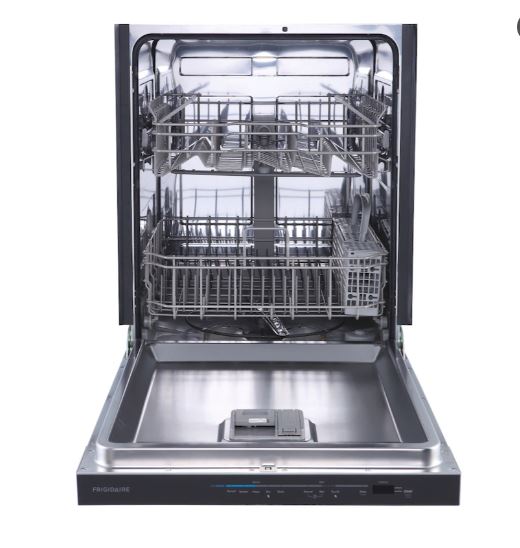
Water Quality Impact on Frigidaire Dishwasher
Your water quality directly affects dishwasher reliability. Hard water causes most long-term component failures.
Hard Water Effects
Mineral deposits accumulate on sensors, valves, and heating elements. These deposits insulate heating elements, reducing efficiency. They clog valve screens, restricting water flow. Sensors covered in minerals send false readings to the control board.
Test your water hardness with simple test strips. Water harder than 7 grains per gallon requires treatment. Use rinse aid religiously to minimize mineral film.
Solution Strategies
Install an inline water softener specifically for your dishwasher. These compact units mount under the sink. They protect the dishwasher without softening your entire home’s water supply.
Add citric acid or a descaling agent to monthly cleaning cycles. This dissolves existing mineral buildup. According to Water Quality Association research, regular descaling extends dishwasher lifespan by 30-40%.
Safety Considerations
Working on dishwashers involves electrical and water hazards. Always prioritize safety over speed.
Electrical Safety Rules
Turn off the circuit breaker before any internal work. Verify power is off with a voltage tester. Never trust the breaker label alone. Test the actual outlet or hardwired connection.
Keep the floor dry while working. Water and electricity create deadly combinations. Wear rubber-soled shoes. Keep a fire extinguisher rated for electrical fires nearby.
Water Damage Prevention
Place towels around the work area before disconnecting water lines. Even drained dishwashers retain water in various components. The water inlet valve holds water until disconnected.
Have a bucket and towels ready when removing the drain pump. This component always contains residual water. Work slowly to prevent flooding your kitchen floor.
Also Read: How to Fix a Whirlpool Dishwasher That Won’t Turn On (DIY Guide)
When to Call a Professional
Some situations exceed DIY capabilities. Knowing when to call a pro saves time and prevents additional damage.
Red Flag Scenarios
Call a professional when you smell burning plastic or see smoke. This indicates serious electrical problems. Don’t attempt to operate the dishwasher.
If you’ve replaced the control board and door latch but lights still blink, deeper electrical issues exist. The main wiring harness or transformer may be failing. These repairs require specialized tools and training.
Water pooling under the dishwasher during cycles indicates seal failures or cracked components. These repairs often require removing the entire unit from the cabinet.
Cost-Benefit Analysis
Compare repair costs to replacement costs. If repairs exceed 50% of a new dishwasher’s price, consider replacement. Modern 2026 models offer significantly better energy efficiency.
Dishwashers older than 8-10 years rarely justify expensive repairs. Parts become harder to find and more costly. Labor charges for older units often increase due to access difficulties.
Get multiple quotes before authorizing expensive repairs. Reputable technicians provide written estimates before starting work.
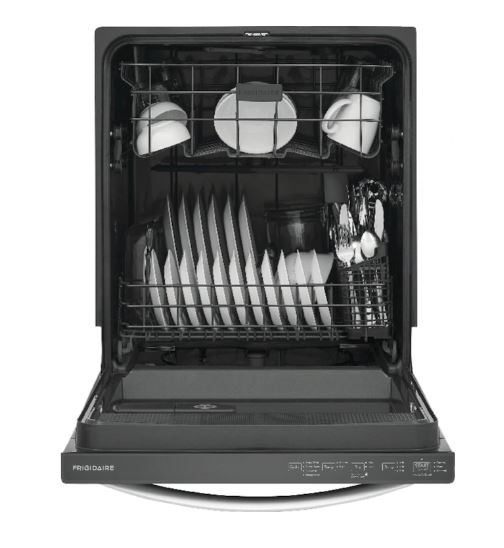
Comparison of Common Frigidaire Dishwasher Blinking Lighs Fixes
| Issue | DIY Difficulty | Estimated Time | Part Cost | Success Rate |
| Door latch adjustment | Easy | 10 minutes | $0 | 85% |
| Control panel reset | Easy | 5 minutes | $0 | 70% |
| Filter cleaning | Easy | 15 minutes | $0 | 60% |
| Door latch replacement | Moderate | 30 minutes | $45-80 | 90% |
| Control board replacement | Moderate | 45 minutes | $150-300 | 75% |
| Wire harness repair | Difficult | 1-2 hours | $50-120 | 65% |
FAQs
Why does my Frigidaire dishwasher blink but not start after a power outage?
Power outages interrupt the cycle and confuse the control board memory. The dishwasher thinks it’s mid-cycle and won’t start fresh. Press and hold Start/Cancel for five seconds to drain and reset. This clears the interrupted cycle from memory. If blinking continues, perform a complete power cycle reset at the breaker.
Can I fix a blinking dishwasher without calling a technician?
Most blinking light issues resolve with simple resets or door latch adjustments. About 70% of cases don’t require professional service. Start with power cycle resets and thorough cleaning. Replace the door latch if the reset doesn’t work. Call a technician only if lights continue blinking after replacing the latch and resetting multiple times.
What does it mean when all the lights blink at once?
All lights blinking simultaneously indicates a control board error or communication failure. The board lost connection with one or more sensors. This happens during power surges or when internal wiring loosens. Perform a hard reset by shutting off the breaker for five minutes. If all lights still blink, the control board likely needs replacement.
How long should a Frigidaire dishwasher last before having light problems?
Quality Frigidaire dishwashers typically run 8-12 years before developing electrical issues. Door latches fail sooner, around 5-7 years with heavy use. Control boards last longer unless exposed to power surges or moisture. Regular maintenance extends component life significantly. Units with proper surge protection and soft water last longer than average.
Is a blinking light covered under warranty?
Frigidaire’s standard warranty covers manufacturing defects for one year. Extended warranties vary by retailer and model. Blinking lights caused by faulty components fall under warranty coverage. User damage from improper installation or maintenance isn’t covered. Check your warranty documentation before paying for repairs. Register your dishwasher at purchase to ensure coverage validity.
Why does the light blink only during certain cycles?
Cycle-specific blinking indicates sensor issues related to that cycle’s requirements. Heavy cycles stress the heating element and temperature sensor more than light cycles. Sanitize cycles require higher temperatures, exposing thermostat failures. Sensors work fine during normal cycles but fail under heavy-cycle demands. Test the temperature sensor and heating element continuity.
Can hard water cause blinking lights?
Hard water indirectly causes blinking lights through mineral buildup. Deposits accumulate on sensors, causing false readings. The control board responds to these bad readings by halting operation and blinking lights. Clogged inlet valve screens restrict water flow, triggering flow sensors. Regular descaling prevents these mineral-related issues. Use quality rinse aid in hard water areas.
How do I know if my Frigidaire dishwasher’s control board is bad?
Failed control boards show multiple symptoms: unresponsive buttons, random light patterns, or starting then immediately stopping. Check for visible burn marks or swollen components on the board. Test for proper voltage at input terminals. If you’ve eliminated all other causes and reset multiple times, the board is likely faulty. Control board failures cause 30% of blinking light cases.
Your Next Steps for a Working Dishwasher
Blinking lights don’t mean your dishwasher is dead. They’re actually helpful diagnostic tools when you understand the language.
Start with the simplest solutions first. Reset the dishwasher, clean the filters, and check the door latch. These free fixes solve the majority of blinking light problems. Move to component replacement only after exhausting simple solutions.
Document what you try and the results. This information helps professionals if you eventually need service. Take photos of wire connections before disconnecting anything. Your future self will thank you.
The good news? You now understand exactly what those blinking lights mean and how to fix them. Most issues take 30 minutes or less to resolve. Your dishwasher will be cleaning dishes again before your sink overflows.

Hi, I’m Barlgan! I created Repair Me Yourself to empower homeowners to tackle appliance repairs with confidence. From decoding error codes to fixing cooling issues, I break down complex repairs into simple, actionable steps that save you time and money.