
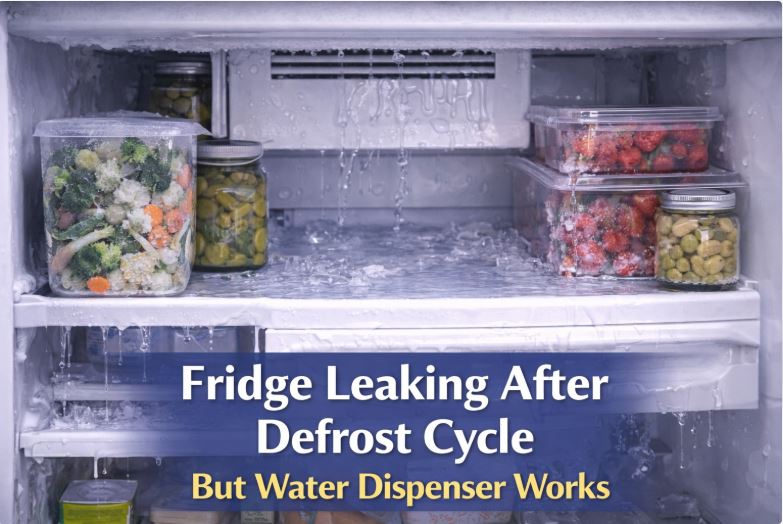
You’ve noticed water pooling around your refrigerator right after the defrost cycle finishes. This timing isn’t a coincidence, and understanding why it happens is the first step to fixing it.
A fridge leaking after the defrost cycle typically indicates a clogged defrost drain, an overflowing drain pan, a malfunctioning defrost heater, a damaged evaporator pan, or improper drainage system installation. The defrost cycle melts accumulated frost, and when the drainage system fails, this water has nowhere to go.
This troubleshooting guide will help you identify the exact cause of your post-defrost leak and provide step-by-step solutions to fix it permanently.
Quick Reference for a Fridge Leaking After Defrost Cycle
| Cause | Symptoms | Difficulty Level | Estimated Fix Time |
|---|---|---|---|
| Clogged Defrost Drain | Water inside fridge, pools in crisper | Easy | 20-40 minutes |
| Overflowing Drain Pan | Water under fridge only after defrost | Easy | 15-30 minutes |
| Defrost Heater Malfunction | Excessive frost, longer defrost cycles | Moderate | 1-2 hours |
| Cracked Evaporator Pan | Water inside freezer compartment | Moderate | 45-90 minutes |
| Improper Drain Installation | Recurring leaks, water backing up | Moderate to Hard | 1-3 hours |
Why Is My Fridge Leaking After Defrost Cycle?
The defrost cycle is a normal part of your refrigerator’s operation. During this cycle, your fridge temporarily stops cooling to melt frost buildup on the evaporator coils.
This process generates a significant amount of water that must drain properly. When something goes wrong with the drainage system, you’ll notice leaks immediately after the defrost cycle completes.
Let’s explore each potential cause systematically. Always unplug your refrigerator before attempting any repairs.
1. Clogged Defrost Drain Line
The defrost drain carries melted frost from your freezer to the drain pan below. During each defrost cycle, water flows through this narrow tube.
Food particles, mineral deposits, or ice can block this drain over time. When blocked, defrost water backs up instead of draining properly.
Signs of a Clogged Drain
- Water appears inside your refrigerator compartment, particularly in the vegetable crisper drawers. You’ll notice this happens consistently after defrost cycles, which typically run every 6 to 12 hours.
- Ice may build up at the back of your freezer near the drain opening. The water often appears within 30 minutes to an hour after the defrost cycle completes.
How to Locate the Drain
Remove the shelves and panels at the back of your freezer compartment. Look for a small opening or groove at the bottom rear of the freezer.
Some models have the drain behind a small plastic cover. Consult your user manual if you can’t locate it immediately.
How to Fix It
Mix hot water with one tablespoon of baking soda in a cup. Use a turkey baster to flush this solution through the drain opening repeatedly.
For stubborn clogs, carefully insert a flexible pipe cleaner or small plastic tube into the drain. Work it gently back and forth to break up the blockage. Never use metal objects that could puncture the drain tube.
Continue flushing with hot water until it drains freely. You should hear water flowing into the pan beneath your refrigerator.
Prevention Tips
Flush your defrost drain with hot water every two to three months. Keep food items away from the back wall of your freezer where debris can fall into the drain area.
Consider installing a drain maintenance kit designed for refrigerators. These typically include cleaning brushes and flush solutions.
2. Overflowing or Mispositioned Drain Pan
Your refrigerator’s drain pan sits at the bottom of the unit and collects water from the defrost cycle. Under normal conditions, this water evaporates before the next defrost cycle.
When the pan overflows or shifts out of position, water spills onto your floor. This typically happens right after defrost cycles when water volume is highest.
Signs of Drain Pan Issues
- Water appears only under your refrigerator, not inside it. The leaking timing coincides directly with defrost cycles.
- You may notice the water is warm, as the compressor heat aids evaporation. The amount of water seems proportional to the frost buildup before each defrost cycle.
How to Access the Drain Pan
Remove the front grille at the base of your refrigerator by pulling it forward or unscrewing retaining clips. The drain pan typically slides out from the front.
Alternatively, pull your refrigerator away from the wall to access the pan from behind. Some models require removing a rear access panel.
How to Fix It
First, check if the pan is properly positioned. It should sit level and align with the drain tube outlet above it. Adjust the pan position until the drain tube feeds directly into it.
Look for cracks, warping, or damage to the pan itself. Even small cracks can cause significant leaking during high-volume defrost cycles.
If the pan is damaged, order a replacement specific to your refrigerator model. Installation involves removing the old pan and sliding the new one into place. Replacement drain pans (View on Amazon) cost $15 to $50.
Clean the pan thoroughly with soap and water. Remove any debris or buildup that could reduce its capacity or prevent proper evaporation.
When the Pan Fills Too Quickly
If your pan consistently overflows despite being undamaged and properly positioned, your refrigerator may be generating excessive frost. This indicates a separate issue requiring attention, such as a door seal problem or temperature setting that’s too low.
3. Malfunctioning Defrost Heater
The defrost heater melts frost from the evaporator coils during each defrost cycle. This component turns on automatically at regular intervals.
When the heater malfunctions, it produces uneven heating. This creates excess water in some areas while leaving frost in others, overwhelming your drainage system.
Signs of Heater Problems
- Your freezer accumulates more frost than usual between defrost cycles. The defrost cycle seems to run longer than normal, or you notice incomplete defrosting.
- Frost patterns appear uneven on the evaporator coils. Water leaks are particularly heavy after defrost cycles because the heater eventually melts accumulated frost all at once.
How to Diagnose the Problem
Check the frost pattern in your freezer. Uneven frost distribution suggests heater issues. Normal frost should melt completely during each defrost cycle.
Listen for the defrost cycle timing. Most refrigerators run defrost cycles every 6 to 12 hours for 20 to 30 minutes. If cycles are much longer, the heater may be weak.
Testing the heater element requires a multimeter (View on Amazon) to check for continuity. If you’re not comfortable with electrical testing, note the symptoms and call a technician.
How to Fix It
Replacing a defrost heater is a moderate DIY task. First, unplug your refrigerator and access the evaporator compartment by removing interior panels.
Locate the heater element, which typically runs beneath or alongside the evaporator coils. Disconnect the wire harness and remove mounting clips.
Install the new heater element in reverse order. Replacement heaters cost $20 to $60 depending on your refrigerator model.
If you’re uncomfortable working with electrical components inside your freezer, hire a professional. This repair typically costs $150 to $300 with labor.
4. Cracked or Damaged Evaporator Drain Pan
The evaporator drain pan is different from the main drain pan at the bottom of your fridge. This smaller pan sits directly under the evaporator coils inside the freezer compartment.
It collects the initial melt water before it flows through the drain tube. When damaged, water leaks into your freezer instead of draining properly.
Signs of Evaporator Pan Damage
- Water pools inside your freezer compartment, specifically at the bottom. This water appears during or immediately after defrost cycles.
- You may notice ice forming in unusual places inside the freezer. The water often refreezes before you notice it, creating thick ice sheets on the freezer floor.
How to Access the Pan
Remove all items from your freezer. Take out shelves, drawers, and any removable components.
Remove the rear panel inside the freezer compartment. This typically involves unscrewing several screws and carefully pulling the panel forward.
Behind this panel, you’ll see the evaporator coils and the drain pan beneath them.
How to Fix It
Inspect the evaporator drain pan for cracks, holes, or damage. Even hairline cracks can cause significant leaking during defrost cycles.
If damaged, you’ll need to replace the pan. Order the correct part using your refrigerator’s model number. Replacement evaporator pans cost $25 to $80.
Installation involves removing the old pan from its mounting position and securing the new one. Make sure the drain outlet aligns properly with the drain tube.
Important Safety Note
Working inside the evaporator compartment exposes you to refrigerant lines. Never puncture or damage these lines. If you’re unsure about any component, consult a professional.
5. Improper Drain System Installation or Damage
Your refrigerator’s drain system includes the drain opening, drain tube, and connection to the drain pan. These components must align and function together properly.
Improper installation, damage from moving the refrigerator, or deterioration over time can disrupt this system. The defrost cycle then produces more water than the compromised system can handle.
Signs of Installation Issues
- Leaks occur inconsistently or seem to worsen over time. Water backs up in the drain even after you’ve cleared clogs.
- You recently moved your refrigerator and leaks started afterward. The drain tube may have disconnected or kinked during the move.
How to Inspect the System
Trace the drain tube from the freezer compartment to the drain pan. Look for kinks, disconnections, or damage along its length.
Check where the tube connects to the drain opening in the freezer. This connection should be secure with no gaps.
Verify the tube feeds directly into the drain pan below. Any misalignment causes water to miss the pan entirely.
How to Fix It
Straighten any kinks in the drain tube carefully. If the tube is damaged, replace it with refrigerator-grade tubing available at appliance parts stores.
Reconnect any loose connections. Use small zip ties or clips to secure the tube in place and prevent future disconnection.
If the tube has deteriorated, replace the entire drain tube assembly. This involves accessing both the freezer compartment and the area beneath your refrigerator.
For complex installation issues or if you’re unsure about the routing, consult your refrigerator’s service manual or hire a professional. Proper installation ensures long-term reliability.
Frequently Asked Questions
How often does the refrigerator defrost cycle run?
Most modern refrigerators run automatic defrost cycles every 6 to 12 hours. Each cycle typically lasts 20 to 30 minutes.
The exact timing depends on your refrigerator model and how often you open the doors. More door openings introduce more humidity, which creates more frost and may trigger more frequent defrost cycles.
You usually won’t notice these cycles happening. The refrigerator manages them automatically in the background.
Is it normal to see some water during defrost cycle?
A small amount of water in the drain pan is completely normal. This water should evaporate between defrost cycles thanks to heat from the compressor.
However, water on your floor or inside your refrigerator compartments is never normal. This indicates a drainage problem that needs fixing.
The key difference is location. Water in the drain pan equals normal operation. Water anywhere else equals a problem.
Why does my fridge only leak after defrost and not all the time?
The defrost cycle generates all the water at once when it melts accumulated frost. This creates a temporary surge of water that your drainage system must handle.
If your drain is partially clogged or your drain pan is undersized, it can handle normal condensation but fails during high-volume defrost cycles.
Think of it like a clogged sink that drains slowly. Regular dripping water might drain fine, but dumping a cup of water overwhelms the system.
Can a leaking fridge after defrost damage my appliance?
Yes, if left unaddressed. Water inside your freezer compartment can refreeze and create ice blockages that restrict airflow. This forces your compressor to work harder and reduces cooling efficiency.
Water under your refrigerator can damage the compressor and electrical components. It can also cause rust on metal components and deterioration of plastic parts.
Additionally, standing water promotes mold and bacterial growth. Address leaks quickly to protect both your appliance and your health.
How do I know if my defrost drain is frozen vs clogged?
A frozen drain typically shows ice buildup visible at the drain opening in your freezer. The ice may appear white or clear and blocks the opening completely.
A clogged drain usually involves food particles or debris. You might see dark material or smell a musty odor from trapped organic matter.
To test, pour warm water into the drain. If it doesn’t drain at all and you see ice, it’s frozen. If it drains slowly or backs up without visible ice, it’s clogged with debris.
For frozen drains, thaw your refrigerator completely before cleaning. For clogged drains, use hot water and a pipe cleaner as described earlier.
Stop Post-Defrost Fridge Leaks Permanently
You now understand why your fridge leaks after defrost cycles and how to fix each potential cause. Most issues involve simple drainage problems you can resolve yourself.
Start by checking your defrost drain for clogs. This is the most common cause and the easiest fix. Flush it with hot water and baking soda solution.
Next, inspect your drain pan for damage or misalignment. Ensure it sits level and the drain tube feeds directly into it.
If simple fixes don’t resolve the issue, consider the defrost heater or evaporator pan. These require more involved repairs but are still manageable for DIY enthusiasts.
Regular maintenance prevents future problems. Clean your defrost drain quarterly. Inspect the drain pan semi-annually. Keep your freezer organized to prevent debris from reaching the drain area.
When defrost-related leaks persist despite your troubleshooting efforts, call a qualified appliance repair technician. They can diagnose complex issues with defrost timers, thermostats, or sealed system components.
Address these leaks promptly to protect your floors, your appliance, and your food.

Hi, I’m Barlgan! I created Repair Me Yourself to empower homeowners to tackle appliance repairs with confidence. From decoding error codes to fixing cooling issues, I break down complex repairs into simple, actionable steps that save you time and money.