
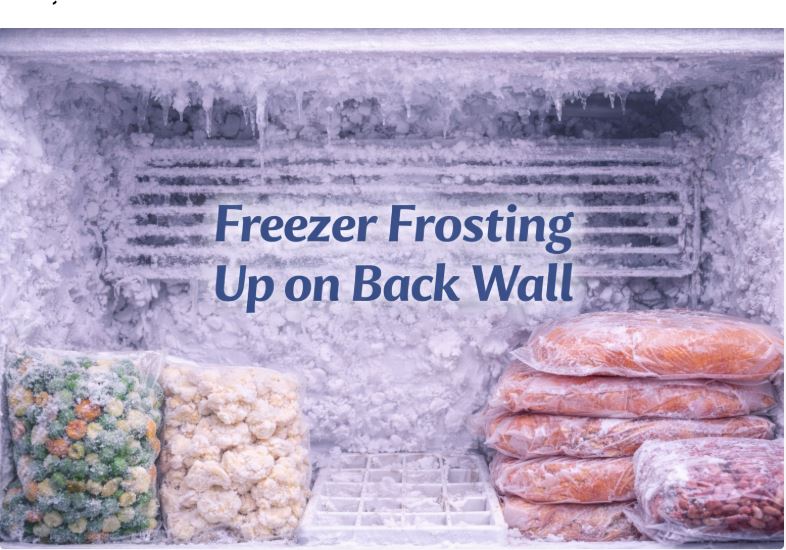
You’ve noticed a thick layer of frost accumulating on the back wall of your freezer. This isn’t just unsightly – it reduces storage space, makes your freezer work harder, and signals an underlying problem that needs attention.
A freezer frosting up on the back wall typically indicates a faulty door seal, a malfunctioning defrost system, temperature setting issues, blocked air vents, or excessive moisture entering the freezer. When warm, humid air enters the freezer or the automatic defrost system fails, frost builds up continuously on the coldest surface, which is usually the back wall where the evaporator coils are located.
This troubleshooting guide will help you identify the exact cause of your frost buildup and show you how to eliminate it permanently.
Quick Reference for a Freezer Frosting Up on Back Wall
| Cause | Symptoms | Difficulty Level | Estimated Fix Time |
|---|---|---|---|
| Damaged Door Seal | Frost near door edges, higher energy bills | Easy | 30-60 minutes |
| Defrost System Failure | Heavy frost, reduced cooling efficiency | Moderate to Hard | 1-3 hours |
| Temperature Set Too Low | Even frost layer, ice on food packages | Easy | 5 minutes |
| Blocked Air Vents | Uneven cooling, frost in specific areas | Easy | 15-30 minutes |
| Excessive Moisture Entry | Frost after door openings, humid conditions | Easy | 10-20 minutes |
Why Is My Freezer Frosting Up on Back Wall?
Frost forms when moisture in the air contacts the extremely cold surfaces inside your freezer. Under normal conditions, automatic defrost cycles prevent excessive buildup by periodically melting frost and draining it away.
When you see heavy frost accumulation on the back wall, something has disrupted this balance. Either too much moisture is entering your freezer, or the defrost system isn’t removing frost effectively.
The back wall frosts up first because it’s the coldest area. The evaporator coils that create cold air sit directly behind this wall, making it the primary condensation point for any excess moisture.
1. Worn or Damaged Door Seal
Your freezer door seal (also called a gasket) creates an airtight barrier when the door closes. This flexible rubber strip runs around the entire door perimeter.
When the seal wears out, cracks, or becomes misaligned, warm humid air from your kitchen leaks into the freezer continuously. This moisture immediately freezes when it contacts the cold back wall.
Signs of a Faulty Door Seal
- Frost appears heaviest near the edges of the back wall or around the door opening. You might notice frost patterns that seem to radiate from one corner or side.
- Your freezer runs constantly or cycles more frequently than normal. Energy bills may increase noticeably because the freezer works harder to maintain temperature.
- The door doesn’t close with a firm suction sound. You can sometimes see light between the door and the cabinet when the door is closed.
How to Test Your Door Seal
Close a dollar bill in the door so half is inside and half is outside. Try to pull the bill out. It should resist with firm pressure.
Repeat this test around the entire door perimeter. Any spot where the bill slides out easily indicates a weak or damaged seal in that area.
Visually inspect the seal for cracks, tears, or areas that look compressed or flattened. Run your hand along the seal feeling for deformities or sticky spots.
How to Fix It
For minor seal issues, clean the gasket thoroughly with warm soapy water. Food residue and sticky substances can prevent proper sealing.
If the seal is dirty but intact, apply a thin layer of petroleum jelly after cleaning. This helps maintain flexibility and improves the seal.
For damaged, cracked, or permanently deformed seals, replacement is necessary. Order a replacement gasket specific to your freezer model using the model number.
Replacement door gaskets (View on Amazon) cost $50 to $120 depending on your freezer brand. Installation is straightforward – remove the old seal by pulling it from the retaining channel, then press the new seal firmly into place.
Some seals attach with screws hidden behind the gasket. Loosen these screws slightly, position the new gasket, then retighten the screws evenly around the door.
Prevention Tips
Clean your door seal monthly with mild soap and water. Avoid harsh chemicals that can dry out and crack the rubber.
Never hang items on your freezer door or overload door shelves. Excess weight can pull the door out of alignment and stress the seal.
2. Malfunctioning Defrost System
Your freezer has an automatic defrost system that periodically melts frost buildup. This system includes a defrost heater, defrost timer or control board, and defrost thermostat.
During defrost cycles, the heater warms the evaporator coils behind the back wall just enough to melt accumulated frost. Water drains away, and normal freezing resumes.
When any component of this system fails, frost never melts and accumulates continuously on the back wall.
Signs of Defrost System Failure
- Frost builds up thick and heavy on the back wall, sometimes creating ice layers over an inch thick. The frost doesn’t melt or reduce between your manual defrosting efforts.
- Your freezer gradually loses cooling efficiency. Food takes longer to freeze, or items at the front of the freezer are warmer than normal.
- You never hear water dripping into the drain pan during defrost cycles. Normally, you’d hear occasional dripping sounds every 8 to 12 hours.
Components to Check
The defrost timer controls when defrost cycles occur. Located either behind the front grille or inside the freezer compartment, this mechanical or electronic timer can fail and stop scheduling defrost cycles.
The defrost heater sits directly on or near the evaporator coils. When it fails, it can’t generate heat to melt frost even when the timer signals it to run.
The defrost thermostat monitors evaporator temperature and controls when the heater turns off. A failed thermostat may prevent the heater from turning on at all.
How to Diagnose the Problem
Manually defrost your freezer completely and observe how long it takes for heavy frost to return. If thick frost returns in just a few days, the defrost system has definitely failed.
Listen for the defrost timer advancing. Some timers make a faint clicking sound every 8 to 12 hours. Absence of this sound suggests timer failure.
Testing individual components requires a multimeter to check for electrical continuity. The defrost heater should show continuity across its terminals. The defrost thermostat should show continuity when cold and open when warm.
How to Fix It
For mechanical defrost timers, locate the timer and look for a manual advance dial. Turn it slowly clockwise until you hear a click. This forces a defrost cycle.
If the heater doesn’t warm during this forced cycle, the heater has failed and needs replacement. Defrost heaters cost $20 to $60.
If the heater works during manual advance but doesn’t run automatically, replace the defrost timer. Timers cost $30 to $80.
Replacing these components requires unplugging your freezer and accessing the evaporator compartment. Remove interior panels to reach the heater and thermostat. The timer is usually accessible from outside.
When to Call a Professional
Defrost system repairs involve working with electrical components in tight spaces. If you’re uncomfortable with electrical testing or removing freezer panels, hire an appliance repair technician.
Professional repair costs $150 to $350 including parts and labor. This is worthwhile for newer freezers but may not make sense for units more than 10 years old.
3. Incorrect Temperature Settings
Your freezer temperature control determines how cold the interior gets. The ideal freezer temperature is 0°F, which keeps food frozen solid without creating excessive frost.
When set too low (below 0°F), the extra cold temperature causes more moisture to condense and freeze on the back wall. The colder surface attracts and freezes humidity more aggressively.
Signs of Temperature Issues
- Frost appears as a relatively even layer across the entire back wall rather than in patches. Ice crystals may form on food packaging throughout the freezer.
- Your freezer feels exceptionally cold when you open it. Food items freeze rock-solid and are difficult to cut or scoop even when removed.
- Energy bills increase because the freezer runs almost constantly to maintain the extremely low temperature.
How to Check Temperature
Don’t rely solely on the temperature dial or digital display. These can be inaccurate. Place a freezer thermometer in the center of your freezer, away from walls and the door.
Wait 24 hours, then check the reading. The ideal range is 0°F to 5°F. Anything below 0°F is unnecessarily cold and promotes frost formation.
Check the temperature in multiple locations. The back is always coldest, but extreme variations indicate other problems like blocked vents.
How to Fix It
Adjust the freezer temperature control to a warmer setting. For dial controls, this typically means turning the dial toward a lower number or toward “warmer.”
For digital controls, increase the temperature setting to 0°F. Make adjustments in small increments rather than dramatic changes.
Wait 24 hours after each adjustment before checking results. Temperature changes take time to stabilize throughout the freezer.
Understanding Temperature Controls
Some freezers have confusing control labels. “Colder” or “Max” settings push temperature well below 0°F. The midpoint or “Normal” setting usually achieves the ideal 0°F.
If you can’t achieve proper temperature even at the warmest setting, your freezer may have a faulty thermostat or temperature sensor requiring professional repair.
4. Blocked or Restricted Air Vents
Your freezer circulates cold air through vents that distribute temperature evenly. These vents connect the evaporator compartment (behind the back wall) to the storage area.
When items block these vents, cold air can’t circulate properly. This creates extremely cold pockets near the back wall while other areas warm slightly. The back wall gets colder than designed, attracting excessive frost.
Signs of Blocked Vents
- Frost concentrates heavily in specific areas of the back wall, particularly near vent openings. Other areas may have less frost or none at all.
- Food items directly against the back wall freeze solid and may show freezer burn. Items near the door or front of the freezer are softer or not fully frozen.
- You hear your freezer running more frequently as it struggles to cool all areas evenly.
How to Locate Air Vents
Look for slotted openings or grilles on the back wall of your freezer. Most freezers have vents at the top, bottom, or both.
Some models have additional vents on the sides or ceiling. Consult your user manual for vent locations specific to your freezer model.
How to Fix It
Remove any items stored directly against the back wall. Maintain at least 2 to 3 inches of clearance around all vent openings.
Reorganize your freezer to ensure air can flow freely. Don’t pack items so tightly that air can’t circulate between them.
If ice has formed over the vents themselves, manually defrost your freezer to clear the blockage. This ice forms when blocked vents can’t distribute cold air, causing localized super-cooling.
Clean vent covers if they’re removable. Dust and frost buildup can restrict airflow even when nothing obviously blocks the vents.
Prevention Tips
Never overfill your freezer beyond about 75% capacity. Overcrowding inevitably blocks vents and restricts airflow.
Store items in bins or baskets rather than loose stacking. This maintains organization and prevents items from shifting against vents.
5. Excessive Moisture and Humidity
Every time you open your freezer door, warm humid air rushes in. Under normal conditions, your freezer’s defrost system handles this moisture without problems.
However, certain situations introduce excessive moisture that overwhelms normal defrost capacity. This moisture immediately condenses and freezes on the coldest surface – your back wall.
Common Moisture Sources
Frequent or prolonged door openings let substantial warm air enter. Each opening brings a fresh wave of moisture that freezes on the back wall.
Storing warm food without cooling it first introduces steam and humidity directly into the freezer. This vapor freezes immediately on cold surfaces.
High ambient humidity in your kitchen, especially during summer or in humid climates, means every door opening brings more moisture than in drier conditions.
Damaged food packaging allows moisture from food to escape into the freezer. Ice crystals form on packages and contribute to overall frost buildup.
Signs of Moisture Issues
- Frost increases noticeably after periods of frequent door opening. You might see more frost after holidays or shopping trips when you access the freezer repeatedly.
- Ice crystals appear on food packages, indicating moisture is escaping and freezing. This causes freezer burn on food items.
- Your kitchen experiences high humidity, or you live in a naturally humid climate. You might notice condensation on windows or other cold surfaces.
How to Fix It
Minimize door openings by planning ahead. Know what you need before opening the freezer and retrieve everything in one trip.
Always cool cooked food to room temperature before freezing. Cover hot foods during cooling to contain steam.
Use airtight containers and heavy-duty freezer bags (View on Amazon) for all stored items. Double-wrap items prone to moisture loss like bread, baked goods, and vegetables.
Consider using a dehumidifier (View on Amazon) in your kitchen if you live in a humid climate. This reduces the moisture content in air that enters during door openings.
Proper Food Storage
Remove excess air from freezer bags before sealing. Air inside packages contains moisture that will freeze and create frost.
Wrap items in plastic wrap before placing in containers. This double layer protects against both freezer burn and moisture escape.
Label and organize items so you can locate things quickly without lengthy freezer searches. Less time with the door open means less moisture entry.
Relevant: Why Your Fridge Leaks After the Defrost Cycle
Frequently Asked Questions
Is some frost on the back wall normal?
A very thin layer of frost, barely visible, is normal and nothing to worry about. This light frost melts during regular defrost cycles.
However, frost thick enough to notice easily, frost that accumulates into ice layers, or frost that returns quickly after manual defrosting indicates a problem.
If you can measure the frost thickness at more than 1/4 inch, you definitely have an issue requiring attention.
How often should I manually defrost my freezer?
Frost-free freezers should rarely need manual defrosting. If yours requires defrosting more than once or twice per year, something is wrong.
Manual defrost freezers need defrosting when frost reaches about 1/4 inch thickness. For most households, this occurs every 3 to 6 months.
If you find yourself defrosting more frequently than this, investigate the underlying cause rather than accepting it as normal.
Can frost damage my freezer or food?
Yes, excessive frost reduces freezer efficiency by insulating the evaporator coils. This forces your compressor to run longer and work harder, increasing energy costs and shortening the freezer’s lifespan.
Thick frost also reduces usable storage space. A heavily frosted freezer might lose 20% or more of its capacity.
For food, frost indicates temperature fluctuations and moisture issues that cause freezer burn. Food quality deteriorates faster in a frosted freezer.
Why does frost return quickly after defrosting?
If frost returns within days or a couple of weeks after complete defrosting, your freezer has a significant problem. This typically means the defrost system has failed completely.
Alternatively, a severely damaged door seal allows so much warm air entry that frost accumulates faster than defrost cycles can remove it.
Quick frost return is never normal and always indicates a problem requiring repair rather than repeated manual defrosting.
Should I see water during defrost cycles?
During automatic defrost cycles, you might hear occasional dripping sounds as melted frost flows into the drain pan. This is normal.
You shouldn’t see water inside your freezer or pooling under your refrigerator. If you do, your defrost drain is clogged and needs cleaning.
Most defrost water evaporates from the drain pan thanks to compressor heat. You typically won’t see this water unless you specifically look for the pan.
Stop Freezer Back Wall Frost Permanently
You now understand why your freezer frosts up on the back wall and how to fix each potential cause. Most issues are fixable with simple adjustments or affordable repairs.
Start troubleshooting with the easiest checks first. Test your door seal using the dollar bill method. Verify your temperature setting is at 0°F, not below. Check for blocked air vents and reorganize items if needed.
If these quick fixes don’t resolve the problem, consider the defrost system. Thick, heavy frost that returns quickly after manual defrosting strongly suggests defrost system failure.
Reduce moisture entry by minimizing door openings, cooling food before freezing, and using proper airtight storage containers. These practices prevent frost regardless of climate or usage patterns.
For persistent frost problems after trying these solutions, the defrost system likely needs professional repair. A qualified appliance technician can test components accurately and replace failed parts.
Remember that some frost is normal after door openings or food additions. Give your freezer 24 hours to stabilize before concluding you have a problem.
Regular maintenance prevents most frost issues. Clean door seals monthly. Defrost manually when frost reaches 1/4 inch on manual-defrost units. Organize items to maintain airflow around vents.
Address frost buildup promptly to protect your freezer’s efficiency, reduce energy costs, and preserve food quality. A properly functioning freezer should maintain a clear back wall with minimal frost year-round.

Hi, I’m Barlgan! I created Repair Me Yourself to empower homeowners to tackle appliance repairs with confidence. From decoding error codes to fixing cooling issues, I break down complex repairs into simple, actionable steps that save you time and money.