You’re standing in your kitchen, and your Bosch Silence Plus 44 dBA dishwasher just beeped three times. Or maybe it won’t start at all. Perhaps it finished a cycle, but your dishes are still soaking wet.
These problems happen more often than you’d think. The Bosch Silence Plus 44 dBA is known for being whisper-quiet, but like any appliance, things can go wrong over time.
Most Bosch Silence Plus 44 dBA dishwashers fail to start because of door latch problems, beep due to drainage issues, or leave dishes wet from faulty heating elements. You can fix most of these yourself through simple resets, cleaning, or basic checks.
This Bosch Silence Plus 44 dBA troubleshooting guide covers the most common issues you’ll run into. You’ll learn what causes each problem and how to fix it yourself. We’ll tackle everything from startup failures to drainage headaches, complete with reset procedures and parts info.
Quick Bosch Silence Plus 44 dBA Troubleshooting Guide
| Problem | Most Likely Cause | Quick Action |
|---|---|---|
| Won’t start | Door latch not engaging | Check door closure and latch |
| Beeping continuously | Drainage blockage | Clean filter and check drain hose |
| Not draining | Clogged filter or kinked hose | Remove and clean filter |
| Not drying | Heating element failure | Test rinse aid dispenser and vent |
| Mid-cycle stop | Overheating protection | Let cool 30 minutes, then reset |
| No lights/power | Tripped breaker | Check circuit breaker and door switch |
What’s Really Going Wrong with Your Bosch Silence Plus 44 dBA
The Bosch Silence Plus 44 dBA series includes several models, but they all share the same basic parts and common failure points.
Most problems come from three areas: water flow, electrical connections, or worn-out parts. Water issues cause about 60% of service calls. Door latch problems account for another 20%. The rest involves heating elements, pumps, or control boards.
That 44 dBA rating? It means this dishwasher runs super quiet. The silence comes from enhanced insulation and precise motor control. But this sophisticated setup also means you’ll need specific troubleshooting approaches for some issues.
Many owners report problems cropping up after 3-5 years of use. That timeline matches typical wear patterns for dishwasher components. If you live in a hard water area, expect problems to show up faster because of mineral buildup.
How to Start Your Bosch Silence Plus 44 dBA
Starting your dishwasher correctly prevents a lot of headaches. The process seems straightforward, but small mistakes cause big frustration.
Standard Startup
Load your dishes properly and make sure nothing blocks the spray arms. Close the door firmly until you hear a solid click. That click means the door latch engaged correctly.
Add detergent to the dispenser and close the lid completely. Select your wash cycle using the control panel buttons. Press “Start” and wait for the cycle indicator light to turn on.
The dishwasher should start filling within 30-60 seconds. You’ll hear a faint hum when the inlet valve opens. If nothing happens after two minutes, something’s wrong with the startup sequence.
Check for Child Lock
Many Bosch models have a child lock feature. When it’s on, the dishwasher won’t start no matter which buttons you press.
Look for a key symbol on the display. If it’s lit, child lock is engaged. Press and hold the “>” button for 3-5 seconds to turn it off. Some models need you to press both “>” and “Start” at the same time.
Verify Power Connection
Make sure your dishwasher is actually getting power before assuming something’s broken. Check your home’s circuit breaker panel for tripped breakers. Look for the breaker labeled “dishwasher” or “kitchen appliances.”
Your dishwasher should be on its own 15-20 amp circuit. If it shares power with other high-draw appliances, that can cause startup problems. You might need an electrician to install a dedicated circuit.
Bosch Silence Plus 44 dBA Reset Options
Resetting your dishwasher clears error codes and restores default settings. This simple fix solves many electronic glitches.
Basic Reset
Press and hold the “Start” button for about 5 seconds until all control panel lights turn off.
Wait 30 seconds before pressing anything else. This pause lets internal capacitors fully discharge. Press “Start” again to see if things work normally.
Hard Reset
For stubborn problems, cut power completely. Find your dishwasher’s circuit breaker and flip it off. Or unplug the unit if you can reach the plug under your sink.
Leave it disconnected for at least 5 minutes. This gives all electronic components time to fully reset. Restore power and try starting a new cycle.
Factory Reset
Sometimes you need to return everything to factory settings. This erases all custom cycle settings and preferences.
Open the door and press the two leftmost buttons on the control panel at the same time. Hold them for 3 seconds while closing the door. The display should flash to show the reset is working. Once done, all settings go back to factory defaults.
Reset Success Rates:
- Basic reset (Start button, 5 seconds): Works 70% of the time for minor glitches
- Hard reset (power off, 5 minutes): Works 85% of the time for unresponsive controls
- Factory reset (3 seconds): Works 90% of the time after replacing parts
Bosch Silence Plus 44 dBA Won’t Start?
A dishwasher that refuses to start ranks high on the frustration scale. Several different causes produce this same symptom, and here are notable reasons why a Bosch Silence Plus 44 dBA won’t start:
1. Door Latch Problems
The door latch is a critical safety feature. Your dishwasher absolutely won’t start if the latch doesn’t engage right.
Open and close the door several times while listening for the latch click. The sound should be solid and immediate. A weak or delayed click means the latch is wearing out.
Check the door strike plate (the metal piece the latch catches). Look for damage, wear marks, or misalignment. The latch hook should slide smoothly into the strike without catching.
Clean around the latch with a damp cloth. Food particles and detergent residue prevent proper engagement. Use a small brush for hard-to-reach spots.
2. Control Panel Not Responding
Touch controls can stop responding over time, especially in homes with fluctuating humidity. Try pressing buttons with firm, deliberate pressure instead of quick taps.
If the display lights up but nothing starts, check for error codes. Error codes show up as blinking lights or numbers. Your user manual explains what each code means.
Sometimes, moisture exposure causes control panel electrical issues. Wipe the panel completely dry and wait 30 minutes before trying again.
And if there are no lights on the control panel, consider this troubleshooting guide.
3. Water Supply Issues
Your dishwasher can’t start without adequate water supply. Trace the water line from under your sink to the inlet valve. Turn the valve counterclockwise to make sure it’s fully open.
Low water pressure also prevents startup. Turn on your kitchen faucet and watch the flow. Weak flow means you’ve got a bigger plumbing problem.
Remove the inlet hose and check the screen filter inside the valve connection. This tiny screen catches debris but gets clogged. Clean it thoroughly with a soft brush and water.
Bosch Silence Plus 44 dBA Not Draining?
Standing water at the end of a cycle signals drainage problems. This needs immediate attention to prevent odors and bacterial growth. Here’s what to do when your Bosch Silence Plus 44 dBA won’t drain:
1. Clean the Filter First
The filter assembly is your first stop. It sits at the bottom of the dishwasher and catches food particles before they reach the pump.
Remove the lower dish rack completely. You’ll see a cylindrical filter in the center of the floor. Turn it counterclockwise about a quarter turn and lift it out.
Take the filter apart by separating the fine mesh screen from the outer cylinder. Rinse both pieces under hot running water. Use a soft brush for stubborn debris on the mesh.
Look in the filter cavity for hidden debris. Sometimes large food particles bypass the filter and get stuck in the sump area. Pull out any visible obstructions with your fingers or pliers.
2. Inspect the Drain Hose
The drain hose carries wastewater from your dishwasher to the sink drain or garbage disposal. Kinks or clogs in this hose stop proper drainage.
Find the drain hose under your sink. It’s usually a corrugated plastic hose connected to your sink plumbing. Check the whole length for kinks, twists, or sharp bends.
The hose should loop high near the top of the cabinet or have an air gap. This prevents backflow from your sink. If the hose runs too low, wastewater can flow back into the dishwasher.
Disconnect the hose from both ends (keep a bucket handy). Look through it toward a light to check for blockages. Use a plumber’s snake (View on Amazon) or straightened coat hanger to clear obstructions.
3. Check the Pump and Impeller
The drain pump pushes water through the hose. When it fails, water pools in the tub.
Access the pump by removing the filter assembly completely. Shine a flashlight into the opening and find the impeller. This small plastic propeller should spin freely.
Try rotating the impeller with your finger or a wooden spoon handle. It should move smoothly without resistance. Grinding sounds or restricted movement mean bearing damage or something’s blocking it.
Look for broken glass, small utensil pieces, or twist ties around the impeller. These items damage pump parts and prevent drainage. Remove any debris carefully.
Common Drainage Problems:
| Problem | Location | Difficulty | Time Needed |
|---|---|---|---|
| Clogged filter | Bottom center of tub | Easy | 10 minutes |
| Kinked drain hose | Under sink | Easy | 15 minutes |
| Blocked disposal | Sink disposal | Easy | 10 minutes |
| Faulty drain pump | Behind filter | Moderate | 45 minutes |
| Air gap blockage | Near faucet | Easy | 5 minutes |
Dishes in a Bosch Silence Plus 44 dBA Still Wet After Washing?
Wet dishes after a complete cycle mean your drying system has problems. Several factors affect the Bosch Silence Plus 44 dBA’s drying performance, and here’s how to go about it:
1. Heating Element Test
The heating element raises water temperature during the final rinse. This hot rinse plus heat from the element helps dishes dry through evaporation.
Run an empty cycle with a dishwasher-safe thermometer inside. Place it in the top rack away from spray arms. After the cycle, check the temperature immediately. It should be over 150°F (65°C).
Lower temperatures suggest the heating element failed. The element sits beneath the tub and isn’t easy to service without taking things apart. This repair usually needs a professional.
2. Use Rinse Aid
Rinse aid dramatically improves drying. This liquid additive reduces water surface tension, making water sheet off dishes instead of forming droplets.
Check your rinse aid dispenser (usually next to the detergent compartment). Fill it to the max line. Adjust the rinse aid setting to the highest level for better results.
Many people skip rinse aid or use combo detergents claiming built-in rinse aid. Separate liquid rinse aid works way better than these alternatives. This small investment solves most drying complaints.
3. Load Dishes Correctly
How you load dishes affects drying big time. Plastics especially struggle to dry because they don’t hold heat like glass or ceramic.
Angle bowls and cups downward so water drains off instead of pooling. Don’t nest items together where water gets trapped. Space dishes apart for air circulation.
Put plastics on the top rack only. The bottom rack gets hotter and has stronger spray action. Top rack placement for plastics prevents warping while improving drying.
4. Check the Vent
Bosch dishwashers use a passive vent system. As the dishwasher cools after the heated dry cycle, this vent lets moist air escape.
The vent is usually in the top edge of the door. Open your dishwasher right after the cycle ends and look for steam escaping from the top. No visible steam means the vent is blocked or broken.
Clean around the vent opening carefully. Grease or debris can block airflow. Wipe the vent area thoroughly with a damp cloth.
Why Is Your Bosch Silence Plus 44 dBA Beeping?
Beeping alerts signal errors or cycle completion. But still, different beep patterns mean different things.
Beep Pattern Guide
One beep usually means the cycle finished. This normal alert tells you dishes are ready.
Three rapid beeps typically indicate a door issue during operation. The cycle paused because the door opened or the latch released.
Continuous beeping suggests a critical error needing immediate attention. This pattern often comes with drainage problems or overheating.
Five beeps in a row commonly indicate water inlet issues.
Common Beeping Causes
Most beeping relates to water flow problems. Check that your inlet valve is fully open. Make sure water pressure from your home plumbing is adequate.
Beeping during or after a cycle often means the dishwasher couldn’t drain properly. Follow the drainage troubleshooting steps above. Clean the filter and check the drain hose for blockages.
Sometimes beeping happens because dishes block the spray arm rotation. Open the dishwasher and manually spin each spray arm. They should rotate freely without hitting dishes or utensils.
Stop False Alarms
Occasionally, the dishwasher beeps when nothing’s actually wrong. This happens when sensors misread conditions. Press “Cancel/Drain” to clear the error and silence the beeping.
If beeping continues after you’ve checked everything, do a full reset. Use the hard reset method described earlier. This clears sensor errors and recalibrates the control system.
Beep Pattern Quick Reference:
| Beeps | What It Means | What to Do |
|---|---|---|
| 1 beep | Cycle complete | Normal, unload dishes |
| 3 rapid beeps | Door opened mid-cycle | Close door, press Start |
| 5 beeps | Water inlet problem | Check water valve |
| Continuous | Critical error/no drain | Check filter and drain hose |
| Intermittent | Cycle interruption | Press Cancel, then Start |
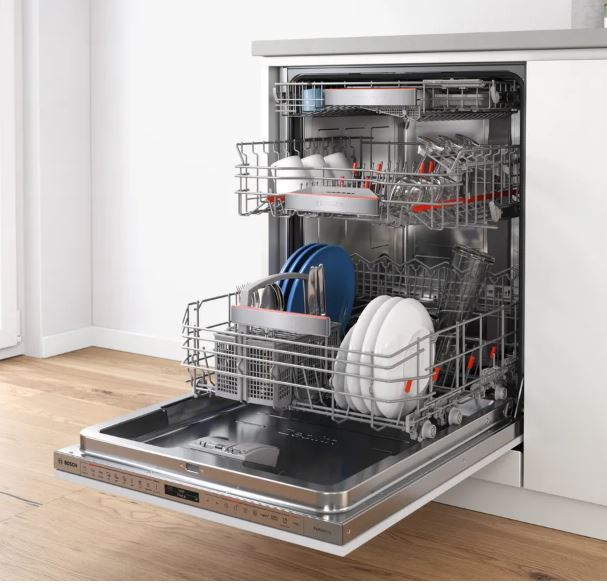
Key Parts of the Bosch Silence Plus 44 dBA You Should Know
Knowing the main components of your Bosch Silence Plus 44 dBA dishwasher helps you talk to repair pros and order the right replacement parts.
Essential Components
Control Board: Your dishwasher’s brain. It coordinates everything from cycle timing to temperature. Control board failures cause erratic behavior or complete system shutdown.
Circulation Pump: Moves water through spray arms during wash cycles. This is different from the drain pump. A failing circulation pump makes grinding noises or causes poor cleaning.
Door Latch Assembly: Includes the latch mechanism, door switch, and strike plate. This critical safety component prevents operation when the door is open. Worn latches are among the most common replacement needs.
Inlet Valve: Controls water entry into the dishwasher. Electronic solenoids inside open and close on command from the control board. Mineral deposits cause valve failure in hard water areas.
Finding Part Numbers
Bosch uses specific part numbers for each component. Your model number (found on the door edge or inside the tub) determines which parts fit.
Check your model number against Bosch’s parts website. Model numbers typically start with “SHE” or “SHX” for built-in models. The complete number includes extra digits specifying exact configurations.
Using wrong part numbers leads to compatibility issues. Even similar-looking parts may have different electrical specs or mounting setups. Always verify part numbers before ordering.
Replace or Repair?
Some components are worth repairing while others should just be replaced. Heating elements, pumps, and valves typically get replaced rather than repaired. These are sealed units that can’t be effectively serviced.
Control boards can sometimes be repaired by specialists who replace failed capacitors or relays. But replacement is often cheaper and more reliable.
Door latches and handles are straightforward replacement items with minimal labor.
Think about your dishwasher’s age when deciding on repairs. Units over 8 years old may not justify expensive component replacement. Calculate whether repair costs exceed 50% of the cost of a new dishwasher (View on Amazon).
DIY Replacement
Many parts can be replaced by confident DIYers with basic tools. Door latches, filters, spray arms, and racks need no electrical work. These replacements involve simple clips, screws, or twist-lock mechanisms.
Pumps, valves, and heating elements require electrical disconnection and plumbing work. These repairs demand more skill and carry greater risk. Wrong installation can cause water damage or electrical hazards.
Control boards are technically DIY-replaceable but need careful handling. Static electricity can damage sensitive electronics. If you try this replacement, use anti-static precautions and document all wire connections before disconnecting anything.
When to Call a Dishwasher Professional
Some situations go beyond DIY capabilities. Know when to get professional help to prevent further damage.
Call for service when error codes persist after basic troubleshooting. Complex error codes often mean control board issues or multiple simultaneous failures. Pro diagnostic equipment pinpoints these problems efficiently.
Water leaking from the bottom or sides needs immediate professional attention. Leaks damage flooring and cabinets quickly. The source might be a failed door seal, cracked tub, or loose hose connection that needs expert repair.
If you smell burning plastic or see smoke, disconnect power immediately and call for service. These symptoms indicate serious electrical problems that pose fire risks. Never run the dishwasher again until a pro inspects it.
Unusual noises like grinding metal or loud banging suggest mechanical failure. Continuing to run the dishwasher can cause more damage. Technicians can identify the failing component before it damages other parts.
When repair estimates approach or exceed the dishwasher’s value, consider replacement instead. A service tech can help you evaluate whether repair makes financial sense based on the unit’s age, condition, and likely future reliability.
Keep Your Bosch Silence Plus 44 dBA Dishwasher Running Longer
Regular maintenance prevents most common problems. These simple practices extend your dishwasher’s lifespan significantly.
- Clean the filter weekly or at least monthly. This single practice prevents most drainage and cleaning issues. Make it part of your regular kitchen routine.
- Run hot water at your sink before starting the dishwasher. This ensures the machine begins with hot water, improving cleaning and reducing cycle time. Cold water in the supply line extends cycles unnecessarily.
- Use quality detergent in proper amounts. Too much creates excessive suds that trigger errors. Too little leaves dishes dirty and allows residue buildup. Follow dosage recommendations precisely.
- Run a cleaning cycle monthly. Use dishwasher cleaner or white vinegar to remove mineral deposits, grease, and odors. Place a cup of white vinegar on the top rack and run a hot cycle empty.
- Inspect door seals quarterly. Look for cracks or gaps. Damaged seals leak water and reduce efficiency. Wipe seals with a damp cloth to remove food particles and maintain flexibility.
- Don’t overload. Cramming too many dishes blocks spray arms and prevents proper water circulation. This leads to poor cleaning and potential mechanical strain. Follow loading guidelines in your user manual.
- Check water supply hoses annually. Look for bulges, cracks, or signs of wear. Replace hoses showing any damage before they fail. Consider upgrading to braided steel hoses for added security.
Maintenance Schedule:
| Task | How Often | Time | Impact |
|---|---|---|---|
| Clean filter | Weekly | 5 min | High |
| Wipe door seals | Monthly | 3 min | Medium |
| Run cleaning cycle | Monthly | 90 min | High |
| Check spray arms | Quarterly | 5 min | Medium |
| Inspect hoses | Annually | 10 min | High |
| Test door latch | Twice yearly | 2 min | Medium |
Common Questions Answered
Can I use regular dish soap in my Bosch dishwasher?
Never use regular dish soap in dishwashers. Hand soap creates excessive suds that overflow and damage electronics. Only use detergents made for automatic dishwashers. These products control foam while providing cleaning power.
How often should I run my dishwasher?
Run your dishwasher at least once weekly even with light use. Regular operation prevents seals from drying out and keeps pumps lubricated. Long periods of inactivity cause mechanical issues and allow odors to develop.
Why does my dishwasher leave white residue on dishes?
White residue typically comes from hard water minerals or excessive detergent. Cut your detergent amount in half and add rinse aid to the dispenser. Consider installing a water softener if you have very hard water. Run a vinegar cleaning cycle to remove existing buildup.
Is it normal for my Bosch dishwasher to run 2-3 hours?
Yes, modern Bosch dishwashers often run 2-3 hours per cycle. Efficiency standards prioritize water and energy conservation over speed. These longer cycles use less water and electricity than older 60-minute cycles. Select express or quick wash when you need faster results.
Can I open the dishwasher door during a cycle?
Opening the door mid-cycle pauses operation immediately. Modern Bosch models let you add forgotten dishes during the first few minutes. Close the door firmly and press Start to resume. Opening during heated dry releases hot steam, so be careful.
Also Read:
What does the E15 error code mean?
E15 indicates water in the base pan beneath the tub. This triggers a flood protection system that prevents operation. Usually caused by a leak or overflow. Tilt the dishwasher backward slightly to drain the base pan. If the error persists, check for leaks and call for service.
Master the Bosch Silence Plus 44 dBA Troubleshooting
Your Bosch Silence Plus 44 dBA is built for years of quiet, reliable service. Most problems have straightforward solutions you can handle yourself.
Start with the basics: check power connections, clean filters, and verify water supply. These simple steps resolve most issues within minutes.
Regular maintenance prevents the majority of dishwasher problems. A few minutes each week cleaning filters and inspecting components saves hours of frustration later.
If troubleshooting doesn’t work, professional service is your next step. Some repairs need specialized tools and expertise that make DIY attempts risky. Choose authorized Bosch service providers who understand your dishwasher’s specific engineering.
Keep your user manual handy for quick reference. Document recurring issues and solutions that work for your specific situation. This becomes invaluable for future troubleshooting.