How long does a dryer take? About 45 minutes for a normal load of mixed clothing. That’s the number to hold on to.
Everything below is the exception worth knowing, and some of it saves you a service call. Small loads of light fabric can finish in 15.
A full drum of towels is a different job. So is bedding. So is anything that comes out of your washer still dripping.
How long does a dryer take for each load?
Load type sets both the floor and the ceiling, and the spread is wider than most owners expect before they time their first load.
The ranges below follow Maytag’s published figures and what I see on service calls. Your own numbers should land inside them.
| Load | Typical time | What decides it |
|---|---|---|
| Small load, light synthetics | 15–25 minutes | Low mass, fast moisture release |
| Mixed shirts and jeans | 40–55 minutes | Cotton holds water; sensor reads the drum average |
| Towels | 50–75 minutes | Terry loops trap water and block airflow |
| Sheets and light bedding | 60–90 minutes | Balling up in the drum slows the middle |
| Blankets and comforters | 90–180 minutes | Thickness, and whether the drum can tumble them |
Maytag’s own guide puts a typical cycle at about 45 minutes, with light loads down to 15 and towels or blankets up to three hours. Two hours is not on that list. Two identical-looking baskets can differ by 40 minutes, and the reason is usually water, not heat.
Water is the only thing you’re paying to remove.
Weigh the load in your head. A drum is sized for a certain weight of wet fabric, and roughly half of it should be airspace.
Why gas, electric, and heat pump dryers differ
Gas and electric dryers run about the same length of time on the same load. Gas heats the drum faster, but the last ten minutes are the same job either way.
A heat pump dryer is the outlier. It moves heat instead of generating it with a flame or a coil, it runs cooler, and most loads take two to three hours instead of one. Wondering whether yours is one of them?
The model tag inside the door settles it in a second, and it also tells you which vent rules apply.
Nothing has failed. The cycle is simply slower, and the trade is electricity for time.
Vented machines push moisture out of the house through a duct. That makes the duct part of your drying system, not an accessory bolted to the back.
The two-hour line: when a slow cycle is a fault
A load that used to finish in 45 minutes and now needs two hours is not a fabric problem. Something changed in heat delivery or airflow, and those are the only two systems that set drying time.
Airflow fails first, because lint and crushed duct are common and cheap to check. A clogged vent slows drying, it makes the cabinet hotter, and it puts lint next to the burner or element, which is the fire risk the safety guidance keeps warning about. Start there, not with parts.
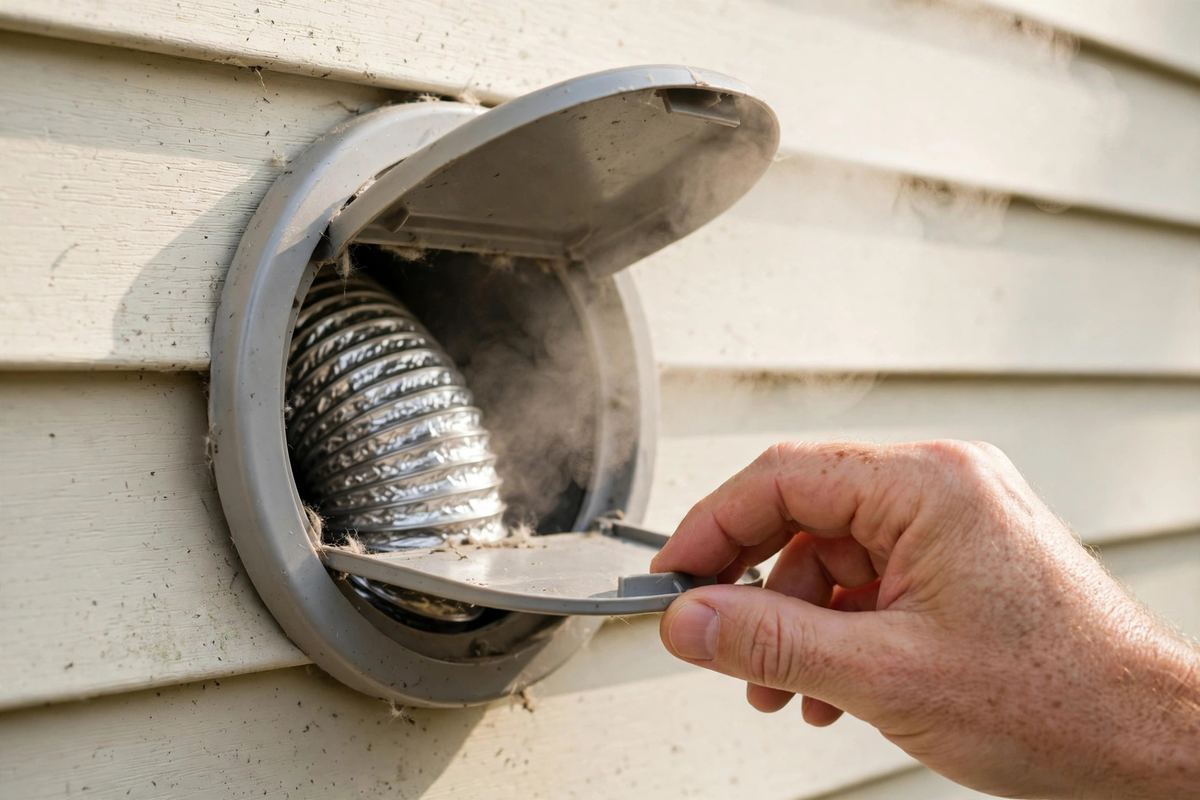
Check the outside flap while the dryer runs.
If it barely lifts, your airflow is restricted, and no amount of extra time will fix it. A dryer with a clear flap and a long cycle has a heat problem instead.
Heat fails second, and it fails quietly on electric machines. One of the two elements in a multi-element dryer can open, leaving you with warm-not-hot air and a cycle that never ends. That failure sounds normal, which is why it takes a visit to find. It also explains a machine that dries one small load fine and fails on anything bigger.
The vent path itself has rules. Most installation guides call for four-inch rigid metal duct, cap the run at around 25 to 35 feet for your model, and subtract a few feet for every 90-degree elbow.
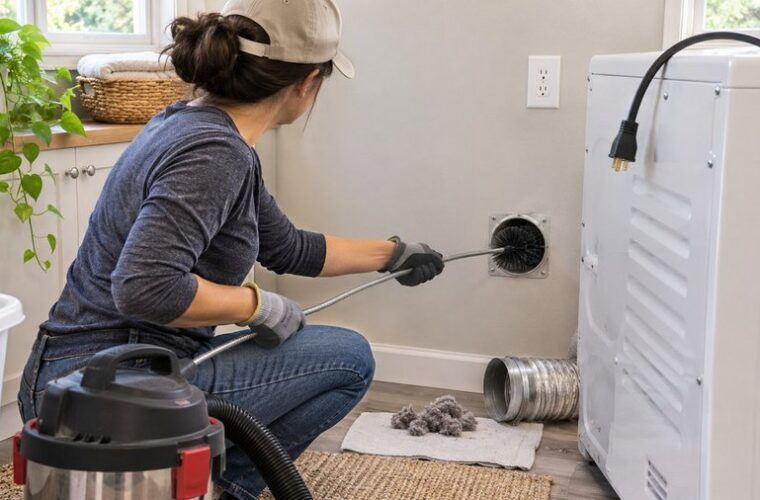
Flexible accordion hose is the usual culprit in apartments, because it sags and collects lint at the low points. Cleaning the vent path is an afternoon job, and it’s the first thing I check when a machine that was fine starts taking two cycles.
If yours is already taking three, the restriction is usually in the duct rather than at the screen, which is the pattern in a dryer that needs three cycles. That page runs the same checks in order, and it’s worth reading before you price a part.
Sensor dry versus timed dry
Sensor cycles end when the moisture sensor inside the drum says the load is dry. Timed cycles end when the clock runs out. The two behave so differently that owners blame the machine for a setting.
If your clothes come out damp at the end of a sensor cycle, the sensor may be reading a cool spot, or the vent may be throttling airflow.
Wipe the sensor bars with a little vinegar, keep the drum under two-thirds full, and set the dryness level to More Dry before you call anyone. That costs nothing, and it rules out the two settings people blame on a broken board.
Timed dry is the setting to use when you’re testing.
Put a known load in and set 60 minutes. Feel the clothes at 30. If they’re steaming wet at the halfway point, stop, because the machine isn’t making heat or moving air, and running the clock won’t tell you which.
Laundromat dryers and the 30-minute claim
Commercial machines finish in 20 to 60 minutes, because their drums are bigger, their burners are larger, and their airflow is higher. That’s why the half-hour claim feels true at a laundromat and false at home.
At home, 30 minutes is realistic for a small load of synthetics on high heat, or on a quick-dry cycle if your model has one. It’s not realistic for a full drum of cotton towels, whatever the dial promises.
What to check before you call a tech
Clean the lint screen every load, and wash it with soap and water once a month. Fabric softener leaves a film you can’t see and air can’t pass, and it builds up fast on a static sheet habit.
Run your washer’s highest spin speed before you blame the dryer. Water you spin out is water the dryer doesn’t have to boil off, and a load that arrives dripping adds 20 minutes to any cycle.
Measure it.
Write down how long a normal load takes today and compare it with the number you’d have given six months ago. A dryer that drifts from 45 minutes to 75 over a year is telling you your duct is loading up. That’s a cleaning job rather than a repair, and it’s cheaper than the part you were about to order.
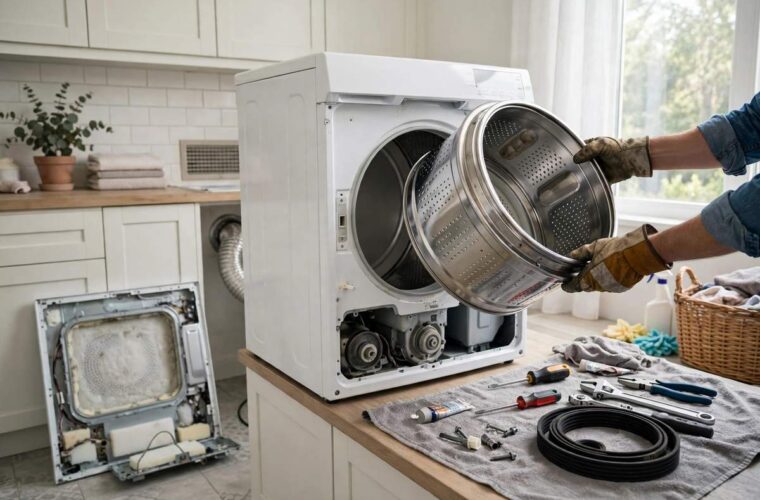
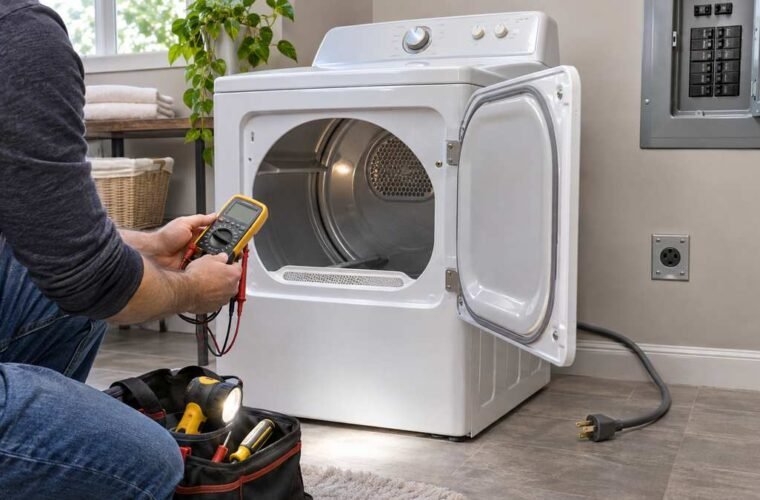
If you’ve cleaned everything and the cycle is still long, the element, the thermostat, or the blower wheel is the next suspect. Those need a meter, not another cycle. A dryer that heats but doesn’t move air will run forever and never finish a load.
Stop and call a pro if you smell gas, see scorched lint near the element, or the machine trips a breaker.
FAQ
Can a dryer dry clothes in 30 minutes?
Yes, for a small load of light fabric on high heat, or on a quick-dry cycle. A full drum of towels won’t, and no setting changes that.
How long does a normal dryer cycle take?
About 45 minutes for mixed clothing in a vented machine. A sensor cycle can end sooner if your load is small and your washer spun it well.
Why does my dryer take 2 hours?
Usually a restricted vent or a weak heat source. Check the outside flap while it runs, then clean the duct before you price a part.
How long does a dryer take on high heat?
High heat shortens a mixed load by roughly 10 to 20 minutes, and it’s the wrong setting for anything with stretch or elastic in it. Use it for towels and denim rather than everything in the basket.
Is 20 minutes in the dryer enough?
Only for a few items that are already nearly dry, or for a refresh cycle on clothes you wore once. A wet load needs the full range from the table.