Gas stove keeps clicking? It usually has water where the spark lives. A boil-over or a wipe-down leaves moisture on an igniter or inside a knob switch, and the spark keeps firing until it dries.
So start with time, not tools. If yours still clicks once it’s dry, you’ve got three more suspects: a burner cap sitting crooked, a dirty burner, or a knob that never fully returned to OFF.
When does it click? That tells you which one.
Clicking with every knob off points to the switches. Clicking after the flame is lit points to the burner itself. Clicking with no flame at all means gas isn’t getting to the spark.
Some clicking is normal
Turn any one knob to LITE and every igniter on the cooktop sparks at once. Whirlpool’s sparking or clicking help page says only the burner you turned on will light, but all surface burners will click. GE says the same thing.
The clicking should stop the moment that burner catches. GE notes it can take up to 10 to 12 clicks to light a burner that’s still a little damp, so you’ll want to give it a few seconds before you worry.
Some cooktops also relight on their own. Whirlpool’s help page describes a reignition feature that sparks again if a spill, wind or a room draft blows the flame out. On those models, a draft can keep it clicking now and then, and so can a very low flame setting.
Clicking with every knob off
This one sounds alarming, but it’s usually water. Whirlpool says that if all burners are off and the stove still clicks, you may have moisture in the switches from cleaning or a spill. Each knob has a small spark switch on its stem, right where spill water runs down.
- Check every knob first. GE’s support page says to turn the knob completely to OFF and make sure it has popped back out. A knob that sticks halfway keeps the switch closed.
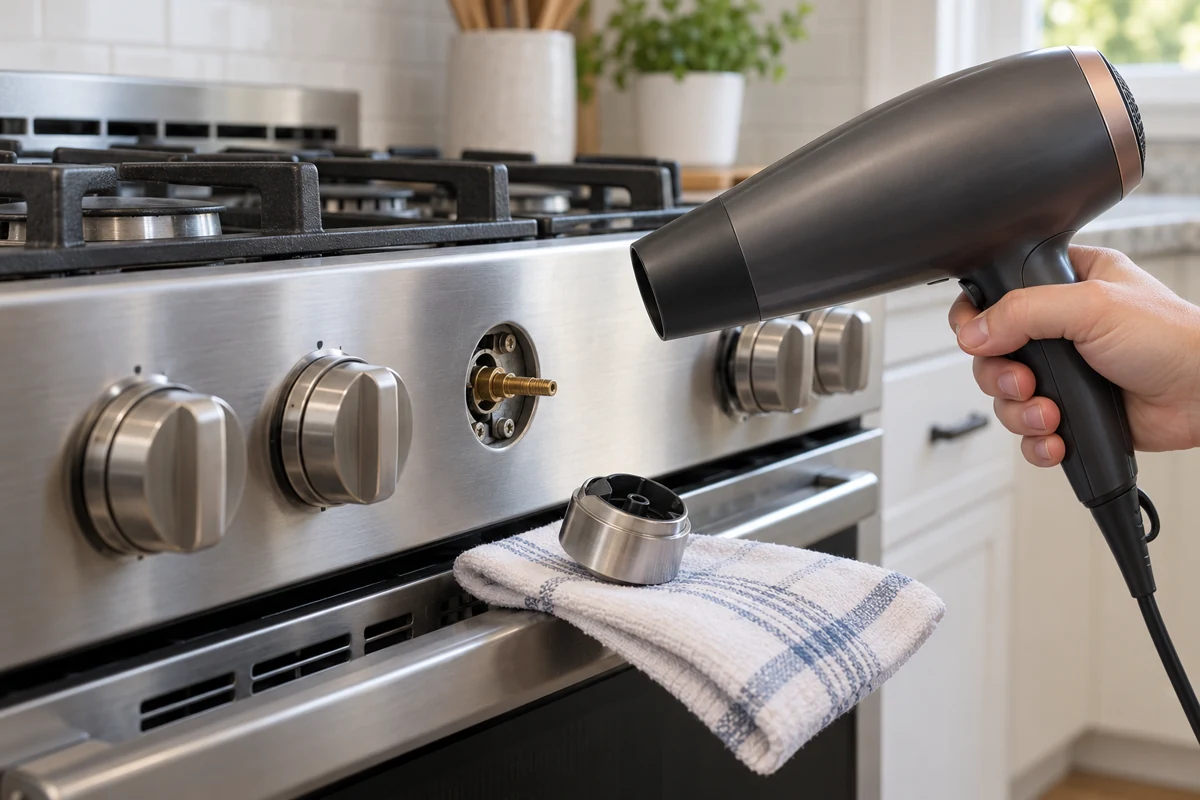
- Let the switches dry. GE suggests giving it a few hours. Whirlpool says cool air from a hair dryer on the control knob shaft area speeds it up.
- Silence it while it dries. The spark runs on household power, not gas. Unplug the range or switch off its breaker, and the clicking stops while you wait.
One exception matters. If you smell gas, don’t unplug anything or flip the breaker. That’s covered in the stop section below.
Pull the knobs off before you dry them. On most ranges a knob slides straight off its shaft, which lets you aim the air at the switch underneath. It’s the part that actually got wet, and drying the knob itself does nothing for it.
Clicking after the burner lights
A lit burner that keeps clicking means the stove doesn’t know it’s lit. On cooktops that sense the flame, the spark keeps going until it does. A commenter on r/appliancerepair explained how that sensing works:
“The way these units check for lit burners is so send a current through the flame. If theres food or even just too much dust or oxidation, it won’t be able to sense the current, and will keep sparking.”
– r/appliancerepair (4 upvotes)
That’s why a dirty or crooked burner is the usual cause here. You can check all four of these yourself with the knob off and the burner cool:
- A wet burner. Water in the ports after cleaning does the same thing as water in a switch. Dry the parts completely.
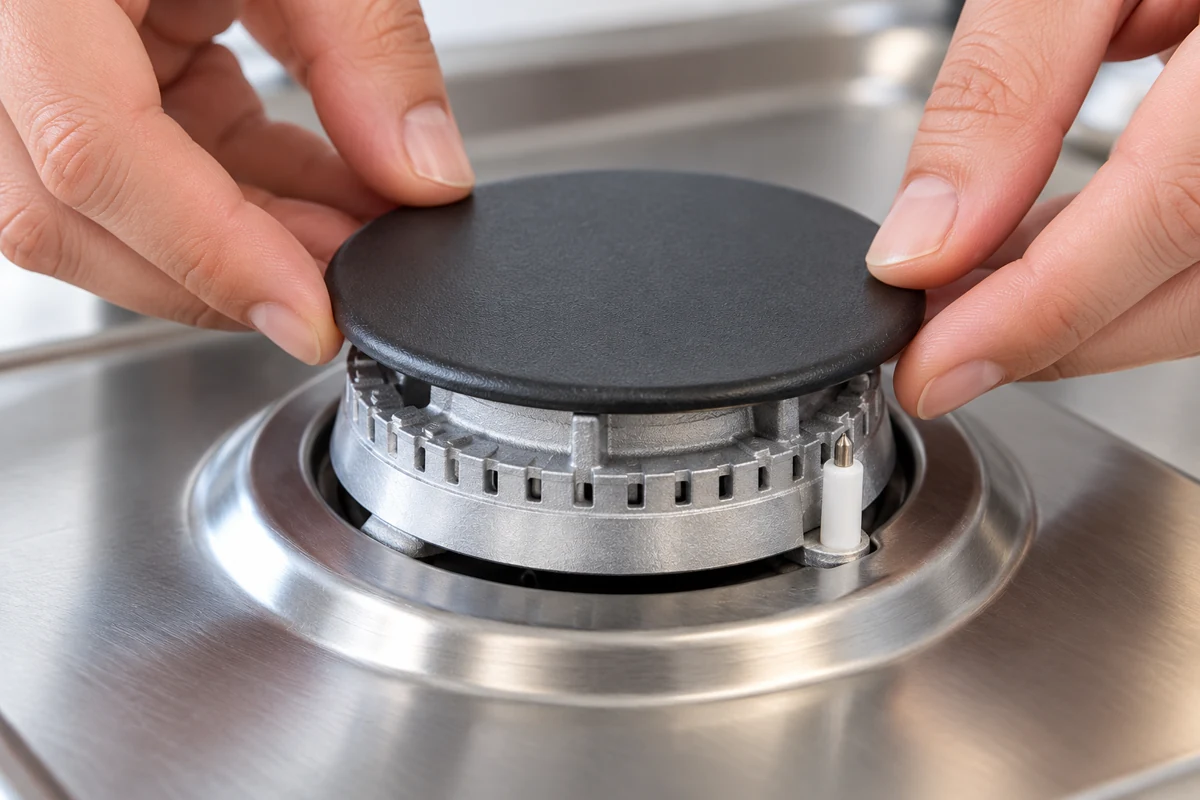
- A cap that isn’t seated. Frigidaire’s manual says the mark on the burner cup should point toward the igniter. Slide the cap gently side to side, and you’ll hear it click into place when it’s centered.
- A raised electrode. GE says the white ceramic electrode should sit flush with the cooktop. Press it down with a clockwise twist.
- A draft or downdraft vent. Whirlpool says a downdraft blower can push the flame away from the igniter, so it sparks at a burner that’s already lit. Lower the blower or raise the flame.
Clicking but the burner won’t light
Sparks with no flame mean the gas isn’t reaching the spark, or there’s no gas at all. Frigidaire’s manual lists these in its cooktop troubleshooting table:
- The knob isn’t at LITE. Push it in and turn it all the way to LITE until the burner catches.
- Clogged ports. With the burner off and cool, clear the slots and the ignition port with a small-gauge wire or needle. Whirlpool says to use a straight pin and not to enlarge or bend the port.
- A brand-new stove. Whirlpool says air can be trapped in the gas line on first use. Run one burner to push it out.
- No gas supply. If no burner lights, Whirlpool says to check that the shutoff valve to the range is turned on.
The same manual says that during a power outage you can light a burner with a match. Hold the lit match to the burner head first, then slowly turn the knob to LITE.
The fix, in the order I’d do it
Work from free to parts, the way you’d want a tech to work in your kitchen. Every step below starts with the knobs off and the burners cool, and you don’t need a single tool until step three, when a pin or a length of fine wire does the job.
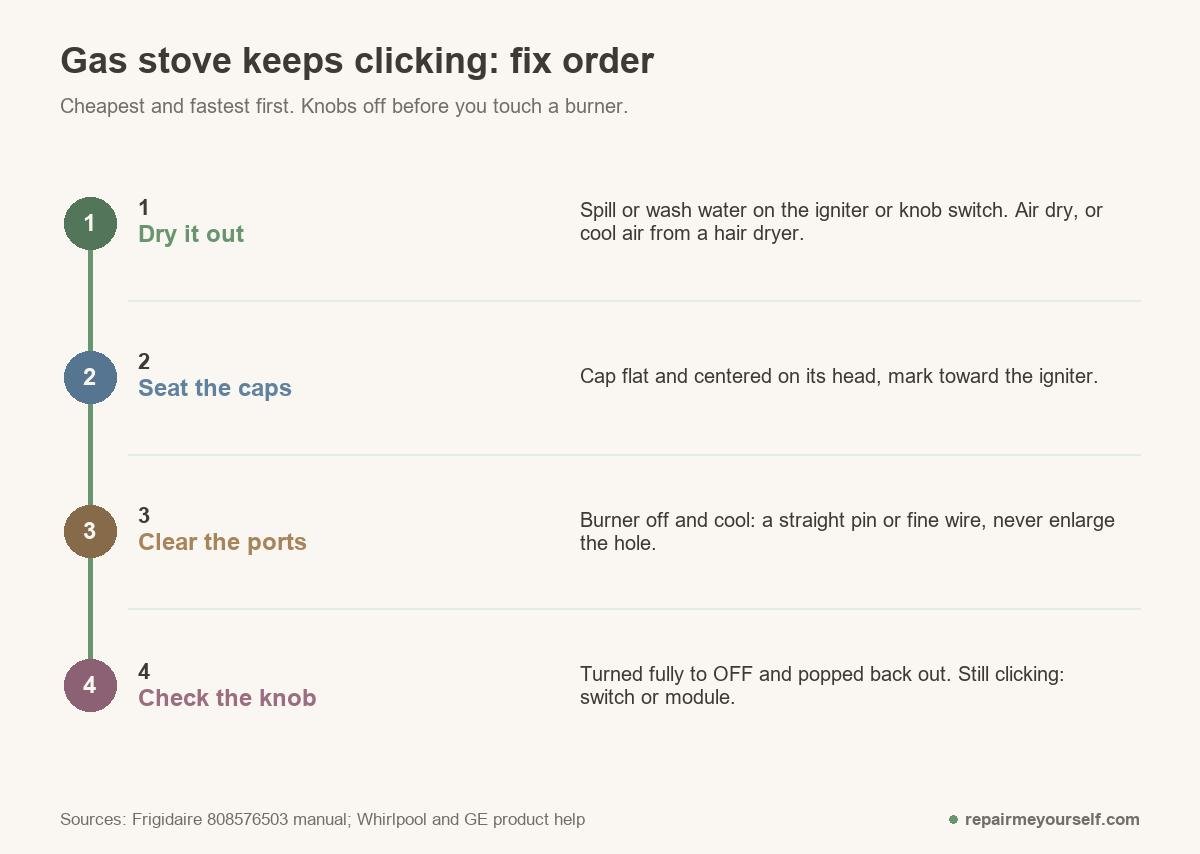
- Dry it out. Lift off the caps and heads, shake out the water and let them air dry. GE says a warm oven for 30 minutes also works for the caps and heads.
- Seat the caps. Put each head and cap back in its own spot, flat and centered. GE notes each cap has to match its head.
- Clear the ports. Use a pin or fine wire in the slots and the ignition port. Don’t open the holes up.
- Check the knobs. Every knob fully off and sprung back out. Dry the switches if one stuck.
- Give it a day. Leave it unplugged overnight if the clicking came back after a big spill.
On service calls, the clicking cooktops I was sent out for were mostly ones that had just been cleaned. A cap set back a little off center, or a burner put back still wet, was the usual find.
If it’s clean, dry and seated and still clicks, the fault is electrical. The same r/appliancerepair thread put the next step plainly:
“If everything is clean, everything is grounding properly, and is still sparking after flame is present it needs a new spark module.”
– r/appliancerepair (7 upvotes)
A stuck spark switch behind one knob is the other common part. Both GE and Whirlpool send you to service at this point. That’s sensible, since you’d be lifting the cooktop’s top to reach either one.
Stop and get help if you smell gas
A clicking stove is an annoyance. A gas smell is an emergency. Frigidaire’s manual is blunt about what to do:
- Don’t try to light any appliance.
- Don’t touch any electrical switch, and don’t use a phone in the building.
- Leave, and call your gas supplier from a neighbor’s phone.
- If you can’t reach the gas company, call the fire department.
Don’t unplug the range or flip its breaker while there’s a smell, because that’s an electrical switch. A gas leak detector near the stove gives you an early warning next time.
Stop and call a pro, too, if a fix means touching the gas valve, the gas line or the regulator. That’s work for a licensed technician or your gas company.
Gas stove keeps clicking: short answers
Is a clicking gas stove dangerous?
The clicking itself is just a spark, and with every knob off no gas is flowing. It’s a nuisance that wears the switch, not a hazard. A gas smell is different: leave and call the gas company.
How long should I let it dry?
GE suggests a few hours. A warm oven for 30 minutes dries the caps and heads faster. After a big boil-over, leave the range unplugged overnight.
Why does it click only on low?
Some cooktops relight a flame they think went out. Whirlpool says these models can spark now and then on a low setting, or when a room draft is moving the flame. Raise the flame slightly or stop the draft.