A dining table needs to do far more than occupy the center of a room. In Australian homes, it may be used for quick weekday breakfasts, school projects, working from home, long lunches, and gatherings that stretch from the kitchen to an alfresco area. For homeowners considering a statement surface, Elsa Home And Beauty offers a marble top dining table collection with round, oval, and rectangular designs in a range of seating sizes. The Australian brand specializes in designer marble and natural-stone furniture, provides Australia-wide delivery, and invites custom-project inquiries, making its collection a useful reference when comparing stone table shapes, proportions, and base styles.
The best choice is not necessarily the largest table that fits through the door. It is the one that leaves people enough room to move, supports the way your household eats and entertains, and feels comfortable year after year. Start with everyday life, then let measurements, shape, material, and delivery access guide the final decision.
Start With How the Table Will Be Used
Before comparing finishes or scrolling through product photos, consider what happens at the table on a normal week. A family that eats there twice a day has different needs from a household that mainly hosts friends on weekends. A table used for laptops and homework benefits from a generous, easy-to-clean surface, while a formal dining room can place more emphasis on visual impact.
Think through the people who use the space. Include children, regular guests, pets that move beneath chairs, and anyone who may need clear access around the table. In an open-plan Australian kitchen and living area, a table also affects the main traffic route, so a slightly smaller option may create a more relaxed room than an oversized design.
Measure the Room Before Shopping
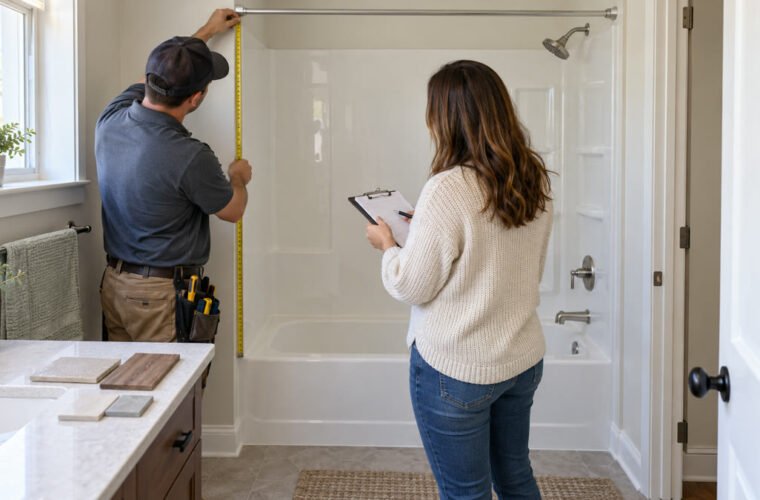
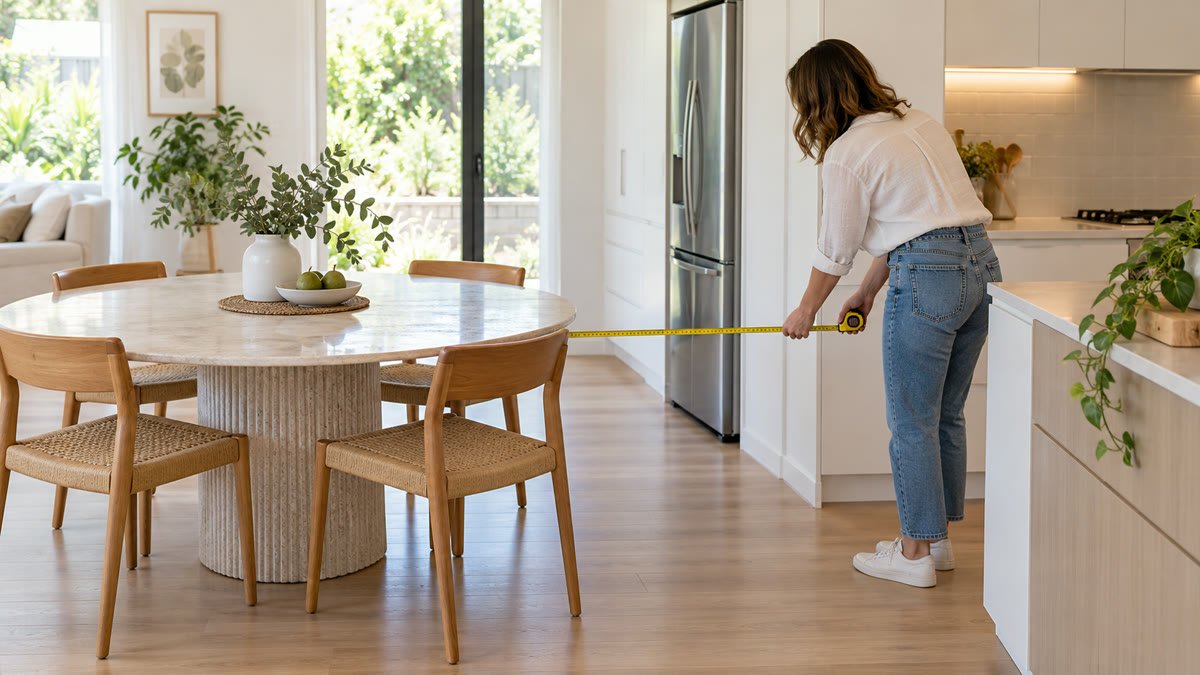
Measure the length and width of the usable dining area, then account for the table, chairs, and circulation space together. As a practical target, aim for about 90 centimeters of clearance between the table edge and a wall, sideboard, or other furniture where the room allows. This gives diners room to pull chairs out and lets others pass behind them.
- Measure the dining zone, including nearby walkways and door swings.
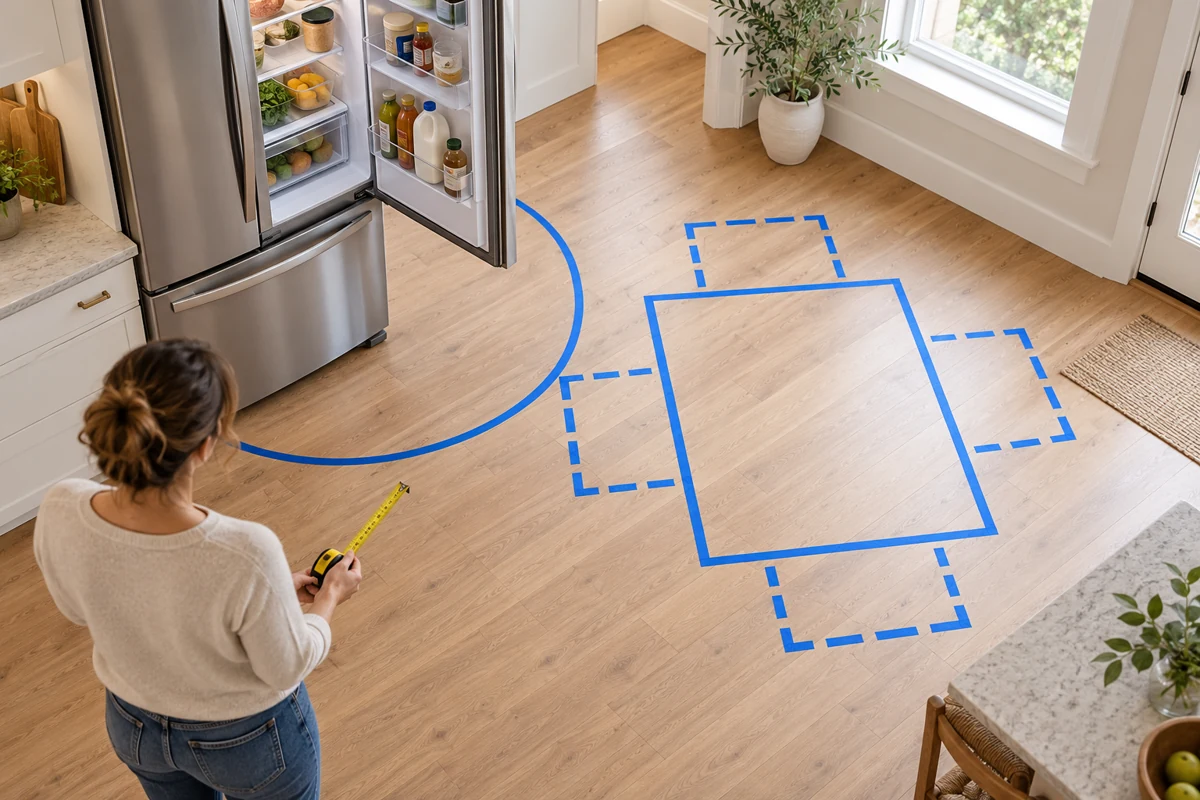
- Use painter’s tape to mark the proposed tabletop on the floor.
- Add the depth of pulled-out chairs around that outline.
- Walk through the space as if carrying plates or opening drawers.
- Measure entry doors, hallways, lifts, stairs, and tight turning points.
Leave Room for the Fridge and Kitchen Appliances
If your table sits in the kitchen or right beside it, it shares the floor with appliances that need space of their own. They were there first. Tape their zones before you tape the tabletop.
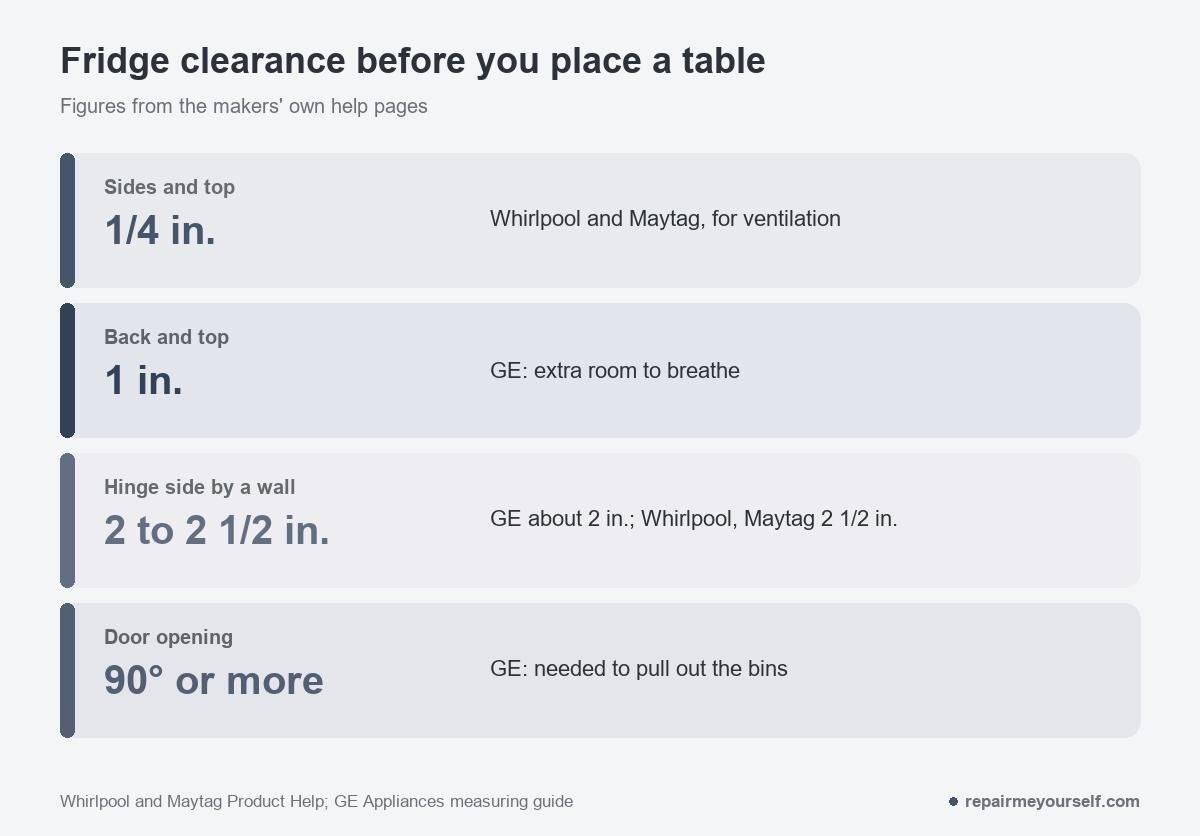
- The fridge door. GE’s refrigerator measuring guide says many models need the door open to 90 degrees or more for full access to the vegetable and door bins. Keep chairs out of that arc, or someone stands up every time you grab the milk.
- The fridge’s air gaps. Whirlpool and Maytag ask for a 1/4 inch space on each side and at the top, and say not to block the base grille. GE asks for at least 1 inch at the back and the top. A bench pushed against the side of the fridge, or a chair parked in front of the grille, cuts that airflow.
- Dishwasher and oven doors. Both fold down into the room, and you stand in front of them to load. Keep pulled-out chairs outside that strip.
- Heat. Whirlpool and Maytag say to keep the fridge away from ovens, ranges and dishwashers that vent heat. Don’t make room for a bigger table by pushing the fridge next to the oven.
Measure walkways from the front of the closed fridge doors, not from the counter edge. A commenter on r/HomeImprovement put the depth problem plainly:
“The body of that fridge is over 24" deep. The doors add another 5".”
– r/HomeImprovement (5 upvotes)
Leave room to roll the fridge out, too. GE suggests space so it slides in and out for cleaning. On service calls, I’ve had to ask people to move a dining table before I could pull a fridge forward. With a heavy stone top, you won’t want to shift the table every time you clean the refrigerator coils.

Blocked airflow makes a fridge work harder. If yours already runs nonstop, start with our guide to a fridge that runs constantly but isn’t cold.
Match the Table Shape to the Floor Plan
Rectangular Tables
Rectangular tables suit longer rooms and generally provide efficient seating for larger groups. They can also align neatly with a kitchen island or a long rug. However, their corners need enough surrounding space, particularly in narrow apartments or dining rooms with multiple entry points.
Round and Oval Tables
Round tables work well in square rooms, breakfast nooks, and compact areas where people need to move around the perimeter. Everyone faces toward the center, which can make conversation feel more inclusive. Oval tables retain much of the seating length of a rectangle but soften the corners, often improving flow in a busy room.
Square Tables
A square table can feel balanced in a square room and works especially well for four diners. For larger groups, though, it can become wide enough that shared dishes and conversation feel less convenient.
Choose Seating for Real Life, Not Rare Occasions
Focus first on the number of people who use the table most often. A compact table for two to four people can be ideal for a small home, while four to six seats suit many family kitchens. Six to eight seats may suit regular entertainers, and larger formats are best reserved for rooms that genuinely support them.
Do not rely on a seat count alone. Wide upholstered chairs, chairs with arms, and sculptural bases can all reduce the usable places around a tabletop. Check each chair’s width and allow enough personal space for diners to eat without bumping elbows.
Compare Materials With Care in Mind
Every tabletop material involves trade-offs. Solid timber adds warmth and can often be refreshed over time, but it can show dents and water marks. Veneer can offer a timber look with a lighter construction. Glass can make a compact dining area feel visually open, although fingerprints and smudges are more noticeable.
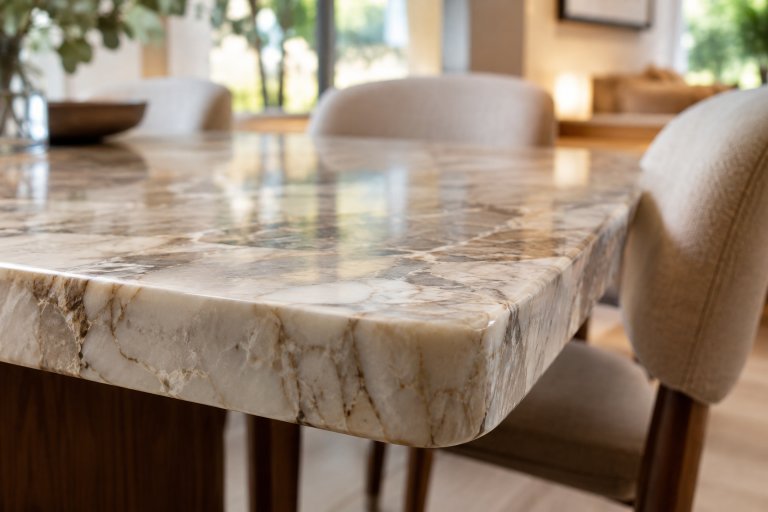
Natural stone gives a table distinctive color variation and visual weight, but it deserves informed care. Ask whether the stone is sealed, which cleaners are suitable, whether acidic spills require prompt attention, and how repairs are handled. Ceramic and engineered surfaces may appeal to households that want a stone-like appearance with different maintenance requirements. Always follow the maker’s specific care guidance rather than assuming that all stone surfaces behave the same way.
If the table sits near the oven, keep a trivet handy. Elsa’s own stone care guide says not to set hot items straight on the stone, so a roasting pan should never go down on the bare top.
Check the Base, Legroom, and Chair Placement
The underside of a dining table matters as much as the top. A pedestal base can make it easier to add or reposition chairs because there are no corner legs. Four-leg tables offer a familiar structure, but the legs can limit where chairs fit. Sculptural bases create a focal point, yet they should be checked for knee clearance before purchase.
If possible, sit at a similar model or map the base footprint on the floor. Confirm that chair arms slide under the edge, knees do not hit the support structure, and diners can get in and out comfortably.
Build a Balanced Dining Layout
A well-sized rug should extend beyond the table far enough that chairs remain on it when pulled back. Center pendant lighting over the tabletop rather than the center of the room, especially in an open-plan layout. Keep centerpieces low enough to preserve sightlines across the table.
Balance visual weight as well. A substantial marble or stone top can look best with slimmer chairs, open lighting, and restrained accessories. A lighter timber table may support more textured upholstery or warmer decorative pieces without making the room feel crowded.
Plan for Delivery, Weight, and Installation
Large tables, particularly stone designs, require delivery planning before the order is placed. Confirm packaged dimensions, whether the top and base arrive separately, who is responsible for assembly, and whether protective pads are needed for timber, tile, or engineered floors. Keep written product descriptions, delivery details, and receipts, particularly for online purchases. Australia’s guidance for buying online also recommends checking seller details and retaining purchase records.
Pre-Purchase Checklist
- Have you measured the room, chairs, and clearance zone?
- Can the fridge, dishwasher, and oven doors open fully with the chairs pulled out?
- Does the table shape support easy movement?
- Is the everyday seat count comfortable?
- Does the material suit spills, heat, children, and cleaning habits?
- Will the base allow enough knee and chair clearance?
- Can the table safely enter the home?
- Do the chairs, rug, and lighting work with its scale?
Common Questions on How to Choose a Dining Table
How much room should be left around a dining table?
About 90 centimeters around the edge is a useful goal where possible. Smaller rooms may require compromise, but chairs should still be able to pull out and people should be able to pass safely.
How close can a dining table be to the fridge?
Close enough is fine as long as the fridge door still opens past 90 degrees, nothing blocks the base grille or the side gap, and you can still roll the fridge out. Your model’s installation instructions give its exact air gaps.
Is a round or rectangular dining table better?
Neither is universally better. Round tables often suit square rooms and close conversation, while rectangular tables usually make better use of longer rooms and can accommodate more diners.
Are extendable dining tables worth considering?
They can be a practical option for households that need a modest daily footprint but host larger groups occasionally. Check how the extension operates, where leaves are stored, and whether the expanded table remains stable and comfortable.
Conclusion
The right dining table fits the room, supports everyday routines, and remains comfortable when guests arrive. Measure before shopping, choose a shape that respects the floor plan, compare materials honestly, and treat delivery as part of the decision. With those details in place, a dining table can become one of the most useful and welcoming pieces in an Australian home.